
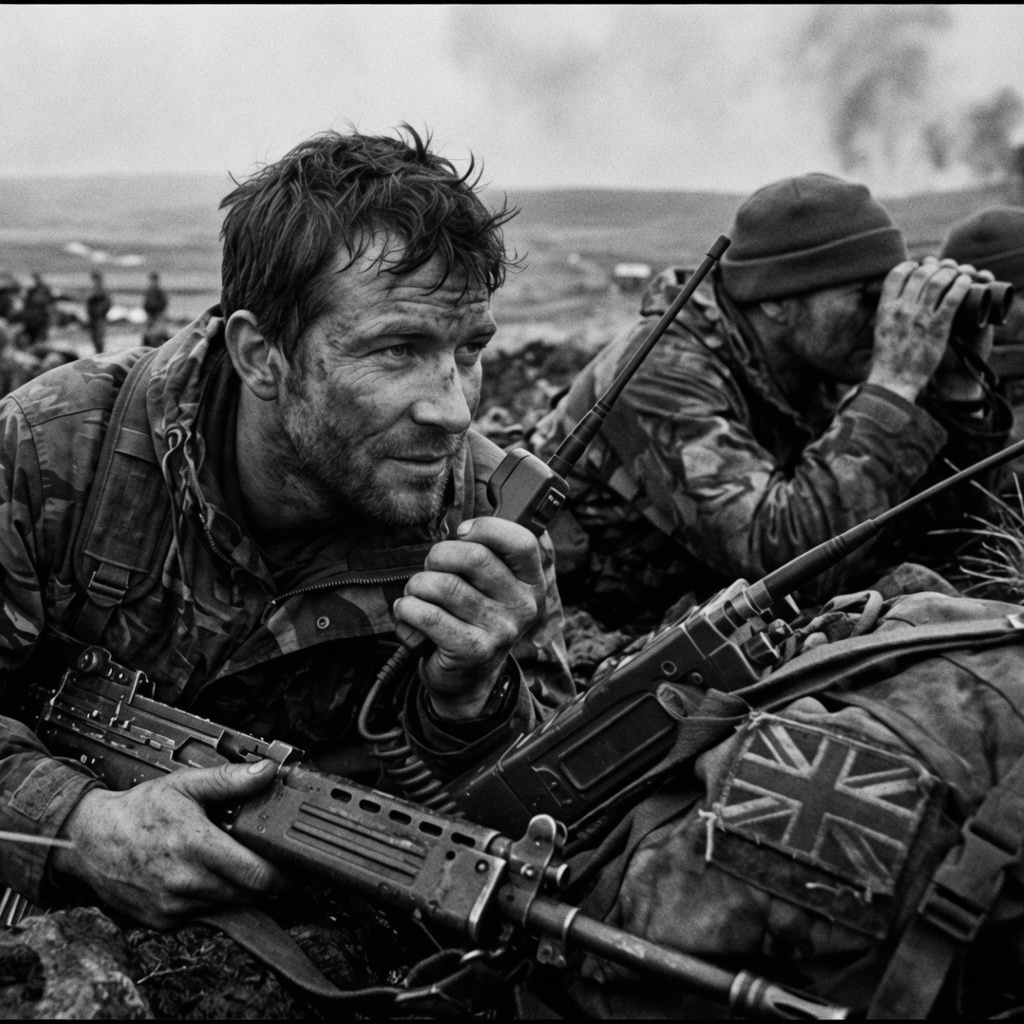
EXCLUSIVE: An expert has outlined what they believe would happen were a large-scale conflict to happen.

The Government has ruled out compulsory military service, but who know what the future holds? (Image: Getty)
Experts have revealed who they think would be called up first if the UK introduces conscription during a major conflict. Growing threats from Russia and China, alongside NATO’s Article 5 mandate that an attack on one member is an attack on all, have put Britain on high alert for a large-scale war.
Revealing how a emergency draft would actually work in practice, a top military chief warned that specific groups would be called to the front line first. Retired senior British Army officer Lord Dannatt told the Express: “I would expect to see the Army Reserve mobilised first, then Regular Reservists recalled to active service and then His Majesty’s Government would need to consider conscription, starting with 18-24-year-olds.”
Meanwhile, emeritus professor at the University of Buckingham, Anthony Glees, said full conscription would likely follow the model used during WW2. “This would mean that all males from 18-41 would have to do military or national service,” Prof. Glees explained.
“This was decided in September 1939 when the UK declared war on Germany but before serious fighting had started, the so-called ‘Phoney War’ period). Previously, prior to the declaration of war in May 1939, all males aged 20-22 were required to do national service. In 1941, the age range was extended by ten years, so 18-51 and unmarried women were also required to do some kind of national service.”
The professor thinks it’s now time for the Government to start introducing the idea of conscripted national service – and the solution may be found in Ukraine. “We need a nation that is fighting fit and ready to fight but that doesn’t necessarily mean ‘with guns and bombs and bullets’, it could mean using laptops and smartphones to push Russia back into its box,” he said.
“We all agree we are already in a ‘grey-war’ situation in respect of Russia and that puts us in the ‘Phoney War’ context, in my opinion. Nothing would terrify that little coward in the Kremlin more than to see that the UK were taking the first measures to prepare for any tricks he may well have up his sleeve, especially now when Trump seems determined to let him have a win in Ukraine.
“We need to learn from that amazing country. When it was attacked, it introduced conscription for all males in the 25-60 year old category. Ukraine, with a population just a little more than half the UK’s population, has armed forces of 900,000 men with a further four million in the reserve.
“That’s how you give Putin the bloody body blows we’ve seen having to take since 2022. If we do not want to fight Russia, and no sane person does, the only way of deterring him is by getting ready to fight him.”

It is feared that Russia and China aggression could trigger NATO’s Article 5 (Image: Getty)
However, the expert stressed not all draftees would fight on the front line, as many “could do useful defence work from their laptops.”
“We’re told by IPSOS that just 11% of 18-27 year olds say they are prepared to fight for their country,” Prof. Glees said. “But that’s not bad, it’s 154,000 brave young men. They would more than double the size of our army.
“I believe it would be right to encourage all 18-19 year olds to see national service as a worthwhile measure to keep us safe and above all deter evil Putin. I would offer all those who volunteered inducements, such as release from student loan debts, assistance with study costs, even preferential housing.
“In WW2, soldiers were offered the prospect of ‘homes for heroes’ and a National Health Service. It was well worth fighting for these benefits. We need to do the same now.
“In December 2025, Starmer’s Government agreed to increase the number of young people going into our armed forces, aware of the fact that the UK has more traffic enforcement officers (82,000) than soldiers (74,000, although our armed forces in total consist of 136,000 personnel. However, that measure was pathetic, dismissed as ‘baby steps’.”
The Royal United Services Institute (RUSI) suggests that reservists and former armed forces members would be first in line for a recall. But it adds that there is a real problem tracking and contacting ex-military people, and various other issues with mass mobilisation.
A research paper stated: “With Russian military expansion and modernisation, and a growing rift between the US and European members of NATO, the risk of protracted conflict in Europe has grown. To deter such a conflict, or deal with the risk if deterrence fails, the UK’s armed forces must be ready to mobilise and expand.”
It added: “Policymakers and the public should be disabused of the idea that the UK’s armed forces do not need to field a large force to match a potential enemy or adversary, nor that the UK can get away with leaving detailed planning until the event itself. The latest UK government’s Strategic Defence Review has already implied greater mobilisation through its framing of the Russian threat, its commitment to the British Army providing a Corps to NATO, and the need to make use of the Strategic Reserve.
“This will not be easy given the current lack of preparedness for mobilising. Moreover, alliance cohesion requires burden-sharing, with all members sharing the costs equitably, which suggests that Britain must be better prepared to contribute mass. Preparing for this involves mobilising, training and equipping enough people, and that has implications for industry, which must also prepare for mobilisation.”
So far, the Government has ruled out conscription or mandatory military service. In September, Defence Minister Lord Coaker said: “Since 1963, it has been the policy of successive Governments that the best way of providing for the defence of our country is by maintaining professional Armed Forces which are manned by volunteers.”
The Government is focusing instead on voluntary schemes intended to give younger people experience of military life without joining the regular Armed Forces. Lord Coaker added: “Through this combination of military experience, engagement, education, skills development and voluntary service opportunities, defence is already helping more young people understand the role of the Armed Forces, experience Service life, develop valuable skills, and explore opportunities to contribute to national security and public service.”
UK Group ‘First in Line’ to Be Called Up in Event of WW3 Conscription Revealed
Fears about the possibility of a major international conflict have reignited debate over whether Britain could eventually bring back compulsory military service. As defence officials consider how the country would respond to a prolonged war, attention has turned to one group that could be mobilised before any new conscription system was introduced: former members of the Armed Forces and military reservists.
Despite alarming headlines about a potential Third World War, the British government has said it has no plans to reintroduce compulsory military service. The country continues to rely on professional personnel and volunteers. However, military experts have outlined how the armed forces might expand if a major conflict placed unprecedented demands on Britain’s defence capabilities. <Cite refs={[“turn558600search1″,”turn558600search0”]}/>
The distinction is crucial. Discussion about emergency mobilisation does not mean conscription has been announced, and no decision has been made to draft young people into the military.
Who Would Be Called Up First?
Retired senior British Army officer Lord Dannatt has suggested that, if the government decided to introduce conscription during a major conflict, the initial priority would be to mobilise existing military reserves.
According to comments reported by the Daily Express, he expected the Army Reserve to be mobilised first, followed by regular reservists recalled to active service. Only after considering those options would the government need to consider compulsory recruitment, potentially beginning with people aged 18 to 24. <Cite refs={[“turn558600search0″,”turn558600search7”]}/>
This approach reflects a straightforward military principle: personnel who have already received military training can generally be brought into service more quickly than people with no military experience.
Reservists understand military procedures, have undergone relevant training and may possess specialist skills that would be difficult to replace immediately. Former service personnel could also contribute experience in logistics, communications, engineering, medical support and operational planning.
However, being part of a reserve category does not necessarily mean every individual would be sent to the front line. Deployment would depend on military requirements, medical fitness, specialist qualifications, legal obligations and the circumstances of the conflict.
The priority in a major emergency would be to identify available personnel and determine where their skills could be used most effectively.
Britain’s Strategic Reserve Comes Into Focus
The debate has intensified as the Ministry of Defence examines how Britain could mobilise former service personnel more effectively.
In September 2026, Armed Forces Minister Louise Sandher-Jones said the government planned a major exercise in 2027 involving members of the Strategic Reserve. The exercise is intended to test procedures for contacting former personnel, mobilising them and ensuring they can be equipped for service if necessary. <Cite refs={[“turn558600search2″,”turn558600search3”]}/>
The Strategic Reserve includes former members of the regular Armed Forces and reservists who may retain a legal liability to return to service under specified circumstances.
Reports have put the wider pool at approximately 95,000 people, although the number who could actually be mobilised would depend on individual circumstances and operational requirements. The total should not be interpreted as a promise that every person in the pool would be called up during a conflict.
There are practical challenges. Some former personnel may have moved, changed contact details, developed medical conditions or taken on responsibilities that affect their availability. Military planners would need reliable records to establish who remains eligible and how quickly those people could be reached.
The planned exercise is intended to test precisely these kinds of procedures.
It is part of a broader effort to improve Britain’s readiness for a crisis, rather than evidence that a mass call-up is imminent.
Could Young People Face Compulsory Service?
The possibility of conscription remains one of the most sensitive aspects of the debate.
Lord Dannatt’s comments suggest that younger adults could become a consideration if existing military personnel and reservists proved insufficient during a major war. But that is a hypothetical scenario, not an announcement of a new policy.
Anthony Glees, an emeritus professor at the University of Buckingham, has separately argued that Britain should consider how a future national service system might work. He has discussed the possibility of a model drawing lessons from the Second World War, when compulsory service was introduced and later expanded.
Such proposals are opinions from individual experts. They should not be confused with government policy.
The House of Commons Library confirmed in its September 2026 briefing that Britain has no current requirement for military service and that the government has said it has no plans to reintroduce conscription. The UK’s armed forces remain a professional volunteer force. <Cite refs={[“turn558600search1”]}/>
Any return to compulsory military service would represent a major policy change, raising questions about legislation, exemptions, medical assessments, training capacity and the rights of people who object to military service on conscientious grounds.
It would also require the government to explain why voluntary recruitment and existing reserves were insufficient.
Lessons From the Second World War
Britain has introduced conscription during two major periods: the First World War and the Second World War.
In January 1916, compulsory military service was introduced for eligible single men aged 18 to 41, with subsequent legislation changing the arrangements. In 1939, the government introduced conscription before the country entered the Second World War. Eligibility was later expanded as the conflict intensified. <Cite refs={[“turn558600search1”]}/>
Those historical systems developed under very different circumstances from modern Britain. The country faced mass warfare that required enormous armed forces, industrial mobilisation and the reorganisation of civilian life.
Modern military operations also require highly trained specialists and advanced technology. Although large numbers of personnel may still be important during a prolonged conflict, simply recruiting more people would not automatically create an effective fighting force.
New recruits require equipment, instructors, accommodation, medical support and sustained training. The military would also need to consider how mobilisation affected hospitals, transport, industry and other essential services.
Consequently, any future decision about conscription would involve much more than setting an age range and issuing call-up notices.
Why Defence Readiness Is Receiving More Attention
Britain’s debate over mobilisation comes amid concerns about the security situation in Europe and the long-term threat posed by Russia. NATO members are reviewing their defence capabilities, while military planners are considering how countries could sustain operations if a conflict lasted longer than expected.
The government has also faced pressure to strengthen the armed forces and improve its ability to respond to emergencies.
One challenge is that modern defence depends on a wide range of capabilities. Combat troops are essential, but so are logistics specialists, engineers, intelligence personnel, cyber-security experts and medical teams.
A country preparing for a major crisis must consider how to maintain essential infrastructure while supporting its military. Cyberattacks, disruption to communications and threats to energy supplies could affect civilians even without a direct attack on British territory.
This is why some defence experts argue that national resilience should include wider public preparedness, stronger reserve forces and better coordination between government departments and industry.
Such preparations do not necessarily require compulsory military service. They can also involve voluntary training, improved emergency planning and recruitment into specialist defence roles.
Would Everyone Who Was Called Up Fight on the Front Line?
No. Even under a hypothetical conscription system, military service would not necessarily mean every person was assigned to combat.
Armed forces require people to perform a wide range of tasks. Personnel may be assigned to communications, transport, administration, engineering, equipment maintenance, medical services or cyber operations, depending on their skills and the needs of the military.
Medical fitness and training would also influence the role an individual could perform.
In a major conflict, civilian expertise could become especially important. Engineers might help maintain critical infrastructure, technical specialists could support secure communications, and logistics personnel could help move essential supplies.
Any future system would need clear rules about eligibility, exemptions and the allocation of roles. It would also need to account for people whose work is essential to keeping the country functioning.
The precise arrangements would depend on legislation and the nature of the emergency. There is currently no general call-up for ordinary civilians in Britain.
What Happens Next?
For now, the government’s emphasis remains on professional armed forces, voluntary recruitment and making better use of existing reserves.
The planned 2027 mobilisation exercise will provide an opportunity to test whether former service personnel can be contacted, equipped and prepared for duty more efficiently. Its results could inform future defence planning, particularly if Britain needs to expand its forces quickly during a national emergency. <Cite refs={[“turn558600search2″,”turn558600search3”]}/>
The wider debate is likely to continue as politicians and defence experts consider how best to protect the country in an uncertain international environment.
For young people worried about being forced into military service, the central fact is that conscription has not been reintroduced. Reports identifying possible age groups describe hypothetical scenarios rather than a current legal obligation.
The possibility of a major war naturally raises difficult questions about national security, personal responsibility and the scale of Britain’s armed forces. But responsible planning requires a distinction between preparing for an emergency and predicting that one will happen.
The immediate priority is to ensure that existing personnel, reservists and essential defence capabilities can meet the country’s needs. Whether Britain ever considers compulsory service would depend on future circumstances and a major government decision—not simply on the warnings or recommendations of individual experts.