
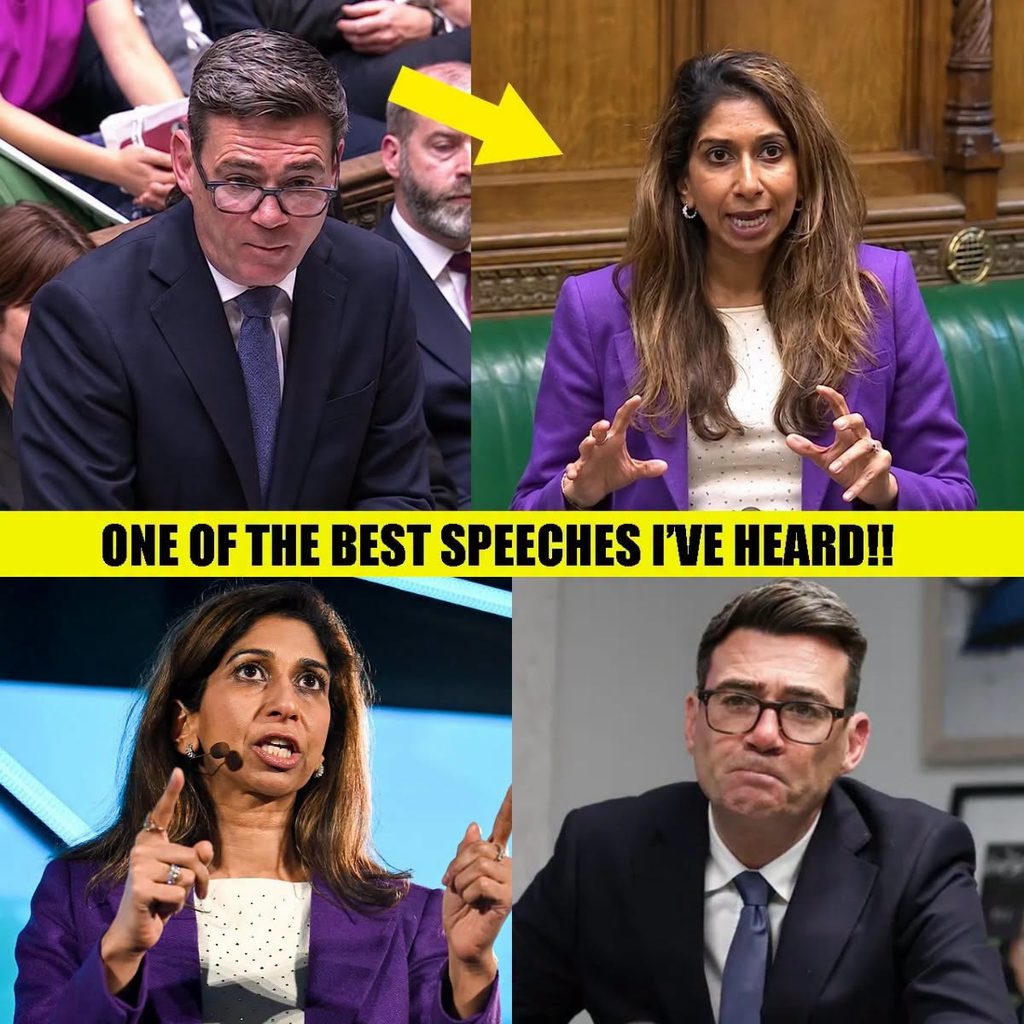
The Reform UK MP delivered a strongly worded intervention in Parliament over plans to house asylum seekers near a small Oxfordshire village, citing local concerns, crime data and the need for radical change.
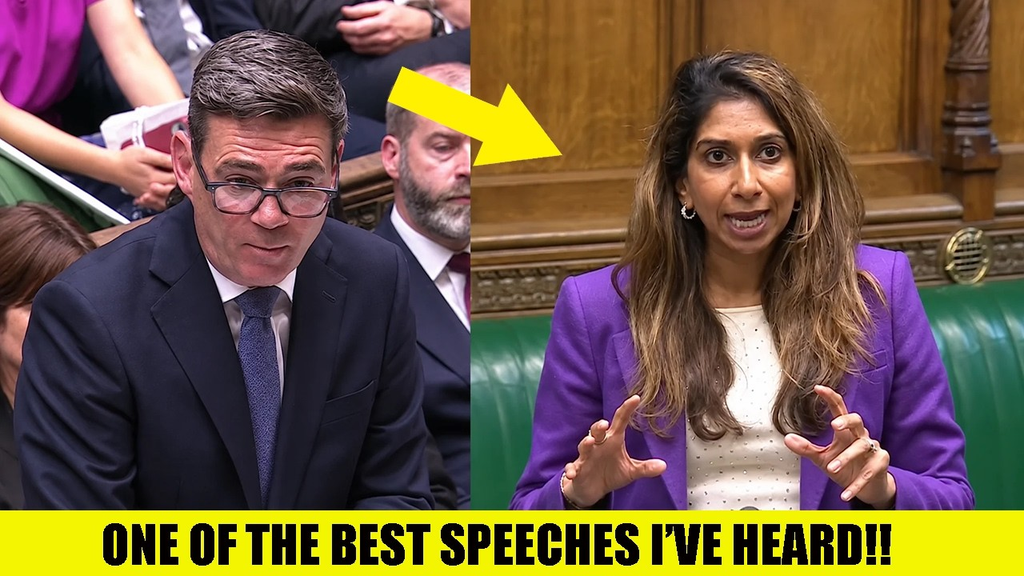
Suella Braverman, now sitting as a Reform UK MP, used a recent Commons debate to criticise government plans to accommodate asylum seekers at a former Ministry of Defence site near Piddington.
The small Oxfordshire village, with a population of around 350, faces the prospect of a facility that could house up to 1,250 people, predominantly men.
Local residents have organised protests, petitions and a symbolic non-binding referendum in which a large majority voted to “leave the UK” in opposition to the scheme.
Braverman told the House she had visited Piddington and met residents, many of them elderly women, parents and widows.
She described them as scared and angry, and said they felt ignored by government.
She noted the absence of female Labour backbenchers in the debate and argued that the concerns of women and girls in affected communities were not being taken seriously.
Similar objections, she said, had previously been raised in Waterlooville, Gosport and Portsmouth.
Crime statistics and public safety
Central to her argument was the claim that certain nationalities among recent arrivals are disproportionately represented in sexual offence convictions.
She stated that Afghan and Eritrean migrant men are many times more likely to be convicted of sex crimes than British-born men, and that a significant share of sexual assaults in London over recent years involved foreign-born offenders.
These figures draw on Ministry of Justice and police data that show elevated rates for some nationalities.
Independent analysis has confirmed over-representation for certain groups, though the precise multiples depend on population estimates and have been subject to debate.
Braverman presented the data as evidence that local fears are not irrational.
She linked the housing of large numbers of single male asylum seekers in rural or residential areas to wider failures of the asylum system.

Braverman directed sharp criticism at both the current Labour government and her former Conservative colleagues.
She said the last Conservative administration had refused to take the steps required to stop the boats, including leaving the ECHR, and that she had been isolated and criticised within her own party for advocating that course.
She rejected any lectures from Conservatives on the issue and insisted that only Reform UK was prepared to suspend the asylum system, void existing grants where appropriate, deport those with no right to remain, and deploy the Royal Navy in the Channel.
The government position is that hotel use for asylum seekers is being reduced through larger alternative sites, including former military facilities, and that removals of foreign national offenders have increased.
Small-boat arrivals in 2026 are significantly lower than at the same point in 2025, though absolute numbers remain substantial.
Ministers argue that legal obligations and practical constraints limit the speed of change, and that community impact is assessed as part of site selection.
A polarising intervention

Braverman’s speech reflects the sharpened tone of the immigration debate.
On one side are communities facing large-scale asylum accommodation and politicians who argue that public safety, women’s concerns and border control have been subordinated to legal and procedural constraints.
On the other are those who warn that collective language about nationalities, rapid suspension of asylum processing, and withdrawal from human-rights conventions risk damaging Britain’s international standing and the rule of law.
The Piddington proposal remains subject to planning, environmental assessments and local opposition.
Whether Braverman’s call for leaving the ECHR, suspending the asylum system and mass deportations becomes government policy will depend on the outcome of the next general election and the parliamentary arithmetic that follows.
For now her intervention has placed the safety concerns of a small village, and the wider arguments about crime data and legal constraints, firmly on the parliamentary record.
Reform MP Unleashes in Parliament — Labour Faces a Fiery Backlash!
A heated parliamentary confrontation involving Reform UK and the Labour government has once again highlighted the deep divisions shaping British politics. With immigration, public spending, living costs and confidence in government continuing to dominate political debate, exchanges between opposition MPs and ministers are becoming an important test of how effectively the government can defend its policies.
The headline suggests that a Reform UK MP delivered a forceful challenge to Labour in Parliament, provoking a wider backlash. The exact speech and circumstances would need to be verified before attributing specific remarks to an individual MP. Nevertheless, the political tensions behind such a confrontation reflect a broader struggle over the direction of the country and the priorities voters expect their representatives to address.
For Reform UK, parliamentary debates provide an opportunity to challenge the government and present itself as an alternative to the established parties. For Labour, the task is to explain its decisions, defend its record and demonstrate that its policies are producing practical improvements for households across Britain.
Reform UK Turns Up the Pressure
Reform UK has built much of its political appeal around criticism of established political leadership, particularly on immigration, taxation, public services and the perceived distance between Westminster and ordinary voters.
A forceful intervention in Parliament can give the party an opportunity to bring those concerns into the national conversation. By challenging ministers directly, Reform MPs can demand explanations about policy decisions and highlight areas where they believe the government has failed to deliver its promises.
However, a dramatic speech is only the beginning of political scrutiny. The strength of an argument ultimately depends on the evidence presented, the accuracy of its claims and whether the proposed alternatives could work in practice.
Questions about public expenditure, for example, require more than criticism of government spending. They also require an explanation of which programmes should change, how much could realistically be saved and what consequences those changes might have for public services.
The same applies to immigration. Demanding tighter controls is a political position, but implementing changes involves legal requirements, administrative capacity, international cooperation and practical enforcement.
Reform UK’s challenge is to demonstrate how its proposals would operate beyond the parliamentary chamber.
Labour Faces Difficult Questions
For the Labour government, confrontational parliamentary exchanges come amid competing demands on the public finances and pressure to demonstrate progress on its policy commitments.
Households continue to pay close attention to the cost of food, housing, energy and transport. Workers want to know whether their incomes can keep pace with everyday expenses, while pensioners and families are concerned about the affordability and reliability of public services.
These pressures can make government announcements particularly contentious. A policy that ministers describe as necessary or financially responsible may be viewed differently by people who believe they are bearing an unfair share of the costs.
Opposition MPs can exploit that gap by asking whether government decisions match the promises made to voters. They may question the timing of reforms, the distribution of costs or the evidence supporting ministerial claims.
Labour, in turn, must explain the choices it has made and acknowledge the limits of what it can deliver. Economic pressures cannot always be resolved immediately, but voters are likely to expect clear objectives, measurable progress and honest explanations when policies fall short.
A parliamentary clash can therefore become more significant when it exposes a disagreement about priorities rather than simply producing a memorable exchange.
Immigration Remains a Major Political Flashpoint
Immigration is one of the subjects most likely to generate sharp exchanges between Reform UK and Labour.
Reform has advocated a substantially tougher approach to border control and irregular migration. Labour has also pledged to strengthen enforcement and improve the management of the asylum system, although the parties differ in their proposed methods and political emphasis.
The debate involves several separate issues that are often combined in political rhetoric. These include legal migration, irregular entry, asylum applications, accommodation arrangements and the removal of people who have no legal right to remain in the country.
Each presents different practical and legal questions.
For example, reducing the number of unresolved asylum applications requires an effective process for examining claims. Removing people whose applications have been rejected can involve legal appeals, identification procedures and cooperation with destination countries. Changes to legal migration routes may also affect employers and sectors that depend on overseas workers.
The government must explain how its policies address these challenges, while opposition parties should set out how their own proposals would work and what consequences they might produce.
For the public, the essential questions are whether the system is lawful, efficient, properly managed and transparent about its results.
The Battle Over Public Services and Taxation
Beyond immigration, Labour faces pressure over public services and the tax burden.
The government must balance demands for investment in healthcare, education, transport and local services against the need to manage public borrowing and maintain confidence in the economy. Those decisions involve difficult trade-offs, and disagreement over the correct balance is a normal part of parliamentary politics.
Reform UK may use these disagreements to argue that government priorities are misplaced or that existing institutions need substantial reform. Labour can respond by explaining the financial constraints it faces and setting out how its spending decisions are intended to improve services.
Neither side can settle the argument through slogans alone.
If an opposition MP claims that a particular policy wastes public money, the relevant evidence includes the programme’s cost, its objectives, its measurable results and the realistic alternatives. If ministers argue that spending is necessary, they should explain the expected benefits and how success will be evaluated.
Tax proposals also need detailed examination. Lower taxes may leave households with more disposable income, but the effects depend on how the reductions are funded and which services or spending commitments might be affected.
Likewise, increased public investment can support services and economic activity, but it must be assessed against its costs and expected returns.
The central issue is not simply which party delivers the sharpest criticism. It is which proposals stand up to scrutiny.
Can Parliament Restore Public Confidence?
Political confrontations often attract attention because they offer a clear contrast between competing positions. They can make complex policy questions easier to understand, particularly when an MP identifies a specific decision and demands an answer from a minister.
But constant confrontation can also obscure the detail voters need.
A forceful speech may raise an important issue without proving every allegation made during the debate. Equally, a ministerial response may defend a policy without resolving the underlying concerns.
Parliament’s role is to examine those claims through questioning, debate, committee scrutiny and the legislative process. Opposition MPs should be able to challenge the government robustly, while ministers should be expected to respond with relevant information.
The public also benefits when politicians acknowledge uncertainty and explain the limits of their proposals. Problems such as economic stagnation, pressure on housing and delays in public services rarely have simple solutions.
A credible political argument should identify the problem, explain the evidence and show how the proposed response could improve the situation.
What the Confrontation Means for Labour and Reform UK
The political significance of the reported confrontation will depend on what was actually said, the issues raised and whether the exchange led to substantive answers or further scrutiny.
For Reform UK, such moments can help establish its identity in Parliament and draw attention to the policies on which it wants to challenge the government. The party must also demonstrate that it can translate criticism into detailed, workable proposals.
For Labour, the incident underlines the importance of communicating its decisions clearly and responding directly to concerns. Avoiding difficult questions can leave space for opponents to define the debate, while vague answers may deepen public frustration.
Both parties must also recognise that voters are not a single, unified audience. Some prioritise immigration and border enforcement; others focus on wages, healthcare, housing, pensions or the wider economy. Many want progress on several of these issues at once.
That makes political accountability more complicated than a single parliamentary exchange might suggest.
Ultimately, the confrontation represents a wider contest over policy, trust and political responsibility. Reform UK is seeking to challenge Labour’s record, while the government must demonstrate that its decisions can withstand criticism and deliver tangible results.
The decisive questions will be whether the claims made in Parliament are supported by evidence, whether the proposed alternatives are realistic and whether the government can show measurable progress on the issues affecting people’s daily lives. A fiery exchange may capture the headlines, but the answers that follow will matter far more.