
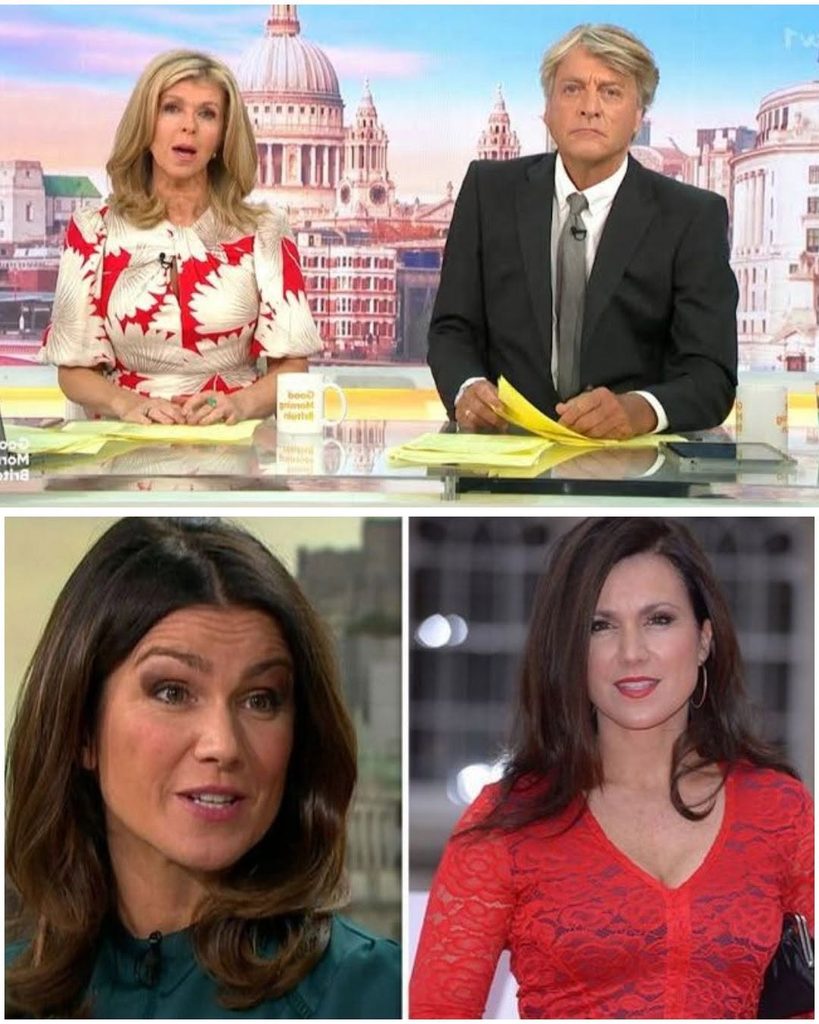
Good Morning Britain presenters Susanna Reid and Richard Madeley were left facing an awkward moment on live television after persistent sound problems disrupted their interview with Energy Secretary Miatta Fahnbulleh, prompting both hosts to apologise.
The ITV breakfast programme encountered unexpected difficulties during Wednesday’s broadcast, October 21, as the presenters attempted to question the Labour politician about a major government decision involving North Sea gas production.

Fahnbulleh was speaking from Aberdeen following the approval of drilling at the Jackdaw gas field, situated approximately 150 miles east of the Scottish city.
The subject was expected to generate a challenging political discussion, particularly given the ongoing debate surrounding Britain’s energy security, environmental commitments and continued reliance on fossil fuels.
However, technical difficulties repeatedly interfered with the conversation, making it harder for the presenters to conduct the interview as intended.
As the segment drew to a close, Susanna acknowledged that the sound problems had prevented the programme from questioning the minister in its usual manner.
She apologised for the disruption and explained that the show would ordinarily challenge a government representative more forcefully.
The presenter also made light of the situation, joking that viewers might have appreciated the unusual lack of interruptions.
Richard then offered his own apology, acknowledging that the communication problems had originated on ITV’s side.
Despite the disruption, Fahnbulleh managed to outline the government’s position on energy policy and the decision to proceed with the gas development.
She defended the importance of investing in renewable energy and nuclear power while arguing that Britain would still require gas during the transition towards cleaner energy sources.
The minister also highlighted the government’s commitment to addressing climate change, pointing to the consequences of extreme weather and the need to protect communities and livelihoods.
Her remarks came against a backdrop of political disagreement over whether expanding domestic gas production can be reconciled with Britain’s environmental ambitions.
For the presenters, however, the immediate challenge was ensuring the interview concluded professionally despite the technical setbacks.
Live television is no stranger to unexpected complications, but problems during a high-profile political interview can prove particularly frustrating when important questions are at stake.
Rather than allowing the segment to end without explanation, both Reid and Madeley publicly acknowledged the difficulties and apologised to their guest.
The incident offered viewers an unusual glimpse of the challenges involved in live broadcasting, where even experienced presenters must sometimes adapt when technology fails.
And while the discussion about North Sea drilling remains politically significant, it was the unexpected on-air apology that became one of the morning’s talking points.
“WE APOLOGISE!” Good Morning Britain Hosts Susanna Reid and Richard Madeley Forced Into Awkward On-Air Apology After Interview Goes Wrong!
A tense television interview can quickly become one of the most talked-about moments of a live broadcast, particularly when presenters are forced to address an unexpected problem in front of millions of viewers. A reported on-air apology involving Good Morning Britain hosts Susanna Reid and Richard Madeley has prompted renewed interest in the pressures of live television and the responsibilities that come with interviewing guests on national television.
The headline suggests that an interview took an unexpected turn, leaving the presenters facing an awkward moment and questions about how the exchange was handled. However, without verified details identifying the guest, the subject of the interview and the precise words exchanged, the circumstances surrounding the reported apology should be treated cautiously.
Nevertheless, the scenario highlights a familiar challenge for breakfast television: maintaining a lively discussion while ensuring that questions, comments and reactions remain fair, accurate and proportionate.
Why Live Television Can Become Unpredictable
Good Morning Britain has established itself as a prominent part of the UK’s breakfast television landscape, combining news, interviews, political debate and discussions about issues affecting everyday life.
The programme regularly brings together politicians, public figures, campaigners and commentators with sharply differing views. These conversations can become heated when the subject involves immigration, public spending, healthcare, taxation or controversial government decisions.
Unlike a pre-recorded interview, a live broadcast offers little opportunity to remove an awkward exchange before it reaches the audience. Presenters must react immediately when a guest challenges a question, disputes a statement or raises an unexpected allegation.
That pressure can create compelling television, but it also increases the possibility of misunderstandings. A question may be interpreted differently from how it was intended, a guest may object to the framing of an issue, or a presenter may need to clarify a statement made moments earlier.
In these circumstances, an apology can serve an important purpose. It may acknowledge an error, correct inaccurate information or recognise that a comment was expressed in a way that caused unnecessary offence.
The significance of an apology, however, depends on what happened and why it was offered.
Susanna Reid and Richard Madeley Under the Spotlight
Susanna Reid and Richard Madeley are familiar faces to British television audiences, and their presenting styles have helped make Good Morning Britain a forum for interviews and lively exchanges.
Reid is known for her direct interviewing approach, while Madeley has frequently participated in conversations covering politics, social affairs and current events. Presenting a programme with a broad audience requires balancing challenging questions with the need to give interviewees a fair opportunity to explain their positions.
When an interview becomes controversial, viewers may disagree sharply about the presenters’ conduct. Some may believe that a guest was challenged appropriately, while others may feel that a question was unfairly framed or that an important point was overlooked.
These disagreements are particularly common when a programme discusses politically sensitive subjects. Audiences often approach such discussions with different expectations about what constitutes impartiality, accountability and respectful questioning.
It would therefore be premature to conclude that either presenter acted improperly based on a headline alone. The full exchange, the context of the discussion and the wording of any apology would all be needed to assess what occurred.
What Can Force a Presenter to Apologise?
There are several reasons why television presenters might apologise during a live programme.
One possibility is a factual mistake. If a presenter quotes an incorrect figure, misidentifies a person or misrepresents a previous statement, correcting the record promptly can help prevent confusion.
Another possibility involves the wording of a question or comment. Interviews sometimes become uncomfortable when a guest believes that a remark has been unfair, personally insulting or based on an inaccurate assumption. A presenter may then clarify their intention or acknowledge that the wording could have been better.
An apology might also follow a technical or editorial problem. Live television depends on coordination between presenters, producers, reporters and guests. Miscommunication can occur, and the programme may need to explain what went wrong.
These situations are not equivalent. Correcting a factual error is different from apologising for causing offence, and neither automatically means that the overall interview was inappropriate.
The public deserves to know which circumstances applied before drawing conclusions about the presenters or the programme.
The Pressure to Deliver Television That Attracts Attention
Breakfast television operates in a competitive media environment. Programmes need to keep viewers engaged while covering a wide range of subjects within a limited broadcast schedule.
Strong questions, contrasting opinions and unexpected reactions can make interviews more compelling. However, the desire to produce memorable television can create tension between entertainment and responsible journalism.
An interview that becomes confrontational may attract immediate attention on social media. Short clips can circulate rapidly, often detached from the discussion that preceded them. A few seconds of disagreement may then become the basis for sweeping claims about a presenter’s behaviour or a guest’s reaction.
This can make it difficult for viewers to understand the full story. A clip might omit an earlier clarification, an explanation offered after the exchange or the precise question that prompted a response.
For that reason, audiences should be cautious about judging an entire interview from a brief excerpt. The complete broadcast, where available, offers a more reliable basis for understanding the exchange.
The Importance of Accuracy and Accountability
Television presenters have a responsibility to ask challenging questions while representing information accurately. Guests should also be expected to respond honestly and support their claims with evidence where appropriate.
When mistakes occur, transparency matters. A clear correction or apology can demonstrate that a programme takes its responsibilities seriously. Conversely, an unclear explanation may leave viewers uncertain about what was wrong and whether the issue has been properly addressed.
An effective apology should identify the problem, acknowledge the relevant mistake or concern and explain any correction that is necessary. It does not need to become a prolonged confrontation, but it should be sufficiently clear to prevent the original error from continuing to circulate.
There is also a distinction between acknowledging an error and conceding an entire argument. A presenter can apologise for inaccurate wording while continuing to question a guest’s claims. Similarly, a guest can object to a question without automatically proving that the interviewer was wrong.
Maintaining these distinctions is essential to meaningful public debate.
How Viewers Should Assess the Controversy
If the reported incident involved a genuine on-air apology, several questions would help establish its significance.
What was the interview about? What did the guest say or challenge? Did the presenters correct a factual error, apologise for the wording of a question or address a different issue? And did the programme provide further clarification after the broadcast?
Answers to these questions would make it possible to assess the incident fairly rather than relying on dramatic descriptions alone.
It is equally important to establish whether the apology was delivered by both presenters or by one of them, and whether it was directed at the interviewee, viewers or another person involved in the programme. Those details can change the meaning of the incident considerably.
Until the full circumstances are confirmed, claims that the hosts were forced to apologise should not be treated as proof of misconduct or a major broadcasting failure.
A Reminder of the Challenges of Live Broadcasting
The reported controversy surrounding Susanna Reid, Richard Madeley and Good Morning Britain illustrates why live interviews can be difficult to manage. Presenters must react quickly, challenge claims where necessary and maintain a conversation that viewers can follow.
When an exchange goes wrong, the response can become almost as important as the interview itself. A timely clarification may resolve the issue, while an inadequate explanation can prolong disagreement and invite further scrutiny.
For broadcasters, the priority should be accuracy, fairness and transparency rather than simply generating headlines. For viewers, the best approach is to examine the full context before deciding what an apology means.
The exact details of the reported incident remain essential to understanding what happened. Until those details are established, the headline should be treated as a description of an alleged television controversy rather than a complete account of the event.
Ultimately, live television will always contain moments of uncertainty. What matters most is how presenters respond when something goes wrong, whether corrections are made openly and whether audiences receive the information needed to judge the exchange for themselves.