
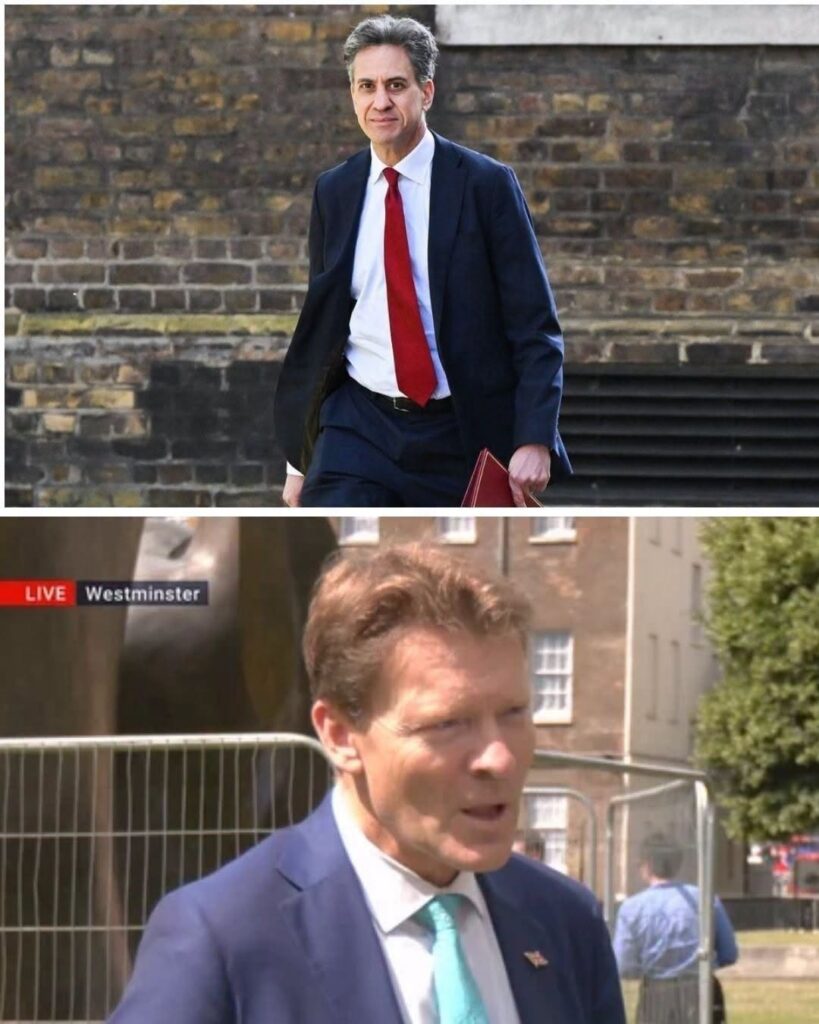
The successful applicant, who would serve as chairman of Great British Energy (GBE), which is sponsored by the Department for Energy Security and Net Zero, would earn £1,100 per day for working just two days per week. The total remuneration would amount to £114,400 per year, almost three times the amount the average worker in the UK earns, which is £39,000.
Responding to the job advert, Shadow Secretary of State for Energy Security and Net Zero Claire Coutinho said: “Ed Miliband said Great British Energy was supposed to lead to a ‘mind-blowing’ reduction in energy bills. Yet it hasn’t taken a penny off bills and all it’s done is put solar panels made with Chinese slave labour on British primary schools.
“Spending hundreds of thousands of pounds of taxpayers’ money on another chairman is a scandalous waste of money.”
Ms Coutinho added: “The Conservatives would scrap Great British Energy and use the savings to take taxes and levies off everyone’s energy bills instead.”
Reform UK deputy leader Richard Tice also criticised the government for “destroying skilled jobs and businesses”, voicing concerns that Great British Energy is nothing more than a “golden gravy train”.
He told the People’s Channel: “GB Energy is a golden gravy train for the few. Its mission is to destroy skilled jobs and businesses, mainly in the oil and gas sector, which help lower bills and create growth.
“It is the worst of quangos, and Reform will scrap it.”
Great British Energy (GBE), sponsored by the Department for Energy Security and Net Zero, was formed in 2025 and promised to supply cleaner and more secure energy for Great Britain.
The quango has made ambitious promises to support the rebuilding of Britain’s industrial capacity, providing highly skilled, well-paid jobs that support the economy.
In response, William Yarwood, campaigns director at the TaxPayers’ Alliance, said: “This is an obscene pay packet for a quangocrat that taxpayers will be forced to pick up the tab for.
“Ministers promised Great British Energy would bring down household bills, but so far it seems more effective at generating bumper pay packets for the quangocrat class.”
Mr Yarwood added: “Ministers must scrap this gravy train and consign this quango to the dustbin of history, where it belongs.”
The energy price cap for the third quarter (July to September) has now been set by energy regulator Ofgem at £1,862 for the average consumer, an amount the new Great British Energy chairman could earn in less than two days on the job.
Cornwall Insight advises that the energy price cap is reviewed every three months, taking into account both wholesale and non-wholesale energy costs.
GB News has approached Great British Energy for comment.
Labour Faces Fury Over £458,000 Energy Chief Pay Packet for Just Two Days a Week
Labour is facing renewed questions over public spending and executive pay after reports that an energy-sector chief receives a £458,000 annual remuneration package while working just two days a week. The figure has fuelled debate about fairness, accountability and whether senior figures connected to essential services are being paid appropriately at a time when millions of British households remain concerned about their energy bills.
The controversy raises questions that extend beyond one individual’s salary. Energy is central to everyday life, affecting household budgets, businesses and the wider economy. When families are struggling with the cost of heating their homes, reports of a substantial executive pay package can quickly become a political issue.
For Labour, the challenge is to demonstrate that its approach to energy policy is fair, transparent and focused on the public interest. However, the precise circumstances behind the reported £458,000 package, including the individual’s responsibilities and the organisation’s ownership structure, need to be established before firm conclusions can be drawn.
Why the Reported Pay Package Has Caused Concern
A salary or remuneration package approaching half a million pounds a year is likely to attract attention, particularly when reports suggest the role involves only two working days each week.
For people on ordinary salaries, the comparison can appear stark. Many workers spend five days a week earning a fraction of that amount, while pensioners and low-income households may be forced to make difficult choices about heating, food and other essentials.
The contrast is especially sensitive in the energy sector. Electricity and gas are not optional luxuries for most households. They are essential services, and the prices consumers pay can influence living standards, business costs and inflation across the economy.
Critics may therefore ask whether a remuneration package of this size is justified by the demands of the role. They may also question whether the reported working arrangement accurately reflects the person’s total responsibilities, contractual commitments and availability outside scheduled working days.
However, working two days a week does not necessarily mean that a senior executive performs only two days’ worth of duties. Some positions involve part-time appointments, board responsibilities, specialist oversight or work spread across several organisations. The relevant details matter when assessing whether the remuneration is reasonable.
Labour Under Pressure Over Energy Costs
The issue presents a political challenge for Labour because energy affordability remains an important concern for households and businesses.
Consumers have faced considerable uncertainty over energy costs in recent years. International fuel markets, geopolitical developments, infrastructure constraints, wholesale prices and domestic policy decisions can all influence what households ultimately pay.
The government does not directly determine every component of an energy bill. Suppliers, regulators, network operators and market conditions also play important roles. Nevertheless, ministers are judged on whether their policies help make energy more affordable, secure and reliable.
Against that background, a reported executive pay package can become a symbol of wider frustration. People may question why large sums are available for senior remuneration while households are being encouraged to reduce consumption or seek support with essential bills.
The political difficulty is that public anger about an individual salary does not, by itself, establish that government policy caused the payment or that public money funded it. Those questions depend on the employer, the source of the funds and the contractual arrangements involved.
A clear explanation of those details would help distinguish legitimate concerns about accountability from assumptions based solely on the headline figure.
Is the Remuneration Justified?
Executive pay is often defended on the grounds that senior leaders carry significant responsibility. Energy organisations may oversee complex infrastructure, manage substantial financial risks, comply with strict regulations and make decisions affecting millions of customers.
In some circumstances, experienced leadership can be important to maintaining reliable services and managing major investment programmes. Organisations may argue that specialist expertise commands high remuneration, particularly when the role involves substantial legal, financial or operational responsibility.
But that argument does not automatically justify every package. The public has a legitimate interest in understanding how senior pay is determined, what performance standards apply and whether remuneration reflects the work actually performed.
A useful assessment would examine several factors: the executive’s precise duties, the organisation’s size, the terms of the appointment, the level of responsibility, the performance criteria and the remuneration offered for comparable roles.
It would also be important to establish whether the £458,000 figure represents basic salary alone or includes bonuses, pension contributions, benefits and other payments. Those categories can make a substantial difference to how a headline figure should be interpreted.
If the position genuinely involves a limited number of working days, the employer should be able to explain why the arrangement is structured that way and how the total package was calculated.
The Importance of Transparency
Transparency is central to maintaining public confidence, particularly where an organisation performs an essential public function or receives government funding.
People should be able to determine who approved a senior remuneration package, what responsibilities the position carries and whether the payment comes from public funds, customer revenue or another source.
The distinction is significant. A salary paid by a privately owned company is not automatically a direct cost to taxpayers, although it may still raise questions about corporate governance, customer interests or the use of revenue. Where public money is involved, questions about value for money and accountability become even more immediate.
Published accounts, remuneration reports and clear explanations from the organisation can help establish the facts. If the package includes performance-related payments, the criteria should be sufficiently clear for stakeholders to understand how those payments were earned.
Labour ministers may also face questions about what oversight they have, if any, over the organisation concerned. The answer will depend on its legal status, ownership and regulatory framework. It would be misleading to assume that ministers personally set or approved the pay without evidence.
Household Bills and Executive Salaries
For many families, the most immediate concern is not the internal pay structure of an energy organisation but the amount they must pay to keep their homes warm and powered.
Energy bills affect people differently depending on income, household size, property insulation and heating requirements. A rise in costs can place disproportionate pressure on people who have little flexibility to reduce their consumption.
That is why stories about high remuneration can provoke such strong reactions. They create a visible contrast between senior pay and the financial pressures experienced by ordinary customers.
However, executive salaries and household energy prices are not necessarily linked directly. Reducing one executive’s remuneration would not automatically produce a meaningful reduction in bills across the country. Any claim about potential savings would need to be supported by figures showing the organisation’s overall costs and how those costs affect customers.
The broader question is whether energy organisations are delivering reliable services, managing costs effectively and treating consumers fairly. Executive pay is one part of that assessment, but it is not the only one.
What Labour Needs to Explain
If the reported package is accurate, the government may face pressure to clarify the nature of the appointment and the extent of any public-sector involvement.
A credible explanation would establish the individual’s role, working arrangements, total remuneration and the process used to approve the package. It would also explain whether ministers have authority over the appointment or whether responsibility rests with an independent board or private employer.
Labour would also need to demonstrate how its wider energy policies address affordability and long-term security. That includes explaining the relationship between investment, infrastructure costs, regulation and the prices paid by consumers.
Critics will likely continue to use the reported figure to question the government’s commitment to fairness. Supporters may argue that the salary should be judged according to the responsibilities and requirements of the role rather than the number of scheduled working days alone.
Both arguments ultimately depend on the underlying facts.
A Wider Debate About Fairness and Accountability
The reported £458,000 remuneration package has the potential to become part of a broader discussion about the relationship between executive rewards and public expectations.
High salaries are not automatically evidence of wrongdoing, and a two-day working arrangement does not reveal the full extent of an executive’s responsibilities. Equally, organisations should not expect the public to accept substantial pay packages without a convincing explanation of the work, performance and governance behind them.
For Labour, the political sensitivity is clear: households want to see progress on energy affordability while also expecting transparency from organisations connected to essential services.
The key questions are straightforward. Is the reported figure accurate? What does the package include? Who pays for it? What responsibilities does the role involve? And what evidence supports the remuneration decision?
Until those questions are answered, the headline alone cannot establish whether the arrangement represents fair compensation or poor value for money.
What it does demonstrate is the importance of public trust. When energy costs remain a major concern, clear explanations of senior pay and effective policies for consumers are essential. The debate should ultimately focus on verifiable facts, responsible oversight and whether the organisations at the heart of Britain’s energy system are serving their customers effectively.