

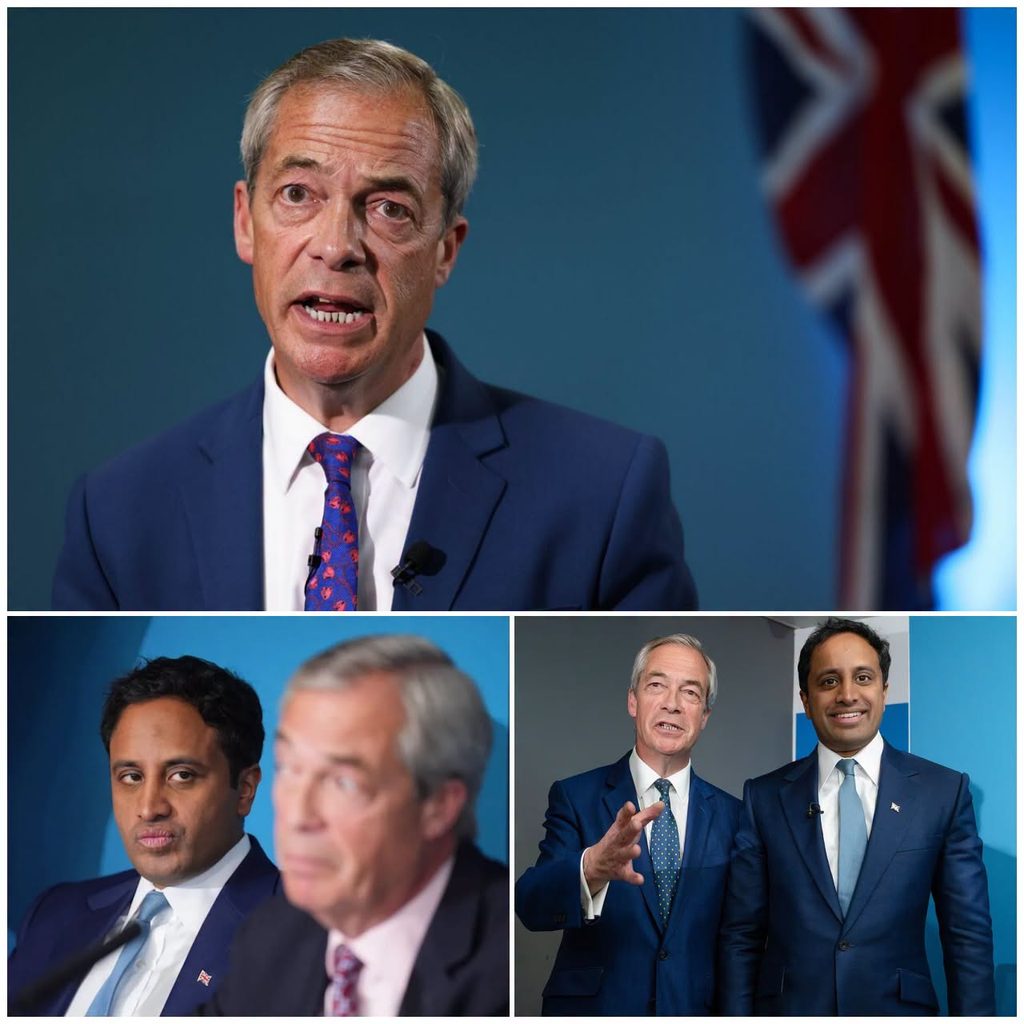
Reform UK has reported ITV to the police following an undercover investigation by the broadcaster.
Reform’s home affairs spokesman Zia Yusuf said the party would also launch a legal challenge against the multiple ITV journalists and the broadcaster’s board of directors.
The expose by ITV revealed racist remarks by members of the party.
In a video posted on X, Mr Yusuf said Reform was now reporting individual journalists to the police, as it believes they have breached fraud and election law in the course of making the documentary.
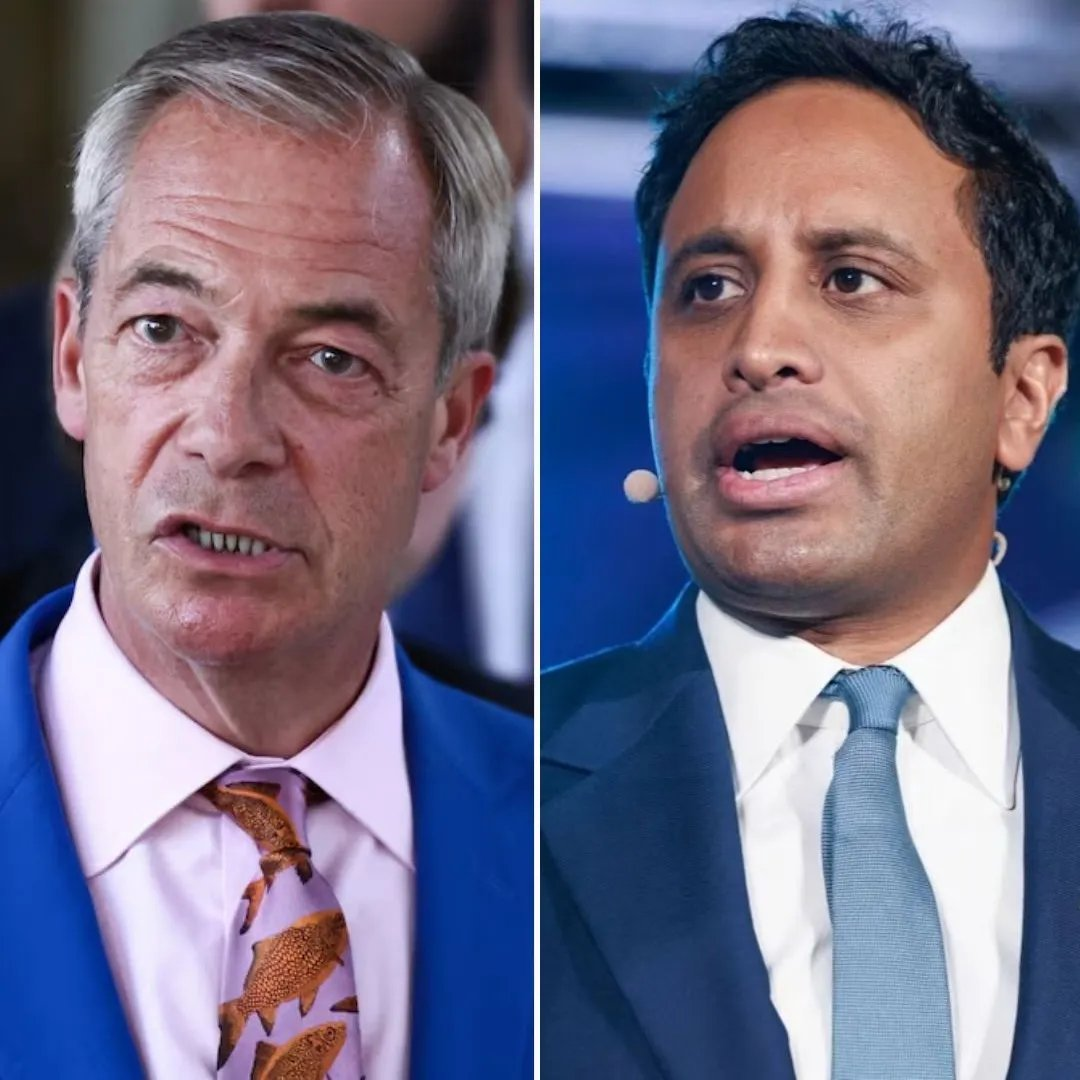
He said: “We have reported multiple ITV journalists and their board of directors to the police, and will be taking legal action against all of them.
“Journalists are supposed to report the news. These ones set out to create it.”
Mr Yusuf claimed that the undercover ITV reporter who became employed as a Reform press officer had “doctored” her passport to gain the job.
He also said two undercover reporters who joined Reform members campaigning in Portsmouth had been reported to the police, as it is illegal to pay someone to canvass for a candidate.
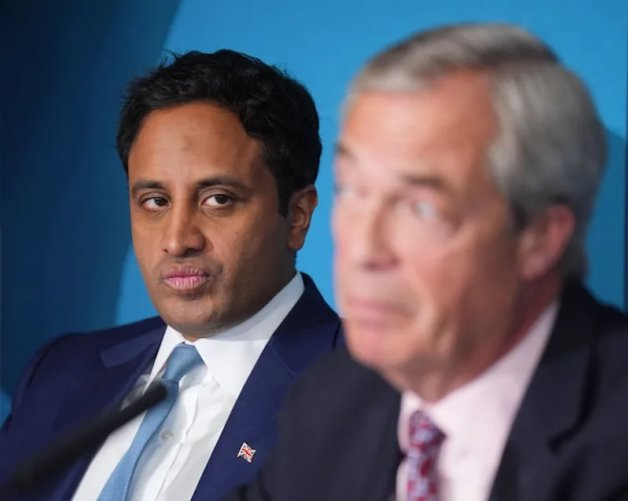
Reform has also reported ITV’s board to the police as the organisation that paid the two reporters, he said, adding that the party would bring “civil proceedings” against them, too.
He said: “We will pursue this through the courts relentlessly.
I want to be frank about why we feel so strongly: Many Reform staff members and volunteers were psychologically manipulated and damaged by ITV’s undercover reporters.”
Mr Yusuf later claimed ITV had engaged in “a form of psychological warfare”.
He added: “It was designed to demoralise, to inject paranoia into our volunteers, our activists, and our employees, and to make ordinary people afraid to take part in politics.”
It was unclear which police force, or forces, Reform made the report to.
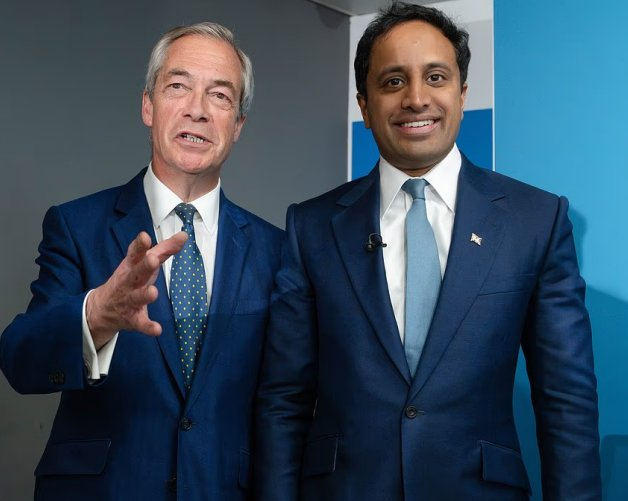
An ITV spokesperson said: “ITV stands by its journalism.
The programme Undercover: A Year In Reform was produced in compliance with the Ofcom Broadcasting Code, relevant laws, and its broadcast is in the public interest.
All journalists were instructed to operate within this framework and did so under the supervision of the programme’s producers.
Should the police get in touch we would fully cooperate.”
Farage Takes Aim at ITV: Reform UK and Broadcaster Face Growing Political Row
A fresh political confrontation involving Nigel Farage, Reform UK and ITV has brought renewed attention to the increasingly tense relationship between Britain’s political parties and the broadcasters responsible for scrutinising them. Against a backdrop of disputes over media coverage, policing and political accountability, the controversy raises important questions about impartiality, freedom of expression and the role of television news in a democracy.
The dramatic claims surrounding the dispute suggest a widening clash between Reform UK and one of Britain’s best-known broadcasters. However, the precise details of any police complaint, referral or investigation must be established before conclusions can be drawn about the actions of either party. A political allegation, a formal complaint and a police investigation are different things, and the distinction matters when assessing what has actually happened.
For Farage, who has built much of his political profile through direct communication with voters and frequent media appearances, disputes involving broadcasters can quickly become part of a wider argument about how his party is represented. For ITV, the challenge is to demonstrate that its reporting meets the standards expected of a major television news organisation while continuing to scrutinise political figures and parties.
The episode reflects a broader question facing British politics: how should disagreements between political movements and media organisations be handled when accusations become public and the stakes appear increasingly high?
Farage’s Long-Running Relationship With the Media
Nigel Farage has spent decades at the centre of Britain’s political debate, from his role in the campaign for Brexit to his leadership of Reform UK. His political style frequently involves challenging established parties and institutions, presenting himself as a critic of what he describes as the political establishment.
Television coverage has played a significant role in the development of his public profile. Interviews, debates and panel discussions provide opportunities for politicians to explain their policies, challenge opponents and reach audiences beyond their immediate supporters.
However, these appearances can also become contentious when politicians believe that questions are unfair, their remarks have been taken out of context or their positions have not received adequate scrutiny.
Such disagreements are not unique to Farage or Reform UK. Politicians from across the political spectrum have criticised broadcasters over interview questions, editorial decisions and the amount of coverage devoted to particular issues.
The important question is whether a dispute can be resolved through evidence, established complaints procedures and transparent explanations rather than escalating into an exchange of accusations.
If Reform UK believes that ITV has acted improperly, the nature of the alleged conduct matters. A disagreement over political framing is different from an allegation of factual inaccuracy, while claims involving unlawful behaviour require a separate evidential assessment.
Without verified details, it would be premature to conclude that ITV has broken the law or that any particular individual has committed an offence.
Why ITV’s Role Matters
ITV is one of Britain’s major television broadcasters, with a substantial presence in national news and current affairs. Its reporting reaches audiences with different political views, making questions about accuracy and impartiality particularly important.
In the United Kingdom, television news providers operate within a regulatory framework that includes requirements relating to due accuracy and due impartiality. Ofcom oversees relevant broadcasting standards, while broadcasters also maintain their own editorial procedures and complaints processes.
These rules do not require every programme to give every political argument identical treatment in every individual segment. Instead, the applicable requirements depend on the programme, the subject and the circumstances, including the need for due impartiality where relevant.
Political parties are entitled to challenge reporting they believe is inaccurate or unfair. They can seek corrections, submit complaints and present evidence supporting their objections.
Broadcasters, meanwhile, must retain the ability to report critically on political organisations and public figures. Investigative journalism and challenging interviews are important parts of democratic accountability.
The balance lies in distinguishing legitimate scrutiny from demonstrable breaches of editorial standards. A forceful interview is not automatically evidence of bias, just as a broadcaster’s reputation does not mean that every editorial decision is beyond criticism.
If the latest dispute involves a specific ITV report or programme, the most useful starting point would be to examine the original material, the precise complaint and any response issued by the broadcaster.
The Police Dimension: What Is Actually Being Alleged?
The suggestion that Reform UK has drawn ITV into a police-related controversy adds another layer to the story. Police involvement can attract considerable public attention, particularly when a dispute concerns political speech, public figures or allegations of misconduct.
Nevertheless, it is essential to establish what the police have actually been asked to do.
A party may report an incident, submit information to authorities or ask whether conduct warrants investigation. Such an action does not establish that a crime has occurred, and it does not necessarily mean that police have opened a formal investigation.
Similarly, an investigation does not itself establish guilt. Police must assess available evidence, follow the relevant legal procedures and determine whether further action is justified.
The nature of the alleged conduct is therefore crucial. If the dispute concerns an editorial decision, the broadcaster’s complaints process or the relevant regulatory framework may be more directly applicable. If it involves a separate allegation of unlawful conduct, that allegation would need to be assessed on its own facts.
Without a confirmed statement from Reform UK, ITV or the relevant police force, the details should not be presented as established fact.
This distinction is particularly important in politically charged stories, where the language used in headlines can make a developing disagreement sound more conclusive than the available evidence supports.
Reform UK’s Challenge to Established Institutions
Reform UK has positioned itself as a challenger to Britain’s established political parties, emphasising issues such as immigration, national sovereignty, taxation and dissatisfaction with existing political institutions.
That positioning can bring the party into conflict with institutions it believes are not responding adequately to public concerns. Media organisations can become part of this argument when their reporting challenges the party’s claims or when its representatives believe their positions are being misrepresented.
Supporters of Reform UK may interpret a confrontation with a broadcaster as evidence that the party is challenging established power structures. Critics may instead ask whether confrontational rhetoric distracts from detailed discussion of the party’s policies and the evidence behind its allegations.
Neither interpretation should be treated as proof of what happened in a particular case. The relevant facts remain the statements made, the reporting under dispute and any evidence offered by the parties involved.
The same standards should apply to all political organisations. A party’s claim that it has been treated unfairly deserves examination, but it does not automatically establish that the broadcaster acted improperly.
Equally, journalists should not be exempt from scrutiny simply because their work involves questioning politicians.
A democratic system benefits when both political representatives and media organisations can explain their decisions and respond to substantiated criticism.
Freedom of the Press and Political Accountability
The dispute also raises a wider question about the relationship between press freedom and political accountability.
A free press plays an important role in examining the conduct of elected representatives, investigating claims and informing the public about decisions made in their name. Political leaders must be able to face difficult questions without every disagreement becoming a legal confrontation.
At the same time, freedom of the press does not eliminate the responsibility to report accurately. Where a broadcaster makes a factual error, an appropriate correction can help protect public confidence. Where a complaint alleges a serious breach, it should be assessed through the relevant procedures.
Politicians also have responsibilities when responding to media coverage. Public accusations can have consequences for the reputation of journalists, broadcasters and other individuals. Claims should therefore be specific and supported by evidence.
The appropriate response depends on the circumstances. A factual disagreement may be resolved through a correction or clarification. A dispute about editorial standards may require a formal complaint. An allegation of criminal conduct must be considered under the applicable law rather than decided through television arguments or social media reactions.
Keeping these processes distinct helps prevent political disputes from undermining confidence in either journalism or law enforcement.
Why Political Media Rows Attract So Much Attention
Confrontations between prominent politicians and broadcasters can spread quickly because they combine recognisable personalities, competing narratives and questions about institutional trust.
A dramatic phrase or heated exchange can become the focus of online discussion, often travelling further than the underlying report. Supporters and critics may then interpret the same incident in completely different ways.
This creates a challenge for audiences attempting to establish what actually happened. Clips may omit important context, headlines may emphasise conflict, and claims repeated by multiple accounts may still originate from a single unverified allegation.
Readers can approach such stories more carefully by checking the full programme or original statement, identifying the specific conduct being alleged and looking for responses from the organisations involved.
Where police are mentioned, confirmation from the relevant force can help establish whether a report was received or an investigation was opened. Where broadcasting standards are disputed, official regulatory information and the broadcaster’s response may provide additional clarity.
These steps do not require viewers to abandon their political opinions. They simply make it easier to distinguish verified developments from speculation and commentary.
What Happens Next?
The future of the reported dispute will depend on the details of the original disagreement and whether either party pursues a formal process.
If Reform UK has submitted a complaint, the nature of that complaint and any supporting evidence will be central to its assessment. If ITV has issued a response, that statement may clarify whether the broadcaster accepts that an error occurred or disputes the allegations.
If police have been contacted, any subsequent action will depend on the information available and the relevant legal requirements. It would be inappropriate to assume that an investigation exists or predict its outcome without reliable confirmation.
The broader political consequences are also uncertain. The incident may become another point of contention between Reform UK and sections of the media, or it may be resolved through established procedures without further escalation.
What matters most is that the facts are established before conclusions are drawn.
Conclusion
The reported confrontation between Nigel Farage, Reform UK and ITV highlights the continuing tensions between political movements and the broadcasters responsible for holding them to account.
For Reform UK, any allegation of unfair or inaccurate coverage should be assessed on its evidence. For ITV, the dispute underlines the importance of transparent editorial standards, accurate reporting and clear responses to legitimate complaints.
The police dimension requires particular care. A complaint, a request for police attention and a confirmed investigation are distinct developments, none of which should be confused with proof of wrongdoing.
Ultimately, the strength of Britain’s democratic institutions depends on more than winning public arguments. Political parties must substantiate their claims, broadcasters must uphold their professional responsibilities, and law enforcement must act on evidence rather than political pressure.
Whether this dispute develops into a formal regulatory or legal matter remains to be established. Until the details are confirmed, the most important questions concern what was actually said, what evidence supports the allegations and how the parties involved respond through the appropriate channels.