
Navy
His eyes are sunk deep into his face. But he is standing straight, still. His name is Lieutenant General Jonathan Wainwright. And in a few minutes, he is going to watch the Japanese sign their unconditional surrender. Three years earlier, this same man was the one holding the white flag. The newspapers called him the general who lost the Philippines.
The largest surrender of American forces in history. Some people called him a failure. Some called him worse. But here he is. Standing on the deck of the Missouri. Watching Japan fold. How does a man go from the lowest moment in American military history to standing in that spot, on that deck, on that day? That answer begins not on a battleship.
It begins in a jungle on a peninsula called Bataan where 80,000 men were starving, sick, and completely cut off. And one general refused to leave them. To understand what Wainwright faced, you have to understand what December 1941 looked like on the ground in the Philippines. It looked like the end of the world.
Discover more
Travel Guides & Travelogues
Tourist Destinations
Historical Sites & Buildings
Within hours of Pearl Harbor, Japanese bombers hit Clark Field, the main American airbase on the island of Luzon. Most of the B-17s never got off the ground. They were caught on the runway, lined up in neat rows, fully fueled. In one afternoon, MacArthur lost half his air force. Just like that. Gone. Then came the ships.
Beaches & Islands
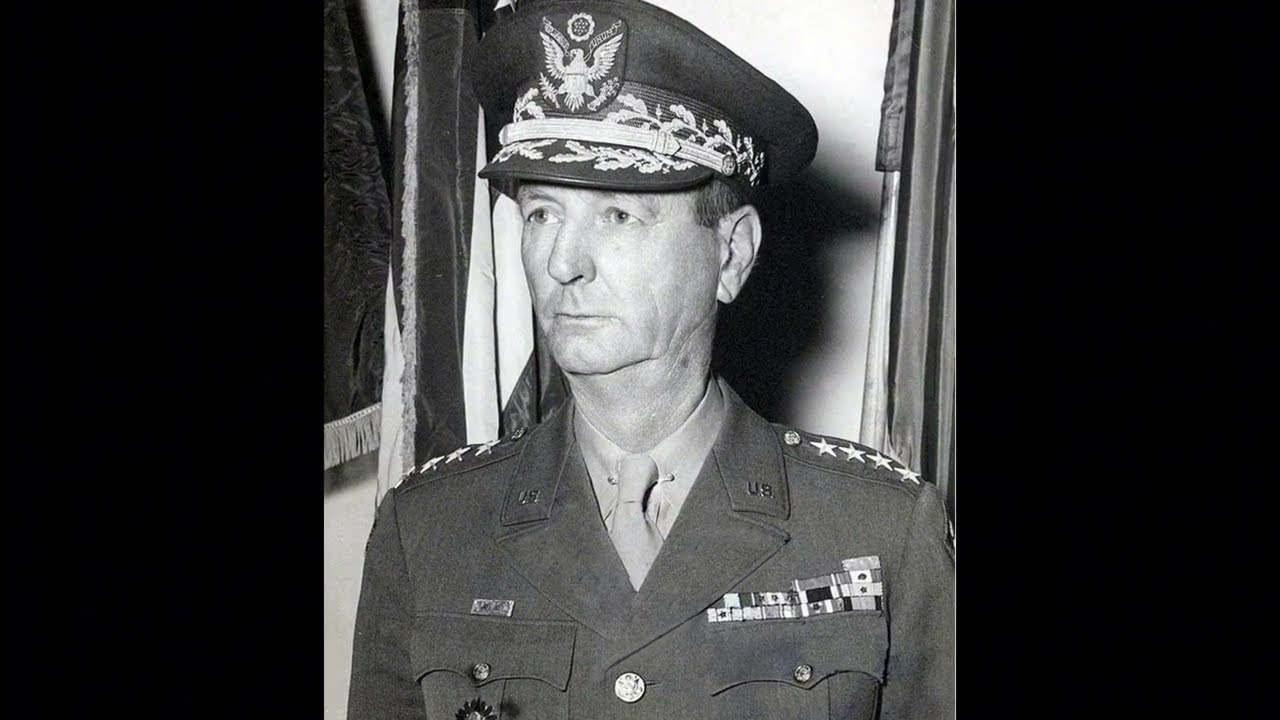
On December 22nd, Japanese General Masaharu Homma put 43,000 combat troops ashore at Lingayen Gulf. 80 warships behind them. More men, more guns, more of everything. MacArthur’s defenders were outnumbered, outgunned, and now without air cover. MacArthur ordered a retreat to the Bataan Peninsula. The plan was to dig in, hold the line, and wait for reinforcements from the United States.
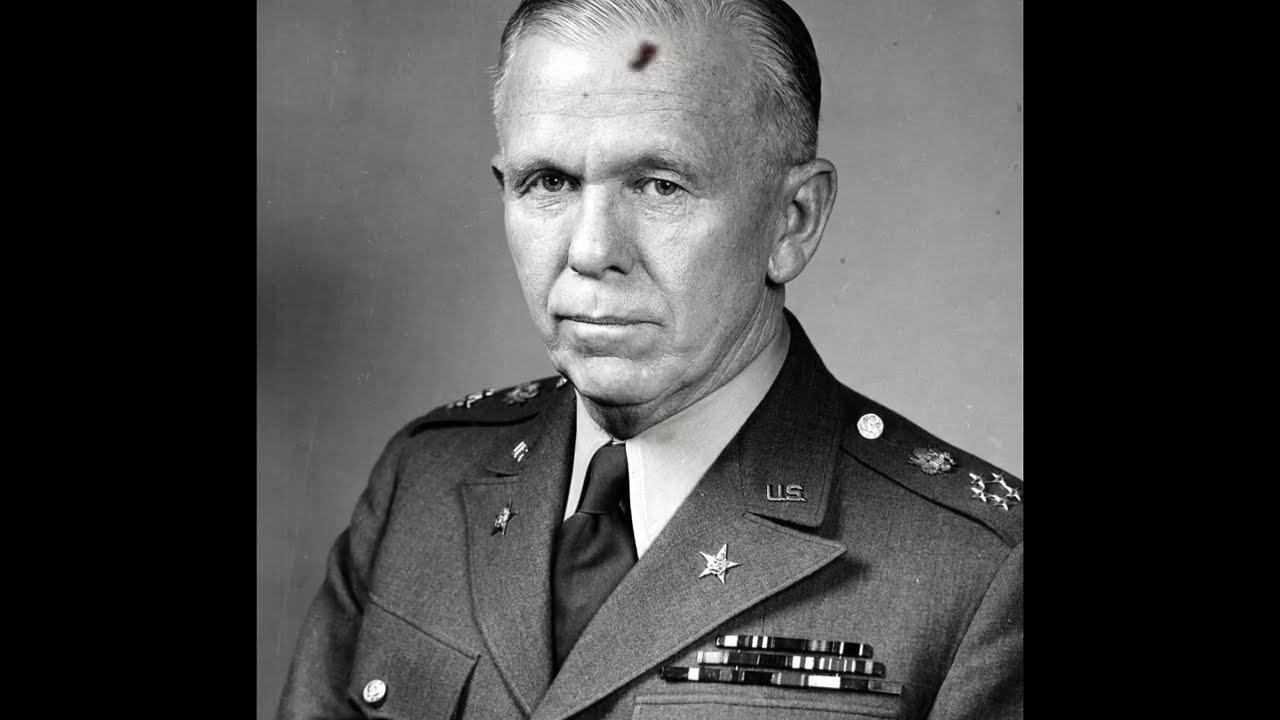
The men believed the ships were coming. They had to believe that. It was the only thing that made any of it make sense. But there was a man in Washington who already knew the truth. Army Chief of Staff George Marshall understood the cold mathematics of a two-front war. Europe first. The Pacific could wait. The Philippines and the 80,000 men now crowded onto Bataan were expendable.
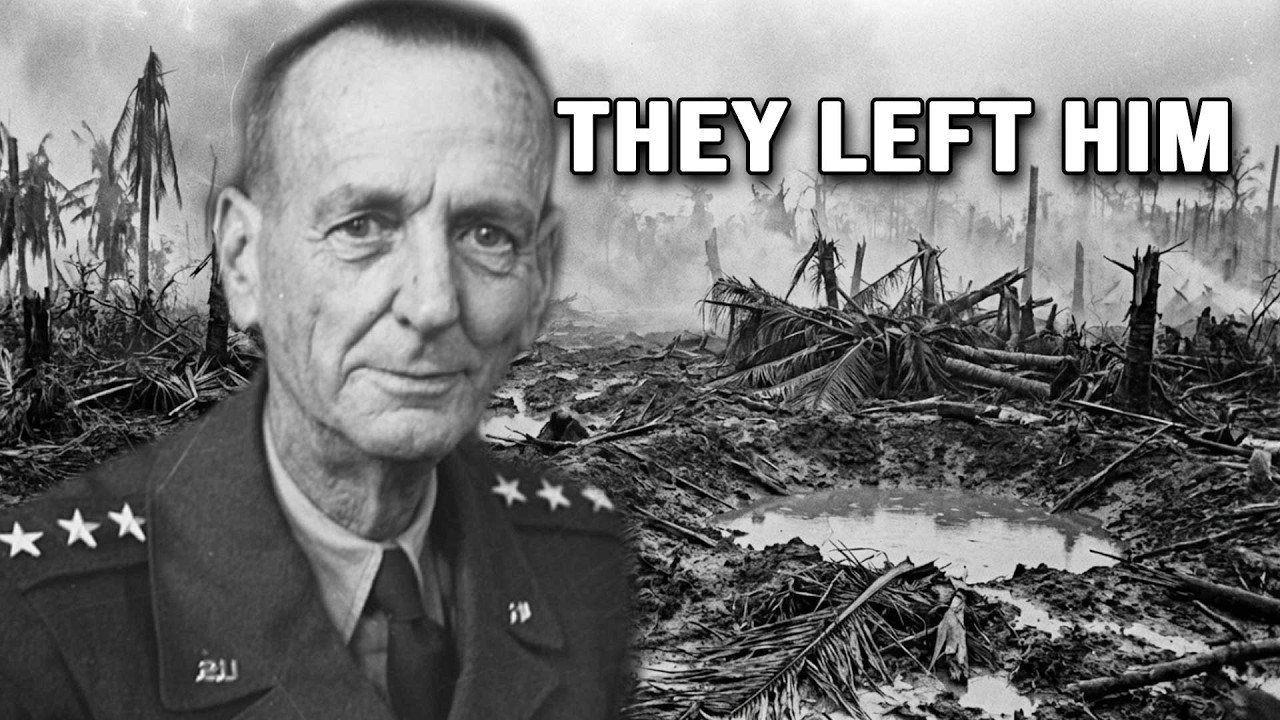
No one told the men on the ground. Into this situation stepped Major General Jonathan Wainwright. A West Point cavalryman. Class of 1906. Lean, leathery, built like a fence post. His men called him Skinny. Not as an insult, but as a kind of affection. He was one of them. While MacArthur directed operations from inside the fortified tunnels of Corregidor Island, Wainwright was a front-line commander.
He walked the defensive positions before sunrise. He sat in the dirt with men who hadn’t eaten a real meal in weeks. One of his officers later said, “You always knew where Wainwright was. He was wherever it was worst.” The men of Bataan were already on half rations by the first week of January. Not because of poor planning on their part, but because MacArthur, in the chaos of the retreat, had left enormous stockpiles of rice and supplies behind on the wrong side of the Japanese line.
Tons of food just sitting there, out of reach. So they made do. They ate what the jungle gave them. Monkey, snake, iguana. The cavalry horses, animals these men had trained with, ridden with, cared for, were slaughtered for meat. And they kept fighting. Because they believed the ships were coming. Jonathan Wainwright looked at these men every day.
He knew what was happening to their bodies. He knew what Washington had decided. And he made a choice that would define the rest of his life. He was going to stay. He was going to fight. And he was not going to leave a single one of them behind. By February 1942, the men on Bataan had been at it for six weeks. Six weeks of jungle heat.
Six weeks of one meal a day. Six weeks of watching a horizon that stayed empty. Then the radio started. Every night, Japanese broadcasters aimed their signal directly at the men on Bataan. And they played a song. The title said everything. I’m waiting for ships that never come in. Night after night, the same song.
Beaches & Islands
A reminder, delivered with a smile, that no one was coming. The men didn’t talk about it much, but they knew. Then came March 11th. That evening, MacArthur’s Chief of Staff summoned Wainwright to Corregidor. He told him quietly that MacArthur was leaving that night by patrol torpedo boat. President Roosevelt had ordered it personally.
MacArthur was needed in Australia to lead the counteroffensive across the Pacific. The Philippines and everyone on them would have to hold on alone. MacArthur found Wainwright before he left. The two men stood together in the dim light of the Malinta Tunnel. “Goodbye, Jonathan.” MacArthur said. “When I get back, if you’re still on Bataan, I’ll make you a lieutenant general.
Urban Transit
” Wainwright didn’t flinch. “I’ll be on Bataan.” he said. “If I’m still alive.” At dark, MacArthur slipped out of Corregidor on four patrol torpedo boats. He carved through Japanese-controlled waters in a stormy sea. Four days later, he landed in Australia. And he stood before the microphones and said the words the world would remember.
Beaches & Islands
“I came through and I shall return.” Back on Bataan, the men heard about it on the radio. Some understood. Some didn’t. One soldier wrote home, “We felt let down, even betrayed. We believed that if we’d been supplied, if someone had kept their word, we could have held.” Wainwright didn’t write letters like that.
He had just been handed command of all remaining American forces in the Philippines. A command that every senior officer in Washington already knew was militarily hopeless. No reinforcements were coming. No resupply convoys. No air cover. Nothing was getting through the Japanese blockade. Just the men in front of him. Running on almost nothing.
Still fighting. He sent a cable to Washington. Straight and plain, the way cavalrymen talk. “My men will be starved into submission unless food arrives before April 15th.” Washington received it. Washington did not reply. Wainwright folded the cable, set it down, and went back to the line. Now let’s talk about what it actually meant to fight on Bataan.
Not the strategy. Not the maps. What it meant in a man’s body. By the end of January, the men were down to one meal a day. One meal in a jungle, in 95° heat, carrying a rifle and a full pack. The army’s standard combat ration was 4,000 calories a day. These men were getting fewer than 1,000. Some lost 15 lb in a month.
Urban Transit
Some lost 25. By late March, the men weren’t losing weight anymore. There was nothing left to lose. The jungle gave them what it could. Monkey meat, boiled and salted. Snake, iguana, roots. Anything that could be caught, killed, and swallowed. The cavalry horses went last. Animals the men had trained with for years, fed by hand, brushed down, named.
Wainwright gave the order himself. The horses were turned over to the quartermaster. Slaughtered for food, the men ate them without complaint because there was nothing else. Then the sickness came. Malaria first, then dengue fever, then dysentery, then beriberi, a disease of severe malnutrition that swells a man’s legs until he can barely walk and attacks his heart.
The field hospitals ran out of quinine in February. Without quinine, malaria doesn’t just make you sick. It keeps coming back wave after wave. A man could be on the line in the morning, shaking with fever by afternoon, and back on the line again by the next dawn. Because there was simply no one to replace him.
Surgeons operated by flashlight, without enough anesthesia. Men bit down on leather straps while doctors worked on them. By March, disease was killing more men on Bataan than Japanese bullets were, and still they fought. Every morning, Jonathan Wainwright was out there with them. Not behind a desk, out there in the mud, checking positions, sitting next to men who hadn’t slept in 2 days.
One of his officers said it simply, “His presence on the line, that was what kept us going.” Not orders, not speeches, just him being there. On Good Friday, April 3rd, 1942, the Japanese launched their final assault. General Homma had spent weeks waiting for reinforcements from Japan. Now they were here.
Fresh troops, heavy artillery, full stomachs against men who had been running on one bowl of rice a day for 3 months. The mathematics of it were unforgiving. Wainwright threw in every reserve he had. It wasn’t enough. Day by day, the Japanese pushed south. On the morning of April 9th, Major General Edward King made a decision. Without informing Wainwright, without asking permission, he looked at his 75,000 men, sick, broken, out of ammunition, out of medicine, and he made the only call a decent man could make.
He sent word to the Japanese. Bataan was surrendering. It was the largest surrender of American forces in history. Wainwright heard the news from Corregidor. He wrote later that a terrible silence settled over Bataan that morning. He could feel it from across the water. But the war was not over. 1 mile off the coast of Bataan, sitting in the mouth of Manila Bay, was a small fortified island called Corregidor.
Beaches & Islands
And Jonathan Wainwright was still on it. Corregidor was 2 square miles of rock and concrete sitting in the mouth of Manila Bay. The Japanese called it the cork in the bottle. As long as it held, they couldn’t use the finest deep water harbor in the Pacific. They needed it badly. And they were going to take it.
After Bataan fell, every Japanese gun on the peninsula turned toward the island. Artillery, bombers, mortars, around the clock. The men lived underground, inside the Malinta Tunnel, a network of concrete passages blasted into the rock. Hundreds of soldiers, nurses, and staff worked and slept and tried to breathe air that smelled of smoke and antiseptic and fear.
The lights flickered with every hit. The walls shook. Dust fell from the ceiling like snow. Above ground, nothing stood for long. Buildings collapsed, gun emplacements buried under rubble. Men ran between positions with their heads down, counting the seconds between shell bursts. Wainwright moved through all of it.
Urban Transit
Tunnel to surface, surface to tunnel, checking the guns, talking to the men, acting like a man who believed this island would hold. Whether he believed it himself, that he kept to himself. On May 1st, he sent a radio message to President Roosevelt. He wrote it the way soldiers write. Plain, no drama, just the facts.
“There is a limit of human endurance, and that point has long been passed.” He was not asking for sympathy. He was stating a diagnosis. Calm, clear, final. 4 days later, May 5th, the Japanese came ashore. In the dark, just before midnight, landing craft pushed through the water toward Corregidor’s beaches. The American and Filipino defenders were waiting.
Even exhausted, even on almost nothing, they hit those landing craft with everything they had left. The first wave of Japanese troops took devastating losses. Bodies in the water, boats burning. For a few hours, it looked like the island might hold. It didn’t. More boats came, then more. The Japanese had men to spend. The Americans did not.
By the morning of May 6th, Japanese tanks were moving inland. Wainwright walked through the tunnel one last time. He looked at what was left. Wounded men on stretchers lining the walls. Nurses still working in the half dark. Soldiers who had been fighting without adequate food for 4 months. He made his decision.
He sent two officers forward under a white flag. Then he faced the Japanese himself. He would not send someone else to do that part. Wainwright surrendered Corregidor at 1:30 in the afternoon. He did it to stop the killing. He knew exactly what captivity under the Japanese meant. He did it because the men in that tunnel had already given everything a man can give.
And he was not going to ask for one thing more. Before the Japanese took full control, American soldiers moved quickly through the tunnel. Code books fed into fires, classified documents burned. The regimental colors, the flags that had flown over American positions since December, were torn from their poles and set alight.
No Japanese soldier would ever hold them. Wainwright stood and watched the flags burn. He knew what the world would say about him. He knew the word they would use. Surrender. He accepted that. What he could not accept, what was never an option, was walking out of that tunnel and leaving those men to be slaughtered.
The Japanese moved Wainwright through a series of prison camps. First in the Philippines, then Taiwan, then to a remote compound in Manchuria, in the frozen north of Japanese-occupied China. He was the highest-ranking American prisoner of war in the entire conflict. It meant nothing. No private quarters, no special treatment.
He stood in the same lines as everyone else, ate the same thin bowl of soup, slept on the same wooden planks. The weight came off steadily until the man who had once stood lean and straight was somewhere around 125 lb. Bones in a uniform. In the prison camp, he traded everything he owned, pens, his wristwatch, whatever he had, for scraps of information about MacArthur’s advance.
He did not know if it was working. He did not know about Midway. He did not know about Guadalcanal. He did not know about the long island-hopping campaign slowly grinding its way toward Japan. He only knew one thing. He was still alive. And as long as he was alive, he was still a soldier of the United States Army.
That was enough. It had to be. The men in that camp said later that Wainwright was what kept them going. Not because he gave speeches, not because he had answers, but because every single morning he was there, upright, present, refusing to disappear. He called them to attention. He maintained formations, kept discipline, held the rituals of military life.
Not because regulations required it, because he understood something the guards did not. The moment you stop acting like a soldier, you stop being one. And if these men stopped being soldiers, they would have nothing left to hold on to. For 3 years and 3 months, Wainwright kept going. Waking up each morning and deciding, again, to stay on his feet.
The men who came home from those camps carried something with them for the rest of their lives. Some talked about it. Most didn’t. If someone in your family served in the Pacific, Army, Navy, Marines, Army Air Corps, put his name in the comments, his branch, where he served. These men’s stories are slipping away from us faster than we realize.
Don’t let that happen. Here is something that history books don’t always say out loud. Bataan was not just a defeat. Bataan was a transaction. Japan gave General Homma 50 days to conquer the Philippines. 50 days. And then his troops would be reassigned to push south through New Guinea, through the Solomon Islands, toward Australia.
Beaches & Islands
That was the plan. Clean, fast, unstoppable. It took 150 days. Think about what happened inside those extra 100 days. In June 1942, while Wainwright was already in a prison camp, the United States Navy met the Japanese fleet at a small island called Midway. Four Japanese aircraft carriers went to the bottom of the Pacific in a single day.
The back of Japanese naval air power broken. But Midway only happened because the Navy had time to prepare, time to reposition, time to crack the Japanese naval code and set the trap. That time was purchased on Bataan. Bought with leather straps bitten down in field hospitals and men carrying rifles on legs that could barely hold them.
After Midway came Guadalcanal. After Guadalcanal came the long push back, Tarawa, Saipan, Leyte Gulf, Iwo Jima. Each one a step closer to Japan. None of it happens on the same timeline if the Philippines fall in 50 days. If Homma’s troops redeploy south on schedule. If Australia gets hit before it’s ready. Historians argue about what might have been.
But this much is not disputed. The defense of Bataan and Corregidor delayed the entire Japanese timetable in the Southwest Pacific by 100 days. 100 days the rest of the Allied world used to fight back. Wainwright didn’t know any of this from his camp in Manchuria. He didn’t know what his men’s suffering had made possible.
He just kept waking up every morning. Calling the men to attention. Holding on in the only way he had left. In August, 1945, the war ended. Soviet forces sweeping into Manchuria reached Wainwright’s compound. American intelligence operatives had tracked him down just days before. He was free. For the first time in 3 years and 3 months, he was free.
On August 31st, Wainwright was taken to the New Grand Hotel in Yokohama to meet MacArthur. MacArthur walked into the room. He saw Wainwright, the white hair, the hollowed face, the body held up by a cane. MacArthur stopped. He recognized the cane. It was the one he had given Wainwright before the war. Meant as a swagger stick, a symbol of rank.
For 3 years, Wainwright had used it to keep himself upright. MacArthur could not speak. The two men held each other. Two days later, September 2nd, 1945. Wainwright was helped aboard the USS Missouri. When he reached the deck, he stood straight. The Japanese delegation came aboard at 9:00 in the morning. Foreign Minister Shigemitsu, General Umetsu, Chief of the Army General Staff.
Navy
The men who had prosecuted the war across the Pacific. They signed first. Then MacArthur stepped to the table and standing directly behind him, close enough to reach out and touch his shoulder, was Jonathan Wainwright. MacArthur signed with six pens. When he finished, he turned and handed two of those pens to the men standing behind him.
One to British General Percival who had surrendered Singapore. One to Wainwright. The man who had surrendered the Philippines was handed the pen that accepted Japan’s surrender. There are photographs of that moment. Wainwright is looking at the document on the table. His face is unreadable. But his eyes are the eyes of a man who has waited a very long time for something he was never sure he would live to see.
Eight days later, President Harry Truman called Wainwright to the White House Rose Garden. He pinned the Medal of Honor on him personally. The citation read in part, “Distinguished himself by intrepid and determined leadership against greatly superior enemy forces. At the repeated risk of life above and beyond the call of duty, he frequented the firing line of his troops, where his presence provided the example and incentive that helped make the gallant efforts of these men possible.
” On September 13th, New York City gave him a ticker tape parade. Thousands of people lining the streets. Cheering for the man the newspapers had once called “The General who lost the Philippines.” He retired from the Army in 1947. He died on September 2nd, 1953. Exactly 8 years to the day after Japan surrendered on the deck of the Missouri.
He was buried with full honors at Arlington National Cemetery. The last men who fought on Bataan and Corregidor are in their late 90s now. In a few years, there will be no one left who can sit across from you at a kitchen table and tell you what it smelled like in that tunnel. What it felt like to eat one bowl of food a day for 3 months and still pick up a rifle.
Beaches & Islands
What it meant to hear that song on the radio, “Ships That Never Come In”, and decide that it didn’t matter. That you were staying anyway. Jonathan Wainwright stayed. His men stayed. They bought something with their suffering that the rest of the world cashed in. At Midway, at Guadalcanal, and finally on the deck of the USS Missouri on a September morning in 1945.
If your father was there. If your grandfather wore that uniform, Army, Navy, Marines, Army Air Corps. Put his name in the comments below. His unit. Where he served. Tell us his story. Because those men are why we’re here. And their names deserve to be remembered for as long as there are people left to say them.