

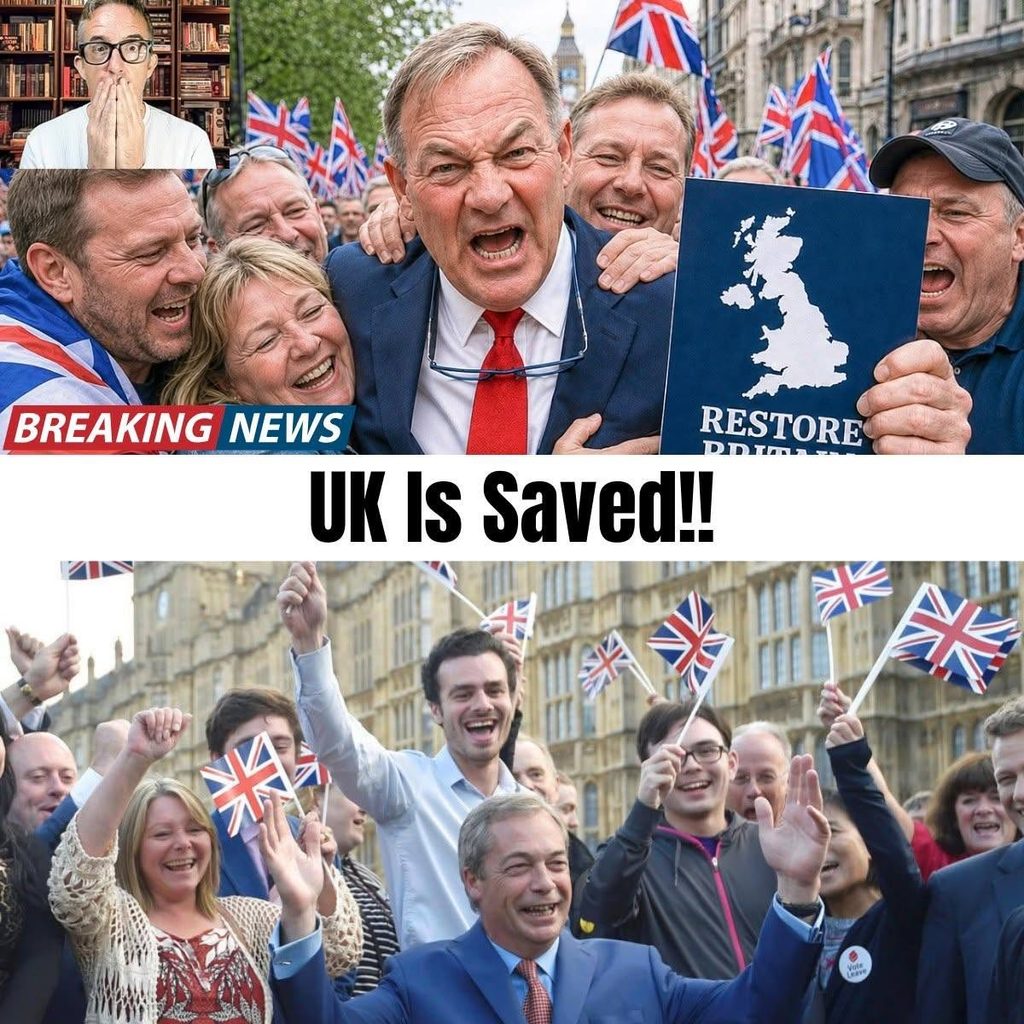
Immigration and National Identity Debate Intensifies Following Rupert Lowe’s Policy Proposals
Immigration, national identity and constitutional reform have once again become central issues in British political debate following recent comments by Reform UK politician Rupert Lowe.
Lowe’s remarks were made during a discussion about a report examining immigration, multiculturalism and social cohesion in Britain.
The interview focused on his assessment of the causes of long-term social challenges and his proposals for immigration reform.
According to Lowe, immigration has played a significant role in shaping many of the issues facing Britain today.
He argued that rapid population growth, combined with long-term immigration policies, has placed increasing pressure on housing, public services and community cohesion.
Lowe also criticized multiculturalism, claiming that it has weakened national identity and social trust.
These views have generated significant discussion among supporters and critics alike.
Supporters argue that immigration policy should be examined alongside broader issues such as housing shortages, wage pressures and public infrastructure.
Critics, however, contend that many of these challenges have multiple economic and political causes that extend beyond immigration alone.
During the interview, Lowe referred to historical immigration policy, including the British Nationality Act 1948 and changes introduced under former Prime Minister Tony Blair.
He argued that post-war governments embraced multiculturalism as a long-term political strategy.
Those claims reflect Lowe’s political interpretation and remain the subject of considerable debate among historians, policymakers and academics.
The discussion also addressed proposals for immigration enforcement.
Lowe outlined a series of measures that he said would prioritize removing individuals who entered Britain illegally.
He also advocated deporting foreign nationals convicted of serious crimes after completion of their sentences.
In addition, he proposed reviewing welfare policies affecting some non-citizens and encouraging voluntary departures through changes to benefit eligibility.
At the same time, Lowe distinguished between illegal migration and migrants who have established lawful lives in Britain.
He said that individuals who entered legally, contribute to the economy, obey British laws and have integrated into society should be treated fairly and in accordance with existing legal protections.
Observers noted that this distinction formed an important part of his overall policy position.
Beyond immigration, Lowe criticized several aspects of Britain’s political system.
He argued that constitutional reforms introduced over recent decades had reduced government accountability and weakened democratic institutions.
Among his concerns were the roles of the civil service, the judiciary and Parliament.
He called for reforms intended to restore what he described as greater constitutional accountability.
Political analysts note that constitutional reform has become an increasingly prominent topic within several parties advocating significant changes to Britain’s governance.
The interview also focused on the city of Manchester.
Lowe and the interviewer described Manchester as an example of wider national debates surrounding immigration, public services and urban development.
They argued that many residents are concerned about housing affordability, pressure on infrastructure and changing community demographics.
Supporters of Lowe’s views believe these concerns have not received sufficient attention from mainstream political parties.
Others argue that cities such as Manchester have benefited economically and culturally from immigration while also facing broader challenges linked to population growth, economic inequality and public investment.
The interview included criticism of several major political parties.
Lowe argued that successive governments have failed to implement effective immigration policies despite repeated public concern.
He also suggested that existing political approaches have not adequately addressed issues surrounding border security and integration.
Observers note that immigration remains one of the most politically divisive issues in Britain.
Opinion polls have consistently shown strong public interest in border control alongside concerns about economic growth, labor shortages and humanitarian responsibilities.
Different political parties continue to propose varying approaches to balancing these competing priorities.
Supporters of stricter immigration policies argue that stronger border enforcement and more selective migration systems are necessary to maintain public confidence.
Others emphasize the economic contributions made by millions of migrants who live and work legally in Britain.
Business groups have also highlighted the importance of immigration in addressing workforce shortages across sectors including health care, construction and technology.
The broader debate reflects wider questions about national identity, integration and the future direction of British society.
Analysts note that these issues have become increasingly significant in public discourse following years of political polarization and economic uncertainty.
As Britain continues debating immigration policy and constitutional reform, proposals such as those outlined by Lowe are likely to remain part of the national conversation.
Whether these ideas gain broader political support will depend on future public opinion, electoral outcomes and the ability of competing parties to address voters’ concerns.
The discussion illustrates how immigration continues to influence debates extending far beyond border policy, including questions of governance, public services, economic planning and the long-term identity of the United Kingdom.
Immigration and National Identity Debate Intensifies Following Rupert Lowe’s Policy Proposals
Immigration and national identity have returned to the centre of Britain’s political debate following a series of controversial proposals from Rupert Lowe, the independent MP for Great Yarmouth and founder of Restore Britain. His calls for a dramatic reduction in immigration, large-scale deportations and major changes to citizenship rules have intensified disagreements over what it means to be British and how the country should manage its borders.
Lowe argues that successive governments have failed to address public concerns about immigration, housing shortages, pressure on public services and the pace of demographic change. He has called for a fundamental shift in national policy, insisting that reducing future arrivals would not be sufficient and that Britain should also reverse some of the effects of previous immigration.
His proposals have attracted support from people who believe existing policies have failed to protect national sovereignty and social cohesion. At the same time, critics have raised concerns about the economic consequences, the rights of established migrant communities and the implications of defining national identity through ancestry or cultural background.
The debate extends far beyond one politician. It reflects a wider struggle over the future direction of Britain, the responsibilities of government and the relationship between immigration control, democratic accountability and individual rights.
Rupert Lowe’s Vision for Immigration Reform
Lowe has built his political platform around the argument that Britain needs a much stricter approach to immigration. After leaving Reform UK in 2025, he established Restore Britain, a political movement advocating extensive changes to immigration enforcement and the country’s approach to citizenship.
His published proposals include large-scale deportations, the withdrawal of certain state benefits from foreign nationals, tighter restrictions on citizenship and significant changes to the asylum system. He has also argued that foreign nationals convicted of crimes, those without a legal right to remain and certain other groups should face removal under his proposed framework.
Lowe presents these measures as part of a broader effort to restore national control. In his view, immigration policy should be judged not only by its effect on economic growth but also by its consequences for housing affordability, public confidence, community cohesion and the ability of people to maintain a shared sense of national identity.
His approach goes further than simply reducing the number of people arriving each year. It seeks to reverse aspects of previous immigration policy and reconsider the conditions under which people can remain permanently in Britain or acquire citizenship.
That distinction is important. Policies aimed at reducing future arrivals are different from measures affecting people who have already lived in the country for many years, including those with permanent residence, established employment, British-born children or citizenship obtained through lawful procedures.
Any government attempting to implement proposals of this scale would have to address those differences, as well as existing legislation, administrative capacity and the country’s international obligations.
National Identity Becomes a Central Political Question
At the heart of Lowe’s argument is a particular interpretation of British national identity. He maintains that large-scale immigration and multiculturalism have weakened social cohesion and that the country needs a clearer understanding of the cultural foundations of national life.
Supporters of this position argue that a shared language, respect for the law, civic participation and a common sense of belonging can help communities function effectively. They believe governments have sometimes been reluctant to discuss the pace of demographic change or the challenges of integration openly.
For these voters, immigration is not simply a question of how many people enter Britain. It is also about whether local communities have the housing, schools, healthcare services and infrastructure needed to accommodate population growth, and whether newcomers and established residents have opportunities to develop lasting social connections.
However, national identity can be understood in several different ways. Some people emphasise ancestry and historical continuity, while others place greater weight on citizenship, participation in public life, shared democratic values and commitment to the country.
Critics of Lowe’s approach argue that British identity has evolved over centuries and cannot be reduced to a single ethnic or cultural definition. They point to the contributions of people from different backgrounds to public services, business, science, sport and cultural life. They also argue that citizens who were born abroad or whose parents immigrated should not automatically be treated as less British than those whose families have lived in the country for generations.
The disagreement is therefore about more than border control. It concerns the criteria by which membership of the national community is understood and the extent to which the state should use immigration and citizenship policy to shape that identity.
The Deportation Debate and Its Legal Challenges
Large-scale deportation is among the most consequential elements of Lowe’s platform. He has called for the removal of people who have no legal right to remain in Britain and advocated a wider programme affecting additional categories of foreign nationals.
Supporters argue that immigration rules lose credibility if decisions to remove people without a lawful basis for staying are not enforced. They believe more effective removals could discourage irregular migration, reduce the scope for exploitation by criminal smuggling networks and reassure voters that the government has control over its borders.
But the practical and legal questions are substantial.
People living in Britain have different immigration statuses. Some may have overstayed a visa, while others have been refused asylum, hold temporary permission to remain, possess permanent residence or have become British citizens. These situations cannot simply be treated as interchangeable.
A deportation programme would require procedures to establish identity, nationality and legal status, alongside arrangements for appeals and cooperation with destination countries. Authorities would also have to consider whether a person faces persecution, torture or other serious harm if returned.
British law and international obligations place limits on the circumstances in which individuals can be removed. The principle of non-refoulement, for example, prohibits returns where the relevant legal threshold for a risk of persecution or serious harm is met. The precise protections depend on the individual’s circumstances and the applicable legal framework.
There would also be financial and administrative implications. Large-scale removals require staff, detention capacity where legally justified, transport arrangements, diplomatic cooperation and functioning legal processes. The final cost would depend on the scale and design of the policy.
Lowe’s supporters argue that these difficulties should not be used as an excuse for inaction. Critics counter that enforcement must remain lawful, proportionate and based on individual circumstances. The debate ultimately concerns how far the government can go while preserving due process and meeting its legal responsibilities.
Citizenship, Contributions and the Rights of Established Residents
Lowe’s proposals to restrict the acquisition of British citizenship have generated another important controversy. Citizenship carries rights and responsibilities, and governments have considerable authority to establish lawful conditions for naturalisation. However, changes to those conditions can have profound consequences for people who have spent years building their lives in Britain.
Many foreign-born residents work, pay taxes, raise children and contribute to their local communities. Some have spent decades in the country and may regard Britain as their permanent home. Others have entered through employment, family reunification, study or humanitarian protection routes.
Critics argue that policies threatening the status of established residents could create uncertainty for families and employers while undermining confidence in the fairness of the immigration system.
They also distinguish between immigration enforcement and the removal of citizenship already lawfully acquired. Revoking citizenship raises especially serious legal questions, including the circumstances in which such action is permitted and the safeguards available to the individual concerned.
Supporters of tighter rules argue that citizenship should carry clear expectations and that naturalisation procedures should be carefully controlled. Yet the details matter: rules for future applicants are not identical to rules affecting people who already possess citizenship or another recognised legal status.
The central challenge for policymakers is to establish a system that is enforceable and publicly understood without treating people with different legal circumstances as if they were all in the same position.
Housing, Public Services and the Economic Argument
Immigration debates often become most intense when they intersect with everyday pressures. Housing costs, access to GP appointments, school capacity and competition for certain jobs are concerns for many British households.
Lowe argues that high immigration has contributed to these pressures and that reducing the population growth associated with migration would help restore affordability and relieve public services.
Population growth can increase demand for housing and infrastructure, particularly when construction and public investment fail to keep pace. However, the effect of immigration varies by location, skill level, household circumstances and the availability of services. Housing shortages, for example, are also influenced by planning decisions, construction rates, interest rates, land availability and the distribution of employment.
The economic effects of migration are similarly complex. Migrants can increase demand for services, but they also work, pay taxes, establish businesses and fill vacancies. The impact on public finances depends on factors such as age, earnings, employment, family circumstances and access to public services.
Some sectors, including healthcare, social care, construction and hospitality, rely on international recruitment to fill particular roles. Rapidly reducing migration without a credible plan to train domestic workers, improve pay or increase productivity could create staffing difficulties.
On the other hand, supporters of lower immigration argue that employers should not rely indefinitely on overseas recruitment when better training and working conditions might attract more domestic workers.
These competing arguments demonstrate why immigration policy cannot be assessed through a single headline figure. The consequences depend on which categories of migration change, how quickly the changes occur and whether other economic policies are introduced alongside them.
Political Competition on the Right
Lowe’s proposals have also added a new dimension to competition among Britain’s right-leaning political movements. His departure from Reform UK and the creation of Restore Britain established a separate political platform for voters seeking more extensive immigration restrictions.
In August 2026, Lowe publicly offered a possible route towards cooperation with Nigel Farage’s Reform UK, but made that cooperation conditional on adopting several of Restore Britain’s policies. Those demands extended beyond immigration to include proposals concerning religious practices and a referendum on restoring the death penalty.
The positions illustrate differences between political groups that may share concerns about border enforcement but disagree over how far policy should go. Reform UK and Restore Britain are not interchangeable organisations, and their approaches should be assessed on the basis of their respective proposals.
This competition also creates strategic questions for politicians seeking support from voters concerned about migration. A party may appeal to those demanding rapid and sweeping change while facing criticism from voters who favour stricter enforcement but oppose broader restrictions on citizenship or religious practices.
For the electorate, the distinctions are significant. Campaign rhetoric can establish priorities, but proposed legislation, implementation plans and the likely consequences of specific measures provide a more concrete basis for evaluating competing programmes.
The Humanitarian and Social Cohesion Questions
Any debate about immigration also involves the treatment of people seeking protection from war, persecution or other serious dangers. Governments have a responsibility to control their borders, but asylum claims require procedures capable of distinguishing between people who qualify for protection and those who do not.
Lowe’s proposed overhaul of the asylum system has raised questions about detention, access to legal advice and the treatment of people whose claims remain unresolved. Critics argue that a deliberately restrictive system could expose vulnerable individuals to serious harm or prevent legitimate claims from receiving a fair hearing.
Supporters of tougher measures respond that an asylum system must be able to identify and remove people who do not qualify for protection, while preventing criminal networks from exploiting vulnerable travellers.
The policy challenge is to make decisions more efficiently without sacrificing the safeguards required by law. Delays can create uncertainty for applicants, increase costs for the state and undermine public confidence. But speed alone is not sufficient if decisions are inaccurate or appeal rights are ineffective.
Social cohesion also depends on more than immigration levels. Language learning, employment opportunities, access to education, equal treatment under the law and participation in local life can all influence how well communities function.
Governments can debate the appropriate scale of migration while still recognising that people who have settled lawfully should be treated according to their rights and individual circumstances.
What Comes Next for Britain?
Rupert Lowe’s proposals have brought several interconnected questions into sharper focus: how Britain should control immigration, what citizenship should mean, how public services can meet growing demand and how national identity should be understood in a diverse society.
His supporters believe the country needs a fundamental change of direction and that previous governments have failed to respond adequately to public concerns. Critics argue that some of his proposals risk sweeping aside important legal protections and overlooking the contributions made by established migrant communities.
The practical effects of any major reform would depend on its precise wording, legal compatibility, administrative requirements and economic consequences. Political declarations alone cannot resolve those questions.
Britain’s challenge is to develop immigration policies that are clear, enforceable and democratically accountable. That includes distinguishing between irregular migration, lawful employment, family migration and genuine asylum claims, while ensuring that public services and infrastructure are equipped to respond to changing population needs.
The national identity debate will continue because it touches on fundamental questions about belonging, citizenship and the future of the country. The task for politicians and the public is to examine competing proposals carefully, separate verifiable evidence from political claims and consider both intended benefits and potential costs.
Lowe’s platform has made those disagreements more visible. Whether its ideas influence future policy will depend on political support, legal scrutiny and the extent to which the proposals can be translated into workable measures. What is clear is that immigration and national identity will remain central to Britain’s continuing debate about its priorities, responsibilities and place in an increasingly unsettled world.