

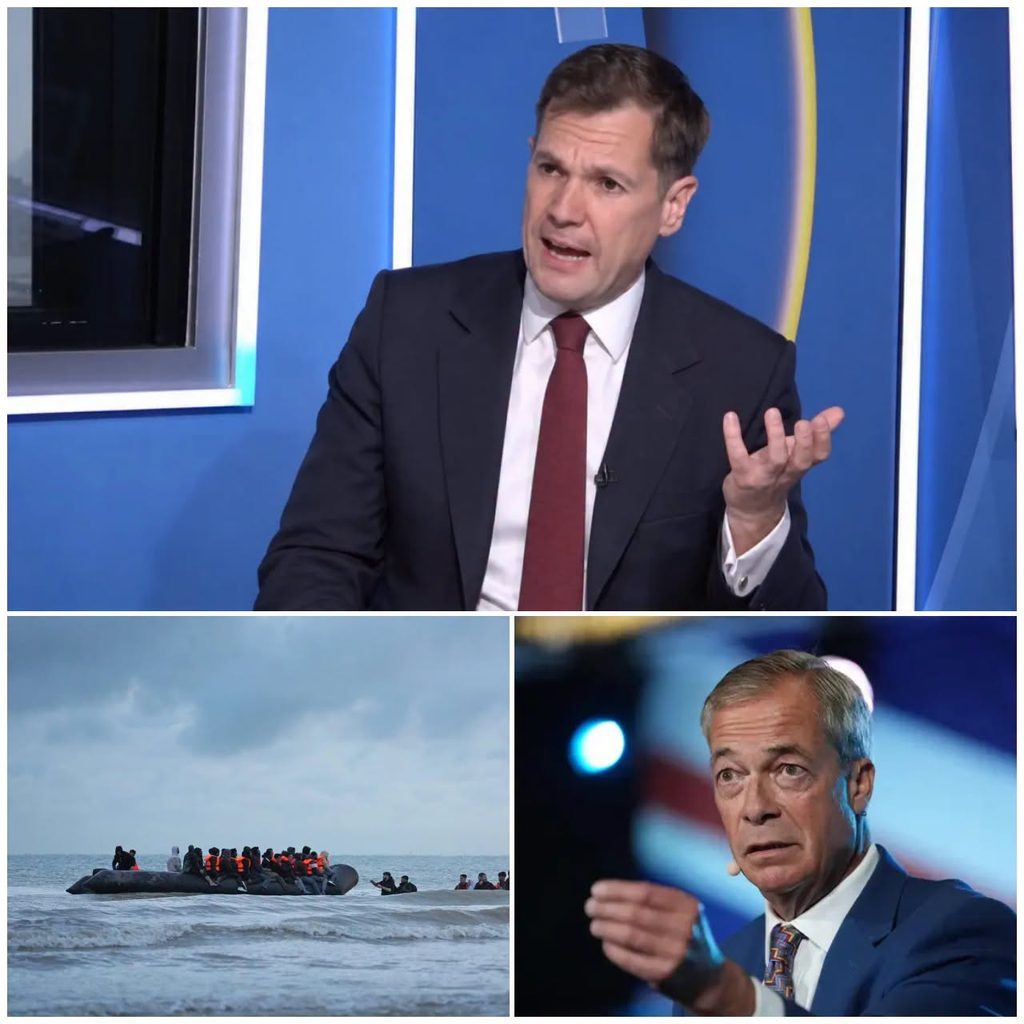
Nigel Farage has moved to deny that a Reform UK government would authorise the use of lethal force against small boat crossings in the Channel, intervening just hours after one of his MPs argued that troops should be allowed to open fire.
The Reform UK leader overruled Robert Jenrick, a prominent MP who defected from the Conservatives, after Jenrick suggested during a broadcast interview that the party would deploy the military to turn vessels back towards France.
The public disagreement comes amid visible strain inside the party, on the same day an opinion poll suggested Reform had slipped into third place behind the Conservatives.

Speaking on LBC, Farage insisted that a Reform administration would not authorise any routine use of force against crossing boats, asserting that Jenrick was being “utterly misconstrued”.
Farage maintained that British forces would be permitted to use force only if they were fired at first, describing such action as a defensive response rather than a general policy of shooting at dinghies.
“Anybody wearing British military uniform who gets fired at has the right to respond.
That’s what he was saying,” Farage told the station.
Farage linked the situation to criminal operations operating around northern French camps, saying: “Remember, in these camps, every week there are shootings, there are stabbings.
We are dealing here with very, very serious international criminal organisations, and what we’re saying is, we will, if we win the next election, pick these people up and take them back to France.”
Farage conceded that such interceptions could provoke confrontation, but predicted that robust action would quickly halt crossings altogether.
“There is a possibility that initially that might be met with some force.
If it is, force will be met with force.
But I tell you something: within two weeks of boats being taken back to France, the boats will stop coming,” he said.

The controversy was ignited when Jenrick claimed during an appearance on TalkTV that Reform was the only political party willing to use force against people making the crossing.
“What we are going to do, and we’re the only political party that has the courage to say this, is deploy the Royal Marines into the Channel.
If they need to use lethal force, then they’ll be able to do so,” Jenrick said.
Jenrick suggested that authorising the use of force would bring the crossings to an end “in just a few days”.
While he stated that using force was “obviously not what we want to see happen”, he added: “We want to see these individuals picked up off the boats in a sensible and reasonable way, and taken straight back to France.”
The remarks prompted sharp condemnation from the government.
Defence minister Luke Pollard described the comments as “disgusting and illegal”, warning that members of the British armed forces are barred under military rules from following an unlawful command.
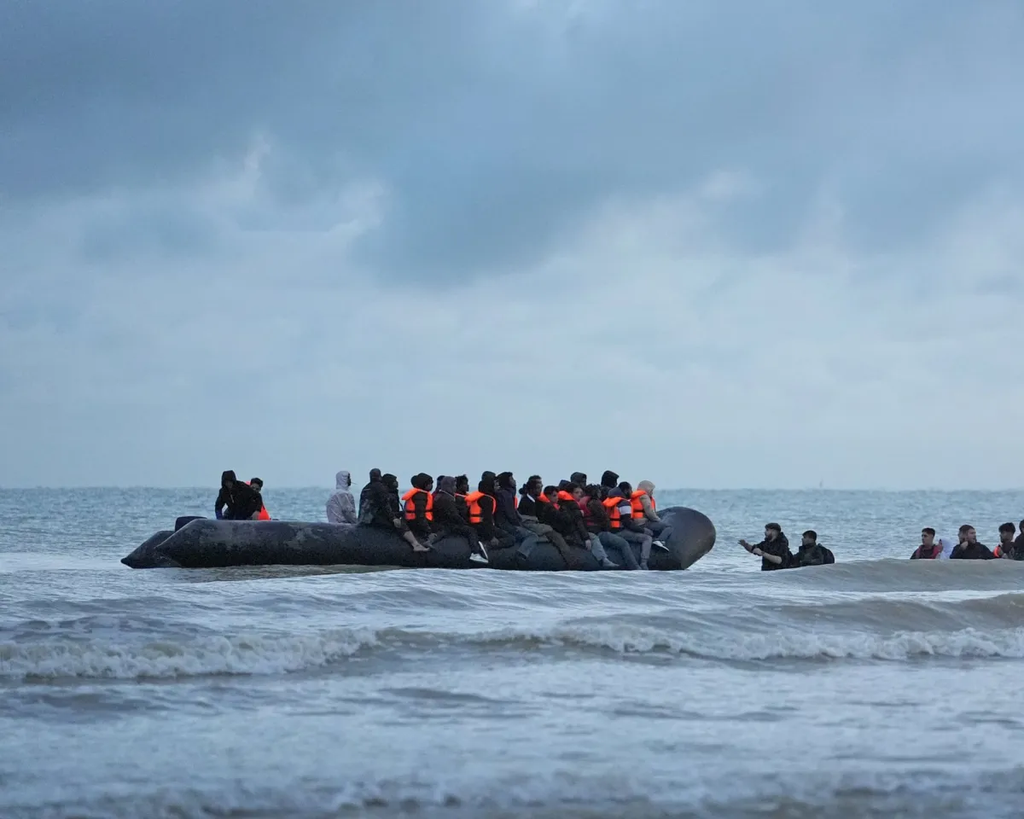
“We do not shoot unarmed civilians. We do not take military action against civilians,” Pollard told Times Radio.
“The idea of this is a soundbite designed by Reform to distract from their sleaze and their scandal … it’s abhorrent to military values, it’s abhorrent to British values.
I don’t think anyone should give this any truck.
We can all see what this is: an attempt to distract from Reform’s internal woes.”
The party’s position was further complicated when Reform UK chair Zia Yusuf also walked back earlier hardline rhetoric.
Yusuf, who had previously promised that lethal force would be deployed to stop migrant boats reaching Britain, told BBC Breakfast that such measures would apply only “in extremely limited circumstances where it is necessary to protect innocent life.”
Yusuf argued that personnel had to be prepared to act if they encountered individuals carrying weapons or threatening the lives of passengers on board.
Yusuf also highlighted internal divisions with former Conservative figures who joined Reform, including Jenrick and former home secretary Suella Braverman.
Asked on Sky News about a past social media post where he had referred to them as “quislings” for their roles in the previous government, Yusuf insisted that ministers in that administration bore collective responsibility for failing to deliver promised reductions in immigration numbers.
Yusuf additionally diverged from Braverman over controversial comments she had made suggesting her South Asian heritage prevented her from being considered English.
Yusuf rejected that stance, referencing celebrated sporting figures such as Ashley Cole, Bukayo Saka, Rio Ferdinand and Nasser Hussain to illustrate that such an argument did not hold water with him.
The widening public debate arrives alongside a Times poll indicating Reform had dropped to third place behind Labour and the Conservatives, giving Kemi Badenoch’s party its strongest showing since she became Tory leader.
Farage Pushes Back After Jenrick Says Royal Marines Could Use Lethal Force Against Channel Boats
Nigel Farage has pushed back against suggestions that Royal Marines could use lethal force against small boats crossing the English Channel, reigniting a heated political debate over how far Britain should go to stop irregular migration. The controversy has placed the spotlight on border security, military involvement in domestic enforcement and the difficult balance between deterring dangerous crossings and protecting human life.
The Channel migration crisis has remained a persistent challenge for successive British governments. Despite repeated promises to strengthen border controls, disrupt people-smuggling networks and reduce arrivals, small boats continue to dominate political discussions about immigration. The latest dispute illustrates how disagreements over enforcement can extend beyond the objective of stopping crossings to the methods authorities should be permitted to use.
The reported exchange involving Farage and Robert Jenrick raises fundamental questions about whether a military response would make Britain’s borders more secure, what legal safeguards would apply and whether the threat of extreme force could create additional dangers at sea.
Farage Questions the Limits of Tougher Border Enforcement
Farage has built much of Reform UK’s political identity around reducing immigration and taking a harder line on people entering Britain without authorisation. His position has appealed to voters who believe successive governments have failed to establish effective control over the country’s borders.
However, the possibility of using lethal force against Channel boats introduces a different dimension to that debate. Stopping an unauthorised crossing, intercepting a suspected smuggling operation and using potentially fatal force are not interchangeable actions. Each involves different operational circumstances and legal considerations.
Farage’s reported response to Jenrick’s comments has brought those distinctions into focus. The precise details of their statements and the context in which the proposal was discussed are important, and any specific account of their disagreement should be checked against the original remarks.
Nevertheless, the wider political question is clear. How can Britain demonstrate that its borders are being enforced without adopting tactics that could put passengers, rescuers and enforcement personnel at greater risk?
For politicians advocating tougher controls, the challenge is to explain not just the desired outcome but also the practical steps that would achieve it. Strong rhetoric may communicate determination, but a workable policy must establish clear rules, responsibilities and safeguards.
Why the Royal Marines Proposal Matters
The Royal Marines are trained for demanding military operations, including activities in challenging maritime environments. Their expertise, however, does not automatically make them the appropriate force for every border-enforcement task.
A deployment involving small boats would require clear decisions about command structures, operational authority, cooperation with civilian maritime agencies and the treatment of people intercepted at sea.
The suggestion of lethal force makes those questions particularly serious. Military personnel cannot lawfully shoot at a boat simply because it is carrying people attempting to enter Britain without permission. Any use of force would have to be assessed under the applicable law and the specific circumstances, including whether there was an immediate threat that could justify such action.
An attempt to prevent an unauthorised crossing is fundamentally different from responding to an imminent threat to life. Confusing those situations could create significant legal and operational problems.
There would also be practical questions about what happens when a boat is stopped. Passengers might include children, people who cannot swim and individuals who have already been exposed to dangerous sea conditions. An intervention that destabilised an overcrowded inflatable vessel could turn a border operation into a major rescue emergency.
These are not minor details. They would be central to any serious assessment of whether military involvement could reduce crossings safely and lawfully.
The Dangerous Reality of Channel Crossings
The English Channel is a busy international shipping route, with commercial vessels, changing weather and strong currents. Small inflatable boats attempting the journey may be poorly equipped and dangerously overcrowded.
Passengers can face risks even when the sea initially appears calm. Engines may fail, boats may lose air or become unstable, and people unfamiliar with maritime conditions may struggle to respond to an emergency.
The danger also extends to rescue personnel. Emergency services must assess the condition of a vessel, the number of people aboard and the safest way to bring passengers to safety. A sudden escalation during an interception could complicate those decisions.
Supporters of tougher enforcement argue that the dangers of the crossing demonstrate why smuggling networks must be disrupted and departures prevented. They contend that allowing the current situation to continue exposes more people to the risk of injury or death.
Critics of extreme enforcement measures counter that deterrence cannot justify every possible tactic. They argue that interventions must be designed to avoid creating additional danger, particularly when passengers may be unable to control the actions of the people organising their journey.
Both concerns point towards the same practical necessity: reducing dangerous crossings requires a strategy that takes maritime safety seriously while addressing the criminal networks facilitating the journeys.
The Legal Questions Behind Lethal Force
The possibility of lethal force would raise questions about domestic law, maritime obligations and human rights protections.
The legal assessment would depend on the precise circumstances of an operation, the authority under which it was conducted and the nature of any threat faced by personnel or members of the public. The fact that a vessel was involved in an irregular migration attempt would not, by itself, establish grounds for the use of deadly force.
Authorities would also need clear procedures for investigating incidents, recording decisions and determining whether personnel had acted lawfully. Accountability would be especially important in operations where the consequences could include serious injury or loss of life.
There is a distinction between using proportionate measures to intercept a vessel and employing force that could kill those aboard. A government considering a new enforcement model would need to explain how that distinction would be maintained in rapidly changing conditions at sea.
The issue would also extend beyond the immediate encounter. Any policy would need to consider what happens to intercepted passengers, how potential asylum claims are handled and how people in distress are rescued.
These questions demonstrate why a proposal involving the military cannot be judged solely by whether it sounds tougher than existing arrangements. Its legality, feasibility and likely consequences would all need careful examination.
Britain’s Immigration Debate Enters Another Difficult Phase
The dispute comes against a background of public frustration over small-boat arrivals and the government’s broader immigration policies.
For many voters, the continued arrival of boats represents a failure to enforce border controls effectively. They want to see fewer crossings, faster decisions on asylum applications and the removal of people who have no legal right to remain in the country.
Others argue that the debate often concentrates too heavily on dramatic interventions while paying insufficient attention to the factors that sustain irregular migration. These include smuggling networks, limited opportunities for safe and lawful migration, delays in processing claims and difficulties arranging returns where removal is legally permitted.
The two perspectives lead to different policy priorities. One places greater emphasis on deterrence and visible enforcement. The other focuses on improving the wider system, international cooperation and the safeguards needed to protect people who may qualify for asylum.
A comprehensive approach would have to consider all these factors rather than assume that a single change to maritime patrols could resolve the problem.
Could Military Involvement Reduce Small-Boat Arrivals?
The effectiveness of any proposal to deploy military personnel would depend on its objectives and operational design.
Additional resources might improve surveillance, coordination or the ability to respond to incidents at sea. However, using military personnel would not automatically eliminate the networks arranging crossings or remove the reasons people attempt the journey.
Smuggling organisations can change routes, departure times and methods when enforcement becomes more difficult. A policy that focuses exclusively on the moment a boat reaches British waters might therefore fail to address the wider business model behind the crossings.
International cooperation would remain important. Working with French authorities to identify suspected organisers, investigate criminal networks and prevent dangerous departures could form part of a broader strategy. Effective asylum processing and lawful returns would also influence whether enforcement measures produced lasting results.
Any new policy should be judged against measurable outcomes: whether attempted crossings decline, whether smuggling operations are disrupted, whether deaths and serious injuries are prevented, and whether public money is being used effectively.
It would also be necessary to examine whether any reduction in arrivals was sustained or whether activity simply shifted to other routes or periods.
Without this evidence, claims about the effectiveness of a proposed tactic would remain uncertain.
Political Pressure on Farage and Jenrick
For Farage, immigration remains a central issue on which Reform UK seeks to distinguish itself from its political competitors. His response to the reported proposal also highlights the fact that politicians who agree on the need for tougher border enforcement may disagree about the methods required.
Jenrick’s reported comments, meanwhile, raise questions about how military capabilities might be used in a civilian border-control context. The implications would depend on the exact proposal, the authority under which it could operate and the safeguards that accompanied it.
The disagreement could therefore become part of a wider argument about what a credible immigration policy should look like. Is success primarily measured by the number of boats stopped, the number of people prevented from making the journey, the disruption of criminal networks or the reduction of risks to life? In practice, policymakers would need to consider all these measures.
The debate also illustrates the importance of distinguishing a political statement from an operational plan. Before any proposal could be implemented, the government would need to explain how it would work, what legal powers would be required and what consequences it could produce.
The Challenge Ahead
Britain’s small-boats crisis is not simply a question of how many vessels reach its coastline. It involves maritime safety, organised crime, asylum law, international cooperation and public confidence in the immigration system.
The reported disagreement between Farage and Jenrick has brought the most controversial aspect of that debate to the forefront: whether the pursuit of stronger enforcement could extend to the use of potentially lethal military force.
Any government has a responsibility to enforce immigration law and address dangerous smuggling operations. It also has a responsibility to ensure that its actions remain lawful and that interventions do not create unnecessary risks to life.
The most credible response will require more than uncompromising language. It will need a clear legal framework, effective cooperation with international partners, properly resourced investigations into smuggling networks and an asylum system capable of making decisions without avoidable delays.
Ultimately, the test of any proposed policy will be whether it produces lasting improvements in border control while respecting the law and protecting human life. The political argument over the Royal Marines may continue, but those practical questions will determine whether a new approach could offer a workable answer to Britain’s continuing Channel challenge.