

The segment highlighted a growing fracture between the government’s objectives and the resistance of local communities across the UK.
 Advertisement
The controversy centers on the Home Office’s strategy to move asylum seekers out of centralized hotel accommodations and into Houses in Multiple Occupation (HMOs) situated within residential neighborhoods.
While the government recently announced the closure of an additional 13 asylum hotels, critics argue this simply displaces the issue into local high streets and suburbs.
Furthermore, there is a push to distribute these populations into wealthier areas, such as the Cotswolds, to ensure all regions shoulder the burden.
Advertisement
Bates criticized the strategy as “politically naive,” warning that attempting to impose asylum housing in more affluent areas will only re-energize opposition and bring previously uninvolved demographics into the immigration debate .
He noted that tight-knit communities, such as those in Crowborough and Pittington, have already demonstrated highly effective, organized resistance against the sudden arrival of unvetted young men.
Advertisement
 The pushback is not limited to grassroots community efforts.
According to the segment, Reform UK, alongside several Conservative and even some Labour-led councils, is mounting legal challenges to block the conversions of single-family homes into HMOs for migrants .
Advertisement
These councils are leveraging HMO directions and planning laws to prevent the Home Office from bypassing local planning authorities.
In response to this resistance, the Labour government is reportedly utilizing an “urgent planning process” to push through housing initiatives—such as at military bases in Oxfordshire and Suffolk—by submitting applications directly to the Housing Secretary, entirely bypassing local democratic structures .
Advertisement
Bates warned that the Home Office’s heavy-handed tactics are creating a “David versus Goliath” dynamic, pitching the central government against local residents .
He projected that this friction will result in “mini uprisings all across the country” .
Police in Norfolk, Suffolk, and North Yorkshire have already expressed concerns over potential flashes of violence and public backlash .
Advertisement
The segment also addressed secondary controversies fueling public anger, most notably the revelation that telecommunications company Vodafone has provided 2,500 free SIM cards with six months of data to Care for Calais, an organization that distributes them to asylum seekers .
Reform UK’s Zia Yusuf has publicly condemned the corporate program, asserting it acts as a “pull factor” for illegal migration and writing a letter threatening criminal liability for Vodafone executives under a hypothetical future Reform government.
Advertisement
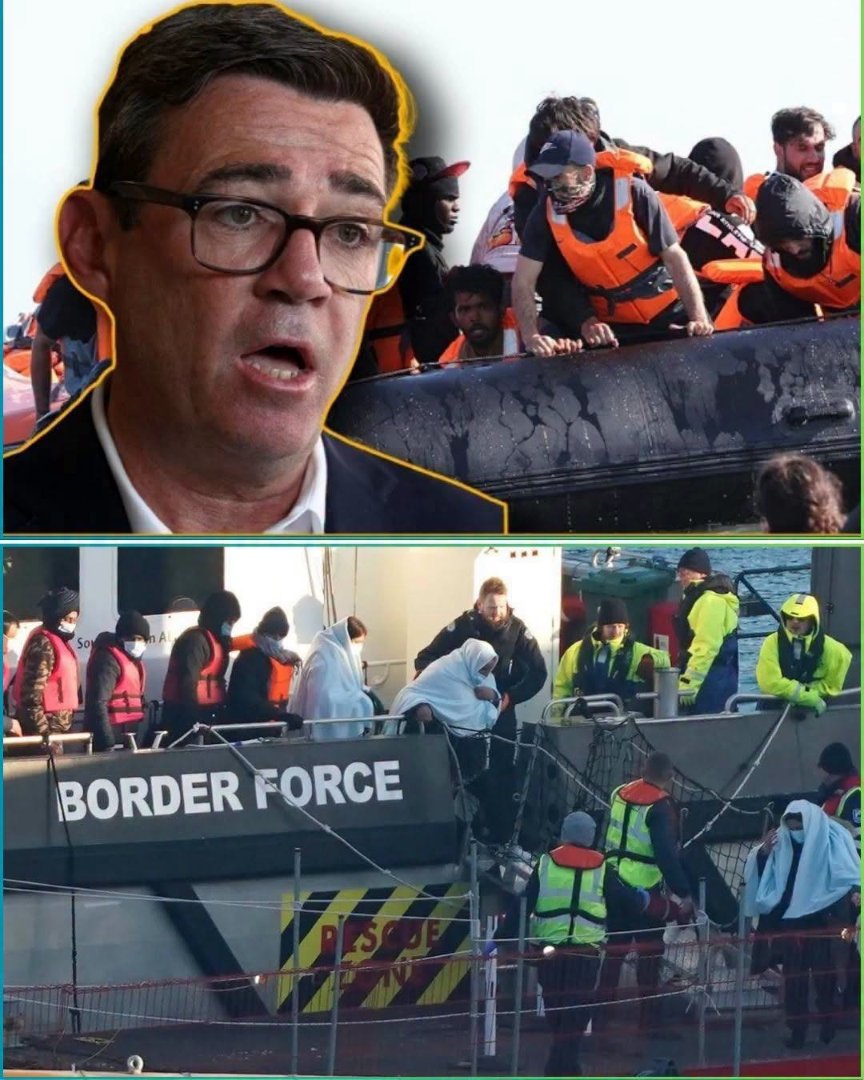 With small boat crossings continuing—reportedly numbering 15,000 this year, with 3,000 arriving recently—and nearly 100,000 migrants remaining in Home Office accommodations , immigration remains a highly volatile vulnerability for the current administration.
Disclaimer: This story was generated with AI and is entirely fictional. It is intended for entertainment purposes only. Names, characters, businesses, places, events, and incidents are either products of the author’s imagination or used fictitiously. Any resemblance to actual persons, living or dead, or actual events is purely coincidental.
UK Asylum Row Erupts as Councils Fight Back Against Controversial Relocation Plans
Britain is facing another fierce political confrontation over asylum policy as concerns grow about the relocation of asylum seekers, the pressure on local services and the responsibilities placed on councils across the country. The debate has intensified as local authorities grapple with housing shortages, stretched budgets and residents demanding greater transparency over decisions that could affect their communities.
At the centre of the dispute is a fundamental question about how the government should manage the asylum system while balancing national responsibilities with the concerns of local people. Ministers face pressure to find suitable accommodation for people seeking protection in the United Kingdom, while councils must consider the practical consequences for housing, healthcare, education and community relations.
For some local leaders, the problem is not simply the presence of asylum seekers but the way decisions are made. Councils may object when they believe they have been given insufficient information, limited opportunities to prepare or inadequate resources to manage additional demands. Residents, meanwhile, want to know whether local services can cope and whether their concerns are being taken seriously.
The result is a politically sensitive dispute that threatens to deepen divisions between central government, local authorities and communities already struggling with wider economic pressures.
Councils Demand Answers From Westminster
Local councils are often on the front line when national asylum policies are implemented. Although immigration and asylum decisions are primarily matters for central government, local authorities have responsibilities connected to housing, social care, education, public health and community support.
When relocation proposals emerge, councils may need to assess accommodation arrangements, coordinate with service providers and respond to questions from residents. Depending on the location and scale of the proposed arrangements, this work can place additional demands on already stretched resources.
Some council leaders argue that central government must do more to involve local authorities before making decisions that affect their areas. They want clear information about the number of people expected to arrive, the accommodation being considered, the duration of the arrangements and the funding available to support local services.
Without that information, planning becomes more difficult.
Councils must also respond to competing pressures. Many are dealing with shortages of affordable housing, rising demand for temporary accommodation and financial constraints that affect their ability to provide services. Any additional responsibilities must therefore be considered alongside existing obligations to local residents.
However, the responsibilities of local authorities do not disappear simply because national policy is controversial. The challenge is to establish arrangements that are workable, properly funded and consistent with the law.
The dispute illustrates a broader tension in British government: national ministers may establish the policy, but local authorities frequently have to manage its practical consequences.
Why Asylum Accommodation Has Become Such a Sensitive Issue
Asylum accommodation has become one of the most contentious elements of Britain’s immigration debate.
People who claim asylum are asking the government to assess whether they qualify for international protection. While their claims are being considered, some may be eligible for accommodation and financial support under the relevant rules.
The government must therefore provide a system capable of dealing with applications, assessing claims and arranging support where required. Delays can increase costs and leave people in temporary accommodation for longer than anticipated.
Hotels have attracted particular criticism because they can be expensive and may not provide an appropriate long-term solution. Their use can also create uncertainty for communities when residents receive limited information about how long arrangements will continue.
Relocation proposals may be intended to reduce reliance on hotels or distribute accommodation more widely. Yet moving people from one location to another does not automatically resolve the underlying problems.
If asylum applications take too long to process, accommodation costs may remain high. If suitable housing is unavailable, councils and government departments may struggle to find alternatives. If local communities feel excluded from decisions, even carefully planned arrangements can encounter opposition.
A sustainable approach must therefore address the entire system, from initial arrival and registration to decision-making, accommodation and the implementation of final outcomes.
Local Residents Want Transparency
For residents living near proposed accommodation sites, uncertainty can become a major source of frustration.
People may ask how many individuals will be accommodated, whether the arrangements are temporary, what support services will be available and how any concerns about safety or antisocial behaviour will be addressed.
They may also question whether the local area has sufficient housing, healthcare capacity and transport infrastructure to accommodate additional demand.
These questions should not automatically be treated as hostility towards asylum seekers. Communities have a legitimate interest in understanding decisions that affect local facilities and public resources.
At the same time, concerns should be addressed using reliable information rather than rumours or assumptions about individuals based on their immigration status.
Asylum seekers come from different countries and circumstances, and their claims must be considered individually. A person’s application for protection does not, by itself, establish that they have committed an offence or pose a threat to the public.
Effective communication can help distinguish legitimate questions about planning and public expenditure from unsupported claims that risk increasing hostility.
Councils and central government can improve confidence by publishing clear information, explaining the decision-making process and establishing accessible channels through which residents can raise concerns.
Where accommodation is proposed, communities should receive practical answers about management arrangements, service provision and the expected duration of the scheme.
The Financial Pressure on Local Government
Money is another central issue in the growing asylum dispute.
Councils across England face difficult financial decisions as they attempt to meet statutory responsibilities while managing competing demands on limited budgets. Housing, adult social care, children’s services and temporary accommodation can consume substantial resources.
When additional responsibilities arise, local authorities want to know whether central government will provide adequate funding.
The financial implications of asylum accommodation depend on the arrangements involved. Costs may include the provision or management of buildings, coordination with public services and other local responsibilities. The extent to which these costs fall on councils varies according to the specific scheme and the funding provided.
It would therefore be misleading to assume that every relocation automatically creates the same financial burden for every authority.
Nevertheless, uncertainty over funding can complicate planning and undermine confidence.
Council leaders may argue that central government should not make commitments without explaining how implementation will be financed. Ministers, in turn, must balance the cost of accommodation against the need to maintain a functioning asylum system.
There is also a wider economic consideration. Prolonged reliance on expensive temporary accommodation can represent poor value for taxpayers if delays could have been avoided through more efficient processing and suitable housing arrangements.
Reducing unnecessary expenditure requires attention to the causes of the problem, rather than simply moving people between different accommodation sites.
The Government Faces Pressure to Reform the System
The political dispute presents ministers with several difficult challenges.
First, the government must ensure that asylum claims are processed efficiently and fairly. Delays can increase accommodation costs, create uncertainty for applicants and make it harder for councils to plan.
Second, ministers need a credible strategy for accommodation. Temporary hotels may be necessary in particular circumstances, but prolonged dependence on them can create financial and political problems.