
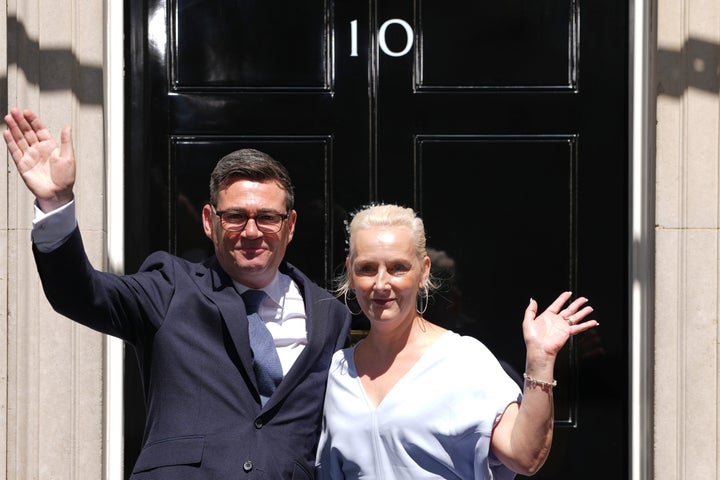
A recent poll projection shows Labour could win a snap election under Andy Burnham but would fall far short of a parliamentary majority, needing coalition deals, while the current prime minister says no early election is planned.
Labour would win a general election if it was held now – but lose more than 150 MPs and the party’s huge Commons majority.
A new study of recent opinion polls suggests Andy Burnham would return to 10 Downing Street as prime minister.
However, he would be forced to do deals with other parties to govern after falling well short of a majority in parliament.
The UK Polling Report findings come amid speculation at Westminster that Burnham could call a snap election within months to capitalise on Labour’s resurgence under his leadership.
The party is now leading Reform UK in most opinion polls – a dramatic turnaround from when Keir Starmer was still PM.
A poll of polls by Election Maps UK puts Labour on 26%, with Reform on 24% and the Conservatives on 20%.
According to UK Polling Report, an election now would see Labour return 239 MPs, 173 fewer than in 2024 and wiping out the party’s 167-seat majority.
Reform would come second on 128 seats, one ahead of the Tories on 127.
The Lib Dems would win 73 seats, the SNP would surge to 41, with the Greens on 6 and Plaid Cymru on 4.
Such a result would leave Labour 87 seats short of an overall Commons majority.
In that scenario, Burnham would most likely look to do a deal with Lib Dem leader Ed Davey, even though that would still not be enough to guarantee him a majority.
The next general election does not need to take place until 2029, and the prime minister has insisted that he has no plans to call one before then.
Speaking to the BBC in July, he said: “There’s no early general election. I don’t think people want it.”
Nevertheless, many senior Labour figures believe Burnham should capitalise on his current popularity by going to the country at some point between now and next spring.
Former Labour adviser Liz Bates told HuffPost UK’s Commons People podcast: “I would be tempted, if I was him, to go for it because you get the new manager bounce, Farage is looking bonkers to be honest … the Greens seem to be in a bit of a tricky spot as well.
“It’s probably not going to get better than this [for Burnham]. They will think it’s going to get better than this because it feels like ‘we’re great, we’re better than Keir, look at us’.
“When things get tough and the pressure comes on to have a general election, if you’re down in the polls at that point, all your options narrow. I would do it when things feel sunny and positive.”
Her comments echoed those of former Theresa May pollster James Johnson, who has said an election by next spring is Burnham’s best chance of securing his own Commons majority, defeating Reform and destroying the Tories.
Labour On Course to Win the General Election but Lose Its Commons Majority
Labour could emerge as the largest party at the next UK general election while still losing its overall majority in the House of Commons, according to recent electoral projections. The prospect highlights the increasingly fragmented nature of British politics, where a party can lead its rivals in the seat count yet remain dependent on other parties to govern.
A YouGov multilevel regression and post-stratification (MRP) model published on 24 September 2026 projected Labour winning 241 seats if an election were held at that time. The Conservatives were projected to win 130 seats, while Reform UK was placed on 123. The Liberal Democrats were projected to secure 71 seats, with the Scottish National Party on 40, Plaid Cymru on 15 and the Greens on nine.
These figures are estimates, not election results, and they depend on polling data and modelling assumptions. Nevertheless, they illustrate the challenge facing Labour: being the largest party would not necessarily mean having enough MPs to govern alone.
A Different Parliament Could Emerge
The scale of the projected change becomes clearer when compared with the 2024 general election. Labour won 411 seats under Keir Starmer, securing a substantial parliamentary majority. The latest YouGov central estimate would represent a net loss of 170 seats, leaving the party 85 seats short of the 326 generally required for an overall majority.
Such a result would transform the political landscape. Instead of relying on its own MPs to pass legislation, Labour could have to negotiate with smaller parties on budgets, public services, taxation and other major policy decisions.
The arithmetic would matter from the first days of a new Parliament. A government without a majority must be able to demonstrate that it can command the confidence of the House of Commons. It may do so through formal agreements, issue-by-issue negotiations or other arrangements with MPs outside the governing party.
That process can create opportunities for compromise, but it can also make governing more complicated. A budget or controversial bill could become the subject of lengthy negotiations, particularly if potential partners demand changes in return for their support.
For Labour, therefore, the distinction between winning the most seats and securing a working majority could become central to its election strategy.
Why Labour’s Position Is Difficult to Assess
The projections should not be interpreted as a definitive forecast of the next election. Polling models offer a snapshot of public opinion at a particular moment, and the political situation can change considerably before voters go to the ballot box.
The YouGov model used fieldwork collected between 23 August and 18 September 2026, drawing on responses from nearly 17,000 people. Its central estimate placed Labour ahead in the projected seat count, but the model also contained a range of possible outcomes.
Its most optimistic scenario for Labour still left the party short of an outright majority. At the same time, the projection suggested that neither Reform UK nor the Conservatives would necessarily be in a position to win enough seats to govern alone.
The result is a more complicated contest than a simple two-party race. Labour must consider not only whether it can attract voters from its opponents, but also whether its support is distributed effectively across constituencies.
Under Britain’s first-past-the-post electoral system, the national vote share does not translate directly into parliamentary seats. A party can receive substantial support across the country yet finish second in many constituencies, while another party with a more concentrated vote can win more seats from a similar share of the national vote.
This makes local contests, tactical voting and the distribution of support especially important. A modest shift in voting intention can produce a significant change in the seat count when it occurs across a large number of closely contested constituencies.
Reform UK and the Conservatives Face Their Own Challenges
The projected competition between Reform UK and the Conservatives adds another layer of uncertainty. In the September YouGov model, the Conservatives were placed on 130 seats and Reform UK on 123, a much narrower gap than some earlier projections had suggested.
For Reform, the challenge would be to convert support into constituency victories. Its projected seat total represented a substantial increase on the five MPs the party won in 2024, but remained far below the level required for an overall majority.
The Conservatives, meanwhile, would need to demonstrate that they could rebuild their position after a historic defeat in 2024. Their projected 130 seats would represent only a modest improvement on the 121 seats they secured at that election.
Competition between the two parties could affect outcomes in constituencies where their voters overlap. If Conservative and Reform candidates split support among voters who might otherwise favour one of them, Labour or another party could benefit. However, the precise effect would depend on local circumstances, candidate strength and how voters respond during the campaign.
Neither party can assume that its national polling position will automatically translate into parliamentary success. Both would need to build a credible constituency-level strategy and persuade voters that their policies offer practical answers to the country’s problems.
The Greens and Liberal Democrats Could Become More Important
A hung Parliament would also increase the potential influence of smaller parties.
The YouGov central estimate projected 71 seats for the Liberal Democrats and nine for the Greens, alongside 40 for the SNP and 15 for Plaid Cymru. These figures are not guaranteed, but they demonstrate how a fragmented political landscape could make parties outside the traditional Labour-Conservative contest more consequential.
If Labour fell well short of a majority, it could need support from more than one party to pass legislation consistently. Each potential partner would have its own priorities and political constraints.
The Liberal Democrats might seek commitments on public services, political reform or relations with Europe. The Greens could press for stronger environmental measures and changes to economic policy. The SNP and Plaid Cymru would approach negotiations with their own constitutional and regional priorities.
Any agreement would involve choices. Labour might need to modify proposals, offer concessions or accept compromises that would be difficult to reconcile with every part of its manifesto.
Support from smaller parties would not necessarily require a formal coalition. A confidence-and-supply agreement, a written cooperation arrangement or negotiations on individual bills could all be possible, depending on the election result and the positions taken by the parties involved.
Yet every arrangement would carry risks. Smaller parties would want to show their supporters that cooperation had delivered meaningful results, while Labour would need to demonstrate that negotiations had not prevented it from implementing its central commitments.
The Cost of Living Could Shape the Campaign
Economic pressures are likely to be an important consideration for voters. Household bills, housing costs, wages, taxation and the state of public services can influence how people assess a government, particularly when their own finances remain under pressure.
For Labour, the challenge would be to explain what its policies have achieved and what voters could realistically expect during another term. Broad promises may be insufficient if households do not see improvements in their everyday lives.
The party would also have to address the relationship between public spending and taxation. Demands for better health services, social care, transport and local government funding must be considered alongside the limits imposed by government borrowing and the wider economy.
Opposition parties would attempt to use these questions to distinguish themselves from Labour. Reform UK could emphasise immigration, national sovereignty and dissatisfaction with established political institutions. The Conservatives could focus on taxation, economic management and their record in government. The Liberal Democrats and Greens would seek to attract voters with different priorities.
Labour’s electoral position would depend partly on whether it could persuade a broad coalition of voters that its economic approach was credible and beneficial. But the impact of individual policies would vary between regions, age groups and income levels, making the contest difficult to reduce to one issue.
Leadership and Public Trust Will Matter
Leadership would be another significant factor. Voters often judge a government not only by its policies but also by its ability to explain decisions, respond to criticism and maintain a sense of direction.
A party facing a potentially reduced majority must also manage its own internal divisions. MPs representing different constituencies may have sharply contrasting views on public spending, immigration, energy, Europe and constitutional reform.
If Labour lost many seats, the remaining parliamentary party could become more diverse in its political priorities. Some MPs might argue for a stronger emphasis on public services and redistribution, while others could urge caution on taxation or migration to appeal to voters who have moved towards Reform UK or the Conservatives.
These disagreements would not automatically make the party ungovernable, but they could complicate attempts to present a consistent programme. The leadership would need to maintain discipline while recognising that MPs facing difficult local contests may have different assessments of what their constituents want.
Public trust would also be important. Voters may be willing to accept difficult decisions if they believe the reasons have been explained honestly and the burdens are distributed fairly. Conversely, a perception that promises have been abandoned without convincing justification could create further difficulties.
A Majority Is Not the Only Measure of Electoral Success
Winning the largest number of seats and winning an outright majority are different achievements. A party can lead the Commons without controlling enough seats to pass every measure independently. Equally, a hung Parliament does not automatically mean that a government will be unstable or short-lived.
Much would depend on the final distribution of seats, the relationships between parties and the willingness of MPs to cooperate on legislation. A minority government with a workable agreement could remain in office, while a government with a larger parliamentary advantage could still encounter internal disputes.
The next general election also remains subject to the usual uncertainties of political campaigns. Party leaderships may change their strategies, economic conditions may shift, and local issues or unexpected events may influence the choices voters make. Polling models can help identify possible outcomes, but they cannot settle the result in advance.
For Labour, the recent projections present a clear parliamentary challenge: a leading position in the seat count may not be enough to secure the freedom to govern alone. The party would need to defend vulnerable constituencies, maintain support among different groups of voters and prepare for the possibility that cooperation with other parties could become essential.
For its opponents, the same projections underline the importance of converting public support into constituency victories rather than relying solely on national vote-share figures.
Ultimately, the election will be decided by voters, not by a polling model. If the next Parliament is hung, Britain’s political parties will face difficult choices about compromise, cooperation and the policies they are prepared to support. The central question may not simply be which party finishes first, but which combination of MPs can command confidence in the Commons and provide a stable basis for government.