

Reform UK will hit countries that block migrant returns with tariffs if it wins power, as Nigel Farage tightens the party’s immigration pitch after a poll.
Will the tariffs would pile economic pressure on states that not accept deportees from Britain. The idea escalates earlier proposals first trailed in February for strict visa bans on people legally seeking to visit from Pakistan, Afghanistan, Syria, Eritrea, Sudan and Somalia until those countries agree to Farage vows tariffs on nations that refuse migrant returns?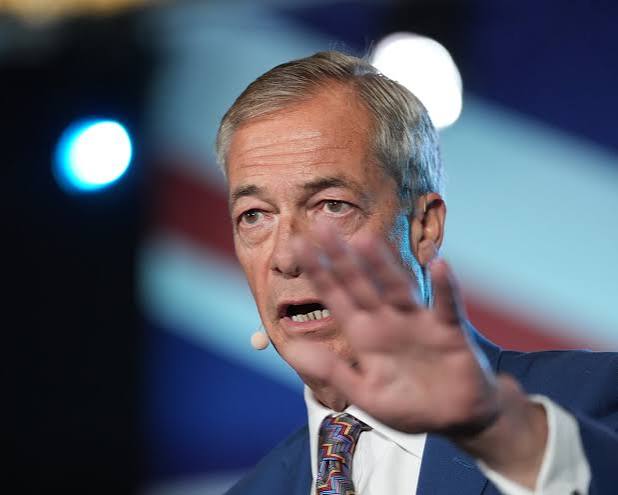
Nigel Farage will this week set out Reform UK plans to impose tariffs on countries that refuse to take back migrants, should the party enter government at the next election. The move renews the party’s hard focus on immigration after a sharp drop in the polls and forms part of a wider package of strict controls aimed at stopping the small boat traffic and forcing returns.
Reform says the tariffs would pile economic pressure on states that will not accept deportees from Britain. The idea escalates earlier proposals first trailed in February for strict visa bans on people legally seeking to visit from Pakistan, Afghanistan, Syria, Eritrea, Sudan and Somalia until those countries agree to take back illegal immigrants and foreign criminals. Party figures believe tariffs may bite harder where visa bans alone carry less weight. The exact rate has yet to be fixed.
The latest plan was first reported by The Sunday Times and is framed as a practical lever to make returns stick. Farage is casting the package in the same blunt economic style favoured by his long-time friend Donald Trump. The i Paper notes the timing: Reform has seen support fall amid funding rows while Labour’s ratings have steadied after Andy Burnham’s arrival in Downing Street, leaving Reform second in most polls and at its weakest approval since December 2024.
Home Office figures show Channel crossings so far this year down 41 per cent on 2025 and roughly a fifth lower than in 2024 and 2023. More than 211,000 people have crossed since 2018, with around 9,700 returned to their original country since June. Net migration has already tumbled from a peak of 944,000 in the year to March 2023 to 204,000 in the year to June 2025, and Oxford Economics expects it to fall below 100,000 this year, the lowest since 1997.
Reform’s list targets several of the countries that have sent the largest numbers of asylum seekers in recent years. The message is straightforward: countries that will not co-operate on returns will face real economic cost, not another round of polite requests. Farage will spell out the detail in the coming days as he tries to put immigration back at the centre of the party’s offer and reverse the recent slide.
Farage Vows Tariffs on Nations That Refuse to Take Back Migrants
Nigel Farage has escalated Reform UK’s immigration agenda by threatening tariffs, visa restrictions and airline bans against countries that refuse to accept the return of their citizens who have no legal right to remain in Britain. The proposal places international cooperation at the centre of Reform’s approach to deportations and raises important questions about trade, diplomacy, immigration enforcement and Britain’s legal obligations.
Farage outlined the measures as part of a wider plan to tighten the asylum system and increase removals. He argues that foreign governments should not be allowed to benefit from economic relationships with Britain while refusing to cooperate over the return of their nationals. Critics, however, question whether tariffs would be effective, whether they could damage British businesses and how the proposals would work within international law. <Cite refs={[“turn135569news6″,”turn135569search1”]}/>
The announcement comes as immigration remains a major issue in British politics. Reform UK has sought to distinguish itself from established parties by promising a much tougher approach to people arriving illegally, failed asylum applicants and foreign nationals convicted of crimes.
Farage’s Proposed Tariffs and Travel Restrictions
Under the proposals, countries that refuse to cooperate with deportations could face a series of escalating penalties. These could include restrictions on visas for their citizens, limits on foreign airlines using British airspace and, in the most serious cases, tariffs on goods imported into the United Kingdom.
Farage has presented these measures as leverage intended to persuade foreign governments to accept people being returned from Britain. He has argued that the existing system allows some countries to delay or obstruct removals, leaving British authorities struggling to enforce immigration decisions.
The tariff proposal is particularly significant because it would extend the dispute beyond immigration and into trade policy. Visa restrictions directly affect travel, while airline bans could disrupt transport links. Tariffs, by contrast, could affect exporters, importers, retailers and consumers on both sides of a trading relationship.
Reporting by ITV News on 12 October said Farage had raised the possibility of visa bans, restrictions involving Pakistani nationals’ assets in London and flight bans, with tariffs described as a measure to consider in extreme circumstances. <Cite refs={[“turn135569search1”]}/>
The precise implementation of the tariff proposal would matter. A political announcement does not itself establish which products would be targeted, what rates might apply, how long restrictions would last or what conditions a country would need to meet to have them lifted. Those details would need to be developed before the policy could be assessed fully.
Why Some Countries Refuse or Delay Returns
Returning people who have no legal right to remain in Britain can depend on cooperation from their country of nationality. Authorities may need to verify identities, issue travel documents and agree on the practical arrangements for a return.
When a government refuses to cooperate or takes a long time to provide documentation, British authorities can face difficulties carrying out deportations, even after an individual’s immigration case has been decided.
The issue can become more complicated when people lack reliable identity documents, dispute their nationality or raise legal concerns about returning to their country of origin. In other cases, governments may be reluctant to accept deportees because of domestic political pressures or disagreements with Britain.
Farage argues that stronger consequences would change the incentives for governments that resist cooperation. His approach rests on the assumption that the prospect of losing visa access, air links or favourable trade arrangements would encourage those governments to negotiate.
That strategy could create pressure, but its effectiveness would vary. A country with substantial trade ties to Britain might have a stronger incentive to reach an agreement than one with limited economic links. A government that considers the political cost of accepting deportees greater than the potential cost of sanctions might continue to resist.
The policy would therefore require more than threats alone. It would depend on diplomatic negotiations, reliable procedures for identifying individuals and clear arrangements for receiving them.
The Wider Immigration Plan
The tariff pledge forms part of a broader Reform UK proposal announced by Farage in October. Reuters reported on 12 October that the party had proposed suspending asylum claims for up to five years if it won the next general election, declaring roughly 90,000 pending applications void and automatically rejecting new claims during the proposed suspension. The party has also discussed deporting people whose claims fail and removing foreign nationals who have no legal right to stay. <Cite refs={[“turn135569news6”]}/>
These are proposed policies, not measures currently in force. Their practical effects would depend on legislation, administrative capacity, court decisions and the circumstances of individual cases.
Reform has also discussed reviewing some existing refugee-status decisions and arranging returns to third countries in certain cases. Such measures would raise questions about the safety of destinations, the treatment of families and the rights of people who may face persecution if returned.
Farage’s supporters argue that a credible prospect of removal is essential to maintaining public confidence in the immigration system. They contend that rules become difficult to enforce if people whose claims have been rejected can remain in Britain indefinitely because another government will not accept them.
Opponents argue that a large-scale programme of removals could encounter serious legal and practical barriers. Refugee organisations have warned that sending people to places where they face persecution, torture or death would raise grave humanitarian concerns. <Cite refs={[“turn135569news8″,”turn135569news6”]}/>
The central challenge is how to enforce immigration decisions while ensuring that each case is handled lawfully and that people are not returned to serious danger.
Could Tariffs Work?
Tariffs are taxes imposed on imported goods. In theory, the threat of additional costs could persuade a trading partner to change its behaviour. If a government believed that refusing deportation cooperation would put valuable exports at risk, it might become more willing to negotiate a returns agreement.
However, tariffs are not a cost-free instrument. Importers may pass additional costs on to businesses and consumers, while affected countries could retaliate against British exports. Companies that depend on international supply chains might face higher prices, uncertainty and administrative complications.
The choice of targets would also be important. If a country exports goods to Britain but has relatively few citizens travelling there, tariffs might create more economic pressure than visa restrictions. Yet the burden could fall disproportionately on private businesses and workers who have little influence over their government’s decisions.
There are also international trade rules to consider. The Times has reported that the proposal could face legal hurdles under World Trade Organization rules, particularly if tariffs were applied selectively to particular countries. The legality would depend on the design of the measures, the relevant trade commitments and whether any recognised exceptions could apply. <Cite refs={[“turn135569news5”]}/>
A future government would need to establish a clear legal basis for any restrictions and consider the possibility of disputes or retaliatory measures. It would also need to judge whether the diplomatic gains were worth the potential economic consequences.
Britain’s Existing Approach to Returns
The use of pressure over deportation cooperation is not limited to Reform UK. The British government has also threatened visa penalties against countries that fail to accept their nationals who have no right to remain in the United Kingdom.
On 15 October, the Home Office announced restrictions on preferential visa processing for Eritrean officials and warned that a wider visa shutdown could follow if cooperation did not improve. The government said earlier visa measures against Angola, Namibia and the Democratic Republic of Congo had helped encourage improved cooperation in returns. It also announced a new migration arrangement with Egypt intended to speed up the return of Egyptian nationals who have no right to stay. <Cite refs={[“turn135569search3”]}/>
This shows that the broader principle of using immigration-related measures to encourage cooperation is already part of government policy. The distinction is the range and severity of the instruments being proposed. Farage has explicitly raised tariffs and airline restrictions alongside visa bans, potentially extending the dispute into wider economic relations.
Whether that approach would produce better results than targeted diplomatic negotiations remains uncertain. The government’s experience suggests that visa measures can sometimes contribute to agreements, but it does not automatically establish that trade penalties would be more effective.
The Diplomatic Consequences
Using tariffs to influence deportation policy could strain relations with countries whose cooperation Britain needs on a range of issues, including security, trade and regional stability.
A government threatened with economic penalties might agree to negotiations, but it could also interpret the move as hostile and respond in kind. Airline restrictions could complicate travel for ordinary passengers, while broader trade measures might affect companies unrelated to immigration policy.
Diplomacy would therefore remain important even if sanctions were introduced. British officials would need to communicate exactly what cooperation was expected, how compliance would be assessed and what steps would lead to restrictions being lifted.
The government would also need to distinguish between deliberate refusal and practical difficulties. A country that is unwilling to accept its nationals presents a different problem from one that needs time to verify identities or establish documentation procedures.
Clear criteria would help reduce uncertainty and make it easier to determine whether the policy was achieving its stated purpose.
What It Means for British Politics
Farage’s proposal reinforces Reform UK’s attempt to make immigration enforcement a defining political issue. By linking deportations to trade and diplomatic pressure, the party is presenting the problem as one that requires a fundamental change in how Britain deals with foreign governments.
The proposal also places pressure on other political parties to explain how they would improve returns while managing legal obligations and international relationships. The government has already adopted some visa-related penalties, meaning the debate is not simply about whether pressure should be used, but which measures are proportionate and likely to work.
For voters, the key questions are practical. Would the policy increase the number of people lawfully removed from Britain? How much would enforcement cost? Could it affect prices, exports or travel? And what safeguards would prevent people from being returned to places where they face serious harm?
Those questions cannot be answered by the strength of the rhetoric alone. They require detailed proposals, transparent targets and evidence about the outcomes of negotiations and enforcement action.