

New polling reveals Reform UK has become Britain’s most unpopular party as voters mobilise to block Nigel Farage’s influence in the upcoming May elections.
The myth of Reform UK as an unstoppable insurgent force is finally beginning to fracture under the weight of its own toxic brand. New data from More in Common confirms that Nigel Farage’s vehicle has achieved a dubious milestone by becoming the most unpopular political party in Britain. For the first time, more citizens are motivated to vote against Reform than against either of the weary legacy parties. This shift represents a fundamental change in the national mood, moving from passive frustration to active resistance.
The numbers published today by More in Common paint a devastating picture for a party that claims to speak for a silent majority. Thirty-eight per cent of British voters now state they would cast their ballot specifically to keep Reform out of power, representing a nine point surge in active hostility since November. This animosity eclipses the negative ratings of both Labour and the Conservatives, suggesting that the more the public sees of Reform, the less they like what is on offer. The party has effectively reached a demographic ceiling that prevents it from expanding beyond a core of disillusioned supporters.
A Referendum on Farageism
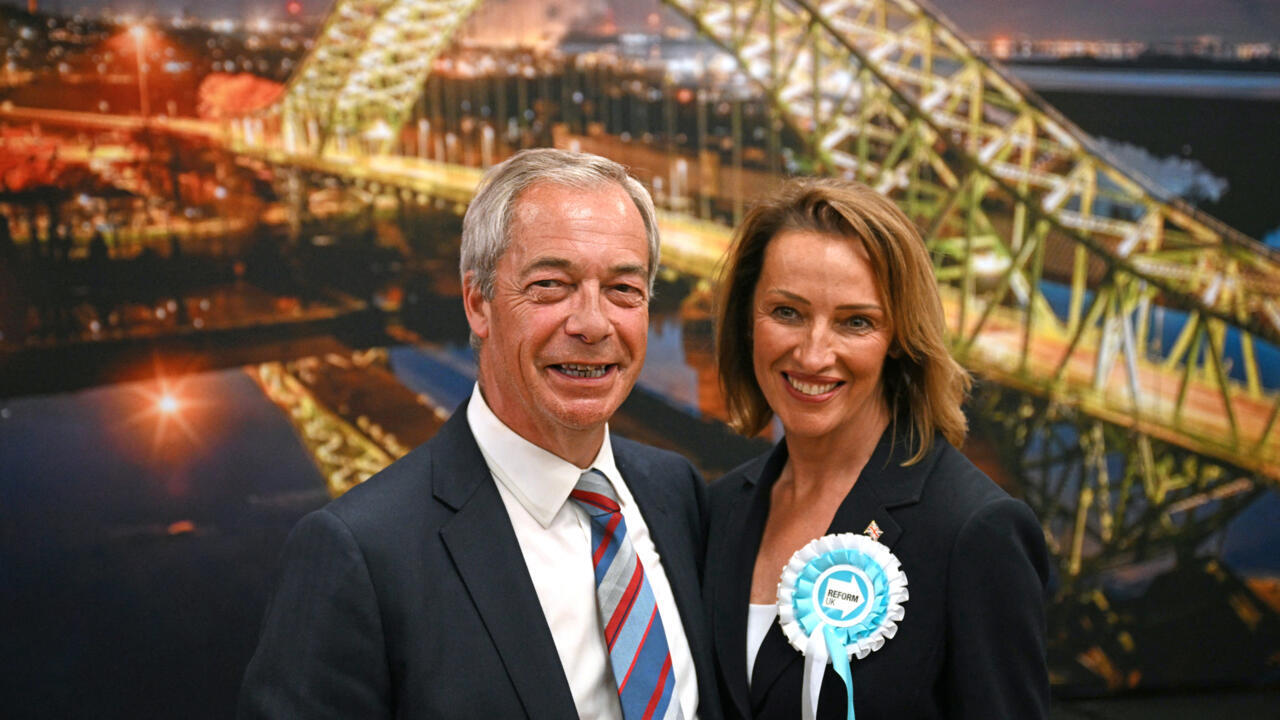
The upcoming May local elections are transforming into an unprecedented national referendum on a party that holds no significant power but exerts a disproportionate influence on the discourse. With over 5,000 council seats contested across England and vital votes in Scotland and Wales, the traditional midterm protest has been replaced by tactical mobilisation. Nigel Farage has become a figure so uniquely divisive that he is driving voters toward any candidate capable of stopping his advance. This phenomenon is no longer confined to liberal enclaves but is manifesting in every corner of the country.
Luke Tryl of More in Common notes that voters are increasingly describing their intentions in terms of who they want to stop rather than who they want to win. Evidence from the Gorton and Denton by-election showed progressive voters repeatedly asking which candidate offered the best chance of blocking a Reform victory. This defensive voting pattern suggests that Farage’s strategy of performance and grievance has finally backfired by uniting his opponents. The party’s attempt to claim it is the only true alternative falls flat when the majority of the electorate views that alternative as a threat.
Cracks in the Insurgent Veneer
Reform leadership acknowledges the threat of tactical voting but continues to rely on the hollow argument that all other parties are a singular establishment bloc. This rhetoric appears increasingly desperate as the party faces rejection in the very regions it seeks to conquer. In Wales, Reform is attempting to squeeze Labour from the right, but they are finding that traditional working-class communities are not as susceptible to their brand of ethnonationalism as they hoped. Plaid Cymru is successfully positioning itself as the constructive alternative for those disillusioned with Westminster.
The High Price of Toxic Rhetoric
The human consequences of Reform’s political style are becoming clear as local communities brace for a campaign defined by division. By focusing on dispossession and institutional capture, Reform has created a political environment where cooperation is impossible. This toxicity has driven away the moderate voters required to win council seats and sustain a national movement. The result is a party trapped in a feedback loop of its own making, appealing only to those who have already bought into its darkening worldview.
Reform UK has built its entire identity on the claim that it represents everyone the establishment has ignored. The polling evidence suggests that the British public has looked at the reality behind that claim and decided to reject it. As the May elections approach, the party finds itself fighting on multiple fronts against an electorate that is no longer merely indifferent but actively hostile. The ceiling has been reached, and the only remaining question is how far the party will fall when the results are finally counted. 10. The era of Reform as a consequence-free protest movement is over, replaced by a reality where its existence serves primarily to unite the rest of the country against it.
Reform UK Becomes Britain’s Most Unpopular Party as Voters Turn Against Nigel Farage
Reform UK is facing growing questions about its public image after recent polling suggested that a substantial proportion of British voters view the party unfavourably. Once able to attract attention through its challenge to the political establishment, Nigel Farage’s party is now confronting a difficult question: can it maintain its electoral momentum while persuading a wider section of the public that its policies offer a credible alternative to Labour and the Conservatives?
The latest developments present a complicated picture. Reform remains a significant force in British politics, but its popularity ratings and voting-intention figures suggest that its support should not be taken for granted. At the same time, Labour and the Conservatives continue to compete for voters who are dissatisfied with the government’s performance and uncertain about the country’s future direction.
A YouGov survey published in August 2026 found that 65% of Britons viewed Reform UK unfavourably, compared with 27% who viewed it favourably. The poll recorded a net favourability rating of minus 38, reflecting the gap between positive and negative opinions of the party. The findings also showed that 56% of respondents did not want Reform to form part of a future government. <Cite refs={[“turn364431search2”]} />
These figures do not mean that every dissatisfied voter intends to reject Reform at the ballot box. They do, however, highlight a challenge for Farage as the party attempts to expand beyond its existing support base.
A Difficult Period for Nigel Farage
Nigel Farage has built his political career around challenging established parties and campaigning on issues including immigration, national sovereignty and Britain’s relationship with Europe. His direct communication style has helped him attract a loyal following, particularly among voters who believe mainstream politicians have failed to address their concerns.
However, the qualities that appeal to some voters can create opposition among others. Farage’s outspoken comments on immigration and national identity have made him a prominent figure in political debates, but they have also attracted criticism from opponents who argue that his rhetoric risks increasing divisions.
This creates a difficult balancing act for Reform. Its core supporters may expect Farage to maintain a confrontational approach, while voters who are considering the party for the first time may want more detail about how its proposals would work in practice.
A party seeking national power must appeal to people with different priorities. Some voters focus primarily on immigration, while others are more concerned about taxation, wages, public services or the cost of housing. Reform must explain how its broader programme would address these concerns without losing the political identity that helped it gain recognition.
The party’s challenge is therefore not simply to attract attention. It must also persuade voters that its proposals are practical, affordable and capable of producing measurable results.
Why Unfavourable Ratings Matter
Political parties frequently receive negative ratings from people who would never consider voting for them. Such figures are not unusual in a competitive political environment, especially when parties take positions that strongly appeal to one section of the electorate but alienate another.
Nevertheless, unfavourable ratings can matter when a party tries to expand. If many voters have already formed a negative impression, the party may find it harder to persuade them to reconsider their views.
The YouGov figures published in August indicated that Reform’s unfavourable rating had reached 65%, while its favourable rating stood at 27%. The same research found that more than half of respondents did not want the party to form part of a future government. <Cite refs={[“turn364431search2”]} />
These results suggest that Reform faces a challenge in broadening its appeal. The party may continue to attract voters who strongly agree with its positions, but a national electoral strategy also requires consideration of people who are undecided or sceptical.
There is an important distinction between disliking a party and refusing to vote for it. Some voters may express a negative opinion while still considering its policies on particular issues. Others may prefer Reform to another party despite having reservations about Farage personally.
Consequently, favourability surveys should be considered alongside voting-intention polls, election results and research into the reasons behind voters’ decisions.
Reform Falls Behind in a Closely Contested Poll
Recent voting-intention figures have added another dimension to the debate surrounding Reform’s position.
A YouGov poll conducted on 11–12 October 2026 among 2,393 adults in Great Britain put Labour on 24%, the Conservatives on 23% and Reform UK on 21%. The Liberal Democrats recorded 12%, while the Greens stood at 11%. The results placed Reform in third position, although all three largest parties were within the poll’s margin of error. <Cite refs={[“turn364431search0”]} />
The figures represent a snapshot of voting intentions at a particular moment, not a prediction of the result of the next general election. Polls can fluctuate as political events develop, party leaders make announcements and voters reassess their preferences.
Even so, the results show why Reform cannot assume that its earlier gains will automatically continue. The Conservatives’ increase and Labour’s position near the top of the poll suggest that the competition for voters remains open.
For Farage, the immediate question is how to retain existing supporters while attracting people who are considering returning to the Conservatives or supporting Labour. For the other parties, the challenge is to demonstrate that they can offer credible responses to the issues driving dissatisfaction.
Immigration Remains Central to Reform’s Strategy
Immigration has been one of Reform UK’s most prominent political issues. Farage has argued for a much tougher approach to asylum applications, deportations and the removal of people who have no legal right to remain in Britain.
On 12 October 2026, Reuters reported that Farage had proposed suspending asylum claims for up to five years if Reform won the next general election. The proposal included plans to address existing applications and increase removals, while allowing an exception for Ukrainian refugees. Refugee organisations criticised the proposals, warning that returns could expose some people to persecution or serious danger. <Cite refs={[“turn364431news9”]} />
The announcement illustrates both the strength and the risks of Reform’s approach. Immigration is an important issue for many voters, and some support far stricter controls than those proposed by the established parties. Others are concerned about the humanitarian consequences, the practical implementation of mass removals and Britain’s legal obligations.
Reform must therefore contend with questions about how its proposals would operate, which countries would accept deportees, what legal challenges might arise and how the system would distinguish between different cases.
The debate is not limited to political messaging. It involves questions of administration, international cooperation, public spending and the protection of people who face genuine danger.
For voters, the important consideration is whether the policies being proposed can achieve their stated aims while complying with the law.
Controversies Can Affect a Party’s Public Image
Reform has also faced scrutiny over party funding and the conduct of people associated with its political operation. Such controversies can become particularly significant for a party whose appeal depends partly on presenting itself as an alternative to established political practices.
In September 2026, reporting on a YouGov survey indicated that 69% of British adults viewed Farage unfavourably, while 24% viewed him favourably. The survey followed controversy surrounding Reform’s funding and questions about a potential foreign donation. Farage denied wrongdoing. <Cite refs={[“turn364431search3”]} />
Political funding questions can affect public confidence because voters expect parties to explain where their money comes from and whether donations comply with the rules. Allegations and investigations should not be treated as proof of misconduct, but the way a party responds to scrutiny can influence how the public perceives its transparency.
For Reform, the issue is particularly relevant because its message emphasises accountability and criticism of the political establishment. Supporters may expect the party to apply high standards to its own operations, while critics will scrutinise whether its practices match its public commitments.
Clear explanations, compliance with electoral law and transparent responses to legitimate questions can help voters assess the facts for themselves.
Labour and the Conservatives Have Their Own Challenges
Reform’s unfavourable ratings do not automatically translate into a recovery for Labour or the Conservatives. Both established parties face their own difficulties in persuading voters that they understand the country’s problems and can deliver practical improvements.
Labour must demonstrate progress on living standards, public services, housing and immigration management. If households continue to feel financially insecure or believe that public services are not improving quickly enough, the party may struggle to rebuild confidence.
The Conservatives, meanwhile, must convince voters that they offer a credible alternative after their previous period in government. Their recent increase in polling support suggests that some voters are willing to reconsider the party, but maintaining that support will require a clear programme and effective leadership.
The October YouGov poll placed the Conservatives just one percentage point behind Labour and two points ahead of Reform. Given the poll’s margin of error, those differences should not be interpreted as definitive evidence of a settled ranking. <Cite refs={[“turn364431search0”]} />
The wider political picture is therefore more complicated than a simple contest between a popular establishment and an unpopular challenger. All three parties are competing for voters who may be dissatisfied with one option without feeling enthusiastic about another.
Can Reform Win Over Voters Who Remain Sceptical?
For Reform, expanding its support will require addressing more than the concerns of its existing base.
The party needs to demonstrate that its economic proposals can withstand detailed examination, that its candidates can represent local communities effectively and that it has the organisational capacity to deliver its promises.
Voters may agree with Reform’s position on one issue while disagreeing with it on another. A person who supports stricter immigration controls may still have concerns about changes to public services or taxation. Another voter may share Farage’s criticism of Westminster but question whether Reform has sufficient experience to govern.
These differences mean that the party cannot assume that public dissatisfaction will translate automatically into votes.
It must also compete in Britain’s electoral system, where the distribution of support across constituencies can be as important as a party’s overall share of the national vote. Strong polling figures do not necessarily translate directly into parliamentary seats, and local contests can produce different results from national surveys.
The party’s longer-term position will depend on its performance across multiple elections, the credibility of its candidates and the extent to which it can maintain support when its policies are examined in detail.
A Changing Political Landscape
The latest polling provides evidence that Reform UK faces difficulties with public favourability, even as it remains a major participant in Britain’s political debate.
The August YouGov survey recorded a substantial gap between favourable and unfavourable views of the party, while the October voting-intention poll placed Reform behind Labour and the Conservatives in a closely contested three-party field. <Cite refs={[“turn364431search2″,”turn364431search0”]} />
Neither finding proves that Reform’s electoral influence has reached its limit. Equally, previous gains do not guarantee future growth. Public opinion can change, and the political consequences of a poll depend on the issues dominating the debate, the choices made by party leaders and the circumstances of individual elections.
For Farage, the challenge is to turn a strong political identity into broader public confidence. For Labour and the Conservatives, the task is to persuade voters that their own policies offer credible answers to the country’s problems.
The coming months will provide further evidence of how these competing strategies perform. Polling, local election results and public responses to policy announcements will help reveal whether Reform can expand its appeal or whether its opponents can regain some of the voters who have drifted away.
Ultimately, Britain’s political contest is not decided by favourability figures alone. It is shaped by voters’ experiences, the credibility of political promises and their judgement of which party best represents their interests. The current figures show a challenging environment for Reform, but the longer-term direction of British politics remains dependent on how parties respond to the concerns of the electorate.