
Wealthfare handouts for the richest paid for by welfare cuts for the poorest reinforce Kemi Badenoch as an old school Two Nation Tory.
She hasn’t changed, they haven’t changed, when the Conservative Party and its leader are for the wealthiest few while kicking the young and those struggling on benefits.
Even the Sheriff of Nottingham might’ve proved squeamish over her robbing the poor to pay for the rich.
Nothing yells “something for nothing culture” louder than reinforcing inherited wealth, gifting bigger fortunes to winners of a parental lottery who never earned fat jackpots Badenoch will clobber folk to subsidise.
And what’s really “immoral” is declaring war on welfare while splashing billions extra on a wealthfare privileged elite. Same old Conservatives looking after millionaires and down on the millions so it’s no wonder most Britons think they haven’t fundamentally changed since 2024’s calamitous rejection at the end of 14 grey years.
Polls suggest the Tories are extremely unlikely to form a UK Government any time soon and it’s worth recalling George Osborne in 2007 promised to raise tax-free inheritance to £1m then never did during six years he was Chancellor or the full 14 years of Tory misrule.
Plus it’s worth stressing just one-in-20 estates currently pay inheritance tax so Badenoch exempting homes and £1million on top is an unearned present for a rich niche she and her top team probably know all by name.
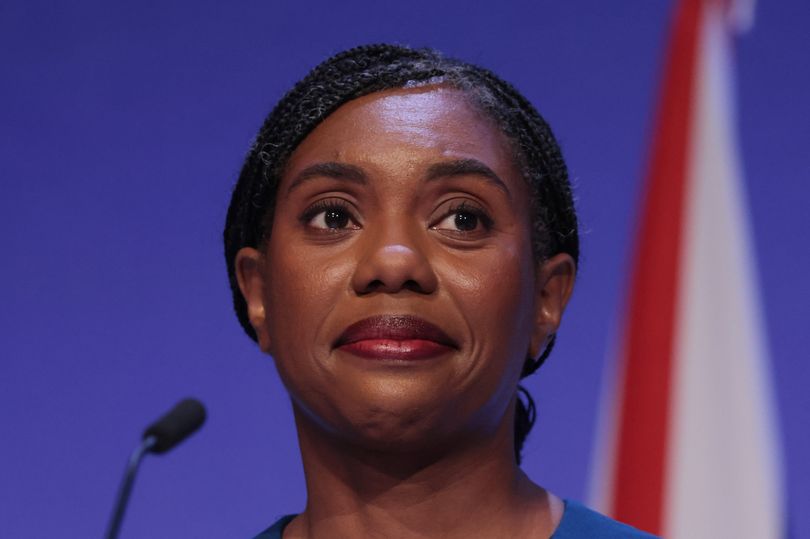
Showering what may prove to be phantom bribes on easy street residents – £700million for highest earning yummy mummies, £1.4billion for private school kids, £9billion helping most the buyers of the most expensive houses and now billions extra for kids of loaded dead parents – while smearing and threatening those born the other side of the tracks deserves to backfire.
Nor is common sense common in a Tory Party discouraging the elderly to downsize, trapping the aged in houses too big unless they need to sell them to fund social care she isn’t providing but crucially Andy Burnham ’s Labour would.
The inheritance tax card is straight from a 2007 Osborne-Brown playbook credited with helping deter Gordon Brown calling an early election. This time Burnham and Labour have close to three years to argue the immorality of Badenoch’s wealthfare bung.
Imposing tyrannical rule on a battered party, Badenoch’s self-confidence isn’t persuading lost voters to return.
Article continues below
In Birmingham this week the Cons avoided last year’s mauling in Manchester when Reform co-ordinated a coach-load of councillors to defect, Nigel Farage ’s own Hard Right mob in trouble 12 months on.
But the Cons aren’t rattling No 10’s gates, the conference largely flat and sparse with star guest Jeremy Clarkson – a wealthy landowner who once admitted buying his farm to dodge inheritance tax – observing a lot of Tories appeared to be dressed as empty seats.
The best part of Badenoch’s speech attacked rival Reform for questioning whether Black Britons, such as herself and international footballers, could really be English which of course they absolutely can and are.
Yet that Badenoch position is constantly undermined by migrant-bashing scapegoating and scaremongering Tories like the Conservative frontbencher who falsely asserted no-go areas exist in Luton.
Article continues below
She deserved applause for a funny gag about Reform figures recently measuring the Downing Street curtains now measuring them for prison cells but pragmatism may be why she continues to rule out a deal with Farage.
More in Common pollster Luke Tryl discovered a Tory-Reform pact would be bad for both parties because too many Tories don’t like Reform and it would blunt Reform’s insurgent edge.
Almost as many Tory voters say they’d tactically vote Labour to stop Reform as would vote Reform to stop Labour. Champion of the rich Badenoch stuffing rich mouths with wealthfare gold isn’t the winner she hopes but it does show she feather-beds the haves at the cost of the have-nots.
Declaring War on Welfare While Showering Billions on the Wealthy Is Immoral
The Conservative Party is facing renewed criticism over its economic priorities after Kemi Badenoch unveiled plans to reduce inheritance tax for wealthy families, reigniting accusations that the party continues to favour Britain’s richest households while people dependent on welfare face financial pressure.
The controversy has intensified following Badenoch’s proposals to abolish inheritance tax on family homes and introduce an additional £1 million tax-free allowance for couples. The Conservative leader has presented the plans as a way to protect family wealth and allow people to pass on the assets they have accumulated throughout their lives. Critics, however, argue that the measures would direct billions of pounds towards households that are already comparatively well-off, while doing little to address the difficulties facing people on low incomes.
The criticism has been summed up in a powerful accusation: declaring war on welfare while spending billions on a privileged wealthy elite is immoral. It reflects a broader argument about fairness, economic inequality and the responsibilities of a political party seeking to regain public confidence after a crushing electoral defeat.
Badenoch’s Inheritance Tax Plan Sparks Anger
Badenoch’s proposed inheritance tax changes have become a major dividing line in the debate over Conservative economic policy. The party argues that families should have greater freedom to pass their homes and savings to the next generation without facing what it regards as an unfair tax burden.
For homeowners who have spent decades paying their mortgages, maintaining their properties and building financial security, inheritance tax can be a deeply personal issue. Rising property values can push estates above tax thresholds even when their owners do not consider themselves exceptionally wealthy.
Conservatives argue that families should not be penalised simply because their homes have increased in value. They also maintain that protecting inheritance can encourage saving, investment and long-term financial planning.
But opponents question whether abolishing inheritance tax on family homes is the most urgent priority for the country. Many people struggle to afford rent, save for a deposit or cover everyday household expenses. For those without substantial assets, the promise of a more generous inheritance allowance offers little immediate relief.
The central criticism is that the policy concentrates benefits among people who already own valuable property. Those who have inherited wealth or stand to inherit expensive homes could receive substantial advantages, while families with few assets would see little direct benefit.
This has led critics to question whether Badenoch’s economic programme is designed around the needs of the wider population or the interests of a relatively privileged group.
The Meaning of ‘Wealthfare’
The term “wealthfare” has become a pointed description of policies that critics believe provide financial advantages to wealthy people while public assistance for poorer households faces restrictions or reductions.
Where welfare generally refers to support intended to protect people against poverty, unemployment, disability or other financial difficulties, wealthfare suggests a system in which tax advantages and public policy help preserve or expand existing fortunes.
The distinction is political as well as economic. Governments frequently defend tax relief by arguing that it encourages investment, rewards saving or protects family businesses. Critics counter that tax reductions can disproportionately benefit people who already have considerable financial resources.
In the inheritance tax debate, the argument is particularly clear. A household with an expensive home and substantial assets may benefit significantly from a more generous inheritance tax regime. A family renting a small property and living from one payday to the next may receive no comparable advantage.
The criticism is not necessarily that wealthy families should never receive tax relief. Rather, it asks why such relief should take priority when other households face immediate financial insecurity.
Supporters of Badenoch’s approach argue that people should be allowed to retain more of the wealth they have earned. Opponents respond that inherited wealth is not distributed according to effort alone. Some people receive valuable assets because their parents owned property or accumulated investments, while others begin adulthood with little financial support.
This difference can influence opportunities for housing, education, business ownership and retirement security. Consequently, changes to inheritance tax are also changes to how wealth is transferred between generations.
Welfare Cuts and the Pressure on Vulnerable Households
The debate becomes more contentious when inheritance tax reform is considered alongside proposals to restrict welfare spending.
Benefits provide essential support for people who cannot work, people looking for employment, families with children and individuals whose earnings are insufficient to cover basic living costs. For many households, these payments help pay for food, heating, housing and other necessities.
Public spending on welfare is not without challenges. Governments must ensure that benefits are properly administered, that fraud is addressed and that employment is supported where possible. There is also a legitimate debate about how to make the system financially sustainable.
However, critics argue that reducing support without adequately considering the circumstances of recipients can push vulnerable people into greater hardship.
The effects of a benefit reduction can be particularly serious for households with little savings. A relatively small loss of income may mean falling behind on rent, reducing food expenditure or being unable to heat a home adequately.
By contrast, a tax reduction for someone with substantial property wealth may increase the amount ultimately passed to their children without changing their immediate standard of living.
These differences explain why the distribution of public policy benefits matters. The overall cost of a measure is only one part of the picture; its effects on different groups are equally important.
Official analysis from the Office for National Statistics has shown that taxes and benefits substantially reduce income inequality in Britain. For the financial year ending 2024, the average final income of the richest fifth of households was approximately 3.3 times that of the poorest fifth after taxes and benefits. This demonstrates the redistributive role played by the tax and benefit system.
Any major changes to taxation and welfare therefore need to be assessed not only in terms of economic growth but also in terms of their consequences for household incomes and inequality.
Who Benefits From the Conservative Proposals?
The Conservatives’ inheritance tax plans are intended to help families pass on property and accumulated wealth. Their supporters argue that the measures would protect ordinary homeowners as well as the wealthiest estates.
That argument deserves consideration because property ownership does not automatically mean that someone has a high disposable income. Some older people live in valuable homes but have relatively modest pensions and limited savings outside their property.
Nevertheless, the greatest financial gains from removing inheritance tax on valuable homes are likely to accrue to estates that would otherwise face the largest liabilities.
The policy therefore raises questions about the relationship between wealth and income. A person can have a substantial asset but limited cash, yet the transfer of that asset can still provide a major financial advantage to their heirs.
For people who have never owned a home, the situation is different. They may have paid rent for decades without accumulating a comparable asset. Their children may face high housing costs and limited opportunities to save, leaving them less likely to benefit from an inheritance.
This creates a wider debate about whether public policy should primarily protect the wealth accumulated by existing property owners or focus more heavily on helping people acquire assets in the first place.
A balanced economic programme could address both concerns. However, critics argue that the Conservatives’ proposal places too much emphasis on protecting inherited wealth without offering a sufficiently convincing answer to the problems facing renters, younger workers and low-income families.
Is the Policy Affordable?
The financial implications of the proposed tax changes are another major concern. The Conservatives have presented their inheritance tax reforms as part of a wider programme intended to reduce the tax burden and change the relationship between individuals and the state.
Yet tax cuts have to be financed. If the government collects less revenue, it must compensate through spending reductions, additional revenue from other sources, borrowing or stronger economic growth.
The Conservatives have argued that reducing the size of government and removing unnecessary expenditure can create room for lower taxes. Critics question whether the savings would be sufficient to cover the cost of the proposed inheritance tax changes without affecting public services.
There is also uncertainty about the long-term economic effects. Supporters believe that greater freedom to transfer wealth could encourage saving and investment. Opponents argue that the benefits may be concentrated among families who already have substantial assets, with limited evidence that the resulting economic gains would offset the loss of tax revenue.
The answer depends on the final details of the policy, the behaviour of households and the wider economic environment. Neither side can establish its case simply by assuming that tax cuts automatically generate enough growth to pay for themselves or that every reduction in revenue must inevitably produce damaging cuts.
Nevertheless, the funding question is unavoidable. If the Conservatives promise both generous tax reductions and stronger public services, they must explain how those commitments can be delivered together.
The Political Cost of Appearing to Favour the Rich
For Badenoch, the controversy is not merely about taxation. It concerns the Conservative Party’s identity and its ability to persuade voters that it understands the pressures facing modern Britain.
The party suffered a historic defeat in the 2024 general election. Since then, it has faced the challenge of rebuilding support among voters who turned to Labour, Reform UK, the Liberal Democrats and other alternatives.
Badenoch has sought to establish a clear economic identity based on lower taxes, personal responsibility, deregulation and a smaller state. The inheritance tax proposal fits that agenda by presenting the protection of family assets as a core Conservative principle.
However, the same policy can be interpreted very differently by people who do not expect to inherit valuable property. They may see the promise as evidence that the party continues to prioritise wealth accumulated in the past over opportunities for people trying to improve their circumstances today.
This creates a strategic dilemma. The Conservatives need to retain support among traditional voters who value property ownership and lower taxes, while also appealing to people who feel economically insecure.
A message centred on inheritance may resonate with some homeowners but struggle to address the concerns of younger generations who cannot afford to buy a home.
It also gives political opponents an opportunity to question whether the party’s programme would narrow or widen economic divisions.
What About Working Families and Young People?
The debate over inheritance tax highlights the different challenges facing generations in Britain.
Older homeowners may have benefited from decades of rising property prices. Younger adults, by contrast, often face high rents, large deposits and mortgage costs that make home ownership difficult to achieve.
For families without inherited wealth, the starting point can be significantly different. A young person whose parents own a valuable property may eventually receive financial assistance or an inheritance. Someone whose parents rent may have to build savings entirely through their own earnings.
This does not mean every homeowner is wealthy or every renter is poor. It does mean that access to inherited assets can influence opportunities over a lifetime.
Critics of Badenoch’s proposal argue that the Conservatives should pay greater attention to policies that help people build wealth, including improving housing supply, increasing access to home ownership and supporting economic opportunities for younger workers.
Supporters may respond that protecting family inheritance is itself a way of supporting younger generations. They argue that people who have worked hard to buy a home should be able to pass it on without unnecessary taxation.
Both arguments concern intergenerational fairness, but they approach the problem from different directions. One emphasises protecting assets that already exist; the other emphasises expanding opportunities for people who have not yet acquired them.
The political challenge is determining how public policy can address both without placing an excessive burden on public finances.
A Question of Moral Priorities
The accusation that declaring war on welfare while spending billions on wealthy households is immoral is ultimately a judgment about priorities.
Critics believe a government should concentrate first on people who face the greatest financial difficulties. From that perspective, generous tax relief for large estates appears difficult to justify when some families struggle to afford essentials.
Conservatives argue that protecting savings and property is legitimate, that inheritance tax can discourage long-term planning and that people should have greater control over the wealth they pass to their children.
The moral disagreement cannot be resolved simply by labelling one side compassionate and the other selfish. It requires examining the actual consequences of the policies, including who benefits, who pays and what alternatives are available.
A government that wants to reduce inequality must consider whether its tax system distributes the burden fairly. A government that wants to encourage enterprise must also consider whether its policies create opportunities for people who do not already possess capital.
Likewise, welfare reform should be judged by whether it helps people into secure employment, protects those who cannot work and uses public money effectively—not simply by how much spending it removes.
The strongest test of any economic programme is whether it improves living standards in a sustainable way while treating people fairly.
The Choice Facing Britain
Badenoch’s inheritance tax proposal has placed the Conservative Party’s economic philosophy under renewed scrutiny. Supporters view it as a defence of family ownership and the right to pass on the results of a lifetime’s work. Critics see it as another example of tax policy that offers substantial advantages to people with valuable assets while leaving the most financially vulnerable with fewer immediate benefits.
The wider debate is about the kind of economy Britain wants to build. Should government concentrate on protecting existing wealth, creating opportunities for new wealth or pursuing a combination of both? How should it balance lower taxes against the need to fund public services and provide a safety net for people facing hardship?
These questions cannot be answered by slogans alone. They require transparent costings, credible funding plans and an honest assessment of how different households would be affected.
For the Conservatives, the challenge is to show that their proposed tax reductions form part of a sustainable programme that benefits more than a narrow group of property owners and wealthy families.
For their critics, the task is to demonstrate how alternative policies could improve living standards without undermining investment or imposing unsustainable costs.
Ultimately, the dispute over welfare and inheritance tax reflects a fundamental choice about economic fairness. A society can recognise the importance of saving and family inheritance while also ensuring that people who have little wealth are not left without meaningful support.
The central question is whether Britain’s political leaders can build a system that protects personal ambition and family security without allowing economic advantage to become increasingly concentrated among those who already have the most.