

Britain has issued an ultimatum to Israel to permanently reopen the Jerusalem consulate, or it will expel diplomats from the UK in a tit-for-tat response.
The diplomatic post was closed by Israel after Ed Miliband slapped a series of trade sanctions on West Bank settlements last month.
Earlier this week, Israeli press reported the UK had warned it planned to expel one diplomat for every British envoy forced out of East Jerusalem.
Senior British officials said the families of the expelled diplomats would also have to leave.
The two countries reached a last-minute agreement on Wednesday evening to keep Britain’s consulate in the holy city open.
Under the deal, the consulate building will remain open but operate under the new name “UK Mission, Jerusalem”, a separate entity from the British Embassy in Tel Aviv.
Just seven diplomats will remain, a sharp reduction from the roughly 27 previously stationed there.
Wednesday’s deal was seen as a compromise that preserves Britain’s presence in the region while allowing Israel to follow through on its initial decision.
Israel was said to have pushed hard to absorb the remaining personnel into the embassy instead.
The diplomats who departed will carry on the mission’s work from other British diplomatic posts across the Middle East or from London.
However, the arrangement is understood to be only a temporary reprieve.
Whitehall has signalled it will revive the expulsion threat if subsequent negotiations fail to produce a credible path to reinstating the mission’s full complement of staff, The Telegraph reported.
Whitehall regarded preserving the mission’s independence from the Tel Aviv embassy as essential, given Jerusalem’s symbolic significance.
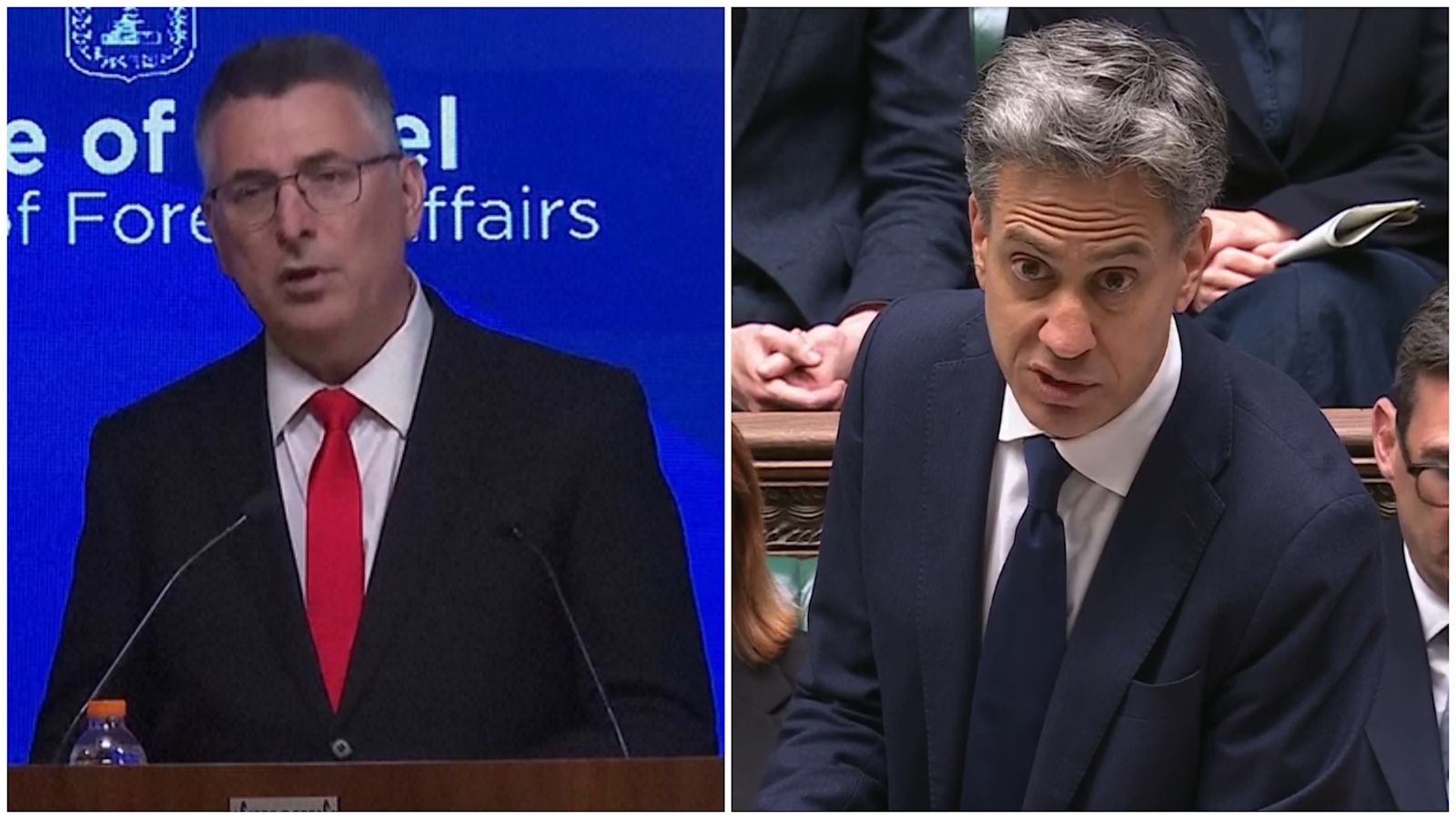
The diplomatic crisis was triggered by Israel’s response to trade sanctions that Foreign Secretary Ed Miliband announced on September 8, targeting goods produced in West Bank settlements.
Britain imposed the measures alongside France and Canada, maintaining its longstanding position that the settlements violate international law, a view Israel disputes.
Israeli Foreign Minister Gideon Sa’ar retaliated with a suite of countermeasures, ordering the East Jerusalem consulate shut within 30 days.
He also expelled British representatives from the international aid coordination centre for Gaza, based in Kiryat Gat, and ended British involvement in training Palestinian Authority security forces.
Israel additionally barred 12 British parliamentarians from entering the country, among them former Labour leader Jeremy Corbyn and Diane Abbott.
Dozens of locally employed staff had already been dismissed ahead of the October 8 closure deadline, and British diplomatic personnel were preparing to leave.
“We do not accept that the Government of Israel has the legal right to close the British consulate general in Jerusalem, which has been there for nearly 20 years,” Mr Miliband said on Thursday.
“The UK Government reiterates its longstanding view that East Jerusalem is occupied territory.”
The Foreign Secretary added that the mission would remain “independent, operational, and will continue to deliver vital services and our work with the Palestinian people.”
Mr Sa’ar responded defiantly, stressing that Israel had established a “clear principle” on the issue.
“Action cannot be taken against Israel without Israel taking appropriate measures in response,” the Israeli Foreign Minister said.
Jerusalem Consulate: Britain Issues Ultimatum to Israel with Demand to Reopen Outpost
Britain’s demand for the reopening of its diplomatic outpost in Jerusalem has brought renewed attention to the increasingly complicated relationship between London and the Israeli government. The dispute highlights the sensitivity surrounding diplomatic access to Jerusalem, the status of Palestinian territories and the wider international disagreement over how peace and security should be pursued in the region.
For the United Kingdom, maintaining a diplomatic presence is important not only for providing consular assistance but also for sustaining political engagement with Israeli and Palestinian representatives. Any restrictions affecting that presence can quickly become a wider diplomatic issue, particularly when they raise questions about access, sovereignty and the ability of foreign governments to carry out their official duties.
The reported ultimatum signals that London wants the issue addressed rather than allowed to linger. However, the precise circumstances surrounding the outpost, the conditions attached to its reopening and the Israeli government’s response are essential to understanding the dispute. Without those details, it would be premature to conclude that the disagreement necessarily represents a complete breakdown in relations between the two countries.