

Shadow Justice Secretary Nick Timothy has blamed “Labour’s ideology” on diversity for the atrocities in Southport and Nottingham.
Mr Timothy made the comments at the Conservative Party conference in Birmingham, where he vowed to “root out” the “cancer” he claims is sweeping Britain.
He said the ideology had contributed to the failures surrounding the Southport killings by Axel Rudakubana and the murder of three people in Nottingham by Valdo Calocane.
Mr Timothy said: “So many parts of Government are corrupted by radical identity politics and a deference to clan culture.
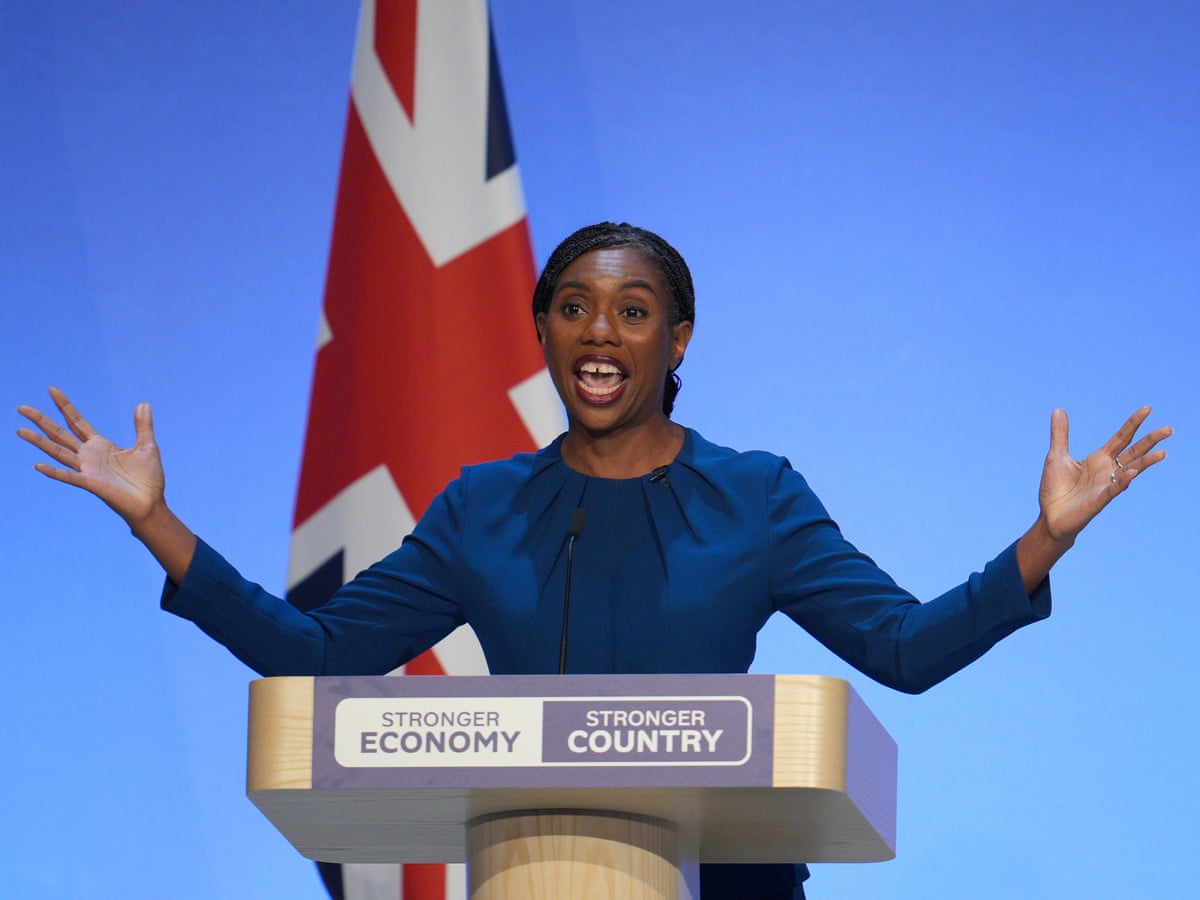
“We can no longer trust our institutions to work for us all, to uphold the principle that justice is blind, that we’re all equal before the law.”
He added: “The faces may change, but the policies live on because this is Labour’s ideology. An ideology with serious consequences in the real world: the Southport killer, Axel Rudakubana, Henry Nowak’s killer, Vikram Digwa, the Nottingham killer Valdo Calocane.
“With each of their terrible crimes and many more like them, the failures of the state run deep.
“A desire to be representative and inclusive has warped and manipulated and led to failure, suffering and injustice.
“This is a cancer and the next Conservative government will root it out.”
In June, it was revealed that officers in the police force responsible for the arrest of Henry Nowak moments before his death had been subjected to mandatory diversity training.
Staff at Hampshire and Isle of Wight Constabulary are given courses covering racism, unconscious bias, privilege and contested critical race theory.
A Times investigation uncovered a staff survey in which one in seven respondents at the force said they had felt “controlled and pressured” to adopt such ideas, fearing that “mistakes would have been held against me”.
A fifth also said they feared being “rejected for saying the wrong thing”.
The ‘Inclusion Matters’ module was launched in 2021, while the Conservatives were in power, as a full-day foundation course. An additional half-day Part Two course was launched in January 2025.
The force’s chief constable issued an apology over the actions of officers at the scene after Mr Nowak, 18, was stabbed and falsely accused of racial abuse while he lay dying from his wounds.
Despite Mr Nowak’s pleas for help, bodycam footage showed officers dismissing them and handcuffing him instead.
Chief Constable Alexis Boon said the force was not guilty of two-tier policing.
He told GB News at the time: “We understand and appreciate as police officers that we are accountable for our actions.
“What we ask, however, is that those actions are judged through fair and transparent processes. In this case, that process is already underway with the IOPC conducting their independent investigation.
“I don’t accept the term of two-tier policing, I don’t recognise it.
“I see officers and staff out there, day in, day out, working incredibly hard to deliver for all our communities. I just don’t recognise the concept.”
Schemes such as the ‘Inclusion Matters’ module would likely be scrapped by a party such as Reform UK, while Labour has continued to defend policies aimed at promoting diversity and equality.
Liz Kendall, who was Work and Pensions Secretary at the time, said at last year’s Labour Party conference that she wanted to see barriers “torn down” so more women, more people of colour and more people from working-class backgrounds could contribute to a healthier economy.
Mr Timothy has long been outspoken about his concerns over assimilation within British society.
He told a fringe event at the conference that he believes face coverings harm society, making reference to the niqab and burqa.
Mr Timothy also suggested Conservative Party policy was being developed on the issue, adding that he hated face coverings.
The Shadow Justice Secretary faced backlash earlier this year after describing prayer at a public Iftar event in Trafalgar Square as an “act of domination and division” in a post on X.
Among those to criticise him was Labour MP Bridget Phillipson, who said the comments were racist.
“I think it’s fundamentally racist,” she told The Guardian. “I don’t think he would say that about any other group.”
Tory Justice Spokesman Blames ‘Labour’s Ideology’ on Diversity for Southport and Nottingham Attacks
A major political row has erupted in Britain after Conservative shadow justice secretary Nick Timothy accused Labour’s approach to diversity and inclusion of contributing to institutional failures linked to the Southport and Nottingham attacks. His remarks have reopened difficult questions about public-sector accountability, the treatment of vulnerable people, and whether concerns about discrimination can sometimes interfere with decisions intended to protect the public.
Speaking during the Conservative Party conference, Timothy argued that what he described as “radical identity politics” had influenced parts of government and weakened the principle that everyone should be treated equally under the law. He pointed to the crimes committed by Axel Rudakubana, responsible for the Southport attack in July 2024, and Valdo Calocane, who killed three people in Nottingham in June 2023.
Timothy also referred to Vikram Digwa, who was convicted of killing Henry Nowak. He presented the cases as examples of what he believes can happen when public institutions become too concerned with representation, inclusion and the circumstances of offenders rather than identifying and managing risks.
His intervention was a direct political challenge to Labour, which has emphasised equality, fairness and the importance of understanding the different circumstances faced by individuals and communities. But the controversy raises a crucial distinction: identifying failures by public authorities is essential, while establishing that a particular political ideology caused those failures requires evidence.
A fierce dispute over diversity and public safety
Timothy’s argument centres on the belief that public institutions must never allow considerations of identity to override their duty to protect the public. He suggested that a desire to appear representative and inclusive had, in some cases, distorted professional decisions and contributed to suffering that might otherwise have been prevented.
The Conservative spokesman’s position reflects a wider debate within British politics about how equality policies should operate in practice. Supporters of diversity initiatives argue that public services must recognise discrimination and ensure that people receive fair treatment regardless of their background. Critics counter that poorly designed policies can create uncertainty for professionals who must make difficult judgments about risk, responsibility and intervention.
These positions are not necessarily incompatible. Public authorities can take discrimination seriously while still applying consistent standards when assessing dangerous behaviour. The difficult question is whether particular decisions were made according to sound evidence and professional judgment, rather than whether diversity itself should be regarded as the problem.
Timothy’s remarks have nevertheless placed Labour under pressure to explain how it intends to ensure that equality objectives and public protection work together. For the Conservatives, the issue provides an opportunity to challenge the government’s approach to justice, institutional reform and the responsibilities of public bodies.
However, the circumstances surrounding the Southport and Nottingham attacks are complex. Neither tragedy can be adequately explained through a single political slogan, and each requires careful consideration of the specific decisions made by the organisations involved.
The Southport attack and missed opportunities
The Southport attack on 29 July 2024 shocked the country. Three young girls—Alice da Silva Aguiar, Bebe King and Elsie Dot Stancombe—were murdered, while other children and adults were seriously injured.
The subsequent inquiry examined how agencies had responded to information about the attacker, Axel Rudakubana, before the killings. Its first-phase findings identified serious failures across several organisations, including problems with information-sharing, risk assessment and the handling of repeated contacts with public services.
The inquiry found that different agencies had encountered warning signs but failed to build a sufficiently complete picture of the danger he posed. Responsibility was repeatedly passed between organisations, while no single body effectively took charge of the accumulating concerns.
These findings raise significant questions about coordination, professional judgment and the ability of public services to recognise a pattern of escalating risk.
The inquiry also examined the handling of referrals to the Prevent programme. One important issue was the difficulty of assessing someone who displayed an intense preoccupation with violence without fitting neatly into an established ideological category. The report highlighted problems with the way the available guidance was interpreted and applied.
Such findings provide substantial grounds for demanding institutional reform. They do not, by themselves, establish that Labour’s diversity policies caused the attack. The events took place under a complicated system of decisions involving several organisations, and determining why individual interventions failed requires attention to the evidence in each case.
For the victims’ families, the central concern is not simply which political party bears responsibility. It is whether authorities can learn from the failures and introduce changes that reduce the likelihood of another tragedy.
Nottingham raises similar questions about institutional responsibility
The Nottingham attacks in June 2023 also exposed serious concerns about how public services respond to individuals whose behaviour may present a danger to others.
Valdo Calocane killed students Barnaby Webber and Grace O’Malley-Kumar, as well as school caretaker Ian Coates. The case prompted scrutiny of the criminal justice system, mental health services and the decisions made before the attacks.
Questions about Calocane’s treatment and contact with services became part of a wider debate over how authorities should respond when a person experiences serious mental illness alongside behaviour that raises concerns about public safety.
The challenge is difficult. Mental health professionals must consider the rights and needs of patients, the availability of appropriate treatment and the evidence indicating whether someone poses a risk to themselves or others. Decisions about detention and treatment can involve competing legal and clinical considerations.
Timothy argued that concerns about racial representation and the overrepresentation of certain groups in detention had influenced institutional decision-making in ways that could undermine public protection. His criticism reflects a broader Conservative argument that professional judgments must not be distorted by political pressure.
Yet it is important to distinguish between a policy concern and a proven explanation for a particular outcome. Evidence that institutions consider racial disparities does not automatically demonstrate that a dangerous individual was treated differently because of race, or that such considerations caused a subsequent crime.
The final assessment of institutional responsibility must rest on documented decisions, professional evidence and the findings of the relevant investigations. The Nottingham inquiry provides an opportunity to examine those issues in detail rather than relying solely on competing political interpretations.
Labour faces questions over its approach
Timothy’s accusations have placed Labour’s approach to diversity and public-sector decision-making at the centre of a contentious political debate.
For the government, the challenge is to demonstrate that commitments to equality do not weaken the ability of police officers, healthcare professionals, teachers and social workers to respond decisively to credible warning signs. Clear guidance, effective information-sharing and transparent accountability are essential regardless of the political philosophy underpinning government policy.
Labour can argue that fair treatment and public safety are complementary objectives. A system that applies consistent standards, recognises genuine risks and avoids discriminatory assumptions should be better equipped to make sound decisions. But that principle must be reflected in practice, with clear responsibilities and meaningful consequences when serious mistakes occur.
The government must also respond to legitimate concerns about fragmented services. When several organisations hold pieces of relevant information, procedures must ensure that those details are shared and assessed together. Otherwise, a risk that appears limited in one department may become more serious when viewed alongside evidence held elsewhere.
This is particularly important when individuals repeatedly come to the attention of authorities. A succession of incidents, referrals or warnings may reveal a pattern that no single organisation can identify in isolation. Systems must therefore allow professionals to recognise cumulative risk and intervene appropriately.
The question for ministers is how to turn the lessons from these tragedies into lasting improvements, rather than allowing the debate to become a contest over political labels.
The Conservative Party’s argument
For the Conservatives, Timothy’s speech offers a way to present public safety and equal treatment as central tests of government competence.
His criticism suggests that institutions should focus on individual behaviour, evidence and legal responsibilities rather than allowing political objectives to influence operational decisions. It also reflects a wider argument within the party that government departments and public bodies need stronger accountability when their decisions have serious consequences.
But the Conservatives face questions of their own. The Southport attack occurred in 2024, while the Nottingham killings took place in 2023. The institutional arrangements, professional guidance and public services involved developed over time, meaning responsibility cannot be assessed simply by identifying which party held office at the moment of a tragedy.
Opposition parties have a legitimate role in scrutinising government policy and proposing alternatives. Their arguments are strongest when they identify specific failures, explain how those failures occurred and set out practical measures to prevent a recurrence.
Broad accusations may generate headlines, but they cannot substitute for a detailed account of what went wrong. If Timothy’s central concern is that public institutions have allowed ideological considerations to influence decisions, the next step is to demonstrate precisely where this happened and how the relevant procedures should change.
A debate that requires evidence, not slogans
The controversy exposes a difficult question for British public life: how can institutions pursue fairness without compromising their responsibility to protect people from harm?
The answer should not require choosing between equality and public safety. Public services can recognise the risks of discrimination while demanding consistent, evidence-based decisions from every professional involved in a case. Indeed, both objectives depend on institutions that apply the law fairly, explain their decisions and accept responsibility when they fail.
The Southport and Nottingham tragedies demonstrate the devastating consequences that can follow when warning signs are missed and agencies fail to act effectively. They also underline the need for public inquiries to examine decisions carefully, identify systemic weaknesses and recommend changes based on evidence.
Timothy has made a forceful political claim that Labour’s approach to diversity contributed to those failures. Labour and its supporters may reject that interpretation, arguing that the issue is the quality of institutional practice rather than the principle of inclusion. The merits of those competing explanations must be assessed against the documented findings of investigations, not assumed from the rhetoric of either side.
Ultimately, the families affected by these attacks deserve more than a political argument that fades after a conference speech. They deserve institutions that learn from mistakes, share information effectively, recognise credible threats and intervene when the evidence demands action.
Whether Timothy’s criticism leads to meaningful reforms will depend on what follows his accusations. The most important test for any government or opposition is whether its proposals can make the public safer while preserving the principle that everyone deserves fair treatment under the law.