

\
The Labour Party has gained a five point lead over Reform UK
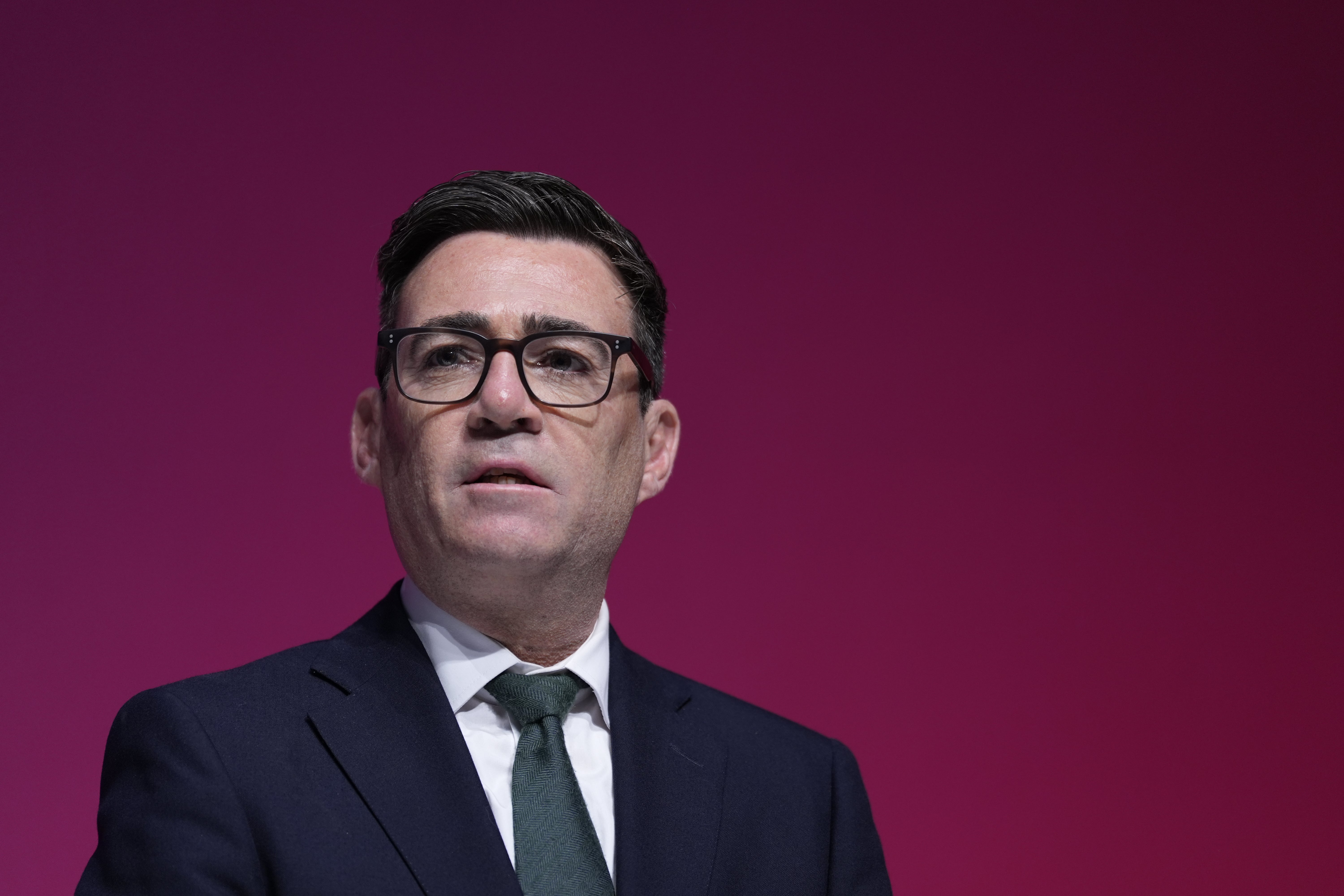
Labour’s popularity in the polls has soared to its highest level since the start of 2025 in the wake of Andy Burnham’s first party conference speech as prime minister.
The Labour Party has taken a five-point lead in YouGov’s latest polling for Sky News and the Times, the highest level of popularity the party has seen in almost two years.
The three-point boost in its ratings has come in the days after Mr Burnham’s well-received party conference speech, in which he pledged to create a national care service in an emotional address.
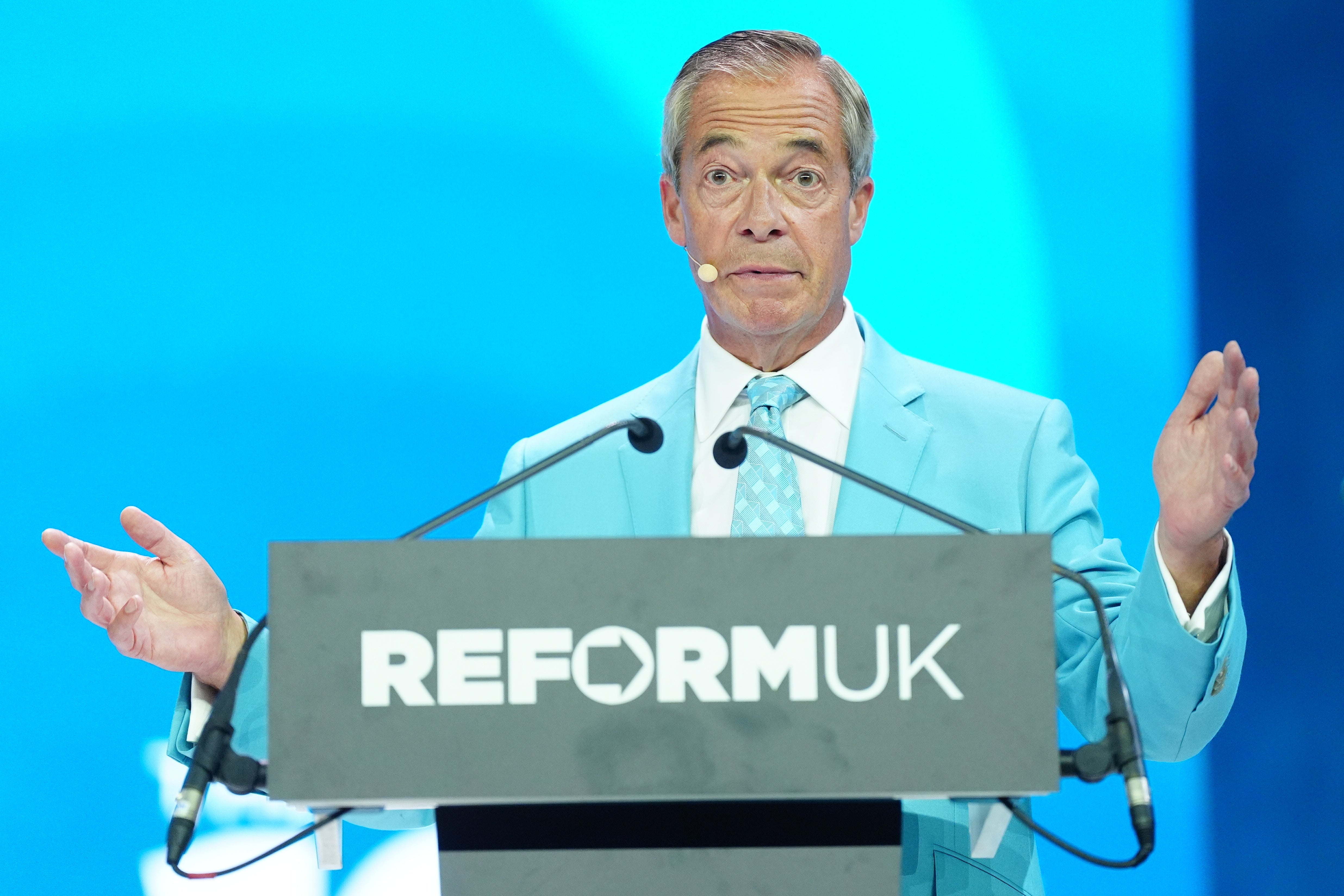
Meanwhile, Reform UK has faced another polling blow as it trails five points behind Mr Burnham’s party at 22 per cent, as Nigel Farage’s party remains bogged down in controversies over its financial affairs.
The Conservatives gained one point as the party gathers in Birmingham for its annual conference, ahead of Kemi Badenoch’s keynote speech on Wednesday.
The prime minister appears to have won back voters on the left during his first weeks as prime minister, with Liberal Democrats and the Green Party both polling at just 11 per cent.
The poll also found an increase in the number of Labour’s 2024 voters who would back the party again if an election were held tomorrow, up from 42 per cent in May to 61 per cent.
The prime minister’s latest popularity boost comes after he used his Labour Party conference speech to pledge to boost collaboration with European partners and lament the British industries “harmed by Brexit”.
Labour’s rise in popularity under Mr Burnham has prompted calls for an early election which, if he won, would secure him a mandate for at least five years to deliver the bold changes he has pledged as prime minister.
The prime minister has said he wants to “knock dead” the ideas, although Mrs Badenoch and Sir Ed Davey have both indicated they are making preparations for the possibility.
In his first Labour Party conference speech as leader, the prime minister said Britain’s decision to leave the EU had done “more harm than good” and he promised to set out the options to the country around the time of a UK-EU summit later this year.
Labour’s election manifesto in 2024 ruled out joining a customs union, going back into the single market or allowing the return of freedom of movement with the EU.
Mr Burnham previously said he would stick to Labour’s so-called Brexit “red lines” but has since indicated he is prepared to recommend going beyond them in future.
Mr Burnham’s comments follow a series of opinion polls on the issue in the past 12 months, which suggest voters believe Brexit has not worked and that a second referendum could result in a vote to rejoin.
He also vowed to bring water, housing and energy into public ownership and confirmed his plans for a free national social care service on a par with the NHS, to be funded with changes to the triple lock guarantee on pensions – a policy likely to divide voters.
And he also signalled a plan for councils to force landlords and the owners of empty homes to sell their properties in a socialist policy, which even Labour governments of the past would not consider.
Labour Opens Up Five-Point Gap Over Reform UK to Record Highest Poll Lead Since Start of 2025
Labour has opened up a five-point lead over Reform UK in a significant new opinion poll, giving Prime Minister Andy Burnham a boost as the political battle with Nigel Farage intensifies.
The latest YouGov survey, conducted for The Times and Sky News on 4–5 October 2026, puts Labour on 27 per cent, up three points from the previous week. Reform UK has fallen three points to 22 per cent, while the Conservatives stand at 20 per cent.
The figures represent Labour’s highest recorded voting-intention rating in YouGov’s tracker since January 2025. They also mark the first statistically significant lead for any party in the tracker in three months, according to YouGov.
The result comes after Labour’s party conference, where Burnham delivered a major speech setting out his political priorities, including proposals for a national care service and changes to Britain’s political and economic direction.
For Labour, the poll offers evidence that its message may be reaching voters who had become disillusioned with the party. For Reform UK, the figures raise questions about whether Farage’s party can maintain the momentum that propelled it into contention with Britain’s established political parties.
However, one poll is a snapshot of public opinion rather than a prediction of the next general election. The coming weeks will reveal whether Labour can sustain its improvement or whether the figures represent a temporary shift following conference season.
Labour Climbs to 27 Per Cent
The YouGov poll places Labour at 27 per cent, three points higher than in the previous survey conducted on 27–28 September.
Reform UK has moved in the opposite direction, dropping from 25 per cent to 22 per cent. The five-point gap between the parties is therefore the result of movement in both directions rather than a Labour increase alone.
The Conservatives have recorded 20 per cent, up one point, leaving them two points behind Reform UK and seven points behind Labour. The Liberal Democrats and Green Party are both on 11 per cent.
The remaining figures put Restore Britain on three per cent, the SNP on three per cent, Plaid Cymru on one per cent and other parties collectively on two per cent.
The poll surveyed 2,312 adults aged 18 and over across Great Britain. Fieldwork took place on 4 and 5 October, and the survey was commissioned by The Times and Sky News.
These figures measure voting intention at the time respondents were questioned. They do not establish how people will vote at a future election, and small movements should be interpreted in light of the survey’s methodology and margin of error.
Nevertheless, the change is politically significant because it interrupts a period in which Labour had faced sustained competition from Reform UK in national polling.
Has Andy Burnham Changed Labour’s Direction?
Burnham’s first Labour conference speech as party leader has been closely associated with the improvement in the party’s polling.
His address sought to present Labour as a party willing to consider long-term changes rather than concentrate solely on immediate political disputes. Among the proposals discussed were a national care service, electoral reform and a different approach to Britain’s relationship with Europe.
The national care service proposal was particularly prominent. The idea is intended to address longstanding difficulties in adult social care, including pressure on families, local authorities and the NHS.
Supporters of reform argue that social care has suffered from fragmented funding and inconsistent provision. A more coordinated system could potentially improve support for older people and those with long-term care needs, while reducing the pressure placed on relatives who provide unpaid care.
However, establishing a national service would involve difficult decisions about funding, staffing, responsibilities and the relationship between central government and local authorities. The details would determine whether the proposal could deliver the improvements promised.
Burnham also used his conference platform to argue for a more ambitious approach to political reform. His proposals have generated debate about how Britain should be governed and whether existing institutions adequately represent voters.
The new poll suggests Labour’s message has coincided with a rise in support. It cannot, on its own, prove that the speech caused the increase, but the timing has made the conference a central part of the political discussion.
Reform UK Faces a Difficult Polling Moment
For Nigel Farage, the latest figures represent a setback after a period in which Reform UK had frequently challenged Labour for the largest share of voting intention.
Reform’s 22 per cent remains a substantial level of support, but the three-point decline puts the party behind Labour and narrowly ahead of the Conservatives.
The result comes amid scrutiny of Reform’s finances, internal disputes and the challenge of translating its national profile into a detailed programme of government.
Farage has built much of Reform’s appeal around immigration control, opposition to high taxation, criticism of established political parties and promises to change how government operates. Those themes continue to shape the party’s public identity.
However, maintaining support requires more than attracting attention to individual controversies. Voters may also consider whether a party has credible plans for public services, economic growth, healthcare, housing and the cost of living.
Reform’s supporters may interpret the recent decline as a temporary movement during a period of intense political competition. Critics may argue that the figures indicate that the party’s support is not guaranteed and that Labour can recover voters who previously considered alternatives.
Neither interpretation can be established by one survey alone. Future polling, local election results and the parties’ responses to national issues will provide further evidence.
Conservatives Remain Within Reach of Reform
The Conservatives’ position is another important feature of the survey.
At 20 per cent, the party is only two points behind Reform UK. That places Kemi Badenoch’s Conservatives in a competitive position relative to Farage’s party, even as both remain behind Labour in this particular poll.
Badenoch has sought to distinguish the Conservatives from Reform by emphasising economic policy, tax reductions, public spending restraint and a different approach to immigration. She has also rejected the idea of an electoral pact with Farage.
The two parties compete for some of the same voters, particularly those concerned about immigration, taxation and the performance of government. Yet they differ over leadership, policy details and the role each believes it should play in British politics.
The Conservatives’ 20 per cent rating does not establish that the party has recovered decisively, but it does show why the contest on the right remains important.
If support shifts between the Conservatives and Reform, the distribution of votes could change substantially. For now, the poll records their positions at one particular moment rather than demonstrating a lasting trend.
Labour’s Challenge: Turning a Polling Rise Into Public Confidence
The improvement in Labour’s figures offers Burnham an opportunity, but it also raises expectations.
Voters who have become frustrated with public services and living costs will want to know whether the Government can deliver tangible improvements. A strong conference speech can attract attention, but public confidence depends on whether policies are implemented and whether people experience meaningful changes in their daily lives.
The economy is likely to remain central to that test. Household bills, wages, housing affordability and employment conditions all affect how people assess the Government’s performance.
Healthcare and social care will also be important. Promises to reform services can generate interest, but the public will eventually expect evidence that waiting times, access to support and the burden on families are improving.
Labour must also manage competing demands within its own political coalition. Voters may agree on the need for better public services while disagreeing about tax levels, spending priorities, welfare reform and the UK’s future relationship with Europe.
Burnham’s challenge is to turn a broad political message into a programme that can command support while addressing the practical constraints of public finances and public-sector capacity.
What Does the Poll Say About Britain’s Political Landscape?
The latest figures show a competitive political environment in which support remains divided among several parties.
Labour’s 27 per cent places it first in this survey, but the figure also means that a clear majority of respondents did not select Labour when asked about voting intention. Reform and the Conservatives together account for 42 per cent, while the Liberal Democrats and Greens each record 11 per cent.
This fragmentation complicates the task of interpreting national polling. A party’s share of the vote does not translate directly into a parliamentary seat total, because constituency boundaries, local patterns of support and the distribution of votes all matter.
Nor does a five-point lead guarantee that Labour will maintain its position. Opinion can change in response to economic developments, policy announcements, leadership performances and events that have not yet occurred.
The poll should therefore be read as evidence of a change in public sentiment during early October, not as a definitive statement about the outcome of a future election.
The Next Test for Burnham and Farage
The coming weeks will be important for both Labour and Reform UK.
Burnham will need to demonstrate that his conference proposals can be developed into practical policies with credible funding and delivery plans. If the Government can show progress on issues that matter to households, Labour may be better placed to maintain its improved position.
Farage, meanwhile, will need to respond to the polling decline while keeping Reform’s policy agenda and organisation under scrutiny. The party will be judged on how effectively it addresses concerns about immigration and public spending, as well as whether it can offer detailed answers on the wider economy and public services.
The Conservatives will also be watching the figures closely as they seek to rebuild support and compete with Reform for voters who have moved away from the traditional governing parties.
For now, YouGov’s latest survey provides Labour with its strongest polling position in the tracker since January 2025 and places Reform five points behind.
Whether the gap widens, narrows or disappears will depend on what happens next. The immediate message from the poll is that Britain’s political contest remains fluid, and no party can assume that its current level of support is secure.
\