

Andy Burnham has come under fire from the US and Israel over “irrational” plans for sanctions on Israeli settlements in the West Bank. Foreign Secretary Ed Miliband is expected to announce the restrictions when he sets out a “reset” of the UK’s relations with Israel in a Commons statement on Tuesday, as part of a toughened stance under Mr Burnham’s Government.
The Prime Minister discussed the Middle East with US President Donald Trump in a phone call on Monday ahead of the intervention, which risks drawing criticism from Washington, Israel’s closest ally. The prospect of the move has already prompted suggestions of retaliation from US and Israeli figures, and US Ambassador to Israel Mike Huckabee called it an “irrational action”.
Get the latest news from around the world and more
Invalid email
You agree you are 18 or over. We use your sign-up to provide content in ways you’ve consented to and to improve our understanding of you. This may include adverts from us and third parties based on our knowledge of you. You can unsubscribe at any time. More Info.

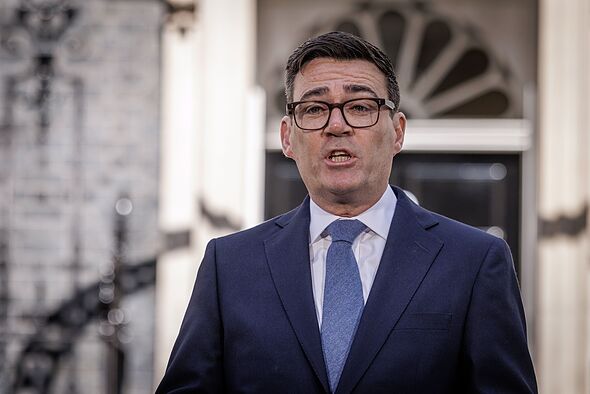
Andy Burnham (Image: Getty)
Mr Huckabee said: “I feel like it’s discrimination against the Israeli government. It’s a discrimination against the Jewish people.”
He told the BBC’s Today programme: “I also would tell you that I don’t know if they have thought it through. It’s like throwing a stone and not having an idea of where it’s going to land.
“And I realise, look, the UK is a sovereign country; they can do what they want, but so is the US.”
Meanwhile Israeli foreign minister Gideon Saar warned: “If Britain acts against Israel, Israel will act against Britain.”
Shadow home secretary Chris Philp said Mr Burnham’s move was “performative posturing” and difficult to implement because of the issue of distinguishing goods from the West Bank from those from the rest of Israel.
But Cabinet minister Pat McFadden insisted the coming measures would be “specifically targeted”.
Labour lost the support of many of its left-wing backers under Sir Keir Starmer over his initial response to Israel’s military action in Gaza following Hamas’s October 7 attack on Israel in 2023.
Mr Burnham, who was among senior party figures to have called for a ceasefire by late October that year, previously suggested he would change the Government’s approach to the conflict soon after coming to office in July.
He has voiced particular concerns about the E1 settlement, where Israel has given final approval for a controversial project that would effectively separate the occupied West Bank from East Jerusalem.
Concerns have also been raised about the impact on the Jewish community in the UK and security co-operation with Israel.
Labour MP Peter Prinsley, the vice chairman of Labour Friends of Israel, meanwhile he had told the Foreign Secretary he was concerned about the risks of such a move.
He told BBC Radio 4’s Today programme: “My fear is that opponents of Israel won’t distinguish between Israeli government policy, Zionistic political philosophy and British Jews.
“As far as they’re concerned, the whole thing’s the same, and I think it carries a real risk of increased chances of attacks on the British Jewish community.”
Andy Burnham at war with Donald Trump’s White House as US launches furious tirade
Andy Burnham’s relationship with Donald Trump’s administration has come under intense scrutiny as Britain’s new prime minister prepares for his first face-to-face meeting with the US president at the United Nations in New York.
The dramatic description of Burnham being “at war” with the White House reflects the depth of disagreement over several foreign-policy issues rather than an actual diplomatic rupture between Britain and the United States. The two governments remain allies, and Burnham has repeatedly indicated that he wants to maintain a strong relationship with Washington.
But the political tensions are real.
Since becoming prime minister in July, Burnham has taken positions that have differed from Trump’s administration on issues including the Middle East, the Falkland Islands, Northern Ireland, Ukraine, energy policy and relations with Israel.
The biggest test may now be whether the two leaders can separate those disagreements from the broader strategic relationship between Britain and America.
A difficult beginning
Burnham’s history with Trump has made the meeting particularly sensitive.
Before becoming prime minister, Burnham was a prominent critic of Trump during his presidency. As mayor of Greater Manchester, he said Trump would not be welcome in the city and previously used strong language to condemn the American president’s political approach.
Those comments have not disappeared simply because Burnham entered Downing Street.
The Independent reported that the two men have spoken twice by telephone since Burnham became prime minister, but that they have disagreed over issues including the Falkland Islands and Northern Ireland. Burnham has subsequently adopted a more conciliatory tone, saying that he tries to find common ground with political figures.
Trump has also softened the rhetoric.
In September, the US president described Burnham as a “very nice guy” while adding that he regarded the British prime minister as being on the liberal side. Trump also expressed support for more North Sea drilling, putting him at odds with parts of Labour’s energy policy.
The result is an unusual mixture of personal warmth and substantial policy differences.
The Miliband factor
One of the earliest sources of tension was Burnham’s decision to appoint Ed Miliband as foreign secretary.
The Independent reported in July that figures close to the Trump administration were unhappy about Miliband’s appointment, partly because of his previous criticism of Trump and disagreements over energy policy. One source described the appointment as creating a diplomatic challenge for the new government.
Miliband has previously criticised Trump strongly and has also been a leading advocate of Britain’s transition away from fossil fuels.
That creates a complicated dynamic for Burnham.
The prime minister needs the United States as a security partner, particularly over NATO and Ukraine, while his foreign secretary has advocated policies that have sometimes conflicted with the Trump administration’s approach.
Nevertheless, Miliband has made clear that Britain wants to preserve the transatlantic relationship while also strengthening ties with Europe.
The appointment therefore does not automatically mean a break with Washington. It demonstrates instead how Burnham’s government intends to pursue its own foreign-policy priorities while remaining inside the US-led Western alliance.
The West Bank dispute
The sharpest recent disagreement came over Britain’s policy towards Israeli settlements in the occupied West Bank.
Burnham’s government announced sanctions targeting goods connected to Israeli settlements, alongside other measures relating to settlement activity.
The move produced a strong reaction from Israeli officials and criticism from US Ambassador to Israel Mike Huckabee.
Huckabee described the planned British action as “irrational” and argued that it amounted to discrimination against Israel. He also questioned whether the British government had fully considered the consequences of its decision.
However, the reaction from the White House itself was more restrained than the headline might suggest.
The Times reported that American officials had prepared for a possible backlash but that the expected confrontation did not materialise at the presidential level. US Secretary of State Marco Rubio did not condemn Britain’s decision, saying Washington had been informed about it and that the United States shared the goal of stability in the region.
That distinction matters.
There were clearly American voices critical of Britain’s policy, but that is not the same thing as the United States government formally breaking with Britain.
Falklands and Northern Ireland
Another potential flashpoint concerns Britain’s territorial integrity.
Trump has made comments about Northern Ireland and the Falkland Islands that have generated concern in London.
Burnham has been explicit that Britain will defend its position on the Falkland Islands.
The issue is particularly sensitive because British governments of different political parties have consistently maintained that the islanders’ wishes should be central to determining their future.
For Burnham, any suggestion that Britain’s sovereignty over the Falklands could become a subject for negotiation would create a major political problem.
The Times identified the Falklands, Northern Ireland and the Chagos Islands among the issues that could complicate the meeting between the two leaders.
At the same time, these disputes have not prevented continued dialogue.
That is important because diplomacy between allies frequently involves disagreement without producing a complete breakdown in relations.
Ukraine could provide common ground
One area where Burnham is actively seeking American cooperation is Ukraine.
Reuters reported that Burnham wants increased US support for Ukrainian air defence, including access to Patriot missile systems. He is expected to raise the issue during his trip to New York.
The prime minister has argued that Ukraine needs greater protection against Russian attacks, particularly as it approaches another difficult winter.
This could give Burnham an opportunity to demonstrate that Britain and the United States continue to share major strategic interests even when they disagree on other subjects.
The challenge will be persuading Trump that additional American support for Ukraine serves US interests as well as European security.
Energy is another dividing line
Energy policy could prove equally complicated.
Trump has repeatedly advocated greater fossil-fuel production and has criticised policies that restrict oil and gas development.
Burnham’s Labour government has taken a different approach, placing greater emphasis on renewable energy and climate policy.
Yet Trump recently indicated that he believed Burnham might approve additional North Sea drilling, while also criticising Britain’s use of wind power.
For Burnham, the issue is not simply environmental policy.
Energy prices are also an economic and political problem.
Britain’s exposure to international energy markets means that decisions about domestic oil and gas production, renewable generation, electricity infrastructure and energy security all have consequences for households and businesses.
Burnham will therefore have to balance his government’s climate objectives against pressure to keep energy affordable and maintain economic competitiveness.
The “special relationship” remains important
Despite all these disputes, Burnham’s government has not abandoned the traditional UK-US relationship.
Reuters reported that Burnham is approaching his first meeting with Trump pragmatically and wants to pursue British interests even when they differ from Washington’s. He has also indicated that he wants to work with people rather than simply confront them.
That approach is significant.
Britain relies on the United States for major elements of its defence and intelligence cooperation. The two countries are also deeply connected through trade, finance, technology, diplomacy and military alliances.
A British prime minister can therefore disagree with the White House while still considering the relationship strategically essential.
The question is whether Burnham can establish enough personal trust with Trump to make those disagreements manageable.
A first meeting under pressure
The timing of the meeting could hardly be more important.
Burnham is attending his first UN General Assembly as prime minister and is using the trip to establish his government’s foreign-policy identity.
Reuters described the meeting as Burnham’s first major test of international diplomacy. Unlike his predecessor, Keir Starmer, Burnham has signalled that he is willing to disagree with Trump when he believes British interests require it.
Yet he is also unlikely to want an unnecessary confrontation.
A senior minister has already sought to lower expectations of conflict. Sky News reported that victims’ minister Alex Davies-Jones said Burnham and Trump would “get on famously”, pointing to their shared interest in sport and larger-than-life political personalities.
That reflects the government’s broader message: disagreement does not necessarily mean hostility.
What happens next?
The meeting between Burnham and Trump will provide an early indication of how Britain’s new government intends to manage its relationship with Washington.
There are genuine disagreements. The West Bank sanctions, energy policy, Ukraine, Northern Ireland and the Falklands all present potential difficulties.
There is also a personal history that cannot simply be erased.
But the available evidence does not show that Britain and the United States are engaged in a diplomatic “war”. Instead, the relationship is being tested by a new British government pursuing a somewhat different foreign-policy agenda while trying to preserve a longstanding alliance.
For Burnham, the immediate objective is likely to demonstrate that Britain can disagree with Washington without damaging cooperation where both countries have shared interests.
For Trump, the meeting provides an opportunity to assess a new British prime minister whose political instincts are different from those of his predecessor but who still recognises the importance of the transatlantic partnership.
The biggest question is therefore not whether Burnham and Trump agree on everything. They clearly do not.
It is whether both leaders can turn those disagreements into a working relationship.
Their first face-to-face meeting in New York will be an important early test of that relationship, but the wider UK-US alliance is likely to be determined by what follows: defence commitments, trade negotiations, Ukraine, energy security and Britain’s position on major international conflicts.
The rhetoric surrounding the encounter may be dramatic, but the practical challenge is much more familiar: finding areas of cooperation while managing disagreements between two governments with increasingly different political priorities.