

Reform has secured a stunning legal victory (Image: Getty)
Nigel Farage has secured a stunning legal victory against the Labour government, as he forced Keir Starmer into a humiliating u-turn over plans to delay local elections for millions of Britons. Ministers announced that Local Government Secretary Steve Reed had decided to withdraw his decision to postpone 30 council elections this May, “in the light of recent legal advice”.
Reform UK had been set to formally challenge the decision in court, amid unprecedented warnings from the head of the UK elections watchdog. In a statement, the department said: “Following legal advice, the Government has withdrawn its original decision to postpone 30 local elections in May. Providing certainty to councils about their local elections is now the most crucial thing and all local elections will now go ahead in May 2026.”
Get the latest politics news – straight from our team in Westminster and more
Invalid email
You agree you are 18 or over. We use your sign-up to provide content in ways you’ve consented to and to improve our understanding of you. This may include adverts from us and third parties based on our knowledge of you. You can unsubscribe at any time. More Info.

Steve Reed revealed the u-turn this afternoon (Image: Getty)
On top of being forced into the humiliating U-turn, the Government will now have to pay Reform UK’s legal costs, which one party source told the Express could run into six figures.
Responding to the news, Nigel Farage said: “We took this Labour government to court and won.
“In collusion with the Tories, Keir Starmer tried to stop 4.6 million people voting on May 7th.
“Only Reform UK fights for democracy.”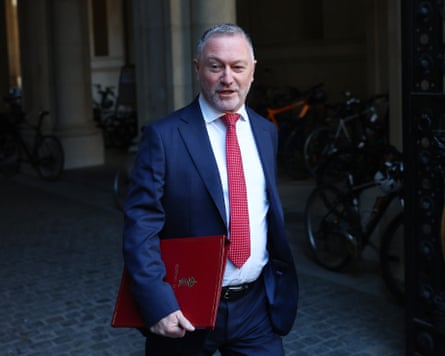
Polling experts had forecast that Reform would have won hundreds of seats in the councils set to be delayed this May, offering the party a fresh opportunity to give Keir Starmer a bruising at the ballot box.
Last month, fresh research from JL Partners said Reform would have won big in the 30 council areas that will now go ahead as planned.
They found that Mr Farage’s party is set to take 28% of the vote, beating both the Tories‘ 21%, Labour’s 17%, and the LibDems’ 15%.
Following the U-turn announcement, a spokesman for the elections department said: “Following legal advice, the Government has withdrawn its original decision to postpone 30 local elections in May.
“Providing certainty to councils about their local elections is now the most crucial thing and all local elections will now go ahead in May 2026.”
It’s understood that the government will now take the necessary steps to revoke legislation in parliament that would have delayed the elections, and have written to all councils telling them to now press ahead with the votes.
The Tories’ Shadow Local Government Secretary Sir James Cleverly blasted: “I’ve always said these elections should go ahead. Steve Reed’s credibility is now completely gone.
“This botched cancellation & U-turn will have cost local government £millions, I don’t think this funding will cover those costs.
“Labour is a joke.”
*** Ensure our latest politics headlines always appear at the top of your Google Search by making us a Preferred Source. Click here to activate or add us as Preferred Source in your Google search settings. ***
The Taxpayers’ Alliance said taxpayers will be “hugely relieved” that their right to vote for councillors has been restored.
But spokesman Elliot Keck added: “It should have never come this far.
“Millions of voters were not just facing cancelled elections, but also the double injustice of increased council tax despite a complete lack of a democratic mandate.
“Ministers should still bring in new guidelines making clear that were any elections to be cancelled in future, for any reason, there would be a mandatory freeze on council tax and any other charges.”
Reform Humiliates Keir Starmer as Labour U-Turns on Plans to Delay 30 Local Elections
Keir Starmer’s government was forced into a major U-turn after abandoning plans to postpone 30 local elections in England, following a legal challenge led by Reform UK.
The reversal became a significant political moment for Nigel Farage and his party, which had challenged the government’s decision in court. The government announced on 16 February 2026 that all the affected local elections would go ahead in May after receiving new legal advice.
For Reform, the decision was presented as evidence that the party could challenge the government through legal and political means. Farage said Reform had “taken this Labour government to court and won”, while the government maintained that the decision to reverse the postponements followed legal advice and concerns surrounding local-government reorganisation.
The dispute therefore became about much more than a calendar change.
It raised questions about democratic representation, the government’s handling of local-government reform and the growing influence of Reform UK.
Why Were the Elections Going to Be Delayed?
The controversy began with the government’s plans for major changes to local government in England.
As part of the reorganisation process, a number of councils were due to be replaced or merged into new unitary authorities. The government had argued that holding elections while councils were being reorganised could create practical and administrative difficulties.
The original decision affected 30 local authorities, with the elections scheduled for May 2026 being postponed until 2027.
However, opposition parties questioned the decision.
Critics argued that voters should not lose their opportunity to elect representatives simply because local government was being reorganised.
The decision became particularly controversial because millions of people were affected. The Week reported that the postponement affected around 4.5 million voters, while other reports placed the number at roughly four million.
That turned a technical local-government issue into a national political controversy.
Reform Takes the Government to Court
Reform UK responded by launching a legal challenge against the government’s decision.
The timing became crucial.
The government’s decision was due to face legal scrutiny, but before the court challenge could proceed fully, ministers announced that the postponements would be abandoned.
The government said the change followed legal advice.
The Ministry of Housing, Communities and Local Government confirmed that the original decision to postpone the 30 elections had been withdrawn and that the necessary secondary legislation would be revoked.
The government also announced up to £63 million in additional capacity funding to support councils dealing with the wider reorganisation programme.
For Farage, however, the political significance was clear.
He claimed the decision represented a victory for Reform and argued that his party had successfully defended voters’ right to participate in the elections.
Farage Claims a Victory
Farage quickly used the announcement to strengthen Reform’s political narrative.
The party has spent much of its recent political campaign arguing that established parties are disconnected from voters and that Reform is prepared to challenge decisions it regards as unacceptable.
The local-election dispute fitted neatly into that argument.
Farage portrayed Reform’s legal action as evidence that his party was willing to confront the government directly rather than simply criticise it from Westminster.
That distinction is important.
Political opposition can take many forms: parliamentary debates, media campaigns, demonstrations, elections and legal challenges.
In this case, Reform chose the legal route.
The government subsequently reversed its decision before the court could determine the substance of the challenge.
That does not mean a court ruled that Reform had definitively won the case. Rather, the government withdrew the postponement decision after receiving new legal advice, while Reform claimed political credit for forcing the issue.
Labour’s Explanation
The government has rejected the suggestion that the original postponement was motivated by a desire to avoid difficult election results.
Its stated justification centred on local-government reorganisation and the practical pressures facing councils.
Steve Reed, the Local Government Secretary, acknowledged that councils undergoing reorganisation had raised genuine concerns about the pressure involved in preparing for structural changes while also running elections.
After reversing the decision, Reed said the government’s priority was providing certainty to councils and confirmed that all local elections would proceed in May 2026.
The government also offered financial support to councils affected by the reorganisation.
This illustrates the central tension in the dispute.
Labour presented the postponement as an administrative issue connected to a major restructuring of local government.
Opposition parties treated it primarily as a democratic issue.
Opposition Parties Seize on the U-Turn
Reform was not the only party to criticise the government’s original decision.
The Conservatives and Liberal Democrats also welcomed the reversal while attacking the government over the original postponement.
Conservative leader Kemi Badenoch described the episode as evidence of poor government decision-making, while Liberal Democrat leader Ed Davey described the reversal as a “humiliating U-turn”. Those descriptions are political judgments from opposition leaders rather than independent findings.
The Guardian reported that the reversal was broadly welcomed by opposition parties and by some figures involved in local government. It also noted criticism from Florence Eshalomi, the Labour MP who chairs the Commons housing, communities and local government committee, who had previously opposed the postponement.
The controversy therefore crossed party lines.
Even within Labour, there had been concerns about the postponements and about aspects of the wider local-government reorganisation.
The Practical Problem for Councils
Although politicians concentrated on the political consequences, councils faced a very practical problem.
Election preparations require significant planning.
Ballot papers must be organised, electoral registers updated, polling stations arranged, candidates processed and thousands of staff coordinated.
When the government originally decided to postpone the elections, councils began adjusting their preparations.
When the government reversed the decision, election administrators suddenly had to restore the original timetable.
The Association of Electoral Administrators warned that councils faced an “uphill struggle” to prepare for the May elections because planning had been paused or altered.
The Institute for Government similarly argued that the decision had consumed time and resources and compressed the timetable for those responsible for delivering the elections.
This created an unusual situation in which a decision intended to reduce administrative pressure potentially generated additional pressure when it was reversed.
A Political Problem for Starmer
For Starmer, the episode created another difficult political moment.
The government had first announced the postponements, faced criticism, encountered a legal challenge and then abandoned the policy.
That sequence allowed opponents to portray Labour as uncertain.
The Guardian described the decision as another political setback for Starmer, while Reuters reported that the government had abandoned the plans after receiving legal advice indicating that it could lose the legal challenge.
The government, however, can point to the fact that it ultimately ensured the elections went ahead.
That distinction matters.
A U-turn does not necessarily mean the final policy is the same as the policy originally intended. Governments can change course because circumstances change, new information emerges or legal advice alters the available options.
In this case, ministers explicitly cited legal advice as the reason for withdrawing the postponement.
Why the Issue Matters to Reform
For Reform UK, the dispute offers a broader opportunity.
The party has been attempting to demonstrate that it can operate beyond the traditional role of a protest movement.
Taking the government to court is one example.
Winning council seats and participating in local government is another.
Presenting a full policy platform is a third.
The local-election dispute therefore fits into Reform’s broader attempt to establish itself as a serious national political force.
Farage can use the episode to argue that Reform is prepared to challenge established parties on questions of democratic accountability.
But the party will also face scrutiny over how it performs in the local elections themselves.
Winning a political argument over whether elections should take place is different from winning seats once voters actually go to the polls.
The Wider Local Government Reorganisation
The controversy should also be separated from the government’s larger plan to reorganise local government.
The government intends to create new unitary authorities in parts of England, replacing existing structures in a process expected to produce significant changes to how councils operate.
The reorganisation involves complicated questions about boundaries, staffing, finances, services and political representation.
That is why ministers argued that councils needed additional capacity and support.
The government has committed up to £63 million in new capacity funding across the reorganisation areas.
The election dispute therefore represents only one part of a much larger administrative transformation.
What the U-Turn Means
The immediate result is straightforward: the 30 affected local elections were restored to the May 2026 timetable.
The political interpretation is more complicated.
Reform describes the episode as a victory achieved through legal action.
Labour describes its reversal as a response to legal advice and the need to provide certainty to councils.
Opposition parties see an opportunity to criticise the government’s decision-making.
Local-government officials are left with the practical challenge of delivering elections after months of uncertainty.
All of these perspectives can coexist.
A New Challenge for Reform
The episode may strengthen Farage’s argument that Reform can challenge the political establishment.
But the next test is what happens after the dispute.
Once the elections take place, voters will judge the candidates and parties standing in their local areas.
For Reform, success in local government would require more than opposing Labour.
It would mean demonstrating that its councillors can manage budgets, provide services and work effectively within local government structures.
That is a considerably different task from campaigning against central government.
Conclusion
Labour’s decision to restore the 30 postponed local elections created an important political moment for Reform UK.
The government said the change followed legal advice and confirmed that all the elections would proceed in May 2026.
Farage, meanwhile, claimed the reversal as a victory for Reform after the party challenged the postponement through the courts.
The controversy has highlighted a fundamental question about democratic representation during major local-government reforms: how should governments balance administrative pressures with the requirement to hold elections on time?
For Starmer’s government, the episode created another round of criticism over its handling of policy.
For Farage, it provided an opportunity to demonstrate Reform’s willingness to confront Labour directly.
But the most important consequence may be less dramatic.
The elections will go ahead, councils must prepare for them, and voters will ultimately have the opportunity to decide who represents them locally.
The political battle may have begun in Westminster and the courts.
Its next chapter will be decided at the ballot box.