
The Tories say ‘Andy Burnham would just be Starmer in a different suit’

Kemi Badenoch wants to replace Sir Keir In Number 10 – but will he be gone before the election? (Image: Stefan Rousseau/PA Wire)
Kemi Badenoch is the only potential prime minister who voters think would do a better job than Andy Burnham. Conservatives welcomed the latest polling as a signal that Mrs Badenoch is winning the trust of voters less than two years after the Tories lost power in the Labour landslide. More in Common found 35% of voters thought the Conservative leader would be better than Sir Keir Starmer. This was more than the 32% who said the same for Mayor of Greater Manchester and Labour leadership hopeful Andy Burnham.
Thirty-one per cent thought Reform UK leader Nigel Farage would be a better PM than Sir Keir. This rating was far ahead of Liberal Democrat leader Sir Ed Davey’s (21%), Green Party leader Zack Polanski’s (16%) and former Labour Health Secretary Wes Streeting’s (15%).
Just 14% thought former Labour deputy leader Angela Rayner would be a better prime minister than Sir Keir. A mere 12% thought Energy Security Secretary Ed Miliband, Home Secretary Shabana Mahmood or Foreign Secretary Yvette Cooper would perform better in the top job.
Elections expert and Tory peer Lord Hayward said: “It is fascinating. Both Kemi and Andy are clearly outperforming their parties. Kemi is hopefully helping to repair the Conservative Party’s reputation as a damaged brand. Many Labour supporters are hoping that Burnham would do likewise.”

The Tory leader topped the poll on who would be better than Keir Starmer as PM (Image: Dinendra Haria/SOPA Images/Shutterstock)
Remarking on the change in fortunes for Mrs Badenoch and Mr Burnham, Lord Hayward said: “In September last year Andy Burnham was accused of trying use the Labour conference to launch his campaign and was considered to have massively damaged his leadership chances as a result. A week later, Kemi arrived at her conference with her leadership chances hanging by a thread. They have both had a great last few months.”
Alex Burghart, the Shadow Chancellor of the Duchy of Lancaster, said: “It’s great to see that Kemi is winning the trust of the British people. She is the only leader with the strength and honesty to solve the problems the country faces. She has a plan and a team which will help rebuild the country.”

Tories are heartened by Kemi Badenoch’s narrow lead over Andy Burnham (Image: More in Common)
Luke Tryl of More in Common, said: “Labour’s Andy Burnham and Conservative party leader Kemi Badenoch occupy distinctive positions as the only figures seen, on balance, by the public as improvements on Keir Starmer. Burnham’s advantage is his broad-based appeal, and there’s evidence he can cut across party lines and win back voters who have drifted from Labour. While Badenoch performs strongly, she remains more polarising, attracting significant support but often sharper opposition.”
A Conservative Party spokesperson claimed “Andy Burnham would just be Starmer in a different suit”, stating: “Voters are increasingly recognising that only Kemi Badenoch has the strength of character, the backbone and the clear plans to fix the mess that Labour have made of the country.”
Huge Blow to Burnham as Voters Think One Leader Would Be a Better PM – And It’s a Surprise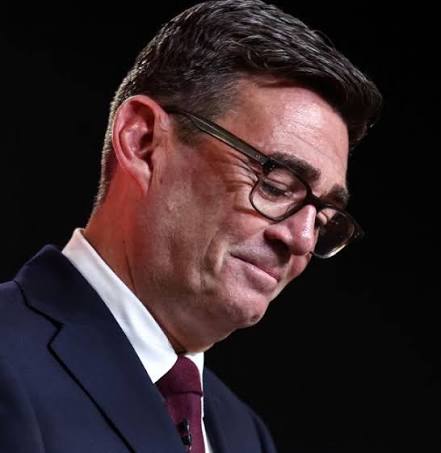
Andy Burnham has faced a surprising warning over his political future after polling revealed that one rival leader was viewed by voters as a better potential prime minister than him.
The finding is particularly notable because Burnham has enjoyed a strong personal profile since returning to Westminster and becoming one of the most prominent figures in British politics. For years, the former Greater Manchester mayor has been discussed as a potential future prime minister, with supporters pointing to his experience in government and his ability to appeal beyond Labour’s traditional base.
However, public opinion about political leaders can change quickly.
A More in Common poll highlighted an unexpected challenge for Burnham when voters were asked which political figures they believed would improve on Keir Starmer as prime minister. Kemi Badenoch, the Conservative Party leader, was selected by 35 per cent, compared with 32 per cent for Burnham. Nigel Farage was on 31 per cent, followed by Liberal Democrat leader Ed Davey on 21 per cent.
The result gave Badenoch a narrow lead over Burnham in that particular measure.
But the wider polling picture is more complicated.
A narrow advantage for Badenoch
The More in Common figures were significant because Burnham had been widely regarded as one of the strongest potential successors to Starmer.
The three-point difference between Badenoch and Burnham was relatively small. It should therefore be viewed as a snapshot of public opinion rather than evidence of a permanent change in political loyalties.
Luke Tryl of More in Common said that Burnham and Badenoch occupied distinctive positions because they were among the figures voters saw, on balance, as improvements on Starmer.
He also highlighted an important difference between them: Burnham appeared to have broader appeal across different groups of voters, while Badenoch’s support was accompanied by stronger opposition among some sections of the public.
That distinction is important when interpreting the numbers.
A politician can lead a particular poll while simultaneously having a higher level of negative opinion. Conversely, a politician can have a smaller overall share but appeal to voters across a wider range of political backgrounds.
Later polling paints a different picture
More recent polling suggests that the situation changed considerably.
A YouGov survey published in September 2026 found that Britons preferred Burnham to Badenoch as a potential prime minister by 42 per cent to 26 per cent.
Burnham’s advantage over Nigel Farage was even larger, with 52 per cent saying Burnham would make a better prime minister compared with 22 per cent for the Reform UK leader.
The same YouGov research showed Burnham ahead of Ed Davey by 44 per cent to 9 per cent and ahead of Green Party leader Zack Polanski by 50 per cent to 8 per cent.
This means that the earlier Badenoch result should not be presented as the current overall polling picture.
Instead, it demonstrates how quickly perceptions of potential prime ministers can move.
Why the result was surprising
The surprise came partly from Badenoch’s position in British politics.
The Conservatives suffered a major defeat at the 2024 general election, leaving the party with a much smaller parliamentary presence than it had enjoyed during much of the previous decade.
Yet Badenoch’s personal ratings in the More in Common research were strong enough to place her narrowly ahead of Burnham on the question of who could improve upon Starmer.
That result gave Conservative supporters an important talking point.
A Conservative Party spokesperson argued that voters were increasingly recognising Badenoch as the leader capable of addressing the country’s problems. The Conservatives also sought to portray Burnham as essentially a continuation of the previous Labour leadership.
Those are political claims rather than independent findings, but they demonstrate how the poll was interpreted by the parties involved.
Burnham’s personal appeal
Burnham’s political strength has often been associated with his personal profile rather than Labour’s national polling position.
Before returning to Parliament, he spent more than a decade as mayor of Greater Manchester.
During that period, he became particularly associated with regional devolution, public transport, public services and policies aimed at reducing inequalities between London and other parts of England.
His profile expanded significantly during the Covid-19 pandemic, when his disagreements with the Conservative government over restrictions and financial support attracted national attention.
That history helped establish Burnham as a politician with an identity distinct from the Westminster establishment.
His return to Parliament subsequently created renewed speculation about his national ambitions.
From mayor to prime minister
The transition from local government to Downing Street would nevertheless be a major political test.
Being a successful mayor does not automatically demonstrate that a politician can manage the responsibilities of national government.
A prime minister must make decisions on taxation, defence, foreign policy, immigration, pensions, welfare, healthcare and the economy.
The scale of those responsibilities means that voters may judge a potential prime minister according to different criteria from those used to assess a mayor.
This is one reason personal popularity can be difficult to translate into national electoral success.
Burnham now has to demonstrate that his political ideas can operate at the level of national government.
The economy will be central
The economic situation is likely to be one of the most important tests of Burnham’s leadership.
The government faces difficult choices over taxation and public spending, while demands for higher defence spending are placing additional pressure on the Treasury.
Questions surrounding pensions and welfare have also become increasingly prominent.
Burnham’s government therefore faces the challenge of balancing public services and social security with the need to maintain sustainable public finances.
These decisions could affect his popularity substantially.
A leader who campaigns successfully on broad principles may find governing much harder when every spending promise has to be matched by revenue or borrowing.
That is why future polling could be shaped less by personality and more by voters’ experiences of government policy.
Reform UK remains a major factor
Another major challenge for Burnham is Reform UK.
Nigel Farage has established himself as one of the most recognisable figures in British politics and continues to attract substantial support among voters dissatisfied with the traditional parties.
Yet the latest YouGov figures suggest that Burnham currently has a considerable advantage over Farage when voters are asked who would make the better prime minister.
YouGov found 52 per cent favouring Burnham compared with 22 per cent for Farage in their head-to-head comparison.
This illustrates an important distinction between party support and personal perceptions.
A party can perform strongly in voting-intention polling while its leader receives a different assessment when voters consider individual suitability for the role of prime minister.
Badenoch’s own position
Badenoch’s performance is nevertheless significant.
The Conservative leader has faced the difficult task of rebuilding a party that remains well below its previous electoral strength in many polls.
Her narrow advantage over Burnham in the earlier More in Common survey suggested that Conservative voters could still see her as a credible national alternative.
The subsequent YouGov figures, however, show that Burnham had moved substantially ahead of her on the same broad question.
YouGov found that 42 per cent believed Burnham would make a better prime minister than Badenoch, compared with 26 per cent who favoured Badenoch.
Badenoch’s position against Farage also changed in the YouGov research. Forty-five per cent preferred her as a potential prime minister compared with 16 per cent for Farage.
The figures underline the increasingly complex competition between the Conservatives and Reform UK for voters on the right.
What does the polling really tell us?
The main lesson is that political leadership ratings are not fixed.
The earlier More in Common poll showed Badenoch narrowly ahead of Burnham on one measure.
A later YouGov poll produced the opposite result, with Burnham holding substantial advantages over Badenoch and Farage.
Ipsos polling from June provides another useful reference point. It found that 35 per cent of Britons thought Burnham would do a good job as prime minister, compared with 29 per cent for Badenoch and 27 per cent for Farage.
The Ipsos survey also found that 61 per cent were not confident that Labour could provide strong and stable leadership.
That combination is revealing.
Voters can view an individual politician positively while remaining uncertain about the party behind them.
For Burnham, this could be both an advantage and a challenge.
The importance of personal ratings
Burnham’s relatively strong personal numbers could provide him with political capital.
However, personal popularity alone cannot determine an election result.
A general election involves hundreds of constituencies, different local candidates and different regional political dynamics.
Voters also make decisions based on economic conditions, public services, taxation, immigration, national security and many other issues.
Consequently, a favourable leadership rating does not automatically translate into electoral success.
The same applies to Badenoch, Farage and other opposition leaders.
A warning rather than a verdict
The earlier poll showing Badenoch narrowly ahead of Burnham should therefore be understood as a warning rather than a definitive verdict on his political future.
It demonstrated that another leader could briefly outperform him on a question that directly concerns suitability for Downing Street.
But the subsequent polling indicates that Burnham’s position was far from collapsing.
Indeed, YouGov’s latest figures show him leading each of the four major opposition leaders tested in individual head-to-head comparisons.
That makes the overall picture considerably more nuanced than the headline alone suggests.
The battle for Britain’s next political era
British politics is entering a period in which traditional party loyalties appear less stable.
Labour faces competition from Reform UK, while the Conservatives are attempting to rebuild their support. The Liberal Democrats and Greens are also seeking to expand their influence.
In such an environment, individual political personalities can become increasingly important.
Burnham’s ability to maintain his personal appeal while governing will therefore be closely watched.
If voters continue to distinguish between Burnham and Labour as a party, he could retain a political profile that is stronger than the party’s overall standing.
But if difficult economic or policy decisions damage public confidence, those personal ratings could change.
For now, the evidence shows a rapidly changing picture rather than a settled hierarchy.
One poll gave Badenoch a narrow three-point advantage over Burnham when voters were asked which leader would improve upon Starmer. Later polling placed Burnham significantly ahead of Badenoch and Farage on direct comparisons.
The surprising result therefore remains important—not because it proves that Burnham has lost his appeal, but because it demonstrates how quickly the public’s assessment of potential prime ministers can change.
For Burnham, the challenge will be to turn personal recognition into sustained public confidence while dealing with the difficult choices that come with national government.
The next stage of his political career will ultimately be judged not by one poll, but by whether voters continue to believe that he can deliver on the promises and priorities associated with his leadership.