


Nigel Farage denied Reform UK has broken any laws amid the latest finance row engulfing the party.
Two Reform officials, James Orr and Dan Jukes, have stepped down from their roles amid an investigation into allegations they breached political donation rules by having polling paid for by an overseas company.
It comes as the party faithful are gathering in Birmingham for Reform’s conference.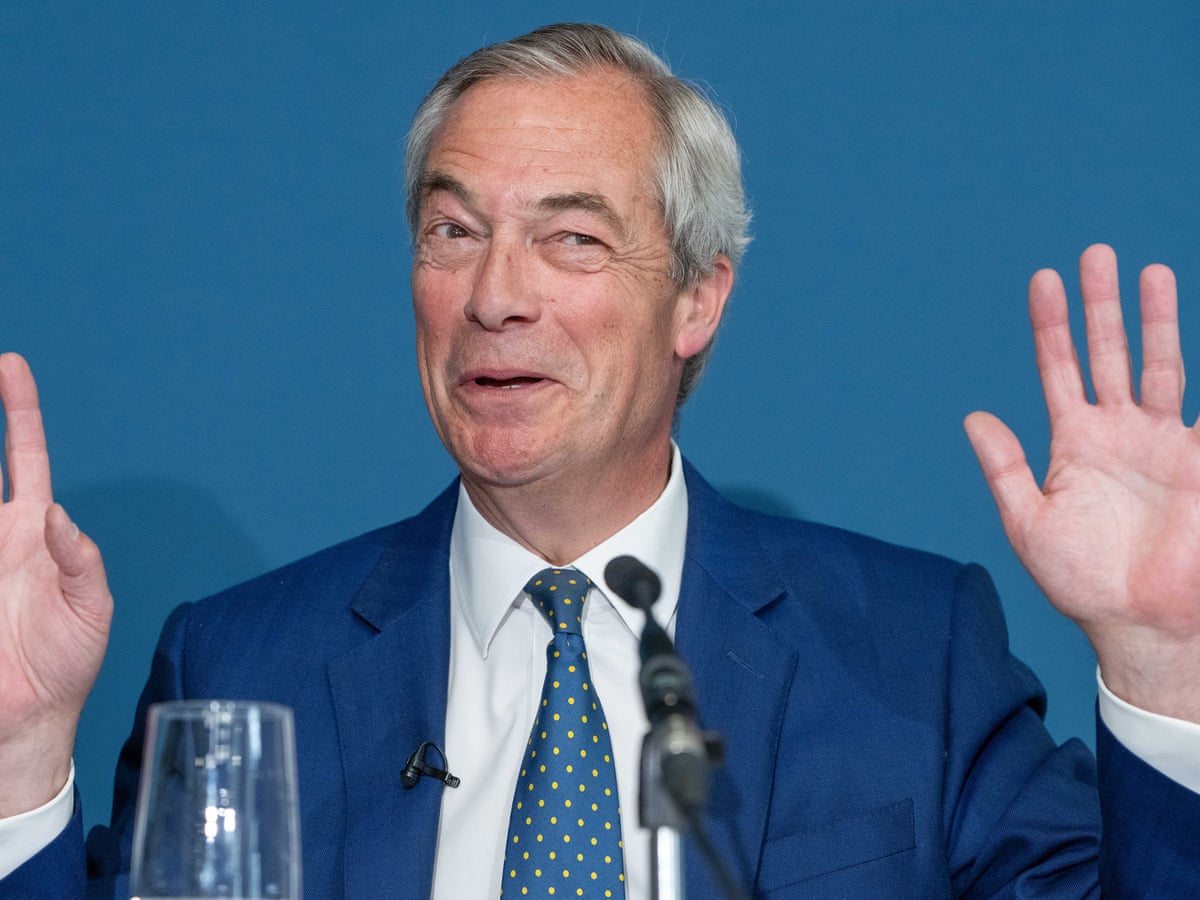
In an interview with LBC, Mr Farage said: “The party has broken no laws. The party has not taken any dodgy money or anything like that whatsoever.
“However, it is a clear case of entrapment, and they worked at it for a very, very long time, and they got a couple of our contractors to say things that perhaps should not have been said.
“And as a result of that, you know, they have been removed this morning. And yeah, you know, I’m not happy about it.”
He said the polls in question were commissioned by an independent third party rather than Reform.
The Brexiteer added: “It had nothing to do with Reform. It was an independent third party that did it. So that’s nothing. That’s nothing. Polls are funded by overseas people every single week. Every single week.”
He said the reason the two Reform aides had stepped aside was because they talked about “putting money in that might have originally have come from America”.
The Clacton MP said: “That clearly can’t be done under electoral law. Now it didn’t happen. It didn’t happen. So no laws have been broken. And yes, they were entrapped into saying what they said.
“But you know we’re going to investigate it, but on the face of it, they said things that shouldn’t have been said.”
Rival parties had reported Reform to the police over claims by Channel 4 News that Reform took funding from a US firm for three polls it commissioned earlier this year, costing £32,500.
The purported donors that appeared in the footage broadcast on Thursday night were in fact undercover reporters from investigative group Verbatim posing as an American financier and his UK-based son.
Foreign companies are not a permissible source of funding for parties, including for payments for studies and research, and accepting donations from them could constitute a criminal offence.
Mr Jukes denied any wrongdoing and said it was a case of entrapment.
It comes as Mr Farage will promise to declare a “national emergency” on his first day in government if Reform wins power in his keynote conference speech this afternoon.
He will say: “Within days of winning the general election, we will introduce dozens of Bills and force Parliament to sit all through summer for seven days a week to pass them.
“Britain is in serious trouble. We don’t have time to wait around to fix it.”
Nigel Farage Breaks Silence as Reform Rocked by Undercover Filming Scandal
Nigel Farage has broken his silence after an undercover investigation plunged Reform UK into a major political controversy, with two senior party figures stepping down following allegations surrounding foreign donations and the funding of political polling.
The investigation, broadcast by Channel 4 News in September 2026, featured secretly recorded conversations involving Reform figures and undercover journalists posing as potential donors. The footage has prompted questions about whether the party’s officials discussed ways of accepting financial support from an overseas source despite restrictions on foreign political donations.
Farage has strongly rejected the suggestion that Reform UK accepted illegal money.
He has described the operation as an “exercise in entrapment”, while insisting that no illegal transaction took place and that the party did not receive prohibited funds. At the same time, he acknowledged that the conduct captured on camera was damaging to Reform’s reputation.
Two senior figures step down
The controversy intensified after Reform’s head of policy, James Orr, and senior aide Dan Jukes stepped down from their positions pending an internal investigation.
Both men appeared in footage obtained by investigative journalists from Verbatim, an organisation founded by journalists associated with the Centre for Climate Reporting.
The undercover reporters reportedly spent months posing as potential supporters and wealthy American donors. According to the investigation, discussions included the possibility of funding polling commissioned by Reform and a potential £500,000 donation.
The footage also appeared to show conversations about how money from a US-based individual could potentially be channelled through a UK-based person.
Foreign donations to British political parties are subject to strict legal restrictions. A donor generally needs to fall within the categories of permissible donors established under UK electoral law.
The allegations have therefore attracted attention beyond Reform itself.
Farage insists no illegal money was taken
Farage has repeatedly rejected the central allegation.
Speaking after the investigation was broadcast, he said Reform had “broken no laws” and had not taken “any dodgy money”.
In an interview with ITV, Farage said he was “100% confident” that Reform had never taken illegal foreign donations.
He characterised comments made by Jukes during the undercover meetings as “loose pub talk”, while acknowledging that the episode did not reflect well on the party.
The distinction is important.
The undercover footage may show what individuals discussed or appeared willing to discuss. It does not, by itself, establish that an illegal donation was actually transferred or accepted.
Farage has maintained that no such transaction occurred.
What was actually filmed?
The controversy centres partly on discussions about political polling.
According to reports on the investigation, the undercover operation involved a fictional American businessman and his supposed UK-based son.
The son was presented as a permissible potential donor, while the supposed father was described as a wealthy US businessman who would not himself be eligible to donate directly to a British political party.
The footage reportedly included discussions about arranging funding for several opinion polls.
The total cost of three polls was reported at approximately £32,500.
Some of the polling subsequently received coverage in British newspapers, although questions were raised about how the polling had been funded and whether its connection to Reform had been sufficiently disclosed.
Reform has disputed the interpretation of those events.
James Orr, in comments following the investigation, argued that no money had reached Reform UK and that the polling had been independently commissioned.
That distinction could become important if regulators or investigators examine whether any electoral rules were breached.
Farage’s meeting with the undercover reporters
Perhaps the most politically damaging part of the footage for Farage himself was his appearance in a meeting with the undercover reporters.
The Reform leader was filmed meeting the supposed donor in Clacton.
According to reports, Farage appeared to welcome the results of polling that had been funded as part of the undercover operation.
The footage showed him thanking the supposed donors and discussing the usefulness of the polling.
Farage has subsequently argued that he did not know the true circumstances surrounding the people he was meeting.
He said he had been told that the prospective donor had a family trust based in London and that he had asked whether the arrangement was legitimate.
Farage has also said that he was campaigning during the period and did not know all the details of conversations being conducted by his staff.
“I wasn’t listening”
One of the most controversial aspects of Farage’s defence concerns what he understood during the meeting.
In an interview with the BBC, he said he “frankly wasn’t listening” to parts of the conversation surrounding the proposed donation.
He argued that the two officials involved had not previously been responsible for fundraising and should not have been directly involved in such discussions.
Farage has maintained that the party’s formal processes would have prevented an impermissible donation from being accepted.
That is now one of the issues being scrutinised amid the wider controversy.
Farage admits the footage “looks bad”
Although Farage has strongly rejected claims that Reform accepted illegal funds, he has acknowledged the political damage caused by the footage.
In a BBC interview, he conceded that the undercover report “looks bad”.
He described the comments made by Orr and Jukes as inappropriate and said that the episode had created an image problem for Reform.
That acknowledgement represented a somewhat different tone from the party’s initial response, which focused heavily on describing the investigation as a hoax or entrapment operation.
Farage has simultaneously defended the party’s record and accepted that some of the behaviour shown in the recordings should not have occurred.
Reform launches internal investigation
Reform UK responded to the investigation by announcing an internal inquiry.
Orr and Jukes stepped aside while the investigation was conducted.
The party said it wanted the process to proceed independently and without prejudice.
Chairman Lee Anderson later indicated that there was no prospect of the two men returning to their previous positions, according to reports.
The decision demonstrated that the party regarded the situation seriously even while Farage continued to deny that Reform had broken the law.
For Reform, the timing was particularly difficult.
The controversy emerged just as the party was holding its annual conference in Birmingham, meaning the issue dominated coverage of an event that was intended to showcase Reform’s political programme.
Police and regulatory questions
The controversy has also moved beyond political argument.
Political opponents called for the allegations to be investigated.
The Metropolitan Police initially said it was assessing information relating to the claims. Later reports indicated that police had determined there were potential offences requiring investigation.
The Electoral Commission also became relevant because political donations and the funding of political activity fall within the regulatory framework governing British elections.
However, an investigation or assessment does not establish that a criminal offence has occurred.
That distinction remains crucial.
The allegations involve potentially serious questions about political funding, but whether any law was actually broken must be established through evidence and the relevant investigative and legal processes.
Reform’s defence: entrapment
Reform has strongly criticised the methods used by the undercover journalists.
The party described the operation as a “hoax” and argued that activists had deliberately attempted to lure its officials into saying things that they otherwise would not have said.
Farage has repeatedly used the word “entrapment”.
Supporters of undercover journalism, however, argue that such investigations can expose conversations that would otherwise remain hidden.
The disagreement over the method is therefore likely to continue alongside the substantive questions about political funding.
Even if the recordings were obtained through deception, the separate question remains whether the conversations accurately represent what the participants said and whether any proposed arrangements were actually implemented.
The wider political implications
The scandal comes at a sensitive moment for Reform UK.
The party has been attempting to establish itself as a serious political force capable of challenging the established parties.
That brings greater scrutiny.
Financial transparency, internal governance and the conduct of senior officials become increasingly important as a party grows.
For Farage, the controversy is particularly significant because Reform’s public identity remains closely connected with him.
The leader has spent years campaigning against what he has described as failures within Britain’s political establishment.
Consequently, allegations concerning political funding create an obvious political challenge, even though Reform denies wrongdoing.
The party must now demonstrate that its internal systems can distinguish legitimate political support from impermissible funding and that senior officials follow the relevant rules.
What happens next?
The immediate focus will be on the investigations.
Police and electoral authorities will have to establish what happened to the money associated with the polling, who commissioned it, who paid for it and whether any political donation rules were breached.
The internal Reform investigation will also examine the conduct of the officials involved.
Farage’s position remains that no illegal donation was accepted and that the party has broken no law.
At the same time, he has acknowledged that the footage is damaging and that the conduct of two senior figures was unacceptable.
That combination of positions is likely to define Reform’s response in the weeks ahead.
A serious test for Reform
The undercover controversy has placed Nigel Farage and Reform UK under intense scrutiny.
The footage has raised questions about foreign funding, political polling and the conduct of senior party officials.
Two senior figures have stepped down.
Political opponents have demanded investigations.
Farage has defended his party while acknowledging that the episode “looks bad”.
But the distinction between an allegation and an established breach of the law remains essential.
The recordings may provide evidence for investigators to examine, but they do not by themselves determine whether a criminal offence was committed.
For now, Reform’s position is unequivocal: the party says it did not accept illegal foreign money.
The coming investigations will determine what happened behind the scenes and whether any further action is required.
What is already clear is that the undercover operation has created one of the most significant tests of Farage’s leadership since he returned to frontline politics.
The Reform leader has survived political controversy before. This time, however, the scrutiny is focused not only on his political message but on the internal systems and people surrounding him.
And with two senior figures already gone from their roles, the fallout from the undercover filming is far from over.