

Horror as ‘Overcrowded’ Migrant Ship Sinks – 250 Refugees Missing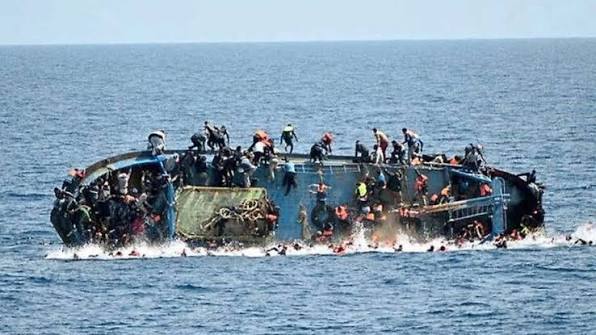
A deadly maritime disaster in the Andaman Sea has highlighted once again the extraordinary dangers faced by refugees and migrants attempting to cross some of Asia’s most treacherous waters.
At least 250 people, including Rohingya refugees and Bangladeshi nationals, were feared dead or missing after an overcrowded boat travelling from Bangladesh towards Malaysia capsized and sank, according to the United Nations refugee and migration agencies and reports from the Associated Press and Reuters.
The vessel reportedly departed from Teknaf in southern Bangladesh, near the vast refugee settlements of Cox’s Bazar, carrying a large number of passengers. It was bound for Malaysia, a destination that has become a major objective for some Rohingya refugees seeking safety, employment and a different future.
But the journey ended in disaster.
A vessel packed far beyond safe conditions
According to information reported by AP, the boat sank on or around April 9, 2026. The UN refugee agency UNHCR and the International Organization for Migration said overcrowding, strong winds and rough seas contributed to the vessel losing control and sinking.
The exact number of people aboard remains uncertain.
That uncertainty is one of the most difficult aspects of the tragedy. Boats used for irregular migration often leave without reliable passenger manifests, meaning that authorities may have no definitive record of everyone on board.
Reuters reported that survivors believed almost 300 people had been packed onto the vessel, including women, children, crew members and suspected traffickers. One survivor described extremely cramped conditions during the voyage, with passengers reportedly forced into confined areas normally used for storing fishing equipment.
The conditions became increasingly dangerous as the voyage continued.
One survivor told Reuters that there was barely enough oxygen inside the cramped compartments and that people struggled to breathe. The survivor estimated that at least 30 people died from suffocation before the boat eventually capsized.
These accounts underline how the danger began long before the vessel actually sank.
Survivors describe a desperate journey
One of the survivors, identified by Reuters as Rafiqul Islam, described spending four days and nights at sea.
The journey had reportedly begun on April 4, when passengers left on a smaller fishing vessel before transferring to a larger trawler near Myanmar’s waters.
The passengers were not simply confronting the risks of the open sea. They were also reportedly attempting to avoid patrols, adding another layer of danger to an already precarious journey.
When the vessel eventually overturned, hundreds of people were thrown into the water.
Only a small number survived.
Reuters reported that a passing Bangladeshi oil vessel rescued four people and subsequently found five more.
The survivors’ accounts provide a grim indication of the scale of the disaster, but authorities have continued to face difficulties establishing exactly how many people were aboard and how many remain missing.
At least 250 feared dead or missing
The figure of 250 has been widely reported, but it is important to understand what that number represents.
The Associated Press reported that at least 250 people were either feared dead or missing, citing UN refugee and migration agencies. Nine people — eight men and one woman — were rescued after being found floating in the sea by the crew of the Bangladeshi-flagged M.T. Meghna Pride.
The rescue was not part of a conventional large-scale search operation. The merchant vessel encountered the survivors while travelling from Bangladesh towards Indonesia and brought them to safety.
That means the eventual casualty figure could remain uncertain.
Some people may have died immediately when the boat capsized. Others may have drowned later, while the whereabouts of additional passengers may simply never be established.
The remoteness of the incident also makes recovery operations extremely difficult.
Why are Rohingya refugees taking such journeys?
The tragedy cannot be separated from the circumstances confronting the Rohingya population.
Bangladesh hosts more than one million Rohingya refugees, most of whom fled Myanmar following waves of violence, particularly the mass displacement that began in 2017.
Many remain in refugee camps in Cox’s Bazar, where access to education, employment and long-term economic opportunities is severely restricted.
The result is a difficult dilemma.
For many refugees, remaining in the camps can mean years of uncertainty. Leaving by sea can expose them to trafficking, exploitation, storms, drowning and other dangers.
Yet dangerous journeys continue.
According to AP, more than 6,500 Rohingya refugees embarked on maritime journeys from Bangladesh and Myanmar during 2025, with almost 900 losing their lives. The IOM also reported that deaths and disappearances in the Andaman Sea and Bay of Bengal increased by more than 40% compared with 2024.
Those figures demonstrate that the April disaster was not an isolated event.
The role of traffickers
Another important part of the story is the role of people-smuggling networks.
Survivor accounts reported by Reuters described suspected traffickers controlling aspects of the journey and forcing passengers into extremely confined spaces.
People attempting to escape poverty or insecurity can become particularly vulnerable to promises of work and safety in another country.
The reality can be very different.
Passengers may pay large sums to smugglers only to find themselves aboard vessels that are poorly maintained, dangerously overcrowded and unsuitable for long-distance travel.
Once at sea, their ability to escape or seek assistance can be extremely limited.
The April tragedy therefore raises questions not only about maritime safety, but also about the networks that profit from irregular migration.
A wider warning about dangerous sea crossings
The disaster comes against a broader backdrop of increasingly dangerous maritime migration routes.
In Europe, for example, the International Organization for Migration reported in September 2026 that sea arrivals had fallen substantially compared with the previous year, but deaths and disappearances had increased. The agency recorded at least 2,292 people dead or missing on European sea routes so far in 2026, compared with 1,999 during the same period in 2025.
Although the Andaman Sea route is geographically different, the underlying pattern is similar: people who lack safe and accessible alternatives may resort to highly dangerous journeys aboard vessels that are not designed to carry large numbers of passengers.
When such boats encounter bad weather, mechanical failure or instability, the consequences can be catastrophic.
A tragedy whose full scale may never be known
Perhaps the most haunting element of the Andaman Sea disaster is the uncertainty surrounding the missing.
There is no definitive passenger list.
There may never be a complete record of everyone who boarded the vessel.
For families waiting in refugee camps, that uncertainty can be devastating. A missing relative may be presumed dead, but without confirmation there may be no body, no final moment and no clear answer about what happened.
The survivors themselves have provided important evidence about the final days of the journey.
Their accounts describe overcrowding, exhaustion, fear and desperate attempts to remain alive after the vessel went down.
But they can only tell part of the story.
The continuing search for safer alternatives
UNHCR and IOM have called for greater international support for Rohingya refugees and for stronger assistance to address the conditions that encourage people to undertake dangerous maritime journeys.
The challenge is complex.
Border controls, maritime enforcement and efforts against trafficking remain issues for governments in the region. At the same time, humanitarian organisations argue that refugees need safer alternatives and meaningful access to protection and basic opportunities.
The sinking in the Andaman Sea demonstrates the consequences when those issues collide on the open water.
A boat leaves with hundreds of people hoping to reach another country.
Then the weather changes.
The vessel becomes unstable.
And within minutes, a journey that began as an attempt to find safety can become a mass-casualty disaster.
The reported figure of around 250 people missing or feared dead is therefore more than a statistic. Behind it are individual passengers, families and communities whose fate may never be completely documented.
For those who survived, the experience is likely to remain with them for the rest of their lives.
And for the families of those still missing, the tragedy continues — even after the sea has fallen silent.