
Iceland Votes Against Joining the EU – But Still Retains Almost All of Its Membership Benefits
Iceland has once again chosen to remain outside the European Union. In a closely contested national referendum, voters rejected the proposal to restart negotiations on EU membership, choosing instead to preserve the country’s existing relationship with Europe.
At first glance, the result might appear to be a straightforward victory for Euroscepticism. Icelanders have decided that they do not want to become members of the European Union, and the message from the electorate is clearly one of national independence. Yet the reality is considerably more complicated.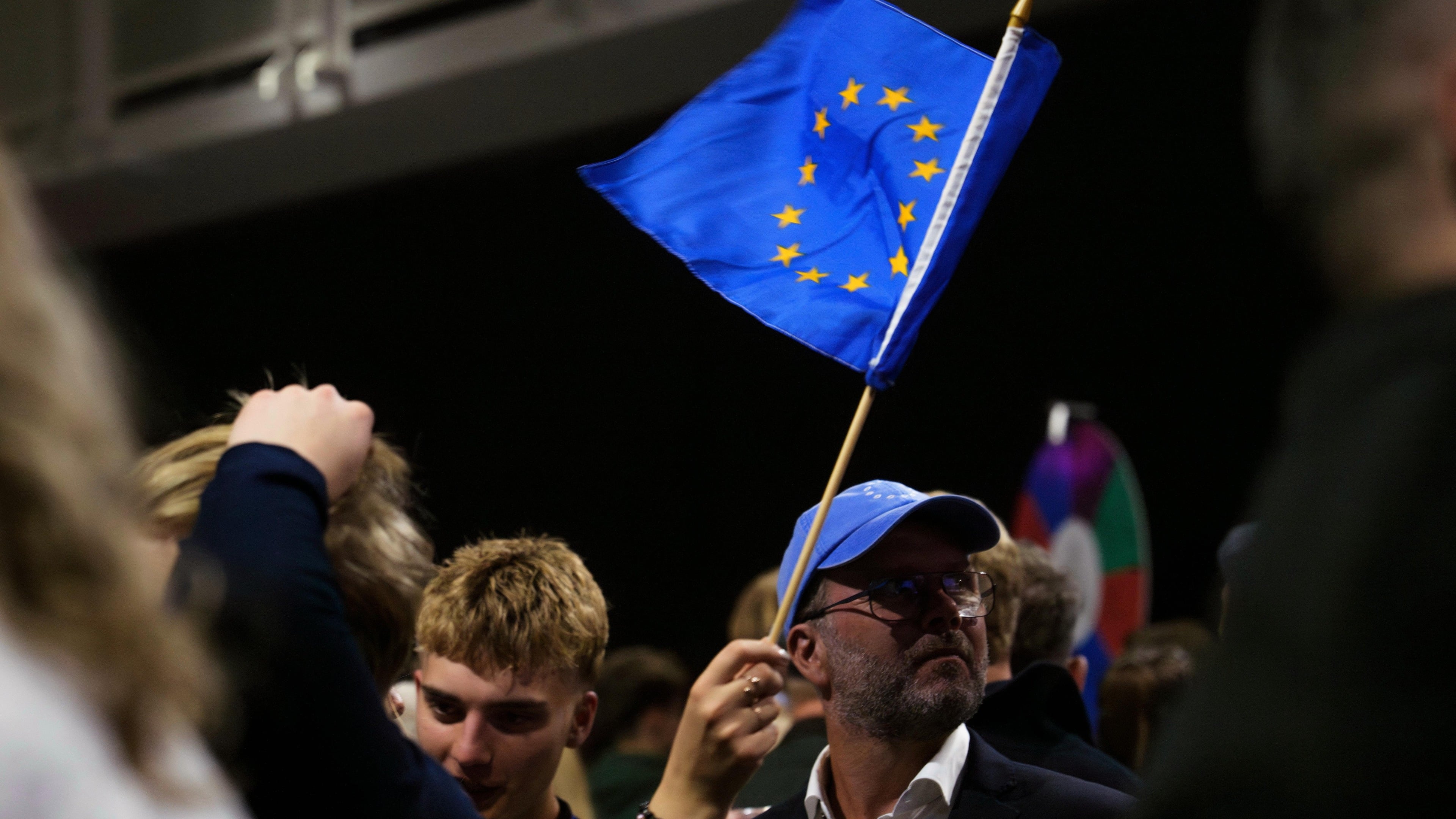
Iceland has rejected EU membership while continuing to enjoy many of the economic and practical advantages that come with close European integration.
That is what makes the Icelandic model particularly interesting for Britain.
Iceland is not a member of the European Union, but it is part of the European Economic Area. Through that arrangement, Iceland participates in the European Single Market and enjoys broad access to the economic system created by the EU. It also participates in the Schengen Area, allowing relatively free movement across much of Europe.
In other words, Iceland has managed to remain politically outside the European Union while remaining economically and socially deeply connected to it.
The referendum therefore does not represent a rejection of Europe itself. Rather, it represents a rejection of full political membership while maintaining a close economic relationship.
That distinction is extremely important.
For years, European politics has often been dominated by a false choice. Supporters of the EU frequently suggest that the only way to enjoy the benefits of European integration is to become a full member. Eurosceptics, meanwhile, often argue that independence requires a country to distance itself from European institutions.
Iceland demonstrates that there is another possibility.
A country can say no to political membership while saying yes to economic cooperation.
This is precisely why the Icelandic result should attract attention in Britain.
The British debate surrounding Brexit has frequently treated membership of the European Single Market as though it were inseparable from membership of the European Union. But Iceland shows that the two concepts are not identical.
The Single Market is fundamentally an economic arrangement. Its purpose is to reduce barriers between participating economies and make it easier for goods, services, capital and people to move across borders. Full EU membership provides access to that system, but Iceland demonstrates that participation can also be achieved through a different institutional relationship.
This arrangement is not without compromises.
Iceland must accept many European rules connected to the areas covered by the EEA. It does not have the same voting rights inside EU institutions as a member state. In that sense, Iceland has made a deliberate trade-off.
It has chosen to sacrifice some influence over European rule-making in exchange for remaining outside the political structures of the European Union.
For Icelanders, that trade-off appears preferable to full membership.
The reason is partly national identity and partly economics.
Iceland is a small country with a distinctive economy and a particularly important fishing industry. Control over its natural resources is closely connected to national sovereignty. Many Icelanders fear that full EU membership could reduce their ability to determine how those resources are managed.
The European Union’s common policies therefore represent a political boundary that many voters are unwilling to cross.
But the fascinating part of the Icelandic model is that the country has not responded to those concerns by abandoning European economic integration.
Instead, it has constructed a compromise.
That compromise gives Iceland access to a huge European market while allowing it to remain outside the political union.
This is precisely where the Icelandic story becomes relevant to Britain.
Britain is vastly larger and economically more complex than Iceland, so the two countries cannot simply be treated as identical. Their political systems, economies and strategic interests are different.
Nevertheless, the underlying question is remarkably similar.
How much political independence is a country willing to exchange for economic integration?
And, more importantly, does a country have to choose between the two?
Iceland’s answer appears to be no.
The country has effectively decided that it wants the economic advantages of being closely connected to Europe without accepting the full political responsibilities of EU membership.
For British politicians who regard EU membership as unacceptable, this should be an important lesson.
The choice does not have to be between complete separation and complete membership.
There is a middle ground.
Britain could theoretically seek a closer economic relationship with Europe without automatically reversing Brexit in its entirety. Such an arrangement would inevitably require negotiations and compromises, but the principle itself is not extraordinary.
Indeed, much of the European continent already operates through a complicated network of different relationships between EU members and non-members.
Norway and Iceland are obvious examples of countries that remain outside the EU while participating in the European economic framework. Switzerland has developed another distinctive relationship with the bloc.
These countries have reached different conclusions about how much political integration they want.
The lesson is not that one model is universally superior.
The lesson is that European cooperation is not an all-or-nothing proposition.
This is particularly significant because the economic arguments surrounding Brexit remain unresolved.
The original promise of Brexit was that Britain could become more independent while developing new opportunities around the world. That ambition remains legitimate. Britain should absolutely be capable of trading globally and establishing relationships beyond Europe.
But global trade does not eliminate geography.
Europe remains Britain’s closest major economic neighbourhood. British businesses will continue to sell products and services to European customers, while European companies will continue to trade with Britain.
The question is therefore not whether Britain should trade with Europe.
It is whether Britain should make that trade unnecessarily difficult.
Iceland’s position offers a provocative answer.
Iceland has decided that it does not need political membership in order to remain economically connected.
Britain could learn from that distinction.
There is also a political lesson here.
Opposition to EU membership does not necessarily mean opposition to European cooperation. A country can be deeply integrated with European markets while maintaining its own political institutions and national identity.
That makes the Icelandic example especially uncomfortable for those who insist that sovereignty requires economic separation.
Sovereignty is not the same as isolation.
A sovereign country is free to enter agreements with other countries. It is free to cooperate. It is free to share standards. It is free to participate in international organisations. And it is free to decide that economic integration serves its national interest.
The real measure of sovereignty is not how many rules a country refuses to share.
It is whether the country has the democratic authority to choose its own relationships.
Iceland has made such a choice.
Its voters have said that they do not want full EU membership, but they have not voted to dismantle their existing European economic relationship.
That is an important distinction.
The result also exposes a paradox within the British Brexit debate.
Some Brexit supporters argue that Britain should follow an Icelandic-style model of independence. Yet if Britain were to seek closer participation in the Single Market while remaining outside the EU, it would essentially be acknowledging that economic integration and political independence can coexist.
That would not necessarily undermine Brexit.
It could instead represent the next stage of the debate.
Brexit was never supposed to be about creating permanent barriers between Britain and its neighbours. It was supposed to give Britain greater freedom to determine its own future.
If Britain’s preferred future involves rebuilding closer economic links with Europe, then doing so should be viewed as an exercise of sovereignty rather than a surrender of it.
This is why Iceland’s referendum is more significant than the simple headline might suggest.
The country has voted against reopening the road to EU membership, but it has not voted against Europe.
It has not chosen isolation.
It has not abandoned the Single Market.
It has not rejected cooperation with its European neighbours.
Instead, Iceland has chosen a highly integrated relationship without becoming a full member of the political union.
That may be precisely the kind of distinction Britain needs to rediscover.
The British debate has been dominated for too long by slogans such as “in” and “out”, “Brexit” and “rejoin”. Such language reduces a complicated economic and constitutional question to a binary political identity.
But countries do not have only two possible relationships with one another.
There are many shades of cooperation.
There are different forms of market access, regulatory alignment, political coordination and institutional participation.
The future of Britain should therefore not be determined by whether a particular policy can be labelled “pro-EU” or “anti-Brexit”.
The better question is whether it serves Britain’s interests.
Iceland has answered that question in its own way.
It has decided that full membership is unnecessary, but European integration remains valuable.
For Britain, that should prompt a serious rethink.
Perhaps the country does not need to choose between Brexit and the Single Market.
Perhaps it can preserve the political independence that Brexit supporters value while rebuilding the economic relationship with Europe that many businesses and citizens want.
That would not be a return to the past.
It would be an attempt to create a more practical future.
Iceland’s decision therefore carries an unexpected message for Britain.
A country can reject the European Union without rejecting the European economy.
It can defend national sovereignty without turning its back on its neighbours.
And it can remain outside the political union while retaining many of the benefits of economic integration.
The question Britain should now ask is not whether it wants to become Iceland.
It is whether it is willing to learn from Iceland.
The answer could reshape the entire British debate about Brexit.