

Rupert Lowe Says He Can Work with Nigel Farage – But Five Conditions Must Be Met
Britain’s political right has been given a potential route towards unity after Rupert Lowe said he could work with Nigel Farage, but only if five major conditions are accepted. The proposal represents an extraordinary development given the bitter relationship between Lowe and the Reform UK leader and raises the possibility of cooperation between two competing forces on Britain’s populist right.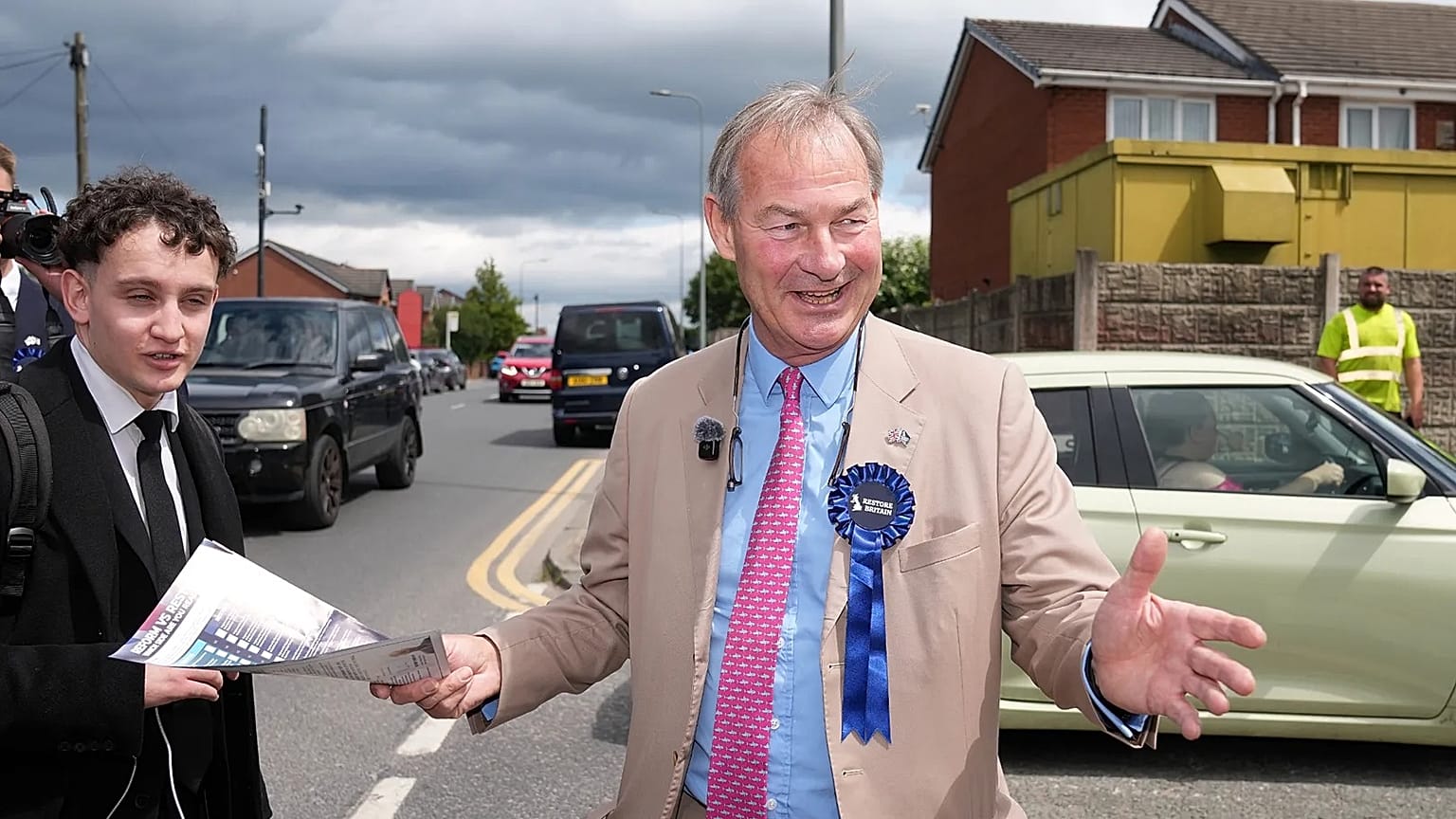
Lowe, the leader of Restore Britain and a former Reform UK MP, made his proposal in a video message in which he called on Farage to put personal disagreements aside. He argued that the political right is too divided and that continuing to fight among themselves could allow Labour and other left-wing parties to remain in power.
However, Lowe’s offer was far from an unconditional peace agreement. He set out five demands that he said would have to form the basis of any cooperation.
The conditions cover immigration, national identity, the death penalty, welfare and the composition of any future government. Together, they reveal just how far Lowe wants the political right to move and how difficult it could be for Farage to accept the proposed partnership.
A Former Ally Turns Competitor
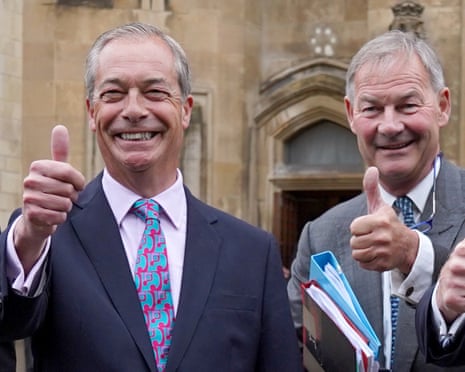
The political relationship between Lowe and Farage has changed dramatically.
Lowe entered Parliament as a Reform UK MP in 2024. He was initially part of the group that helped transform Reform from a relatively small political organisation into a significant parliamentary force.
The relationship later deteriorated, and Lowe was removed from the party. He subsequently established Restore Britain, turning what had once been an internal dispute into direct competition.
That makes Lowe’s latest proposal particularly striking.
Rather than continuing to attack Farage, Lowe has suggested that the two sides should cooperate. His argument is that political differences should not prevent a wider alliance if both parties ultimately want to achieve similar objectives.
But the conditions attached to the proposal make clear that Lowe is not simply asking to return to Reform.
He wants Farage to accept a political programme that would push the British right considerably further on several controversial issues.
First Condition: Mass Deportations
Lowe’s first demand concerns immigration.
He argues that simply reducing the level of immigration is no longer sufficient. Instead, he wants Britain to reverse the effects of mass immigration and remove people who are in the country illegally.
His proposal includes mass deportation of illegal migrants, including women and children.
This is one of the strongest positions currently being advocated by a British political party. Lowe has argued that illegal migration has become a structural problem that requires a fundamental change in government policy.
The demand is also strategically important because immigration is one of the main areas where Reform and Restore compete for voters.
Farage has already made border control one of Reform UK’s central political themes. His proposal to intercept small boats crossing the English Channel demonstrates how important the issue has become to his party.
Lowe’s condition therefore puts pressure on Farage to decide whether Reform should adopt an even harder position or maintain a broader appeal.
Second Condition: Demographic and Cultural Policy
Lowe’s second condition goes beyond immigration numbers.
He calls for what he describes as “demographic security” and wants to reverse what he sees as the increasing influence of Islam in Britain.
His proposed measures include banning the burqa, ending halal and kosher slaughter, banning cousin marriage and opposing the use of Sharia courts.
These proposals are considerably more controversial than traditional immigration-control policies.
They raise questions about religious freedom, cultural diversity and the role of the state in regulating religious practices.
For Lowe, however, these issues are part of a wider argument about national identity. He believes that Britain’s political system should place greater emphasis on preserving what he regards as the country’s traditional cultural character.
This creates a significant challenge for Farage.
Reform has attempted to build a coalition that extends beyond its most hard-line supporters. The party wants to attract former Conservative voters as well as working-class voters who have become disillusioned with Labour.
Adopting all of Lowe’s cultural demands could strengthen Reform among some voters while making it more difficult to appeal to others.
Third Condition: A Referendum on the Death Penalty
Lowe’s third condition is a referendum on restoring the death penalty.
Capital punishment has not been used in Britain for decades, and its restoration would represent a major change in the country’s criminal justice system.
Lowe has argued that voters should have the opportunity to decide the issue directly.
A referendum would allow him to frame the proposal as a question of democratic choice rather than simply demanding that Parliament restore capital punishment.
Nevertheless, the issue would be highly controversial.
Supporters could argue that the most serious crimes deserve the strongest possible punishment and that the public should have a say.
Opponents would raise concerns about wrongful convictions, human rights and the irreversible nature of the death penalty.
For Farage, accepting this condition would therefore carry substantial political risks.
Fourth Condition: Welfare Cuts and Self-Sufficiency
Lowe’s fourth demand concerns the welfare system.
He wants significant reductions in welfare spending and argues that government policy should encourage greater economic self-sufficiency.
The argument fits into a wider political debate about the relationship between taxation, benefits and employment.
Supporters of welfare reform believe that the benefits system should provide temporary assistance while encouraging people who can work to become economically independent.
Critics, however, argue that large cuts could disproportionately affect vulnerable people, including those who are unable to work because of disability or family responsibilities.
This issue could become particularly important for Reform because the party is trying to appeal to working-class voters.
A message focused heavily on welfare cuts may be attractive to taxpayers who believe the system is too generous, but it could alienate voters who depend on public support.
Fifth Condition: No Former Tory Ministers in Government
Lowe’s final condition is perhaps the most directly relevant to Farage’s political strategy.
He wants former Conservative ministers excluded from any future cabinet formed through cooperation between Reform and Restore.
This demand reflects Lowe’s deep distrust of the traditional political establishment.
He believes that simply replacing a Conservative or Labour government with a government containing former Conservative politicians would not represent genuine political change.
For Lowe, the point of a right-wing political revolution is to replace the political establishment rather than absorb it.
This position creates a major problem for Farage.
Reform UK is increasingly trying to present itself as a government-in-waiting rather than merely a protest party. To govern effectively, it may need experienced politicians, civil servants and individuals with knowledge of government departments.
Some former Conservative figures have already moved towards Reform.
Lowe’s condition would therefore limit Farage’s freedom to construct a future cabinet.
Why Lowe Is Making the Offer Now
The timing of Lowe’s proposal is important.
Restore Britain has established itself as a genuine competitor on the right, but it remains considerably smaller than Reform UK.
Lowe therefore faces a strategic choice.
He can continue competing against Farage and attempt to build Restore into a major political force, or he can seek cooperation and use his party’s growing influence to negotiate political concessions.
The five conditions allow Lowe to do both.
If Farage accepts them, Lowe gains influence over the direction of the wider right.
If Farage rejects them, Lowe can argue that he tried to unite the right but that Reform refused to compromise.
Either outcome keeps Lowe at the centre of the political conversation.
Farage’s Difficult Decision
For Nigel Farage, the proposal creates a complicated political calculation.
On one side, cooperation could prevent the right-wing vote from being divided.
Britain’s first-past-the-post electoral system rewards parties that can concentrate support in individual constituencies. If Reform and Restore compete against each other, they could split the vote and allow Labour, the Conservatives or another party to win.
A pact could potentially prevent this.
On the other hand, accepting Lowe’s conditions could push Reform further towards positions that make it harder to win support among moderate voters.
Farage therefore has to balance electoral unity against political flexibility.
The problem is made even more difficult by the personal history between the two men.
Trust is essential to any political alliance, and Farage and Lowe have spent considerable time criticising one another.
Could the Right Actually Unite?
A formal merger appears unlikely in the immediate future.
A more realistic possibility could be an informal electoral arrangement in selected constituencies.
Reform and Restore could potentially agree not to compete against each other in areas where one party has a stronger local base.
Such a deal could reduce vote splitting without requiring either party to surrender its identity.
However, Lowe’s five conditions suggest that he wants more than a simple electoral agreement.
He wants political influence over immigration, culture, criminal justice, welfare and government appointments.
That makes negotiations much more difficult.
The Wider Political Consequences
The dispute between Reform and Restore could have consequences far beyond the two parties.
If they remain divided, Labour and the Conservatives could benefit from a fragmented right.
If they cooperate, however, they could create a formidable electoral alliance.
The next general election could therefore be shaped not only by the popularity of Labour and Reform but also by the relationship between Farage and Lowe.
The situation also demonstrates how rapidly British politics is changing.
Traditional party loyalties are weakening, smaller parties are becoming more influential and voters are increasingly willing to move between political organisations.
The emergence of Restore Britain is itself evidence of this fragmentation.
Conclusion
Rupert Lowe’s offer to work with Nigel Farage is one of the most significant developments on Britain’s political right in recent months.
His proposal is not simply a call for peace. It is a political challenge built around five conditions: mass deportations, much tougher cultural and immigration policies, a referendum on the death penalty, major welfare reform and the exclusion of former Conservative ministers from any future cabinet.
Some of these ideas overlap with Reform’s existing policies, while others would push Farage’s party into considerably more controversial territory.
For Lowe, the strategy offers an opportunity to influence the direction of the wider right.
For Farage, it creates a dilemma.
Cooperation could prevent the right-wing vote from splitting and potentially improve Reform’s electoral prospects. But accepting Lowe’s demands could narrow Reform’s appeal and make it harder for the party to present itself as a credible government for the whole country.
The most important question is therefore not simply whether Farage and Lowe can work together.
It is whether they can find enough common ground to unite their voters without forcing either party to abandon its political identity.
For now, Lowe has opened the door.
Whether Nigel Farage chooses to walk through it remains one of the most intriguing questions facing Britain’s political right.
:::{“fallbackMarkdown”:””,”reference”:{“matched_text”:” “,”prefix”:null,”start_idx”:12609,”end_idx”:12609,”safe_urls”:[],”refs”:[],”alt”:””,”prompt_text”:null,”type”:”sources_footnote”,”sources”:[{“title”:”Rupert Lowe urges Nigel Farage to work with Restore Britain”,”url”:”https://www.theguardian.com/politics/2026/aug/02/rupert-lowe-urges-nigel-farage-to-work-with-restore-britain?utm_source=chatgpt.com”,”attribution”:”Guardian”}],”has_images”:false},”showLoginRequiredCard”:false}