
The Staggering Amount of Money Reform Voters Are Paying for a Signed Nigel Farage Shirt
Nigel Farage has spent decades building one of the most recognisable political brands in Britain. Now, that political loyalty appears to have acquired a surprising financial value, with signed Reform UK shirts being offered to supporters for sums that would make many ordinary voters think twice.
What might look like an ordinary football shirt can become something entirely different once Farage’s signature is added.
For some supporters, it is a political souvenir.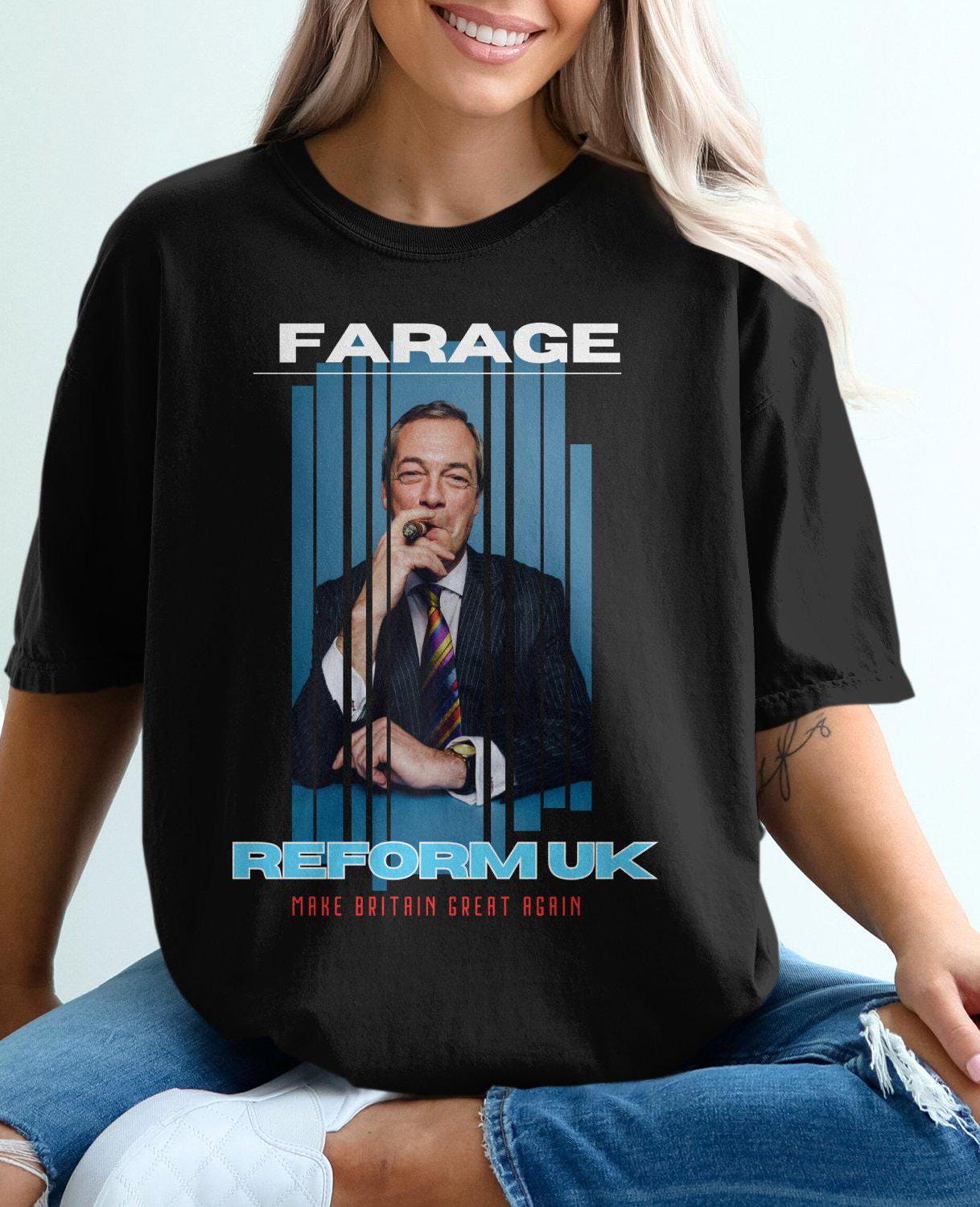
For others, it is a collector’s item.
And for a growing number of people watching Britain’s political landscape, it is another fascinating example of how modern politics has become intertwined with personality, branding and commercial value.
Recent online listings show Reform UK football shirts signed by Farage being offered for anything from around £60 or £70 to more than £200, depending on the shirt, size, condition and claimed authenticity. Some specialist listings go considerably higher, including a limited-edition cased shirt advertised at hundreds of pounds.
That raises an obvious question.
Why would anyone pay so much money for a political shirt?
The answer is partly about Nigel Farage himself.
Few modern British politicians have developed such a distinctive personal following.
Farage has survived multiple political parties, election defeats, leadership battles and years of criticism from opponents.
He became one of the defining figures behind Britain’s campaign to leave the European Union and later transformed his political influence through Reform UK.
To his supporters, Farage is not simply another politician.
He represents a political revolt.
That makes objects carrying his signature more valuable to some supporters because they represent a particular moment in British political history.
A signed shirt can therefore become a form of political memorabilia.
The same phenomenon exists in sport.
Fans routinely pay more for shirts signed by famous footballers.
They buy framed shirts, signed boots, programmes and photographs.
The value is not necessarily connected to the practical usefulness of the object.
A signed football shirt cannot help someone score a goal.
Its value comes from the association with a particular player, club or historical moment.
Political memorabilia works in much the same way.
A Reform supporter buying a Farage-signed shirt is not simply buying clothing.
They are buying a physical reminder of a political movement.
The Reform brand has increasingly become associated with a distinctive visual identity.
The party’s colours, slogans and football-style shirts have helped transform politics into something closer to a cultural identity.
This is important because modern political parties increasingly compete not only through policy but also through identity.
Voters want to feel that they belong to something.
They wear campaign merchandise.
They attend rallies.
They display flags.
They share political content online.
And they purchase memorabilia.
The political shirt therefore becomes part of a wider movement.
For Reform, that can be extremely valuable.
Traditional political parties have historically relied on membership subscriptions, donations and local campaigning.
Modern populist movements can supplement those sources with merchandise.
Every shirt sold creates another connection between the supporter and the party.
Every supporter wearing that shirt also becomes a walking advertisement.
That makes political merchandise both symbolic and strategic.
But the prices attached to signed Farage shirts create another interesting issue.
How much is political loyalty worth?
An unsigned Reform football shirt can be relatively inexpensive.
Adding Farage’s autograph can dramatically increase the asking price.
That premium reflects scarcity.
Farage cannot personally sign an unlimited number of shirts.
His time is limited.
A shirt signed at a particular political event may also carry a story that makes it more desirable.
The fewer authentic examples available, the more collectors may be prepared to pay.
Of course, there is an important distinction between an asking price and an actual market value.
An online seller can advertise an item for £200, £400 or £700.
That does not mean a buyer will necessarily pay that amount.
The true value of memorabilia is ultimately determined by what people are willing to spend.
This distinction matters when discussing the most expensive Farage merchandise.
Some listings claim extremely high prices, but without evidence of completed transactions, those figures should be treated cautiously.
Nevertheless, even lower prices demonstrate something significant.
People are prepared to spend meaningful amounts of money to own a physical object connected to Farage.
That tells us something about the strength of his personal political brand.
Farage’s political career has always been unusually dependent on personality.
His supporters often talk about him personally rather than simply talking about party policy.
They describe him as someone who “says what others won’t”.
They see him as an outsider challenging Westminster.
They credit him with helping force the Brexit debate into the centre of British politics.
Whether someone agrees with that interpretation or not, there is little doubt that Farage has built a powerful political identity.
That identity has commercial consequences.
A signed shirt becomes a small piece of that identity.
It can be displayed at home.
It can be worn at political events.
It can be kept as a collectible.
It can potentially increase in sentimental value if Reform becomes a major force in British politics.
That last point is particularly interesting.
Political memorabilia can become more valuable when the historical importance of the politician increases.
Consider what happens when a politician becomes Prime Minister, wins a major election or plays a decisive role in a historic event.
Objects associated with that moment can become more desirable.
For Farage supporters, there is an obvious possibility.
What if Reform UK eventually becomes one of Britain’s major governing parties?
What if Farage becomes Prime Minister?
What if the movement he helped build transforms British politics?
A shirt signed before such a moment could become a fascinating historical artefact.
Of course, nobody knows whether that will happen.
Political movements can rise quickly and disappear just as quickly.
That uncertainty is part of what makes memorabilia interesting.
The buyer is not simply purchasing an object from the past.
They may be buying a piece of what they believe could become history.
There is also an emotional element.
Supporters of political movements often develop strong feelings towards their leaders.
They may see them as representatives of their own frustrations.
A signed item creates a sense of personal connection.
The politician may never know the individual buyer.
But the signature can create the illusion of a direct connection between leader and supporter.
That emotional value cannot be measured purely in pounds.
This is particularly true in the case of Farage because he has cultivated a highly recognisable public persona.
His speeches, television appearances and political confrontations have made him a constant presence in British public life.
Supporters therefore recognise the signature as belonging to a politician they have followed for years.
For critics, however, the commercialisation of politics may raise different questions.
They may argue that political parties are increasingly behaving like brands.
Instead of persuading voters through detailed policy arguments, they create merchandise, slogans and personalities that generate emotional loyalty.
There is some truth in that criticism.
Politics has always involved symbolism.
But social media has dramatically increased its importance.
A political message can now be reduced to an image, a slogan or a piece of clothing.
A supporter wearing a Reform shirt does not need to explain their political views.
The shirt communicates them instantly.
That can be powerful.
It can also be divisive.
Political clothing can turn public spaces into visible expressions of political identity.
A Reform supporter wearing a Farage shirt may feel proud.
Another person may see the same shirt as a provocation.
That is the nature of political symbolism.
The more recognisable the brand, the stronger the reaction.
For Reform UK, the popularity of Farage merchandise can therefore be interpreted as evidence of political enthusiasm.
Supporters are not simply voting once every few years.
They are investing money and emotion into the movement.
That level of commitment is valuable for any political organisation.
But there is another side.
A political party must be careful not to become too dependent on one personality.
Farage’s popularity is a major advantage for Reform.
It is also a potential weakness.
If the party’s identity becomes almost entirely associated with Farage, its future may depend heavily on his continued popularity and political involvement.
A successful party ultimately needs institutions, candidates, local organisations and policies that can survive beyond one individual.
The signed shirt captures this tension perfectly.
The value of the object comes from Farage’s name.
Without his signature, it is simply a political football shirt.
With his signature, it becomes memorabilia.
That tells us just how central the individual politician has become to the Reform brand.
It also raises an intriguing question about the future.
What happens to the value of these shirts if Farage’s political career changes dramatically?
If Reform loses momentum, demand could fall.
If Farage retires, the shirts might become historical curiosities.
If he reaches the highest office in the country, today’s merchandise could look very different in ten or twenty years.
Collectors understand this uncertainty.
They are effectively betting on history.
The current prices therefore tell us more about political enthusiasm than guaranteed financial investment.
Anyone buying a signed Farage shirt should understand that the asking price is not necessarily its future value.
Authenticity is another important consideration.
A genuine signature can matter enormously.
Certificates of authenticity, provenance and evidence that the item was signed personally can influence what collectors are willing to pay.
Without reliable evidence, a seller’s claim that a shirt is “genuine” should not automatically be accepted.
This is particularly important when prices reach several hundred pounds.
The higher the price, the more important verification becomes.
There is also a broader lesson here about the changing nature of political campaigning.
Traditional campaign materials were designed to be disposable.
Leaflets were thrown away.
Posters were removed.
Badges were collected.
Today, political parties can create merchandise that supporters actively want to own.
That changes the relationship between voter and campaign.
A shirt is not just an advertisement.
It can become part of someone’s identity.
That is exactly why political merchandise can be so effective.
It transforms a temporary election campaign into something physical and lasting.
For Reform UK, this could be particularly important as the party attempts to establish itself as a permanent political force rather than simply a protest movement.
The party needs supporters who remain engaged between elections.
Merchandise can help maintain that connection.
A supporter wearing a Reform shirt is effectively making a public statement about their political allegiance.
A Farage-signed shirt goes even further.
It combines the party identity with the leader’s personal brand.
That is why the prices are so interesting.
A shirt that might otherwise be worth a modest amount can suddenly become a much more expensive object because of a signature.
The difference is not the fabric.
It is the politics.
It is the personality.
It is the scarcity.
And, above all, it is the emotional attachment of the buyer.
In that sense, the staggering price of some signed Farage shirts is not really about clothing.
It is about what Farage represents to the people prepared to pay.
For his supporters, the shirt can symbolise Brexit, opposition to the political establishment, frustration with mainstream parties and hope for a different political future.
For collectors, it may represent an unusual chapter in Britain’s political history.
For critics, it may be another example of politics becoming excessively personality-driven.
But whatever interpretation one chooses, the market for signed Farage merchandise reveals something important.
Political loyalty can have a surprisingly high monetary value.
People are willing to spend far more than the basic cost of a shirt to own something carrying the name of a politician they believe has changed Britain.
And if Reform’s political fortunes continue to rise, today’s expensive souvenir could one day become a fascinating reminder of the movement before it reached its full potential.
That is the gamble behind political memorabilia.
Nobody knows what history will decide.
A £200 shirt today may be worth much less tomorrow.
Or it could become a cherished artefact from the early days of a political revolution.
For the Reform voter holding a signed Nigel Farage shirt, that possibility may be worth every penny.