
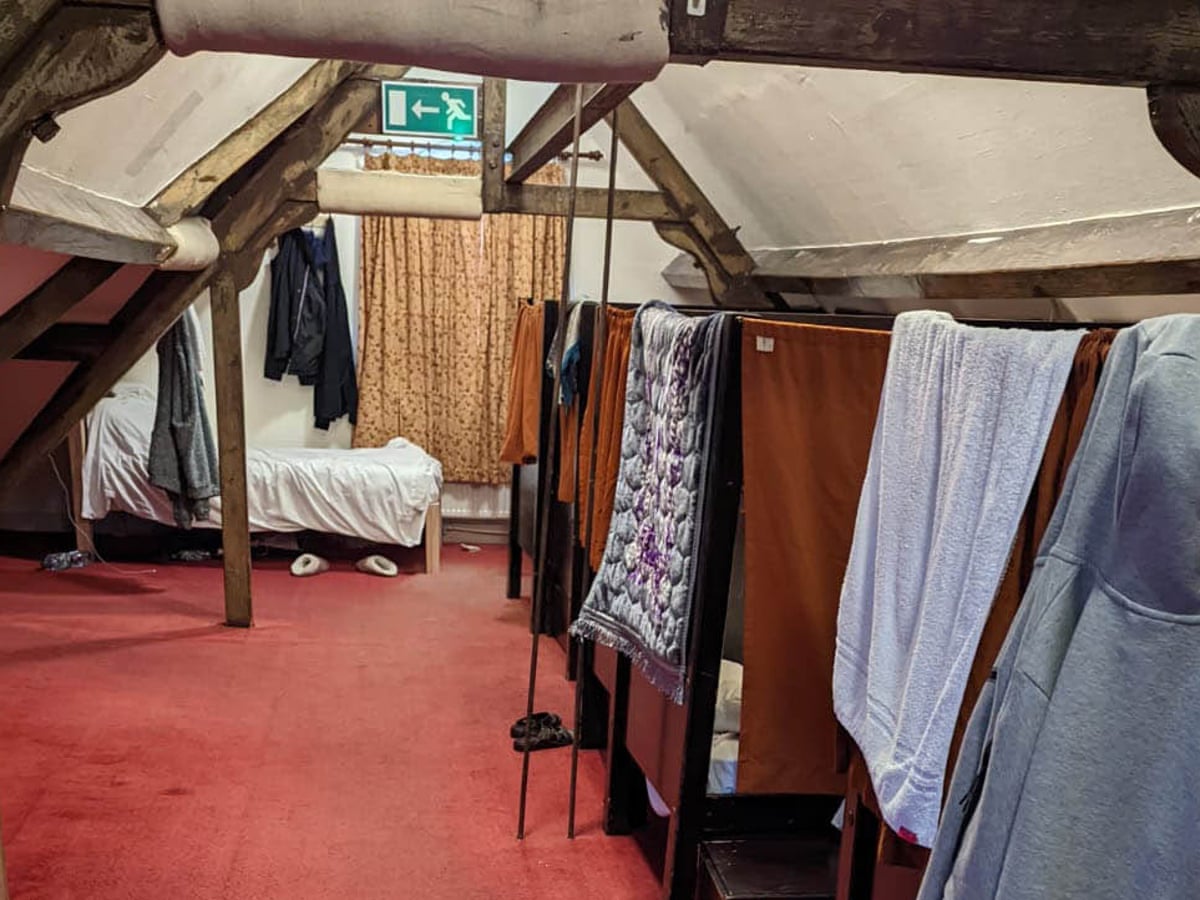
Illegal Immigrants in Taxpayer-Funded Hotels Are Being Provided with Free Condoms
Britain’s immigration debate has been reignited by claims that people housed in taxpayer-funded asylum accommodation are being provided with free condoms and access to sexual health services.
The revelation has generated predictable outrage among critics of the government’s migration policy. At a time when taxpayers are facing high living costs, rising taxes and pressure on public services, many voters are asking whether providing free contraception to asylum seekers is an appropriate use of public money.
For the government, however, the issue is considerably more complicated.
People accommodated by the Home Office are not necessarily all “illegal immigrants” in the legal sense. Many are asylum seekers whose claims have not yet been decided. Some may eventually be granted refugee status or another form of protection, while others may have their claims rejected and become liable for removal.
That distinction matters.
Nevertheless, the political controversy is understandable.
The British taxpayer funds the asylum accommodation system. People who arrive in the country and cannot support themselves may receive accommodation and other forms of support while their claims are being considered.
At the same time, the National Health Service provides free sexual health services, including contraception and condoms, to people who are eligible to access those services.
The question is therefore not simply whether condoms are free.
The bigger question is whether taxpayers should be funding additional services for people who have entered Britain through an irregular route while thousands of British citizens are themselves struggling with poverty, housing problems and access to healthcare.
This is where the political argument becomes particularly intense.
Opponents of the policy see it as another example of what they describe as an immigration system that appears more generous to newcomers than to struggling British residents.
They point to the wider package of support available to asylum seekers.
Accommodation.
Food or financial allowances.
Healthcare.
Legal assistance.
And, in some circumstances, access to sexual health services.
To critics, the cumulative effect creates an image of a system in which people arriving illegally receive a range of taxpayer-funded benefits while ordinary working families are being told that public finances are under severe pressure.
Nigel Farage and Reform UK are likely to seize upon precisely this argument.
Reform has built much of its political identity around immigration, border control and the principle that government should prioritise British citizens.
The party can argue that the controversy over free condoms is not really about condoms at all.
It is about priorities.
If the government can provide free contraception to people staying in taxpayer-funded accommodation, critics ask, why can it not provide better housing support for homeless British citizens?
Why are people waiting months for medical treatment?
Why are families struggling with childcare costs?
Why are pensioners worried about energy bills?
And why are taxpayers being asked to accept higher taxes while the government continues to spend billions on the asylum system?
These are legitimate political questions.
But there is another side.
Free condoms are a relatively inexpensive public health intervention.
Sexually transmitted infections can be costly to diagnose and treat.
Unplanned pregnancies can create significant financial and social consequences.
Sexual health services are therefore designed not simply as benefits for individuals but as preventative healthcare.
From that perspective, providing condoms to asylum seekers is not necessarily an extraordinary privilege.
It is part of the broader principle that public health measures should reduce preventable disease and unwanted pregnancies.
The same principle applies to other healthcare services.
Asylum seekers awaiting a decision or appeal can access NHS healthcare under established rules.
The government has a public health interest in ensuring that infectious diseases are identified and treated, regardless of someone’s immigration status.
This is not unique to Britain.
Most modern healthcare systems recognise that contagious diseases do not respect immigration boundaries.
If a person has an untreated infection, ignoring it does not make the problem disappear.
It can simply allow the infection to spread.
The political difficulty is that public health arguments rarely overcome public anger when trust in the immigration system is already weak.
The debate over condoms therefore becomes symbolic.
It represents a much larger frustration about the cost and management of irregular migration.
Britain has spent billions supporting the asylum system.
Hotels have been used to accommodate large numbers of people.
Although the number of asylum seekers in hotels has fallen significantly from its peak, thousands remain in temporary accommodation.
The government is attempting to move people away from expensive hotels into other forms of accommodation.
That may reduce costs, but it does not eliminate the underlying controversy.
Communities still want to know how many people are arriving, how quickly claims are being processed and what happens to those whose applications are rejected.
Taxpayers want to know whether the system is delivering value for money.
And political parties want to demonstrate that they have control over Britain’s borders.
The free-condom controversy fits neatly into this broader debate because it is easy to understand and emotionally provocative.
A headline saying that migrants in taxpayer-funded hotels are receiving free condoms immediately raises questions about fairness.
But headlines can also conceal important context.
Free condoms are not necessarily handed out as a special reward for crossing the Channel.
They are generally available through sexual health services to people based on public health considerations.
That distinction should be made clear.
If a government is accused of giving asylum seekers preferential access to healthcare, it should explain exactly what services are available, who provides them and what they cost.
Transparency is essential.
If the cost is minimal and the policy reduces disease and unwanted pregnancies, the government should say so.
If significant resources are being directed towards specialised services without clear evidence of benefit, ministers should also be prepared to explain why.
The problem is that the public often hears conflicting messages.
On one hand, ministers say that public finances are extremely tight.
On the other hand, taxpayers see government-funded services being provided to people who may not ultimately be allowed to remain in Britain.
That creates a perception of unfairness.
Perception matters in politics.
A government can win an argument about public health and still lose the political argument if voters believe the immigration system is fundamentally unfair.
That is why Labour needs to address the wider issue rather than simply dismissing criticism over condoms.
The government must demonstrate that asylum support is temporary, controlled and subject to clear rules.
It must process claims quickly.
It must remove people whose applications are finally rejected where removal is lawful and practical.
And it must reduce reliance on expensive hotel accommodation.
These measures would do more to restore public confidence than any statement about sexual health.
The same applies to Reform UK.
If the party wants to criticise free condoms, it should explain what policy it would put in their place.
Would it prohibit access to sexual health services for asylum seekers?
Would it charge people for condoms?
Would it provide exceptions for sexually transmitted infections?
How would it prevent infectious diseases from spreading?
These are practical questions that any serious government must answer.
A political party cannot simply campaign against an unpopular policy without explaining the consequences of replacing it.
This is especially important because healthcare is different from ordinary welfare.
Providing a condom is not equivalent to providing cash.
The cost is extremely small compared with the potential cost of treating some preventable infections or dealing with an unintended pregnancy.
That does not mean every government programme is automatically justified.
It means the economic argument needs to consider both costs and potential savings.
There is also a moral dimension.
Some people believe that individuals who enter Britain illegally should receive as little taxpayer-funded support as possible.
Others believe that basic healthcare should be available to anyone physically present in the country, regardless of immigration status.
Neither position can be dismissed simply as irrational.
They reflect different ideas about the responsibilities of the state.
The first prioritises immigration control and fairness to citizens.
The second prioritises public health and basic human welfare.
The challenge for government is to balance these principles.
Britain can maintain strict immigration controls while ensuring that people in the country do not become a public health risk.
It can provide basic healthcare without creating a system that encourages illegal migration.
The key is ensuring that healthcare provision is not presented as an immigration incentive.
That distinction is particularly important.
If people believe that entering Britain illegally guarantees comfortable accommodation, financial support and access to a wide range of services, the government’s deterrence strategy becomes harder to defend.
But it would be equally misleading to suggest that someone crosses the English Channel because they have been promised free condoms.
Migration decisions are driven by far more complicated factors.
The real deterrence debate concerns whether the overall asylum system provides incentives for irregular migration and whether successful enforcement can discourage dangerous crossings.
This is where the government should focus.
Stopping small boats is more important than winning an argument about contraception.
Speeding up asylum decisions is more important than generating headlines about hotel residents.
Removing people who have no legal right to remain is more important than debating the cost of individual healthcare items.
Yet political parties understand that voters respond strongly to symbols.
The image of a taxpayer-funded hotel resident receiving free condoms is likely to provoke a stronger emotional response than a complicated discussion about asylum processing.
That is why the issue has attracted attention.
For Reform UK, it is another opportunity to argue that the political establishment does not understand the frustration of ordinary voters.
For Labour, it is another test of whether the government can explain its immigration policy in a way that feels fair.
The government should therefore publish clear information about the cost of asylum accommodation and associated healthcare.
It should explain which services are available to asylum seekers and why.
It should distinguish between people whose asylum claims are being processed and people who have exhausted all legal routes to remain.
And it should demonstrate that support is not indefinite.
The public deserves clarity.
If taxpayers are paying for a service, they deserve to know why that service exists and whether it represents value for money.
At the same time, political debate should not turn vulnerable people into caricatures.
Asylum seekers are not a single group.
Some have fled war or persecution.
Some may have experienced serious trauma.
Some may have no valid claim and may ultimately be required to leave.
The government must deal with each case according to the law.
That does not prevent it from maintaining strict border controls.
Indeed, a credible asylum system requires both compassion and enforcement.
The condom controversy therefore reveals something larger about Britain’s immigration debate.
The argument is not really about contraception.
It is about trust.
Do taxpayers trust the government to control immigration?
Do they believe asylum claims are being processed efficiently?
Do they believe people with no right to remain are being removed?
Do they believe public money is being spent responsibly?
And do they believe that the government is treating citizens fairly?
Those questions will determine the political consequences of the controversy.
If Labour can reduce the asylum backlog, cut hotel use, increase lawful removals and demonstrate greater control of the borders, the free-condom story will eventually fade.
If the system continues to struggle, every new example of taxpayer-funded support will become another symbol of government failure.
For Nigel Farage and Reform UK, that creates an obvious political opportunity.
The party can use the controversy to reinforce its wider message: Britain needs stronger borders, lower immigration and a government that puts taxpayers first.
But Labour has an equally important responsibility.
It must show that providing basic public health services does not mean abandoning immigration control.
A functioning state can do both.
It can prevent illegal entry.
It can process asylum claims rapidly.
It can remove those who have no right to stay.
And it can provide necessary healthcare to people who are temporarily within the country.
The question is whether the government can deliver that balance.
Free condoms may seem like a trivial issue compared with the enormous challenges facing Britain’s immigration system.
But politically, they have become a symbol of something much bigger.
They symbolise the tension between public health and immigration control.
They raise questions about fairness between taxpayers and asylum seekers.
And they provide another opportunity for Reform UK to attack Labour’s handling of the border.
The government should not respond simply by dismissing the controversy.
It should answer the underlying questions about cost, eligibility, enforcement and fairness.
Because ultimately, voters are not just asking whether migrants should receive free condoms.
They are asking whether the government has a clear plan for immigration, whether taxpayers are receiving value for money and whether Britain still has control over its borders.
Those are much bigger questions.
And they will continue to shape British politics long after the latest controversy over taxpayer-funded condoms has disappeared from the headlines.