
Bombshell Favourite to Replace Keir Starmer Revealed – Is It a Nightmare Scenario for Labour?
The future of the Labour Party has once again become a subject of intense political speculation. Whenever a governing party begins to struggle with public confidence, attention quickly turns towards its leadership and the possibility of a change at the top. The latest discussion about who could replace Keir Starmer reflects a deeper problem within Labour: the party is searching not only for a new leader, but also for a new political identity.
The emergence of a potential successor can be exciting for supporters who believe that a change of leadership could restore Labour’s popularity. However, it can also create a serious political risk. Replacing one unpopular leader with another politician does not automatically solve the problems facing a government. Indeed, if Labour begins to treat a particular figure as a political saviour, the party could create expectations that are impossible to satisfy.
Andy Burnham is an obvious example of this phenomenon. His political reputation has been built around his experience in Greater Manchester, his strong communication skills and his ability to present himself as a politician who understands the concerns of ordinary communities. For many Labour supporters, these qualities make him an attractive alternative to Starmer’s more cautious and managerial style.
But the debate about Starmer’s successor is bigger than Burnham himself. It raises fundamental questions about what Labour wants to become, what kind of voters it hopes to attract and how it intends to respond to the growing challenge from Reform UK, the Conservatives, the Greens and other political forces.
One reason leadership speculation becomes so powerful is that voters often associate a political party with the personality of its leader. When a government appears ineffective, changing the leader can seem like an easy solution. A new face can create optimism, generate favourable headlines and encourage voters to reconsider their opinion of the party.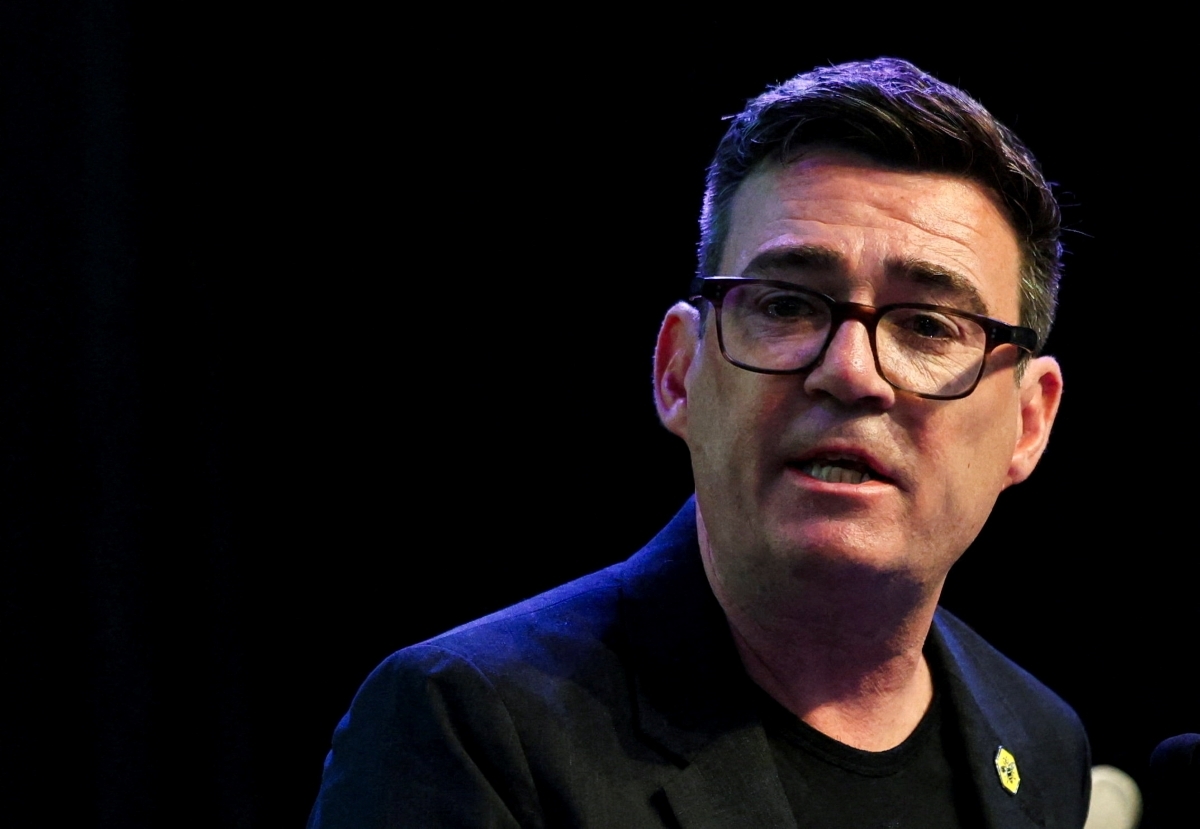
This phenomenon is sometimes known as a honeymoon period. A new leader may benefit from increased attention and public goodwill before being judged on the difficult realities of government. The danger is that political enthusiasm can be mistaken for long-term support.
Labour has experienced this problem before. Political parties often become convinced that a change of personality will transform their electoral fortunes, only to discover that voters are more concerned about policies and living standards than about who occupies the leadership position.
The pressure on Labour is particularly intense because the party must manage a wide range of competing expectations. Traditional Labour voters want stronger public services, better wages and greater economic security. Younger voters are concerned about housing, climate change and opportunities for the future. Other voters want tougher immigration controls, safer communities and lower taxes.
A new leader would therefore inherit the same contradictions that have challenged Starmer. Changing the person at the top would not make these tensions disappear.
This is why the idea of a “nightmare scenario” deserves careful consideration. The nightmare for Labour may not simply be choosing the wrong successor. It may be believing that a leadership change can solve problems that are fundamentally structural.
The party’s difficulties are connected to broader economic and social conditions. Britain faces pressure on public finances, a housing shortage, strained public services and continuing political dissatisfaction. None of these problems can be resolved through a change of leadership alone.
A successor would also face the continuing legacy of Brexit. Britain’s departure from the European Union remains one of the most divisive political issues of recent decades. Labour has attempted to avoid reopening the central question of whether Brexit was right or wrong, but the consequences of the decision continue to influence trade, immigration, regional politics and relations with Europe.
A future Labour leader would need to decide how closely Britain should cooperate with the European Union. Moving towards Europe could appeal to younger and more liberal voters, but it could also create problems in communities where support for Brexit remains strong.
Immigration presents another difficult challenge. Reform UK has successfully made immigration one of the central issues in British politics. Labour cannot ignore this pressure, but adopting Reform’s language and policies could alienate parts of its traditional support.
This dilemma illustrates why a leadership contest could become dangerous. Candidates may make ambitious promises in order to win support from Labour members, but governing requires compromises. Policies that sound attractive during a leadership campaign may become much harder to implement when confronted with economic constraints.
There is also the danger of internal division. Leadership contests can encourage different factions of a political party to fight for control. Supporters may begin to attack one another, and disagreements that would normally remain private can become public. If this happens while Labour is already struggling to maintain public confidence, the party could appear chaotic.
The rise of a new leader could also encourage opponents to focus their attacks on that individual. Reform UK, in particular, has demonstrated the importance of personality-driven politics. Nigel Farage has built much of his political appeal around direct confrontation and a clear personal identity.
A Labour leader such as Burnham could potentially compete effectively in this environment because he is also a strong communicator. However, personality-based politics can become unpredictable. The more politics becomes a contest between individuals, the easier it becomes for complex policy debates to disappear.
Burnham’s supporters would argue that his experience as mayor gives him an important advantage. He has governed at regional level and has developed a strong political connection with Greater Manchester. His emphasis on devolution and local decision-making could help Labour reconnect with voters who feel ignored by Westminster.
This approach has considerable potential. Regional inequality has been a major problem in Britain, and many communities outside London believe that national government has failed to provide enough investment. Giving local authorities more power could allow decisions to reflect local circumstances more effectively.
Yet devolution is not a magic solution either. Local governments require adequate funding, administrative capacity and long-term investment. If responsibility is transferred without sufficient resources, frustration could simply move from Westminster to local authorities.
The same principle applies to the National Health Service. A new Labour leader might promise to transform healthcare, but reducing waiting lists, recruiting staff and improving facilities require time and substantial resources. Public expectations must therefore be realistic.
Housing is another example. Britain needs more homes, particularly affordable homes, but increasing supply can involve difficult decisions about planning, land use and infrastructure. Local residents may oppose developments even when national government considers them necessary.
A leader who promises to satisfy everyone will eventually disappoint someone.
This is why Labour needs a political strategy rather than simply a new personality. The party must determine its priorities and communicate them clearly. It needs to decide what problems it will address first and explain honestly what those policies will cost.
The biggest advantage of a leadership change is the opportunity to reset the political conversation. A new leader can acknowledge mistakes, introduce a different style of government and reconnect with voters who have become disengaged.
But a reset only works if it is accompanied by meaningful policy change. If Labour changes its leader while continuing to pursue exactly the same policies, voters may conclude that the change is cosmetic.
There is also an important democratic consideration. Leadership should not be decided solely by political excitement or media speculation. Labour members and MPs need to consider which candidate can actually govern effectively. Popularity within the party does not necessarily translate into popularity with the wider electorate.
The candidate most likely to win a leadership contest may not be the candidate most capable of winning a general election. These are two different challenges.
For Labour, the ideal successor would need to unite different sections of the party while also reaching voters outside its traditional support base. That means combining economic competence with a strong social message and maintaining credibility on issues such as immigration, national security and public services.
This is an extremely difficult balance.
The political environment makes it even harder. Reform UK has challenged the traditional Conservative-Labour competition, while the Greens have attracted voters on the progressive left. The Liberal Democrats remain competitive in many constituencies. Labour therefore cannot assume that dissatisfied voters will automatically return to it after a leadership change.
The party must earn their support.
Ultimately, the speculation about who might replace Starmer reveals Labour’s desire for renewal. That desire is understandable. Political parties need leaders who can communicate effectively, inspire confidence and provide a clear sense of direction.
However, the language of a “Messiah” or political saviour should be treated with caution. Britain does not need a leader who promises to solve every problem. It needs a government capable of identifying priorities, making difficult decisions and delivering gradual improvements.
If Burnham or another candidate eventually takes over, the first challenge will be resisting the temptation to promise too much. The new leader will inherit the same financial pressures, institutional problems and political divisions that affected Starmer.
The second challenge will be managing expectations. A new leader may initially enjoy strong approval ratings, but voters will quickly judge whether their lives are improving. Popularity is temporary; results are what create lasting political trust.
The third challenge will be unity. Labour cannot afford a leadership battle that leaves the party permanently divided between competing ideological factions. A successful successor must be able to bring different groups together around a practical programme.
The current speculation should therefore be seen as both an opportunity and a warning. A leadership change could give Labour a chance to reconnect with voters, but it could also deepen instability if treated as a substitute for serious political reform.
The so-called “nightmare scenario” would be a Labour Party that becomes obsessed with finding the perfect leader while failing to address the problems that caused its difficulties in the first place. If voters are worried about housing, healthcare, wages, immigration and the cost of living, changing the face on the television will not be enough.
Britain’s political problems are too complicated for one individual to solve. Labour needs effective institutions, credible policies and a long-term economic strategy. It also needs to rebuild trust with voters who feel that politics has failed to improve their everyday lives.
A new leader could certainly help. The right personality can change the tone of a government, create optimism and make political communication more effective. But leadership is only one part of successful government.
The real test for whoever eventually succeeds Starmer will be whether they can turn public frustration into practical reform. If they can do that, Labour may have an opportunity to rebuild its political coalition and regain public confidence. If they cannot, another leadership change may simply begin the cycle again.
The revelation of a new favourite to replace Keir Starmer is therefore significant, but it should not be mistaken for a solution. Labour’s future will not be determined solely by who becomes leader. It will be determined by whether the party can understand why voters are dissatisfied and provide credible answers to their concerns.
A political “Messiah” may create headlines, excitement and temporary popularity. What Labour really needs, however, is something much less dramatic: competent leadership, realistic promises, economic credibility and a clear vision for Britain’s future.
That may not sound as exciting as a bombshell leadership announcement, but it is far more likely to determine whether Labour survives its current political difficulties.