
Manchester Synagogue Stabbing: A Witness’s Terrified Warning as the Attacker Was Shot Dead
The morning of October 2, 2025, began as a sacred and deeply meaningful day for members of Manchester’s Jewish community. It was Yom Kippur, the holiest day in the Jewish calendar, when worshippers traditionally gather for prayer, reflection and remembrance. At the Heaton Park Hebrew Congregation Synagogue in Crumpsall, north Manchester, people had come together expecting a peaceful religious service. Instead, the community was confronted with an act of terror that would leave two people dead, several others injured and many more struggling with fear and grief.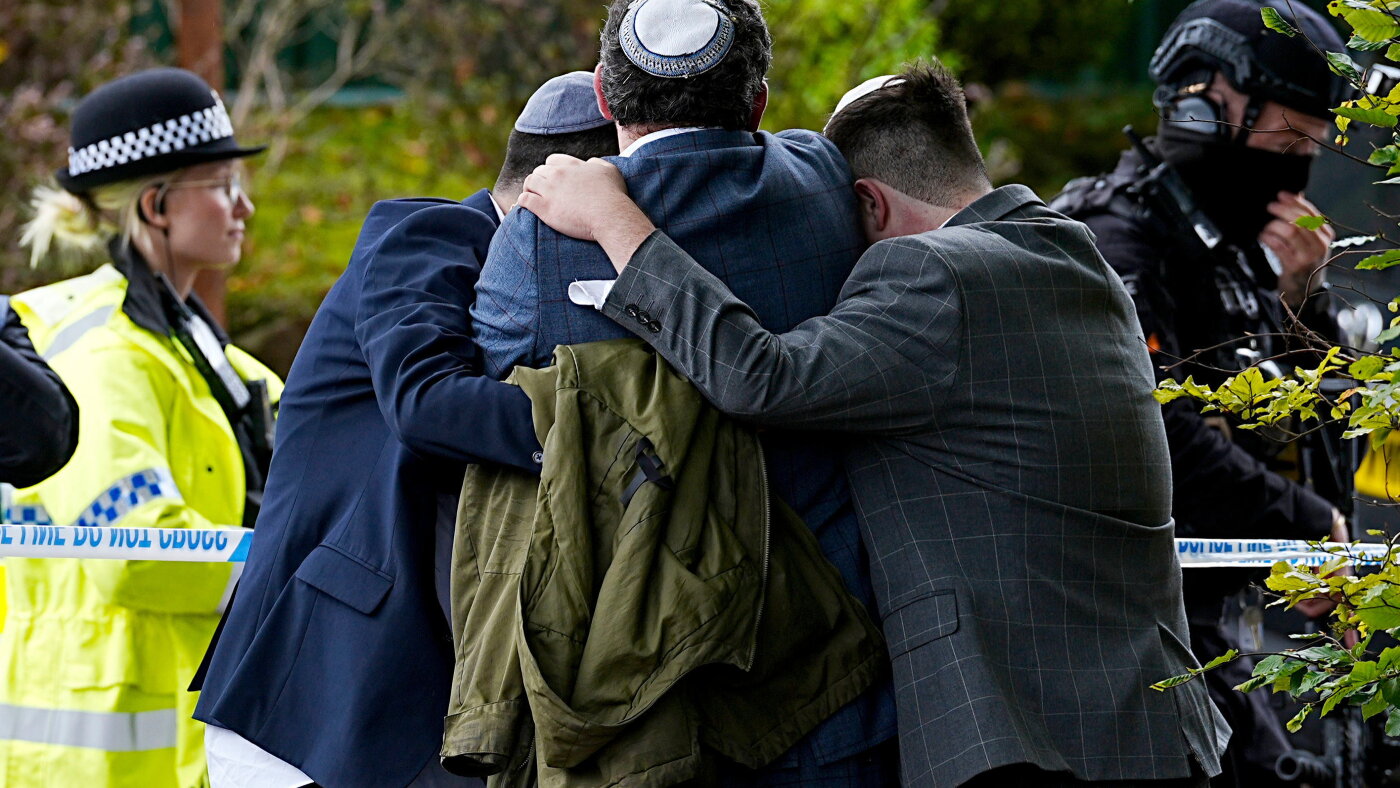
The attack developed rapidly, turning an ordinary place of worship into a scene of chaos. According to the subsequent police investigation, the attacker, identified as 35-year-old Jihad Al-Shamie, had been seen behaving suspiciously outside the synagogue before the violence began. He was challenged by security and initially walked away. Around fifteen minutes later, however, he returned in a black Kia and deliberately drove the vehicle towards people outside the synagogue.
The situation became even more terrifying when Al-Shamie left the vehicle carrying a knife. He attacked people outside the building before attempting to continue his assault. He was also wearing what appeared to be an explosive device. Although the device was later confirmed to be fake, people at the scene had no way of knowing that at the time. For those witnessing the attack, the possibility of an explosion added another layer of terror.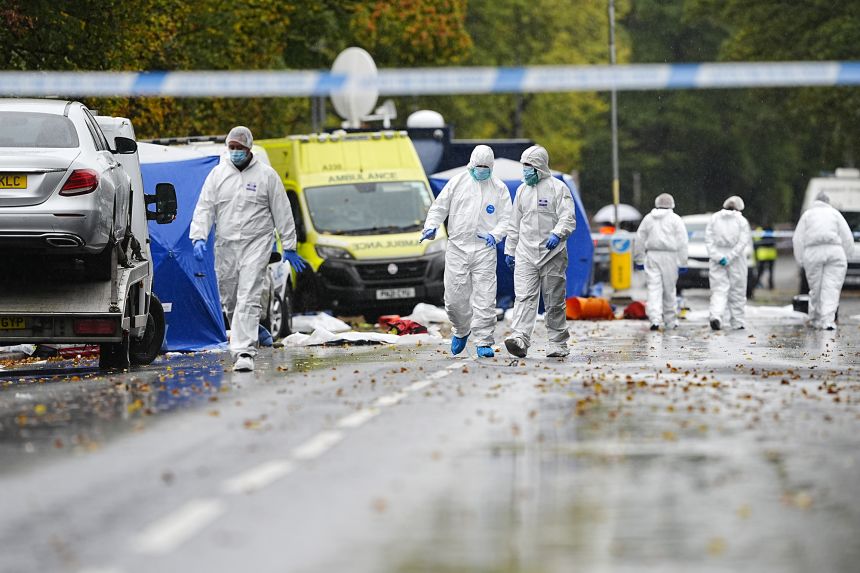
In moments like these, witnesses do not have the luxury of understanding everything that is happening. They see fragments: a vehicle moving suddenly, people running, shouting, someone carrying a weapon, doors being closed and strangers desperately trying to find safety. A warning shouted by someone who has just witnessed an attacker can become a matter of life and death.
The terrified warning associated with the incident captures the extraordinary fear experienced by people caught in the middle of the violence. An eyewitness does not need to give a long explanation. Sometimes a few urgent words are enough to communicate the danger: get away, get inside, stay back, or protect the people around you. Such warnings are often instinctive responses to an immediate threat.
Inside the synagogue, security staff and worshippers responded with remarkable courage. Their actions helped prevent the attacker from gaining access to the main building, where a large number of people were gathered. The doors became an important barrier between the attacker and those inside. While the situation outside remained extremely dangerous, people inside were forced to wait, listen and hope that the threat would end before the building was breached.
The bravery of those who protected the synagogue is an important part of the story. Terror attacks are designed to create panic and helplessness, but the actions of individuals can disrupt that objective. Security personnel, religious leaders and ordinary worshippers all played roles in keeping people alive.
Outside, emergency services were responding to a rapidly developing incident. Police received the first emergency calls and specialist firearms officers were dispatched. The attacker continued to pose an immediate threat, and officers had to make decisions in circumstances where there was very little time for careful assessment.
Police eventually confronted Al-Shamie and shot him dead. The decision to use firearms occurred in an extremely dangerous environment. Officers believed they were dealing with an attacker carrying a knife and wearing something that appeared to be an explosive device. The suspect was therefore treated as an immediate and potentially lethal threat.
The attack had already caused devastating consequences. Adrian Daulby and Melvin Cravitz lost their lives. Three other men were seriously injured and required hospital treatment. Later investigations also examined the circumstances surrounding injuries caused during the police response.
The death of Melvin Cravitz was particularly painful for his family and friends. In the months following the attack, those who knew him remembered him as a warm and sociable man who valued relationships with other people. His family described the devastating impact of losing someone they loved in an attack that occurred while he was simply attending religious services.
The death of Adrian Daulby also became part of the complex aftermath of the incident. Investigators later determined that he had suffered a gunshot wound during the armed police response. This led to an independent investigation into the actions of the officers involved. Such investigations are essential after incidents in which police firearms are used, especially when members of the public are injured or killed.
The synagogue attack also raised difficult questions about security, intelligence and the ability of authorities to identify threats before violence occurs. As the investigation continued, authorities discovered that Al-Shamie had connections to another man, Mohammed Asim Bashir. Evidence later showed that the two men had conducted reconnaissance of a UK defence facility before the synagogue attack.
Bashir eventually pleaded guilty to preparing for an act of terrorism and was sentenced to life imprisonment, with a minimum term. Investigators found evidence that he and Al-Shamie had discussed extremist ideas and examined potential targets. The discoveries added another disturbing dimension to the investigation because they demonstrated that the synagogue attack did not exist in complete isolation from other extremist activity.
At the same time, authorities acknowledged that there had been missed opportunities. Information relating to Al-Shamie had previously been available to police, but some data from his mobile devices had not been examined before the synagogue attack. The revelation has understandably intensified questions about whether the tragedy could have been prevented.
However, the story cannot be reduced to failures by institutions. It is also a story about ordinary people placed in extraordinary circumstances. Witnesses saw things that no person should have to experience. Some pedestrians stopped to help injured people. Others attempted to escape. Some protected children. Others sought shelter inside nearby buildings. Police officers ran towards danger while most people were desperately trying to get away from it.
The unidentified witnesses became an important part of the investigation. Police later appealed for people who had been near the synagogue to come forward, including an elderly man who had been walking with a young child. Investigators also identified motorists who had stopped at the scene to assist those who had been injured.
These details demonstrate how a terror attack affects not only its direct victims but also everyone who happens to be nearby. A person who witnesses violence may carry the memory for years. The sound of shouting, the sight of people running or the sudden appearance of an armed attacker can