

Politics LIVE: Andy Burnham Sets Out Plan to Replace Keir Starmer as Brexit Row Continues
British politics has entered another period of uncertainty as the Labour Party faces questions about its leadership, its future direction and its relationship with the legacy of Brexit. Andy Burnham has emerged as a central figure in this political struggle, presenting himself as a politician capable of reconnecting Labour with voters who have become increasingly frustrated with mainstream politics. His rise has also reopened an old argument about Britain’s relationship with the European Union. As the debate continues, Burnham faces the difficult task of offering Labour a new direction without creating another internal conflict over Brexit.
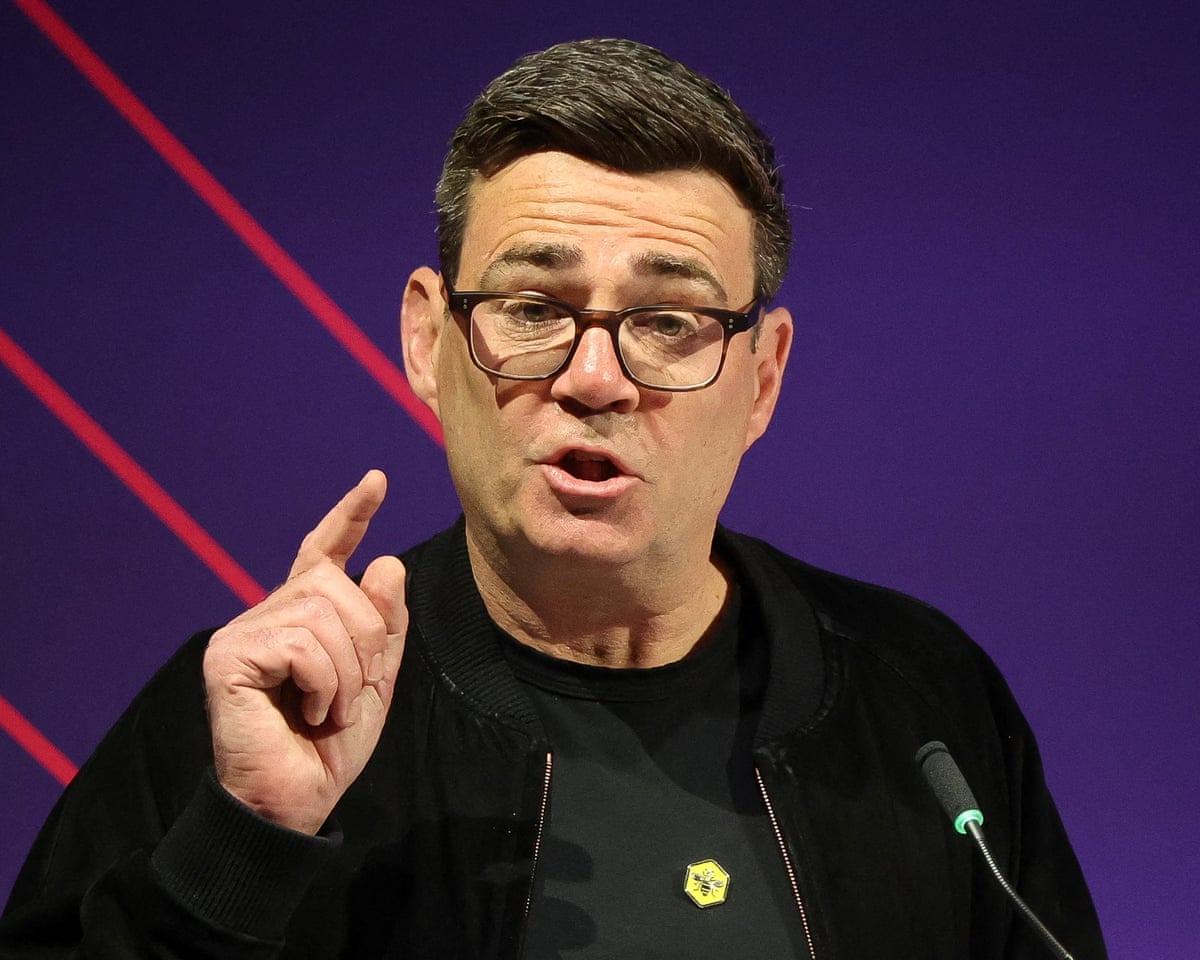
The question of Labour leadership is particularly important because the party’s electoral future depends on its ability to maintain support across very different groups of voters. Labour traditionally relies on working-class communities, urban voters, younger people and socially progressive supporters. However, these groups do not always agree on issues such as immigration, national identity, economic policy and Britain’s relationship with Europe. Brexit exposed many of these differences.
Burnham’s political appeal comes partly from his image as a politician who understands the concerns of communities outside Westminster. During his years as mayor of Greater Manchester, he developed a reputation for emphasising local government, public services and regional economic development. His political message has often focused on giving communities more control over their own futures rather than concentrating power in London.
This approach could provide Labour with an opportunity to rebuild trust. Many voters feel that British politics has become disconnected from everyday life. They are less interested in arguments between politicians and more concerned about housing costs, wages, healthcare, transport and the quality of public services. Burnham’s emphasis on practical issues attempts to respond to this frustration.
However, replacing a prime minister is not simply a matter of changing personalities. Labour must also decide what kind of government it wants to become. The party needs a coherent economic strategy, a credible approach to public services and a clear position on Britain’s place in the world. Burnham’s leadership will therefore be judged by whether he can turn his political reputation into a practical national programme.
Brexit remains one of the most difficult parts of this challenge. The 2016 referendum fundamentally changed British politics. It divided voters geographically, socially and politically, and its consequences continued long after Britain formally left the European Union. The issue also contributed to disagreements within Labour about whether the party should accept Brexit, seek closer relations with Europe or eventually consider returning to the EU.
Burnham has previously indicated that there may be a long-term case for Britain to rejoin the European Union, while also making clear that immediate re-entry is not his policy. This position reflects an attempt to avoid reopening the referendum question while acknowledging that Britain’s relationship with Europe may need to change over time.
The strategy is politically understandable. A direct promise to reverse Brexit would risk alienating voters who supported leaving the EU. At the same time, refusing to discuss the issue at all could disappoint Labour supporters who believe Brexit has damaged Britain’s economy and international influence. Burnham therefore has to find a position somewhere between these two competing pressures.
The most realistic approach may be to focus on improving Britain’s relationship with Europe without immediately discussing membership. Cooperation on trade, research, security, education and environmental policy could bring practical benefits without requiring another referendum. Such an approach would allow the government to address some of the consequences of Brexit while avoiding another major constitutional battle.
This distinction is important because political debates often become trapped between two extremes. Supporters of Brexit can view any closer relationship with the EU as an attempt to reverse the referendum, while some pro-European voters may regard anything short of rejoining the EU as inadequate. A successful government needs to recognise that there are many possibilities between complete separation and full membership.
Burnham’s broader political challenge is the rise of populist parties. Reform UK has benefited from dissatisfaction with established political parties and has attracted voters who believe that immigration and national sovereignty have not been adequately addressed. Labour cannot ignore this development.
At the same time, responding to populism by copying its rhetoric could damage Labour’s identity. The party needs to address legitimate concerns about immigration, housing and public services while maintaining a commitment to equality and social responsibility. Simply adopting more aggressive language may win temporary attention but is unlikely to solve the underlying problems.
Economic policy will therefore be central to Burnham’s leadership. His experience in Greater Manchester has shaped his belief in regional investment and decentralisation. He has argued that Britain should give regions greater power over economic development and public spending. Such a model could challenge the traditional concentration of political and economic power in London.
Regional inequality has been one of Britain’s persistent problems. London and the South East have historically enjoyed significant economic advantages, while many towns and cities in the North have struggled with lower productivity and weaker investment. A government that promises to rebuild the country’s economy must therefore consider where investment is going and who benefits from economic growth.
Burnham’s concept of “Manchesterism” represents one possible response. The basic idea is that national government can learn from the experience of Greater Manchester, where local authorities have gained greater control over areas such as transport, housing and economic development. Supporters argue that decisions are often more effective when made closer to the communities they affect.
However, decentralisation also creates challenges. Giving local authorities more power requires them to have sufficient financial resources and administrative capacity. There must also be mechanisms to ensure that poorer regions are not left behind. Devolution should therefore be accompanied by long-term investment rather than simply transferring responsibility without adequate funding.
The future of public services will be another major test. The National Health Service faces enormous pressure, while local councils struggle with increasing demand and limited budgets. Burnham has built much of his political reputation around public services, so expectations will be particularly high.
Improving public services requires more than additional spending. The government must also consider recruitment, training, productivity and long-term planning. In healthcare, for example, reducing waiting lists depends on having enough doctors, nurses and other professionals. In local government, social care remains a major challenge because an ageing population increases demand.
Housing is equally important. High housing costs affect both younger people and families on moderate incomes. A government seeking to rebuild support among working-class voters cannot ignore the connection between housing, wages and living standards. Increasing the supply of affordable homes could therefore become a major part of Burnham’s domestic agenda.
There is also a question of political trust. British voters have experienced repeated changes of prime minister and prolonged arguments over Brexit. Many people are tired of political instability. Burnham therefore needs to demonstrate that his government can provide continuity and competence.
His greatest advantage may be his experience outside Westminster. Unlike politicians who have spent most of their careers in central government, Burnham can present himself as someone who has managed a large region and dealt directly with practical problems. This experience could help him argue that government should be less focused on political drama and more focused on improving everyday life.
Nevertheless, his leadership will not escape political controversy. The Brexit question will remain difficult, and any movement towards closer European cooperation could attract criticism. At the same time, Labour supporters who want a stronger relationship with Europe will expect Burnham to deliver more than symbolic gestures.
The key will be sequencing. Burnham may need to focus first on economic recovery and public services before attempting major constitutional changes. If Britain becomes more prosperous and stable, the government may have greater freedom to consider its relationship with Europe in the future.
Ultimately, the debate surrounding Burnham and Starmer is not simply about replacing one Labour leader with another. It represents a wider argument about the direction of Britain. Should the country continue along the path established after Brexit, or should it gradually rebuild closer relationships with Europe? Should political power remain concentrated in Westminster, or should regions receive greater control? Should Labour focus primarily on economic growth, public services or redistribution?
Burnham’s answer appears to be a combination of regional empowerment, stronger public services and a more pragmatic approach to Britain’s relationship with Europe. His challenge will be turning these ideas into policies that produce visible improvements.
The Brexit argument is unlikely to disappear completely. However, Britain does not need to remain permanently trapped in the political divisions created by the referendum. A government can accept the reality of Brexit while seeking better cooperation with European countries. It can also acknowledge the concerns of Leave voters without refusing to learn from the economic and political consequences of leaving the EU.
For Labour, the ultimate objective should be to rebuild trust. That means demonstrating that government can improve living standards, strengthen public services, create opportunities outside London and give citizens a greater sense of control over their communities.
Andy Burnham’s rise represents a new chapter in Britain’s political story. Whether he can succeed where previous governments struggled will depend on his ability to combine political ambition with practical government. Replacing Keir Starmer may be relatively straightforward compared with the much harder task of rebuilding confidence in British politics.
The continuing Brexit row shows that the divisions of the past remain powerful. Yet Burnham has an opportunity to move the debate towards the future. Rather than constantly asking whether Britain was right or wrong to leave the European Union, his government can ask a more practical question: how can Britain build the strongest possible economy, public services and international relationships under the circumstances it now faces?
If Burnham can answer that question convincingly, he may be able to offer Labour something that British politics has lacked for years: a sense of direction beyond the arguments of the past. The success of his leadership will ultimately depend not on how effectively he replaces his predecessor, but on whether he can persuade voters that Britain is finally moving forward.