

Zack Polanski and the Golders Green Controversy: When Political Criticism Collides with the Facts
The controversy surrounding Green Party leader Zack Polanski and the police response to the Golders Green stabbing incident has developed into a significant test of political judgment. What began as criticism of the Metropolitan Police has become a wider argument about policing, political responsibility, antisemitism, public trust and the danger of commenting on emotionally charged events before all the facts have been established.
The incident itself was serious. A man suspected of attacking Jewish people in Golders Green was confronted by police officers, who used a Taser and physical force to restrain him. Video footage of the arrest subsequently circulated widely online. The images were disturbing, particularly because officers could be seen kicking the suspect while attempting to control him and prevent further danger. The incident inevitably raised questions about whether the level of force used was proportionate.
Those questions are legitimate. Democratic societies depend upon scrutiny of police powers, and officers should be accountable for their actions. At the same time, criticism of police conduct must be based on an accurate understanding of what happened. This is where Polanski’s intervention became particularly controversial.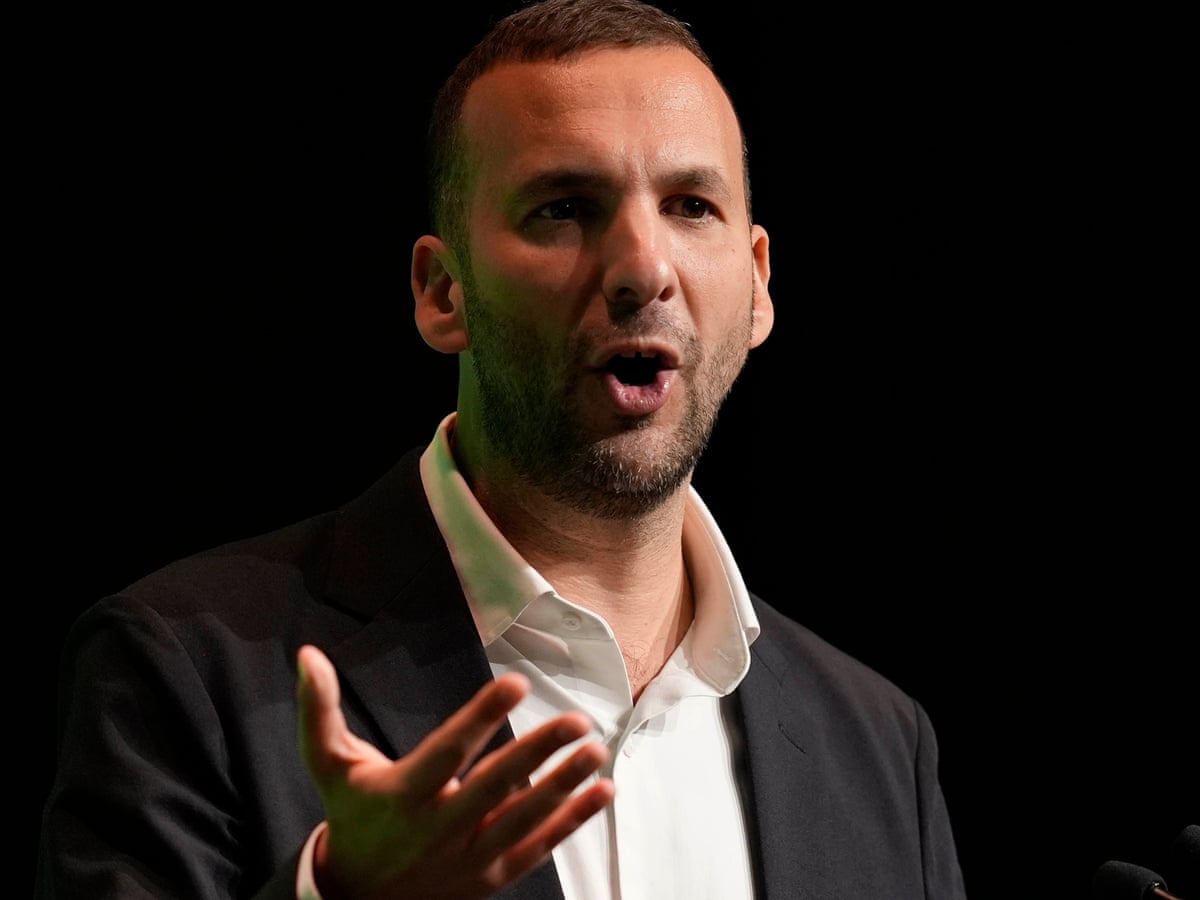
Polanski initially shared a social-media post alleging that Metropolitan Police officers were “repeatedly and violently kicking” a mentally ill man in the head after he had already been incapacitated by a Taser. He subsequently apologised for sharing the post in haste. Metropolitan Police Commissioner Sir Mark Rowley strongly criticised the intervention, arguing that it risked undermining public confidence in officers who had confronted a dangerous individual.
The controversy might have ended there had Polanski simply acknowledged his mistake and moved on. Instead, he returned to the subject, telling the BBC’s Today programme that he had been “traumatised” by seeing someone handcuffed and repeatedly kicked in the head.
The problem with this statement was factual as well as political. The footage does not show the suspect being handcuffed when officers were struggling to restrain him. Instead, it shows officers attempting to control him while he was on the ground, with the police apparently trying to remove an object from his hands. Reports also indicate that officers repeatedly shouted for him to drop the knife.
This distinction is crucial. There is a profound difference between an officer kicking a handcuffed and compliant suspect and an officer using physical force against an armed individual who is still resisting arrest. The former would naturally raise extremely serious questions about police brutality. The latter must be assessed in the context of an active and potentially lethal threat.
That does not mean that every action by police officers should automatically be considered justified. Police powers must remain subject to scrutiny, particularly when force is used against people who have already been subdued. Independent investigation and proper evidence are essential. But political leaders have a special responsibility to distinguish between what they know, what they believe and what they merely assume from a short piece of social-media footage.
The Golders Green incident also illustrates a broader problem of modern political communication. Social media rewards speed, emotional reaction and outrage. Politicians can gain attention by responding immediately to dramatic images, but the same speed creates enormous risks. A video clip may show only a few seconds of an incident. It may omit what happened before the recording began or what happened immediately afterwards.
A responsible politician therefore needs to resist the temptation to become part of the online reaction cycle. The pressure to post first and investigate later is particularly dangerous when the subject involves violence, terrorism, race, religion or policing. Once an inaccurate claim has gone viral, correcting it rarely receives the same attention as the original allegation.
Polanski’s position is complicated further by the fact that he leads a political party that wants to transform the relationship between the state, police and criminal justice system. The Green Party has been debating policies involving police powers, prisons and counterterrorism. A draft motion discussed by the party included proposals to move resources away from police and prisons, end police presence in schools and ultimately seek the closure of prisons through systemic change. A separate proposal to remove Tasers and pepper spray was later withdrawn from the final version.
These policies do not automatically make criticism of the police illegitimate. On the contrary, democratic debate requires competing views about how policing should work. However, they make accuracy even more important. If a party wants to persuade the public that the criminal-justice system needs fundamental reform, it must demonstrate that its arguments are based on evidence rather than instinctive hostility towards law enforcement.
There is another sensitive dimension to the controversy: the identity of the victims. The attack involved Jewish people in Golders Green, an area with a large Jewish population. At a time when concerns about antisemitism are already highly sensitive, political discussion of an incident involving Jewish victims requires particular care.
This does not mean that police officers should receive automatic immunity from criticism simply because the victims were Jewish. Nor should every discussion of policing be reduced to questions of antisemitism. But politicians need to recognise the wider social context in which their words will be interpreted. When a Jewish community experiences an attack and the subsequent political conversation focuses heavily on the treatment of the alleged attacker rather than the safety of the victims, some people may understandably feel that the priorities have become distorted.
At the same time, it is important not to assume that Polanski’s criticism necessarily demonstrates hostility towards Jewish people. That would go beyond the evidence. His argument can instead be understood as reflecting a strong concern about police use of force and the treatment of vulnerable or mentally ill suspects. The appropriate criticism is therefore not to attribute motives without evidence, but to examine whether his claims were accurate and responsibly presented.
The most troubling aspect of the episode is arguably the failure to separate empathy from judgment. It is entirely possible to feel disturbed by images of a suspect being kicked while simultaneously recognising the danger faced by police officers. Polanski himself attempted to make precisely this argument, saying that officers were brave for running towards dangerous situations while maintaining that he was disturbed by what he saw.
Both propositions can indeed be true. Police officers deserve protection, respect and accountability at the same time. A suspect’s criminal conduct does not remove his legal rights, just as his legal rights do not eliminate the danger he may pose to officers and members of the public.
The difficulty is that political language can turn a complicated situation into a moral binary. Police are portrayed either as heroes who cannot be criticised or as perpetrators of brutality. Suspects are portrayed either as monsters who deserve no sympathy or as victims of an oppressive system. Reality is rarely so simple.
The Golders Green episode should therefore encourage a more measured debate about policing. Britain needs police officers who are confident enough to confront violent criminals but constrained enough to use force lawfully and proportionately. It needs independent mechanisms for investigating allegations of misconduct. It also needs politicians who understand that criticism carries consequences, especially when their words reach millions of people online.
For Polanski personally, the incident is a lesson in political credibility. A leader does not need to support every police action. Nor does he need to abandon his principles about criminal-justice reform. But if he makes an inaccurate factual claim, the strongest response is to acknowledge it clearly and move on. Repeating or reframing an argument after the factual foundation has been challenged risks turning a legitimate political concern into a question about personal judgment.
Ultimately, the Golders Green controversy is not simply about one politician, one police operation or one video. It reflects a much larger challenge facing modern democracy. Social media has given politicians unprecedented opportunities to communicate directly with the public, but it has also made instant reactions more powerful and more dangerous.
The proper response to disturbing footage should be neither blind condemnation nor blind defence. It should be careful investigation. The police should be held accountable where necessary, while officers who act bravely to protect the public should not be condemned on the basis of incomplete information.
For a political leader, that balance is not optional. It is part of the responsibility of public office. In the Golders Green controversy, the central lesson is therefore simple: strong principles matter, but facts matter too. A politician seeking to reform policing must first demonstrate that he understands the difficult reality faced by those who have to make split-second decisions when violence is already unfolding.