

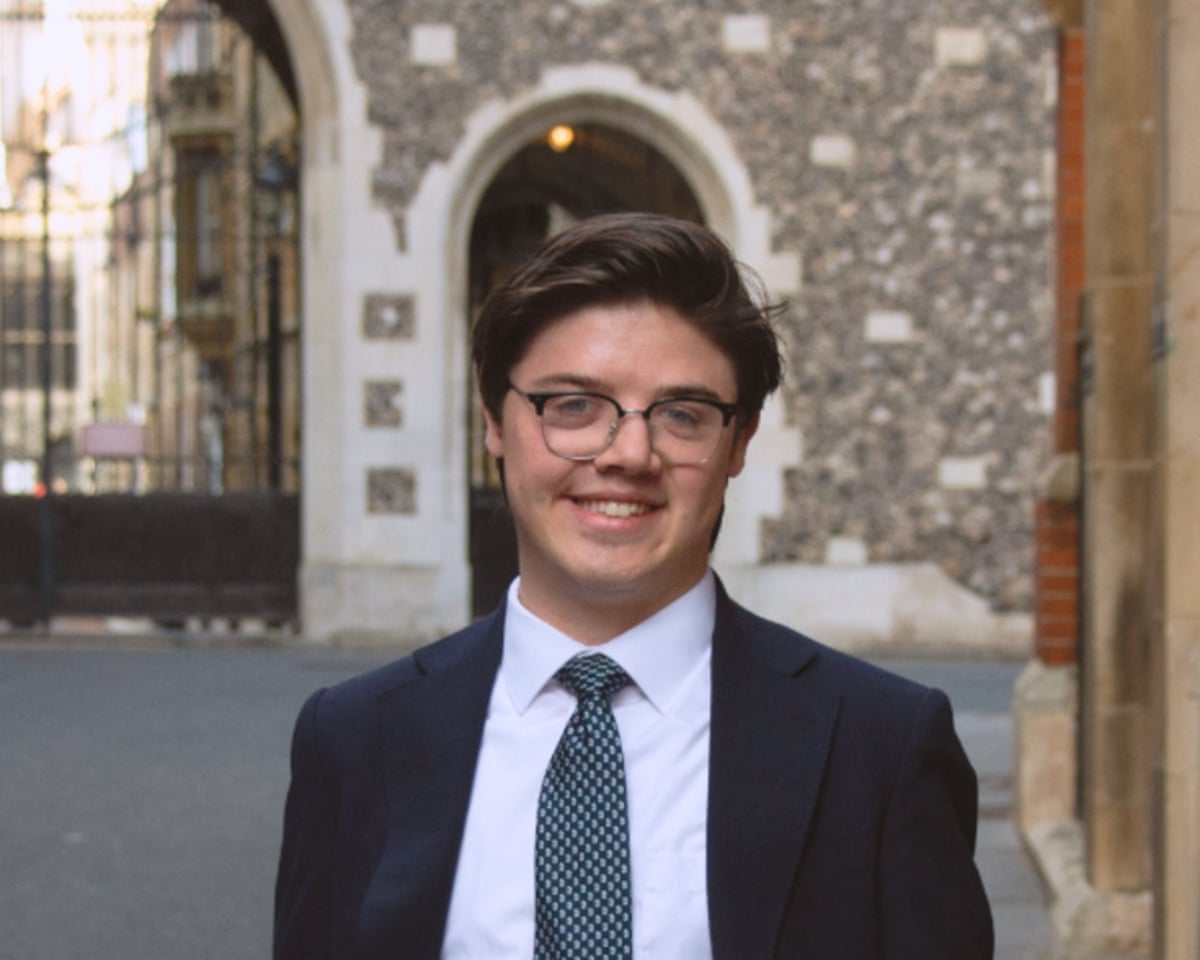
The appointment of a new economic adviser to Reform UK has reignited a major political debate about the future of Britain’s state pension. Mitchell Palmer, a free-market economist and adviser to Reform’s economic spokesman Robert Jenrick, has previously argued that the state pension triple lock is “unsustainable”. His comments are significant because the triple lock is one of the most politically sensitive commitments in British politics. Millions of pensioners depend on the state pension, while younger workers ultimately help finance it through taxation and National Insurance.
The triple lock is a system designed to protect the value of the state pension. Under the current arrangement, the pension rises each year by whichever is highest of average earnings growth, inflation or 2.5%. The policy is intended to ensure that pensioners do not see their incomes fall behind either wages or the cost of living. In April 2026, the state pension increased by 4.8%, reflecting earnings growth. More than 12 million pensioners were affected by the increase.

Palmer’s criticism is based on the long-term cost of the system. He argues that the triple lock can create an unpredictable increase in government spending because pension payments automatically follow whichever of the three measures is highest. In comments reported this month, he suggested that pensioners could still enjoy a dignified retirement without relying on a mechanism that potentially increases spending faster than the wider economy.
The argument is not simply about whether pensioners deserve financial security. Almost everyone agrees that older people should be protected from poverty. The disagreement concerns how that protection should be delivered and who should pay for it. Palmer believes that there are alternative ways to support pensioners without maintaining the triple lock in its current form.
One of his strongest arguments concerns the changing age structure of Britain. The country has an ageing population, meaning that the number of pensioners relative to the number of working-age people is increasing. When fewer workers are supporting more retired people through taxation, the cost of maintaining generous state pensions becomes more difficult to manage.
This creates an intergenerational question. Older people may argue that they have spent decades paying taxes and National Insurance and therefore deserve a secure retirement. Younger workers, however, may question whether they will receive the same level of support when they eventually retire. They face high housing costs, uncertain employment conditions and other financial pressures. If pension spending continues to increase, they may eventually face higher taxes to finance it.
This is the central concern behind Palmer’s argument that the triple lock can appear unfair to younger generations. He has argued that pensioners can become relatively better off than working-age people when the pension rises through the triple lock while wages grow more slowly.
However, critics of this argument point out that pensioners are not a single wealthy group. Many older people have very limited incomes and depend heavily on the state pension. Some have no substantial private pension or savings. Others face rising costs for heating, food, housing and healthcare. Removing or weakening the triple lock could therefore have a significant impact on people who are already financially vulnerable.
Dennis Reed, director of the senior citizens’ organisation Silver Voices, has strongly rejected the idea that the triple lock is unaffordable. He has argued that the state pension is already too low compared with pensions in some other developed countries and that the triple lock is necessary to provide older people with a reasonable standard of living.
This highlights an important weakness in the argument for simply abolishing the triple lock. If the system were removed without replacing it with an effective alternative, pensioners could face a gradual decline in their living standards. A reform would therefore need to guarantee a minimum level of income while also keeping government spending under control.
The debate has become particularly interesting because Reform UK has not always presented a completely united position. Robert Jenrick has supported retaining the triple lock, while Nigel Farage has previously suggested that the policy should be open to debate. Palmer’s appointment therefore raises questions about whether Reform’s economic policy could change in the future.
A Reform spokesperson has defended the appointment, arguing that Jenrick is willing to employ intelligent advisers even when they disagree with him. This suggests that Palmer’s views should not automatically be interpreted as official Reform policy. Nevertheless, appointing someone who has publicly criticised such an important pension policy sends a strong political signal.
The issue also fits into a wider debate about Reform UK’s economic direction. The party has promised major reductions in government spending and has recently proposed substantial welfare cuts. Reform’s economic team argues that Britain needs to reduce the size of the welfare state and redirect resources towards economic growth. Critics, however, fear that aggressive spending reductions could disproportionately affect vulnerable people.
The triple lock is especially difficult to reform because it has strong electoral support among older voters. Pensioners are more likely to vote than many younger age groups, making pension policy politically important for every major party. A politician who proposes reducing pension increases risks being accused of attacking older people.
This helps explain why governments have repeatedly protected the triple lock. The current Labour government has explicitly committed to maintaining it. In July 2026, Prime Minister Andy Burnham said that although there was considerable debate about the policy, the government’s manifesto commitment remained important. The 2024 Labour manifesto promised to retain the triple lock for the state pension.
Burnham’s position creates an interesting contrast with Palmer’s. While Reform’s new adviser questions the sustainability of the triple lock, the Labour government currently supports it. This means that any attempt to reform the system could become a major dividing line between the parties.
There is also an economic argument in favour of maintaining the triple lock. Pensioners spend much of their income within the domestic economy. Increasing pension payments can therefore support consumer spending, particularly in local communities. Pensioners may spend additional income on food, energy, transport and other necessities. From this perspective, pension increases are not simply a cost; they can also contribute to economic activity.
However, the government must ultimately finance those payments. If spending increases without sufficient tax revenue, borrowing may rise. Higher government debt creates interest costs that future taxpayers must pay. This is why the sustainability question cannot simply be dismissed.
Official projections demonstrate that the triple lock can add to pension expenditure over time. The Government Actuary has noted that because the system selects the highest of three measures every year, cumulative pension increases can exceed the growth produced by any single measure alone. Under current assumptions, the minimum 2.5% guarantee is expected to be the highest component in some future years.
The ageing population makes this issue more urgent. If the number of pensioners grows while the number of workers grows more slowly, each worker may effectively carry a larger share of the cost. This does not mean that the pension system is inevitably unaffordable, but it does mean that governments must consider long-term financing.
There are several possible alternatives to the current system. One option would be to replace the triple lock with a “double lock”, linking pension increases only to earnings and inflation. Another possibility would be to retain a minimum increase but reduce the role of the 2.5% guarantee. Governments could also introduce more targeted support for pensioners on low incomes while providing smaller universal increases to wealthier retirees.
Each option has advantages and disadvantages. A double lock could make spending more predictable, but pensioners could lose some protection during periods of weak wage growth. Targeted benefits could direct more money towards poorer pensioners, but they might create complicated eligibility rules and discourage some people from saving privately.
Another possibility would be to increase the state pension more slowly while encouraging greater private retirement saving. This could reduce the long-term burden on the state, but it would take many years to produce results. Millions of people approaching retirement would still need adequate protection under the existing system.
The political problem is that any reform creates uncertainty. People plan their retirement around expectations about how much income they will receive. If governments repeatedly change pension rules, public confidence can be damaged. Someone who has paid National Insurance for decades may reasonably expect that the promises made during their working life will still mean something when they retire.
This is why the language used by Palmer is politically sensitive. Describing the triple lock as “unsustainable” can easily be interpreted as suggesting that pensioners are receiving too much. In reality, the debate is more complicated. The key question is not whether pensioners should receive support, but how much support the country can provide while maintaining a sustainable balance between generations.
There is also a distinction between the state pension and the wider pension system. Many pensioners receive private or workplace pensions in addition to the state pension. Others depend almost entirely on government support. A policy that treats every pensioner identically may therefore be inefficient if the goal is to reduce poverty.
A more targeted approach could concentrate additional support on pensioners who need it most. However, targeting can also create problems. People who narrowly miss eligibility may feel unfairly treated, and complicated benefit systems can discourage eligible people from applying.
The debate also reflects wider questions about Britain’s social contract. Citizens pay taxes throughout their working lives with the expectation that government will provide certain protections in return. Pensions are one of the clearest examples of this arrangement. Changing the rules requires politicians to explain why the existing promise can no longer be maintained in its current form.
Reform UK’s economic strategy may increasingly force this conversation into the centre of British politics. If the party wants to reduce public spending significantly, pensions represent one of the largest areas of government expenditure. It is difficult to promise dramatic reductions in spending without eventually discussing pension costs.
At the same time, Reform must consider its electoral coalition. Many of its supporters are older voters who may strongly oppose reductions in pension benefits. A policy that appears financially rational to economists could therefore be politically disastrous if voters believe it threatens their retirement income.
This creates a major challenge for Jenrick and Farage. They must balance the desire for fiscal reform with the political reality that pensioners are an important part of the electorate. Palmer’s appointment may make this debate more visible, but it does not necessarily mean that Reform will immediately abandon its support for the triple lock.
The Conservative Party faces a similar dilemma. Previous Conservative governments maintained the triple lock, and any attempt to weaken it could be attacked by opponents as a betrayal of pensioners. Labour has also committed to retaining it. Reform could therefore distinguish itself by proposing a different approach, but doing so would carry significant political risks.
Ultimately, the triple lock is a question of priorities. Governments have limited resources and must decide how much should be spent on pensions compared with healthcare, education, defence, housing and other public services. Increasing one area of spending can reduce the resources available elsewhere unless taxes or borrowing increase.
A responsible debate should therefore avoid portraying either pensioners or younger people as the enemy. Older people have contributed to British society for decades, while younger workers deserve confidence that they will not inherit an impossible financial burden. The goal should be a pension system that protects retirees without placing unreasonable costs on future generations.
In conclusion, Mitchell Palmer’s appointment as a Reform UK economic adviser has brought renewed attention to the future of the state pension triple lock. His argument is that the current system is expensive, unpredictable and potentially unfair to younger workers as the population ages.
His critics respond that pensioners still need protection and that the state pension is not generous enough to abandon the triple lock without a credible replacement. The government has currently committed to maintaining the policy, and the state pension rose by 4.8% in April 2026 under the existing rules.
The most sensible long-term approach may not be simply to defend the triple lock forever or abolish it overnight. Britain may eventually need a carefully designed reform that protects poorer pensioners, provides predictable increases and ensures that younger generations are not left with an ever-growing financial burden.
Palmer’s intervention matters because it forces politicians to confront a difficult reality: pension promises cannot be separated from Britain’s changing population and public finances. Reform UK now has an adviser openly questioning one of the country’s most politically protected policies. Whether that view eventually becomes official Reform policy remains uncertain, but the debate over the triple lock is unlikely to disappear.