
“Muslims Thought the UK Would Bow Down to Islam”: The Reality Behind Britain’s Immigration and Integration Debate
Britain’s debate over immigration, religion and national identity has become increasingly heated. Headlines claiming that Muslims expected Britain to “bow down to Islam” and that the British have now “thrown them out” may attract enormous attention online, but they also risk turning a complicated social and political story into a simplistic confrontation between two opposing groups.
The reality is far more complex.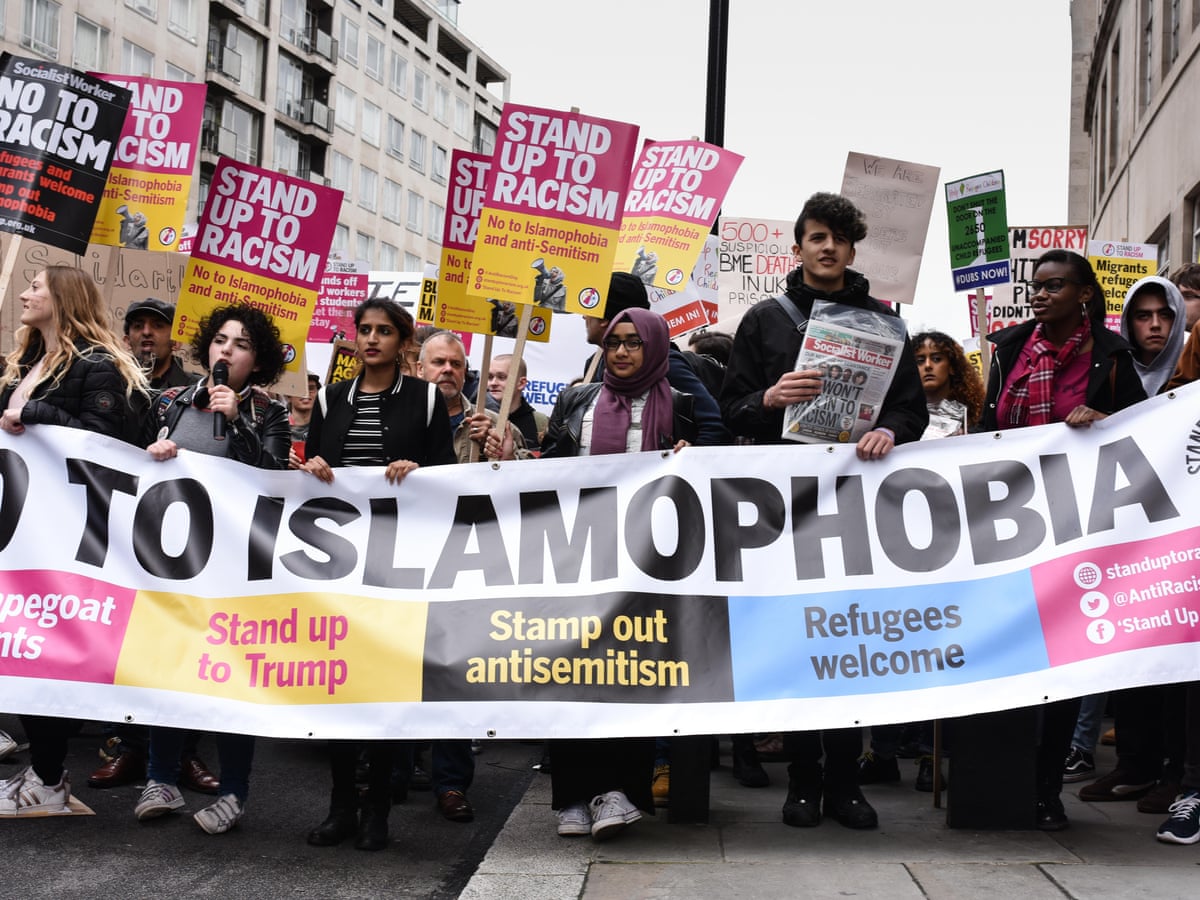
Muslims are not a single political or cultural bloc, and there has been no nationwide expulsion of Muslims from Britain. On the contrary, Muslims are a permanent and increasingly important part of British society. The 2021 Census for England and Wales recorded around 3.9 million people identifying as Muslim, representing 6.5% of the population. The Muslim population increased from approximately 2.7 million in 2011.
These figures make one point immediately clear: Britain has not “thrown Muslims out.” Instead, the country is experiencing an increasingly intense argument about immigration, integration, religious identity and the limits of multiculturalism.
To understand that argument, it is necessary to separate several different issues that are frequently combined in political rhetoric.
The first is immigration.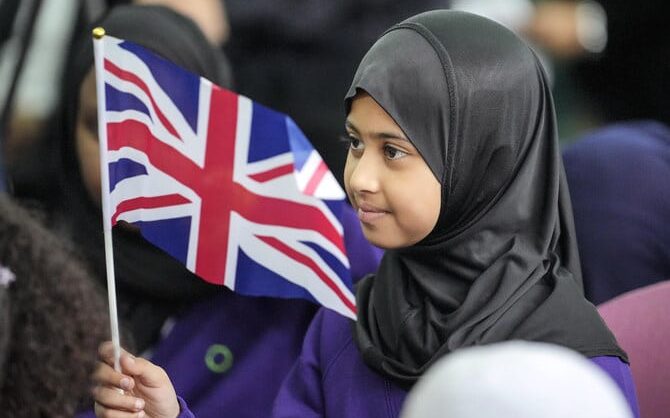
Britain has experienced substantial immigration over recent decades, with people arriving from Europe, South Asia, the Middle East, Africa and many other parts of the world. Some immigrants are Muslim, while many are not. Likewise, Britain’s Muslim population includes people who were born in Britain as well as people who migrated from abroad. Treating Islam and immigration as interchangeable concepts therefore creates a misleading picture.
The second issue is religion.
Britain remains a country in which people have considerable freedom to practise their faith. Mosques operate alongside churches, synagogues, temples and other religious institutions. Muslim children attend British schools, Muslim doctors work in the National Health Service, Muslim business owners operate companies and shops, and Muslim politicians serve in Parliament and local government.
The census demonstrates just how deeply religious diversity has become embedded in modern Britain. In England and Wales, the proportion of people identifying as Muslim rose from 4.9% in 2011 to 6.5% in 2021. At the same time, the proportion identifying as Christian fell substantially, while the number reporting no religion increased dramatically.
This means Britain’s changing religious landscape cannot simply be described as “Islam replacing Christianity.” Britain is undergoing a broader transformation in which traditional religious affiliation is declining while some minority religions remain demographically significant.
The third issue is integration.
This is where legitimate political disagreements become particularly difficult.
A democratic society can welcome religious diversity while simultaneously insisting that everyone follows the same laws. Freedom of religion does not mean freedom to ignore British law. A Muslim citizen has the same legal rights as a Christian, Hindu, Jewish, Sikh, atheist or person of any other belief. Equally, every citizen has the same legal responsibilities.
That principle is important because successful integration does not require people to abandon their religious identity.
A British Muslim can pray five times a day, fast during Ramadan, eat halal food and attend a mosque while also supporting British democratic institutions, speaking English, working, paying taxes and participating in wider society. There is no inherent contradiction between being Muslim and being British.
Indeed, the demographic data reveal that Britain’s Muslim population is not simply a community of recent arrivals. Muslims have established families and communities across generations. In the 2021 Census, Muslims had a relatively young age profile, with a median age of 27 compared with 40 for the overall population of England and Wales.
That younger population means the future of British Islam will increasingly be shaped by people who grow up in Britain rather than by first-generation immigrants.
Their relationship with Britain is therefore likely to be different from that of their grandparents.
Many young British Muslims simultaneously possess multiple identities. They may feel British, Muslim, English, Scottish, Welsh, Pakistani, Bangladeshi, Somali, Arab or something else. Modern identity does not always fit neatly into a single category.
The political question is whether these identities can coexist peacefully.
For the overwhelming majority of people, the answer is yes.
But there are genuine tensions that should not simply be dismissed.
Britain has experienced controversies involving religious extremism, terrorism, segregation, hate crime and disputes over free speech. There have also been arguments over religious schools, gender equality, religious clothing, demonstrations, foreign conflicts and the boundaries of acceptable political expression.
These issues deserve serious debate.
However, criticism of Islamist extremism must not automatically become criticism of Muslims as a whole. Islamist extremism represents a political ideology associated with a minority, not a description of every person who follows Islam.
The same principle should apply in reverse. Criticism of immigration policy or government decisions should not automatically be labelled hatred of Muslims.
A healthy democracy must be able to discuss immigration and integration without demonising an entire religious population.
This distinction becomes particularly important when political parties campaign on immigration.
Across Britain, public frustration over housing shortages, pressure on public services, illegal immigration and the number of people arriving through irregular routes has increased political support for parties promising tougher border controls. Reform UK, for example, has made immigration and national sovereignty central to its political message.
But such debates concern government policy rather than the religious identity of every person who happens to be Muslim.
A British government can decide to reduce immigration without trying to remove Muslims.
It can strengthen border controls without banning Islam.
It can deport people who have no legal right to remain without expelling British Muslim citizens.
These distinctions are fundamental.
The dramatic language of “throwing Muslims out” therefore does not accurately describe Britain’s current situation.
Official census figures provide a much more grounded picture. In England and Wales alone, nearly four million people identified as Muslim in 2021. The Office for National Statistics also makes clear that the census measures religious affiliation—the religion with which someone identifies—not necessarily how frequently they practise their faith or the strength of their beliefs.
That is another reason why sweeping claims about what “Muslims” supposedly think are unreliable.
Muslims differ enormously in their political opinions.
Some support Labour.
Some support Conservatives.
Some support Reform UK.
Some support Liberal Democrats or Green candidates.
Some are politically active, while others have little interest in politics.
Some are deeply religious, while others identify culturally as Muslim but rarely practise.
Some strongly support multiculturalism, while others favour much stricter integration into mainstream British culture.
There is no single Muslim political position.
The same is true of British society as a whole.
Not every British person wants lower immigration. Not every British person opposes Islam. Not every British person supports multiculturalism. The country is divided on these questions, and those divisions cannot honestly be represented as a simple battle between “Muslims” and “the British.”
In fact, millions of Muslims are British.
That fact alone makes the language of “them” versus “us” increasingly difficult to sustain.
A child born in Birmingham to Muslim parents is not a foreign visitor. A Muslim nurse who has worked in Britain for twenty years is not an outsider. A Muslim soldier who serves the British armed forces is not automatically less British because of his religion. A Muslim entrepreneur employing local workers is participating directly in Britain’s economy.
The idea that Muslims collectively expected Britain to surrender its identity also requires evidence that goes beyond isolated extremist statements.
Extremist organisations and individuals have certainly expressed ambitions that are incompatible with liberal democracy. Such ambitions should be confronted firmly. But it would be inaccurate to attribute the beliefs of extremists to millions of ordinary Muslims.
There is another side to the story that is often overlooked.
British Muslims themselves have faced discrimination and hate crimes. In 2026, Britain’s largest Muslim gathering was held under heightened security amid concerns about rising anti-Muslim hate. The event’s organisers emphasised the importance of engagement between Muslim communities and wider British society.
This illustrates an important reality: Muslims in Britain are not simply political actors demanding concessions from the state. They can also be targets of hostility and violence.
A successful society must therefore oppose both forms of extremism: religious extremism that rejects democratic values and far-right extremism that treats Muslims collectively as enemies.
The answer cannot be to demand that Muslims abandon their religion.
Nor can the answer be to allow religious identity to override British law.
The more sustainable approach is equality before the law.
Every citizen should be free to practise a religion, change a religion or practise no religion at all. At the same time, everyone must accept democratic institutions, individual rights, freedom of expression and the rule of law.
That principle allows Britain to remain both diverse and cohesive.
The real challenge for the United Kingdom is therefore not whether Islam will somehow “take over” the country. The more important question is how a modern democracy manages a population with increasingly diverse backgrounds while maintaining a shared civic identity.
Britain has faced similar challenges before.
Catholics, Jews, Irish immigrants, Caribbean communities, South Asians and many other groups have experienced periods of suspicion and hostility before becoming established parts of British society. Integration has rarely been immediate or effortless.
The same process is continuing with Britain’s Muslim population.
There will undoubtedly be disagreements. Some communities will resist aspects of wider British culture. Some political activists will make extreme demands. Some British citizens will react strongly against perceived changes to national identity.
But disagreement does not automatically mean national collapse.
Britain’s institutions remain capable of enforcing the law. Parliament continues to legislate. Courts continue to operate. Elections continue to determine governments. Citizens of different religions continue to live, work and study alongside one another.
The dramatic claim that Muslims believed Britain would “bow down to Islam” therefore tells us more about the emotional temperature of Britain’s political debate than it does about the country itself.
There are legitimate questions about immigration levels, integration policies, religious extremism, community cohesion and national identity. These questions deserve evidence-based discussion.
But Britain’s Muslim population should not be treated as a foreign army waiting to be defeated.
It is a population that is already part of Britain.
The future debate should therefore move away from the language of collective punishment and towards a clearer principle: Britain can control its borders, enforce its laws and defend its democratic values while allowing law-abiding Muslims to live freely as equal citizens.
That balance may be difficult, but it is not impossible.
The story of modern Britain is not one of one religion defeating another. It is a story of a society continually changing while attempting to preserve common institutions, individual freedom and the rule of law.
If Britain succeeds, Muslims will not need to “bow down” to Britain, and Britain will not need to “bow down” to Islam.
Instead, both religious believers and non-believers can live under the same democratic system, with the same rights and the same responsibilities.
That is a far more complicated story than the sensational headline suggests—but it is also a much more accurate description of Britain today.