


Farage Breaks Silence With Defiant Statement After Missing Clacton By-Election Results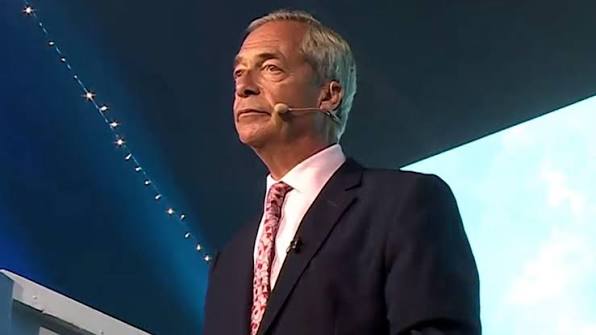
Nigel Farage has broken his silence after making the extraordinary decision to stay away from the declaration of his own Clacton by-election victory.
The Reform UK leader secured a commanding win, taking 22,239 votes and 63.34 per cent of the vote. Yet while the result was being announced in the early hours, Farage was nowhere to be seen.
Instead, the man who had deliberately triggered the by-election was watching events from elsewhere.
His absence immediately became one of the biggest stories of the night.
Farage had spent weeks presenting the contest as a historic confrontation between the people of Clacton and the Westminster establishment. He had resigned his parliamentary seat specifically to force voters to decide whether they wanted him back.
So when the moment finally arrived, many expected a triumphant appearance on stage.
It never happened.
Instead, Farage issued a short but defiant response: “The result in Clacton speaks for itself.”
It was a remarkably restrained statement from a politician normally known for lengthy victory speeches.
But behind those few words was a clear message.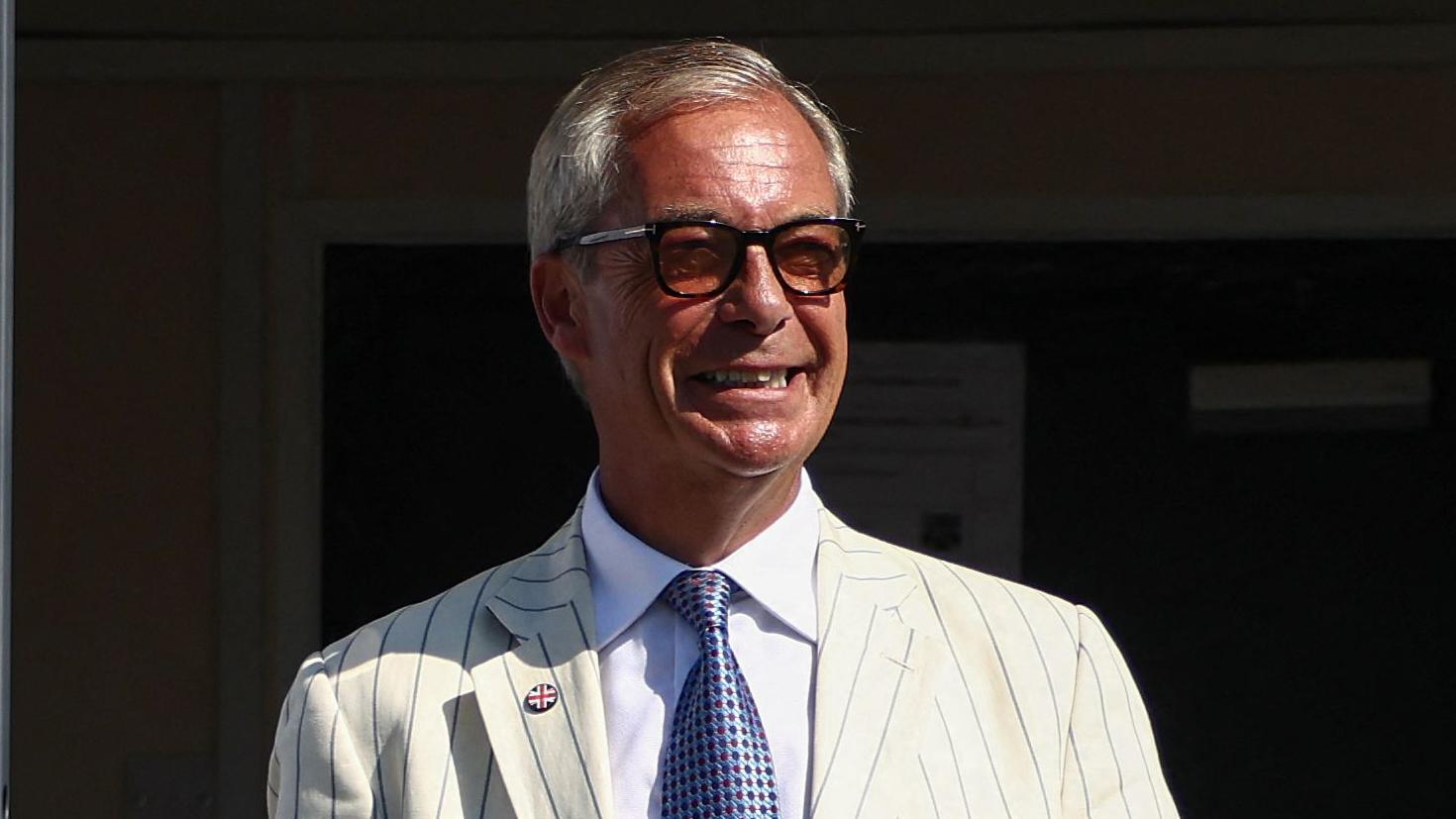
Farage had won.
And he wanted everyone to know it.
A Victory Without the Victory Speech
The circumstances surrounding Farage’s absence created immediate controversy.
Reform said Farage had been advised not to attend the count because of a security threat and an alleged organised campaign intended to disrupt the proceedings. Farage himself had said he had been advised by Essex Police not to attend.
However, Essex Police subsequently said it had not advised any candidate not to attend the count. The force stated that the decision to attend was ultimately one for candidates and their security teams.
That contradiction left an awkward question hanging over the result.
Why exactly was Farage not there?
His supporters could point to legitimate security concerns and argue that a high-profile politician should not take unnecessary risks.
Critics saw the decision differently.
They questioned why Farage would trigger an expensive by-election to obtain a fresh mandate and then refuse to appear when the result was announced.
That criticism became particularly damaging because the contest itself was already unusual.
The Conservatives, Labour and Liberal Democrats all declined to field candidates, leaving Farage to compete against dozens of independents and fringe candidates. His strongest challenger was Count Binface, the satirical candidate created by comedian Jonathan Harvey.
Farage therefore had an enormous advantage.
His absence made the victory look stranger still.
The Numbers Were Still Impressive
Despite all the controversy, it would be wrong to suggest that Farage did not win convincingly.
He did.
His 22,239 votes represented more than 63 per cent of the total, while Count Binface received 9,455 votes, or 26.93 per cent. Turnout was around 44 per cent.
Farage also received more votes than he did at the 2024 general election, increasing his tally by just over 1,000.
That is politically significant.
Even without a Conservative or Labour candidate, Farage demonstrated that his personal support in Clacton remains extremely strong.
The constituency has become one of the most recognisable Reform strongholds in Britain.
But there is another side to the numbers.
Count Binface secured almost 10,000 votes.
That is an extraordinary result for a novelty candidate, particularly in a parliamentary election.
It suggests that a significant proportion of voters were motivated not simply by support for Farage, but by a desire to vote against him.
That is something Reform cannot comfortably ignore.
Farage’s Original Gamble
The by-election was never supposed to be simply about winning a seat.
Farage triggered it after facing intense scrutiny over his financial affairs, including questions surrounding a £5 million gift from cryptocurrency businessman Christopher Harborne.
A parliamentary standards investigation had been opened into whether Farage should have declared certain financial interests. When he resigned as an MP, the investigation was paused.
His argument was that the people of Clacton should become the ultimate judges of the controversy.
He described the contest as a battle between the people and the establishment. In the days before the vote, Reform’s official campaign said the election was about far more than Farage’s position as MP and urged voters to send Westminster a message.
The strategy was obvious.
If Farage won overwhelmingly, he could argue that the controversy had failed to damage his democratic mandate.
He could return to Parliament and say that voters had rejected the establishment’s attempt to undermine him.
And that is exactly what he has done.
The day after the election, Farage issued a much longer statement declaring that the result was a victory not merely for himself but for the people of Clacton and those demanding political change.
His message was unmistakable.
The establishment had tried to damage him.
Clacton had answered.
But the Investigation Has Returned
There is one major problem for Farage.
The financial controversy did not disappear.
The parliamentary investigation resumed after he was re-elected.
That means the Clacton victory did not provide the clean break Farage wanted.
Instead, he has returned to Westminster with the same unresolved questions waiting for him.
This could become the biggest political problem facing Reform.
Farage wants to argue that the establishment has spent years attempting to silence him.
His critics respond that parliamentary scrutiny is not persecution.
The distinction between those two narratives will be crucial.
If Farage can persuade voters that the investigation is merely another example of establishment hostility, the controversy could actually strengthen his political appeal.
But if the process uncovers serious breaches of parliamentary rules, the consequences could be much more damaging.
The issue is therefore far from finished.
Could Farage Face Another Election?
There is an extraordinary possibility hanging over the situation.
If Parliament ultimately imposes a sufficiently serious suspension, another by-election could potentially be triggered.
That would mean Clacton could once again be asked to decide whether Farage should remain its MP.
This time, however, the circumstances would probably be very different.
The mainstream parties might not boycott the contest again.
The Conservatives would have a powerful incentive to fight.
Labour would have an opportunity to attack Reform.
The Liberal Democrats could attempt to consolidate anti-Reform voters.
Farage would therefore face a genuine electoral test rather than a contest dominated by independents and novelty candidates.
A second election could become one of the most closely watched political events in Britain.
And the result could determine whether the Clacton victory represented the beginning of a Reform revolution—or merely the strength of Farage’s personal brand in one constituency.
The Conservatives Should Be Watching
For Kemi Badenoch and the Conservatives, the Clacton result contains both good news and bad news.
The good news is that Farage’s national position is not necessarily as strong as his local result suggests.
The major parties stayed away, and almost 27 per cent of voters backed Count Binface.
The bad news is that Farage remains extraordinarily effective at mobilising his core supporters.
That means Reform cannot simply be dismissed.
The Conservative Party must still compete with Farage for millions of voters who once regarded the Tories as their natural political home.
Immigration, taxation, national sovereignty and dissatisfaction with Westminster remain powerful issues.
Badenoch therefore faces a difficult choice.
Should she confront Farage directly?
Should she adopt some of his policies?
Or should she attempt to persuade voters that Reform is too risky to govern?
Whatever strategy she chooses, the Clacton result demonstrates that Farage is not going away.
Reform Has a Bigger Problem
Farage’s absence from the count also comes at a delicate moment for Reform.
The party has recently faced internal tensions, including the suspension of prominent Conservative defector Tim Montgomerie after he criticised Farage and senior Reform figures.
Montgomerie’s criticism was particularly significant because he questioned Farage’s decision to miss the Clacton count and raised concerns about the handling of the £5 million donation.
Reform’s leadership defended the suspension, arguing that internal disagreements should be handled privately.
But the incident revealed something important.
The party is no longer merely a protest movement.
It is becoming a serious political organisation with ambitions for government.
And that means voters will increasingly judge it by standards normally applied to established parties.
Leadership discipline matters.
Financial transparency matters.
Internal stability matters.
And how a party responds to criticism matters.
Farage cannot simply rely on his personal popularity forever.
The Bigger Question: Can Farage Go From Protest to Power?
This is the central question facing Reform.
Farage is extraordinarily good at opposition politics.
He knows how to identify public anger and turn it into a political campaign.
He knows how to dominate headlines.
He knows how to frame elections as battles between ordinary people and powerful institutions.
But governing Britain requires something different.
A government cannot simply campaign against problems.
It has to solve them.
If Reform wants to reach Downing Street, Farage will eventually have to convince voters that his party can manage the economy, run public services, control immigration, maintain national security and deal with Britain’s international obligations.
That requires credibility beyond Clacton.
His latest victory gives him another platform.
It does not yet give him a national mandate.
A Strange Victory
There was something almost surreal about the scene in Clacton.
Farage had engineered an election specifically to demonstrate his popularity.
He won with more than 63 per cent of the vote.
His nearest opponent was a man wearing a dustbin on his head.
And yet Farage was not there to celebrate.
The result was instead declared to a room in which his own supporters were largely absent.
That image will probably remain one of the strangest moments in modern British electoral politics.
Yet the symbolism may ultimately matter less than the political consequences.
Farage has secured his parliamentary seat.
He has demonstrated that Clacton remains firmly behind him.
He has given Reform another headline victory.
And he has shown his opponents that attempts to undermine him have not destroyed his electoral support.
But the questions that drove him to call the by-election remain.
The parliamentary investigation has resumed.
His financial affairs remain under scrutiny.
Reform’s internal discipline is being tested.
And his national polling position is no longer as dominant as it once appeared. The Financial Times has argued that the Clacton result did little to change Farage’s broader political position, despite the size of his local victory.
So Farage’s defiant message is understandable.
The result really does speak for itself.
But it does not speak for everything.
It cannot answer the questions about his finances.
It cannot guarantee Reform’s national success.
It cannot tell voters whether Farage is capable of becoming Prime Minister.
And it certainly cannot prevent another election if parliamentary sanctions eventually make one necessary.
For now, however, Farage is back.
He has won Clacton.
He has survived another political test.
And despite the controversy, the investigations and the increasingly bitter arguments within British politics, his message remains remarkably simple:
The people have spoken.
Whether Westminster listens is another matter entirely.