


Andy Burnham on the Brink of a Snap Election – and One Nightmare Scenario Should Terrify Us All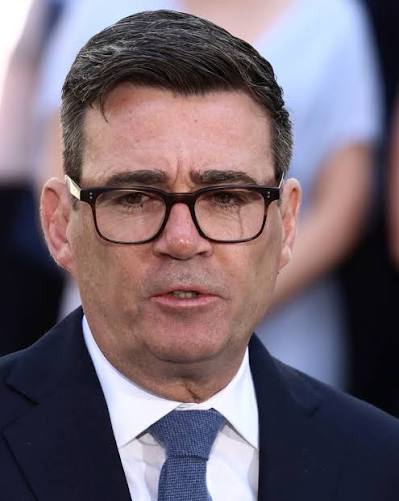
Britain’s political landscape has been transformed with extraordinary speed, and few developments have been more dramatic than Andy Burnham’s rise from Greater Manchester mayor to Prime Minister. Having returned to Westminster after winning the Makerfield by-election and subsequently taking the Labour leadership, Burnham now finds himself facing one of the most important decisions of his political career: whether to seek a fresh mandate from the country sooner rather than later.
The possibility of a snap general election has already generated intense speculation. There are obvious attractions for a new prime minister. A leader who enters Downing Street without having fought a general election as party leader may feel that a personal mandate is essential. If opinion polls are favourable and the opposition remains divided, an early election could appear to offer an opportunity that may not return.
Yet there is another side to the argument. Calling an election is one of the biggest political gambles any prime minister can make. A government that already possesses a large parliamentary majority does not need to call voters to the polls immediately. Instead, it can use its time in office to implement policies, improve public services and attempt to strengthen its reputation.
That is why the prospect of a snap election is so intriguing. Burnham’s political momentum is currently strong. Recent polling has shown a positive response to his leadership, while his personal popularity has been considerably better than that enjoyed by his predecessor. The Financial Times recently described his government as enjoying a political honeymoon, although it also warned that difficult decisions on the economy, welfare and other issues are approaching.
The temptation is obvious. A new prime minister may believe that the best time to ask voters for support is when enthusiasm is high rather than after several years of difficult decisions. Governments often become less popular as they make unpopular choices, particularly when taxes, spending, immigration, welfare and public services are involved.
However, the nightmare scenario is not simply that Labour might lose seats. The greater danger is that an early election could produce a fragmented Parliament in which Reform UK becomes powerful enough to dominate the political agenda.
Reform has already demonstrated its ability to challenge Labour in parts of England that were once considered relatively secure for the traditional parties. Its gains in the 2026 local elections created new difficulties for Labour mayors and councillors, demonstrating that the political map is no longer as predictable as it once was.
This is particularly important because Burnham’s own political story is closely connected to the challenge posed by Reform. When he won the Makerfield parliamentary by-election, he defeated Reform and demonstrated that Labour could still mobilise voters in areas where the party faces serious competition. Reuters described the victory as a significant demonstration that Burnham could beat Reform in a northern constituency.
But one successful by-election does not guarantee a national victory.
A general election would put hundreds of constituencies into play simultaneously. Reform could concentrate its resources on Labour seats where dissatisfaction with Westminster politics, immigration, public services and the cost of living is strongest. The Conservatives, Liberal Democrats and Greens would also be competing for different parts of the electorate.
The result could be a political landscape in which Labour remains the largest party but loses a substantial number of seats. Alternatively, Reform could emerge as the principal challenger in a large number of constituencies, changing British politics for a generation.
This is the nightmare scenario that should concern Labour strategists most. An election called to strengthen Burnham’s authority could instead weaken his parliamentary position.
There is also a danger in assuming that today’s polling will remain unchanged until election day. Political opinion can move extremely quickly. Burnham’s honeymoon may be real, but a honeymoon is not the same thing as a long-term political settlement.
The first major test will come when voters begin judging the substance of his government rather than the personality of its leader. Burnham has made decentralisation and regional government central themes of his administration. His decision to establish a “Number 10 North” operation in Manchester represents an attempt to shift economic decision-making away from London and give northern England a more influential role. Reuters reported that Burnham intends the Manchester hub to become a centre for economic strategy and regional power.
His transport agenda is similarly ambitious. Burnham has promoted the Greater Manchester model of public transport as an example of how government can make practical improvements to people’s lives. His approach includes public control, integrated transport and efforts to make fares more affordable.
These policies could become powerful electoral messages. If voters believe that their buses are cheaper, their trains are more reliable and their towns are receiving greater investment, Burnham may be able to argue that his government is delivering tangible improvements.
But politics becomes much harder when the government has to confront questions that cannot be solved through relatively modest spending commitments.
The economy is likely to be the defining challenge. Burnham has ambitious plans for social care, regional development, public services and infrastructure, but government finances impose limits. His first major budget will therefore be crucial. Decisions on taxation and spending could determine whether the public’s current enthusiasm survives.
The same is true of welfare reform. Burnham has already indicated that reforming the benefits system will be an important part of his agenda. The government wants to reduce long-term dependency and control expenditure, but welfare changes can create enormous political risks. If vulnerable people believe they are being punished, Labour could lose support among voters who traditionally form part of its electoral coalition.
Climate policy presents another potential danger. Labour faces pressure from the Greens over North Sea oil and gas. Recent analysis cited by The Guardian suggested that Labour could lose dozens of seats to the Greens if it approves new drilling, although the government disputes those projections.
This illustrates the fundamental problem facing Burnham. His political coalition is potentially broad, but broad coalitions are difficult to maintain. Working-class voters may demand tougher action on immigration and stronger economic protection, while younger and environmentally conscious voters may demand faster climate action. Business voters may want lower taxes, while public-sector workers want greater investment.
A snap election would force Burnham to reconcile all these demands immediately.
There is another strategic problem. An election can transform an opposition party from a protest movement into a serious governing contender. Reform UK has already benefited from growing dissatisfaction with Labour and the Conservatives. Giving Reform a national campaign lasting several weeks could provide Nigel Farage and his party with enormous visibility.
A successful Reform campaign would not necessarily require the party to win the election. It could simply need to win enough seats to deny Labour a comfortable majority.
That possibility explains why some commentators have urged Burnham to resist the temptation. One recent Times analysis argued that although there are reasons why a snap election might look attractive, the risks could outweigh the benefits, particularly because Reform is capable of taking Labour seats.
The argument for waiting is therefore straightforward: govern first, campaign later.
If Burnham can spend the next two or three years demonstrating that his economic and public-service agenda works, he could enter the next election with a much stronger case. If voters can point to lower transport costs, improved infrastructure, better social care and stronger regional economies, Labour’s campaign could become about achievements rather than promises.
The opposite is also possible. If the economy deteriorates, taxes rise, public services remain under pressure and welfare reforms prove unpopular, waiting could allow the opposition to build momentum.
This is what makes the decision so difficult.
Burnham must decide whether his greatest political asset is his current popularity or the opportunity to govern for several years before asking the public to judge him. An early election could lock in his honeymoon. Waiting could allow him to build a much more substantial record.
For Britain, the stakes are enormous. Another early election would be yet another reminder of how unstable the country’s politics has become. Since 2016, British politics has experienced Brexit, leadership changes, economic crises and repeated shifts in public opinion. Voters may be increasingly tired of political games and may prefer a government that concentrates on solving practical problems.
The nightmare scenario, then, is not merely an election defeat for Burnham. It is an election that fragments the country further, strengthens Reform, weakens Labour’s ability to govern and leaves Westminster even more divided than before.
Burnham has spent years building a reputation as a politician who understands communities outside Westminster. His greatest challenge now is proving that he can use national power responsibly.
A snap election could give him a powerful mandate. But it could just as easily become the moment when Britain’s political revolution accelerates beyond anyone’s control.
For now, Burnham has something every new prime minister wants: political momentum. The question is whether he will spend it immediately or invest it in governing.
That decision could define not only his premiership, but the future shape of British politics itself.