
Andy Burnham Just Punched Himself in the Face Again – He’ll Be Raging at Rachel Reeves
Andy Burnham has spent years presenting himself as the Labour politician who would do things differently. He built his reputation by attacking Westminster, defending public services and speaking passionately about the pressures facing ordinary families.
But now that he is Prime Minister, reality is beginning to bite.
And nowhere is that more obvious than on pensions and taxation.
Burnham has inherited a political mess partly created by his own party. Rachel Reeves spent much of her time as Chancellor insisting that Labour had to make difficult choices to protect the public finances. Burnham, meanwhile, spent years criticising the direction of Labour politics and positioning himself as the candidate who could reconnect the party with voters who felt abandoned.
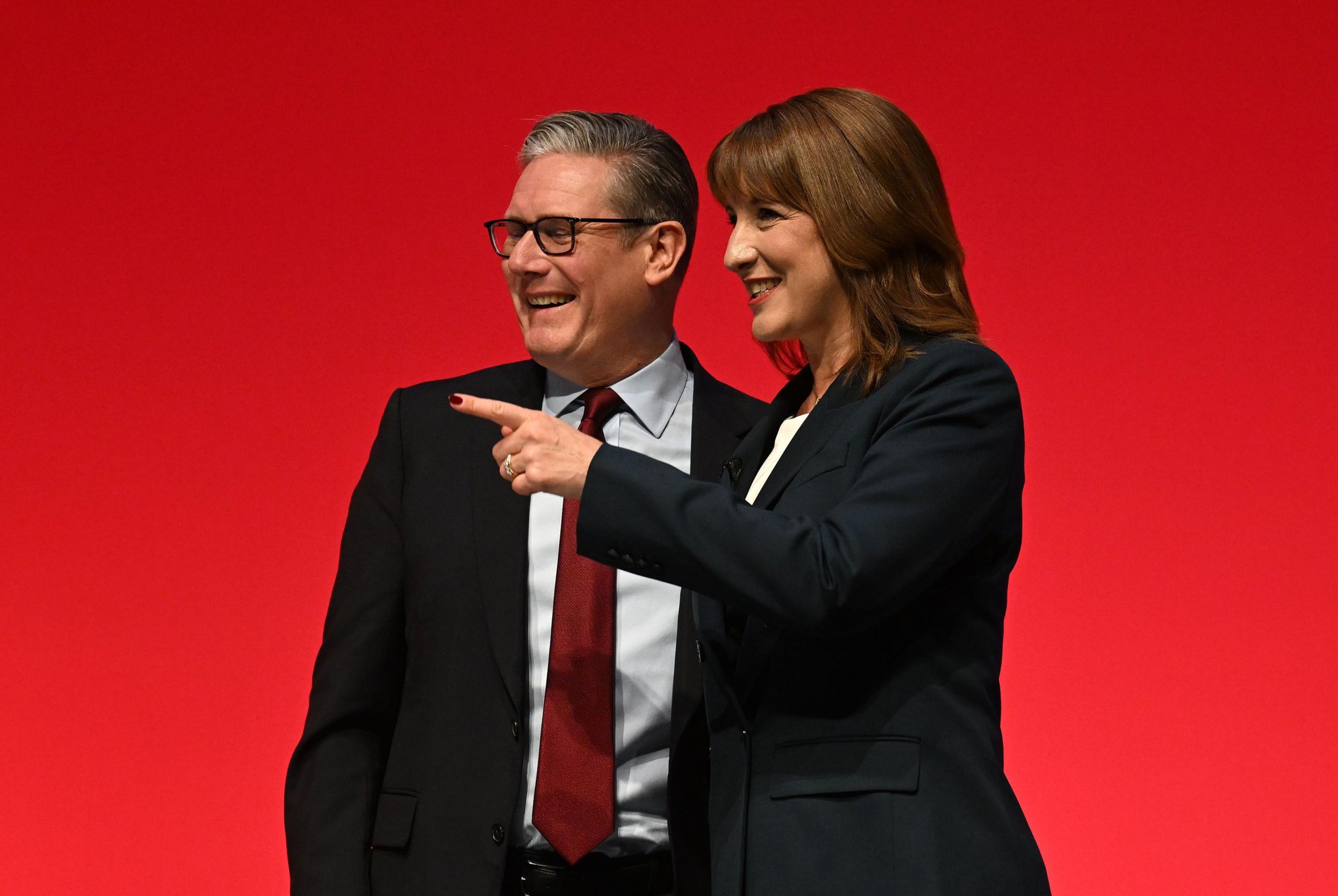
Yet his government is now discovering an uncomfortable truth: governing means dealing with exactly the constraints that politicians criticise when they are outside Downing Street.
That is why Burnham’s latest move on pension taxation looks so awkward.
Reports say he has confirmed that state pensioners whose only income is the State Pension will receive a special income-tax exemption. On the surface, it sounds like a straightforward victory for older people. But the policy is not entirely new: it follows an approach previously associated with Reeves.
And that creates a delicious political irony.
Burnham is now trying to present himself as the politician who will repair the damage caused by the previous Labour government, while simultaneously inheriting — and in some cases continuing — the same fiscal framework.
He has even confirmed that he will retain the fiscal rules established under Keir Starmer and Reeves. Burnham has said he will not take risks with the economy and that the funding for his policies will be explained in his Budget.
For a politician who built his appeal around breaking with the Westminster establishment, that is a significant change.
The biggest problem is the State Pension itself.
The personal allowance has been frozen at £12,570 for years. As the State Pension rises, more pensioners can find themselves getting closer to the point where tax becomes relevant, particularly if they have additional income.
That produces a strange political situation.
A government can increase the State Pension while simultaneously allowing the tax system to claw back some of the benefit. Pensioners see their payments rising, but their tax position can become more complicated.
Burnham’s proposed exemption is therefore designed to address a very specific problem: protecting pensioners whose only income is the State Pension.
But critics can reasonably ask why the government is fixing a problem that the tax system itself helped create.
And this is where Rachel Reeves enters the story.
Reeves’ tenure became synonymous with the politics of difficult choices. Her decision to restrict the Winter Fuel Payment for millions of pensioners became one of Labour’s most controversial decisions. She defended it as necessary in the context of the public finances, while critics argued that it placed an unfair burden on older people.
Even after the policy was changed, the political damage remained.
Reeves continued to defend the decision rather than admit that it had been a mistake. In July, as Burnham prepared to enter Downing Street, she again rejected the suggestion that removing the payment from millions of pensioners had been an error.
So imagine Burnham’s position.
He comes into Downing Street promising a new direction. He wants to be seen as more compassionate, more radical and more willing to tackle the problems Westminster has ignored.
Yet he is still operating within the fiscal constraints that Reeves insisted were unavoidable.
That is the political trap.
Burnham cannot simply spend his way out of every problem. The welfare bill is enormous. According to ITV, total welfare spending was forecast at £322.6 billion in 2025-26, with more than half — around £177.7 billion — going towards pensioners.
Those figures explain why pension policy is so politically sensitive.
There is simply too much money involved for any government to ignore.
But there is another side to the argument.
Pensioners are not merely an entry in a Treasury spreadsheet.
They are people who spent decades working, paying taxes and National Insurance and making plans around the rules governments established. Many have little ability to increase their income if government policy changes.
That is why pension policy demands particular care.
Burnham understands this politically. His long-standing support for older people is central to his public image. He has also made social care one of the major priorities of his new government, promising to tackle what he describes as decades of political failure. In July, he said he wanted to create a system that provides older and disabled people with dignity, security and support.
That is exactly the kind of language his supporters want to hear.
But words are cheap once you are in government.
Money is not.
And Burnham is now being forced to choose between competing demands.
He wants cheaper household bills. He wants better public services. He wants to reform social care. He wants to maintain the pension triple lock. He wants to avoid raising income tax and National Insurance on workers. He wants to keep the fiscal rules.
Every promise creates another pressure on the Treasury.
That is why the comparison with Reeves is so uncomfortable.
Reeves was frequently criticised for being too cautious and too Treasury-minded. Burnham now risks discovering that the Treasury is not simply a building occupied by people who lack imagination.
It is the place where political promises meet arithmetic.
Burnham may rage privately about decisions inherited from Reeves, but if he keeps the same fiscal rules and operates within the same broad constraints, he will eventually have to make many of the same kinds of choices.
That is the political punchline.
The man who promised a different Labour politics may discover that the hardest opponent in government is not the Conservative Party.
It is the balance sheet.
And there is another reason Burnham’s pension tax move matters.
It exposes the difference between headline politics and genuine reform.
Telling pensioners that they will not pay income tax if the State Pension is their only income sounds generous. But for many older people, the more pressing issues are the cost of housing, energy, food, council tax, care and healthcare.
A tax exemption that affects only a particular group cannot solve the broader problem of pensioner living standards.
That does not make it worthless.
It simply means politicians should be honest about what it achieves.
Burnham has already promised to cut VAT on household electricity bills from October, with the government estimating that the measure could save the average household around £45. He says it will be funded by ending the previous digital ID programme.
He has also promised a £2 cap on bus fares across England from January 2027, alongside other cost-of-living measures.
These policies show that Burnham is trying to establish a very different political identity.
But the financial question remains.
Can he pay for all of it without raising taxes, increasing borrowing or breaking the fiscal rules?
That is the question Reeves spent years warning about.
And Burnham may now be discovering that she had a point.
There is a particularly awkward irony in the fact that Burnham previously criticised the government’s approach to Waspi women. In June, he ruled out compensation for the campaigners after previously indicating support for compensation, although he remained open to other forms of assistance. The government estimated that a flat-rate compensation scheme could cost up to £10.3 billion.
Again, the pattern is familiar.
Before taking power, it is possible to demand more.
After taking power, someone has to find the money.
That does not mean Burnham has become Reeves.
It means he has entered the world Reeves inhabited.
And that may be the greatest irony of all.
The new Prime Minister may have spent years believing that Labour’s problem was insufficient political ambition. Now he has to prove that ambition can survive contact with the Treasury.
Pensioners will be watching closely.
They will not be impressed merely by announcements. They will want to know whether their incomes actually rise in real terms, whether their bills become more manageable and whether the government treats them as citizens deserving of security rather than as a convenient source of savings.
Burnham has promised a new kind of politics based on problem-solving rather than political point-scoring. His government says it wants to tackle long-standing problems such as social care through cooperation and practical reform.
That is a noble ambition.
But it also creates a standard by which Burnham can be judged.
If he spends his time blaming Reeves for the mess while adopting the same fiscal rules, making similar spending calculations and recycling some of the same policies, voters may reasonably ask what has actually changed.
Perhaps the most revealing development is that Burnham does not have the luxury of being the outsider anymore.
He is Prime Minister.
The buck stops with him.
And that means every pension decision, every tax decision and every difficult Budget choice will ultimately carry his name.
Rachel Reeves may have left Downing Street, but the political legacy of her time in government has not disappeared.
Burnham has inherited it.
And if he finds himself frustrated by the constraints she left behind, he may discover that the biggest punch to the face is the one delivered by political reality itself.
He promised pensioners something better.
Now he has to deliver it.
Because once you are in No 10, blaming Rachel Reeves is no longer enough.