
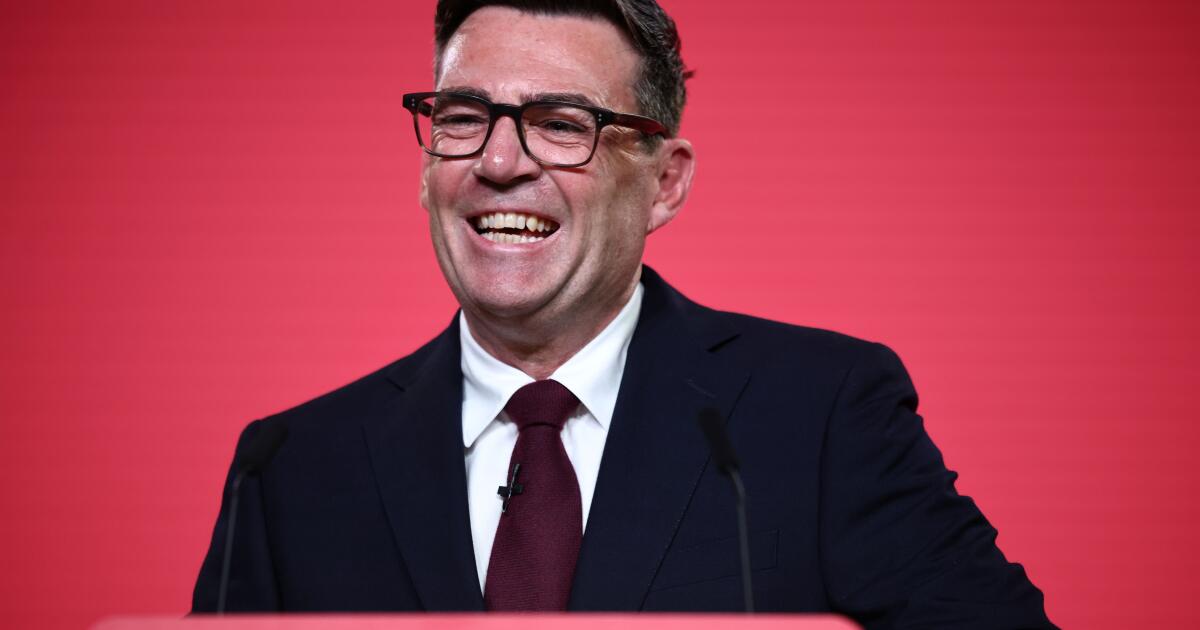

Andy Burnham Is on a Winning Streak – Now He’s Got a Secret General Election Plot
Andy Burnham has spent years building his reputation as one of the most formidable figures in British politics. From his long tenure as mayor to his growing influence over Labour’s political direction, he has repeatedly demonstrated an ability to turn local popularity into national attention.
Now, however, speculation is growing over whether Burnham could have a much bigger ambition in mind: a return to Westminster and, ultimately, a central role in shaping the next general election.
For his supporters, such a move would be the natural next step in a remarkable political comeback.
For his opponents, it could represent something much more calculating.
The question is whether Burnham is simply enjoying a political winning streak—or quietly preparing for something much bigger.
Burnham Knows How to Build Momentum
Burnham’s political career has been defined by persistence.
He served as an MP for Leigh and held several senior government positions under Labour before becoming mayor of Greater Manchester. Since taking that role, he has built a distinctive political identity that often goes beyond traditional party politics.
His approach has relied heavily on regional government, public services and the argument that decisions affecting northern communities should be made closer to the people who live there.
That message has proved powerful.
Burnham has also developed a reputation for communicating directly with voters, particularly during moments of national crisis. His interventions during the pandemic, for example, helped establish him as one of Labour’s most recognisable regional politicians.
That profile has never completely disappeared.
Indeed, it may now be more valuable than ever.
The Westminster Question
The biggest obstacle to any Burnham comeback has always been the same: he cannot simultaneously serve as mayor of Greater Manchester and sit in the House of Commons.
If he wants to return to Westminster, he would need to give up his mayoral position and win a parliamentary seat.
That would be a significant gamble.
As mayor, Burnham has a powerful independent political base.
As an MP, he would once again become one politician among hundreds.
Yet Westminster offers something Greater Manchester cannot: direct access to national power.
That makes the decision extremely difficult.
Why a General Election Matters
The next general election is not expected immediately.
Under the current parliamentary timetable, the next election must take place by 2029 unless an earlier election is called.
That gives Burnham time.
And time is precisely what a politician needs if they are considering a carefully planned return.
A successful political comeback cannot be improvised overnight.
Burnham would need to establish a parliamentary base, rebuild relationships within the Labour Party and demonstrate that he has something distinctive to offer national politics.
A future general election could provide the perfect opportunity.
The Secret Plot Theory
The phrase “secret general election plot” makes for an exciting headline, but there is an important distinction between political speculation and evidence.
There is no public proof that Burnham has a secret plan to force an early general election or undermine the current government.
What is much more plausible is that he is keeping his options open.
Experienced politicians rarely close doors unnecessarily.
Burnham knows that political circumstances can change rapidly. A government that appears secure today can become vulnerable within months.
Economic problems, leadership disputes, scandals or a sudden collapse in public confidence can transform the political landscape.
If that happened, Burnham would want to be ready.
His Biggest Asset: Popularity
Burnham’s greatest political advantage remains his personal popularity.
He has repeatedly won mayoral elections in Greater Manchester by substantial margins, demonstrating that he can attract support beyond Labour’s traditional voter base.
That is particularly valuable at a time when British politics has become increasingly fragmented.
The rise of Reform UK has created new competition for Labour in many constituencies. Conservative support has also changed dramatically since the party’s previous periods in government.
In such an environment, politicians who can appeal beyond their party’s core vote become especially important.
Burnham believes his record in Greater Manchester gives him precisely that advantage.
But National Politics Is Different
There is also a danger in assuming that success in Greater Manchester automatically translates into national success.
Mayors have considerable freedom to develop their own political brands.
General elections are different.
A Westminster politician must deal with national taxation, defence, immigration, welfare, foreign policy and the economy.
Every decision attracts scrutiny.
Every controversial statement can become a national headline.
Burnham would therefore face a much tougher environment if he returned to Parliament.
His critics would also be waiting.
The Labour Party’s Internal Politics
Burnham’s relationship with the Labour establishment has always been complicated.
He has sometimes positioned himself as a critic of Westminster politics, even while remaining deeply connected to the Labour movement.
That makes him attractive to some Labour activists but potentially uncomfortable for party leaders.
If Burnham returned to Westminster, he would immediately become one of the party’s most recognisable figures.
That could create tension.
A senior politician with a large personal following is never simply another backbencher.
He would have influence.
And influence creates opportunities.
Could He Become a Future Leader?
This is where the speculation becomes particularly interesting.
Burnham has previously contested the Labour leadership.
His first attempt came in 2010, when he finished fourth. He later stood again in 2015 and finished second to Jeremy Corbyn.
He therefore already has experience campaigning for the leadership and understands the internal dynamics of the Labour Party.
A future leadership contest cannot be ruled out.
But it would be premature to assume that Burnham is currently preparing one.
Much would depend on the political circumstances at the time.
If Labour were performing strongly, there would be little reason for Burnham to challenge the leadership.
If the party were struggling, however, his outsider credentials could become much more valuable.
The Economic Problem
The biggest threat to the current Labour government may ultimately be economic rather than political.
Britain faces high public debt, pressure on public services and difficult decisions over taxation and spending.
If households feel that their living standards are deteriorating, political loyalties can change quickly.
Burnham has spent years arguing that the economic model has failed to deliver enough prosperity outside London and the South East.
That argument could become increasingly powerful if regional inequality remains a major concern.
He could present himself as the politician who understands why traditional Westminster policies have failed northern communities.
Devolution Is Central to His Vision
Burnham’s political philosophy is closely associated with devolution.
He has argued that regions should have more control over transport, housing, skills, health and economic development.
That idea has now moved closer to the centre of British political debate.
Successive governments have accepted that local government needs greater powers, although the details remain controversial.
Burnham can therefore claim that ideas once considered radical are becoming mainstream.
That strengthens his national profile.
The Danger of Overplaying His Hand
There is, however, a major risk.
If Burnham appears too eager to return to Westminster, opponents could accuse him of abandoning Greater Manchester for personal ambition.
That would undermine one of his greatest political strengths.
His image has been built partly on being a champion of the region.
A sudden departure could therefore create resentment among supporters who expect him to complete his work as mayor.
Burnham would need to present any move as being about national service rather than personal advancement.
An Early Election Would Change Everything
An early general election would dramatically alter the political calculations.
If the government suddenly called an election, politicians across the country would have to make rapid decisions about their futures.
Burnham could be forced to decide whether to remain mayor or seek a Westminster seat.
That is why rumours about his ambitions are likely to continue.
But there is a fundamental difference between preparing for an election and secretly engineering one.
There is currently no evidence that Burnham has the power or intention to force an early national vote.
The timing of a general election ultimately depends on the Prime Minister and the political circumstances of the day.
What Would a Burnham Comeback Look Like?
If Burnham did return to Westminster, his political strategy would probably focus on several familiar themes.
Regional economic development would remain central.
Public services would be another major issue.
He would almost certainly continue arguing for stronger devolution and greater investment outside London.
And he would seek to position himself as a politician capable of appealing to voters who feel disconnected from Westminster.
That combination could make him a formidable campaigner.
But it could also put him at odds with Labour figures who prefer a more conventional national strategy.
The Real Question Is Timing
Burnham does not need to decide everything today.
His political capital is already substantial.
By remaining mayor, he can continue building his record while watching what happens in Westminster.
If the government performs well, he can remain a powerful regional figure.
If Labour struggles, his arguments about devolution and regional inequality could gain greater traction.
If a leadership contest eventually emerges, he could decide whether the moment is right.
That flexibility may be his greatest asset.
A Winning Streak Can Become a Launchpad
Political careers rarely follow straight lines.
Burnham has already demonstrated that setbacks do not necessarily end a politician’s ambitions.
He lost leadership contests and subsequently reinvented himself as one of Britain’s best-known mayors.
That experience matters.
He knows how to survive political disappointment.
He also understands the value of building a personal brand beyond Westminster.
If he eventually returns to national politics, he would do so with something he did not possess when he first left Parliament: a proven record of executive leadership.
That could make his second act very different from his first.
The Bottom Line
The idea that Andy Burnham has a secret plan to engineer the next general election remains speculation.
There is no confirmed evidence of a hidden operation to force voters back to the polls.
But the broader political calculation is much more credible.
Burnham has a strong personal profile, a substantial political record and a demonstrated ability to build support beyond Labour’s traditional base.
Those qualities mean that Westminster will continue to watch him closely.
Whether he remains in Greater Manchester, returns to Parliament or eventually makes another attempt at national leadership will depend on circumstances that cannot yet be predicted.
For now, Burnham’s smartest strategy may simply be to keep winning where he is.
Every successful election strengthens his bargaining power.
Every policy achievement adds to his record.
And every national headline keeps his name in the political conversation.
If the opportunity for a return to Westminster eventually appears, he will have one enormous advantage: he will not need to introduce himself to the country.
Britain already knows who Andy Burnham is.
And that may be exactly why his political future remains one of the most intriguing stories in British politics.
Leave a Reply
You must be logged in to post a comment.