
Richard Tice Slaps Down Reform UK Critics as Civil War Rages
Reform UK is facing growing internal tensions, with deputy leader Richard Tice publicly urging party members and supporters to keep their disagreements behind closed doors rather than fighting their battles through the media. His intervention comes as criticism of Nigel Farage and senior Reform figure Zia Yusuf has exposed increasingly visible divisions inside the populist party.
Tice’s remarks were prompted by the suspension of Tim Montgomerie, a prominent Conservative commentator and former adviser, after he publicly criticised Farage and attacked Yusuf. Rather than dismissing the dispute as evidence of a party in crisis, Tice insisted that Reform UK is a “fast-growing party” in which differences of opinion are inevitable. His message, however, was clear: disagreements should be dealt with privately rather than becoming public spectacles.
The intervention comes at an awkward moment for Reform. The party has spent much of the past two years presenting itself as a disciplined alternative to the established political parties. Its electoral breakthrough and Nigel Farage’s continuing popularity have allowed Reform to portray itself as a movement capable of challenging Labour and the Conservatives. Yet recent events have revealed that the party faces many of the same problems that affect traditional political organisations: disagreements over personalities, policy, strategy and leadership.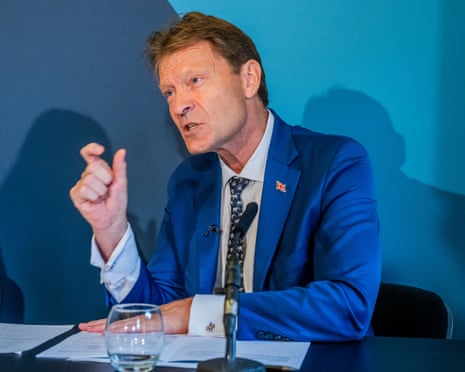
Tice’s call for internal disputes to remain private is therefore about more than one suspended activist. It reflects a wider concern that public infighting could damage Reform’s credibility at precisely the moment when it wants voters to view the party as a government-in-waiting.
Montgomerie’s criticism was particularly sensitive because it targeted Farage, the central personality around whom much of Reform’s political identity has been built. Montgomerie questioned Farage’s absence from the count following his victory in the Clacton by-election and criticised the tone of his political presentation. He also attacked Zia Yusuf, describing him in highly personal terms. Reform subsequently suspended him.
Tice defended the decision by stressing the importance of handling disputes internally. His comparison with a corporate boardroom was revealing: if directors disagree, he argued, they should normally resolve those disagreements privately rather than conducting the argument through newspapers, podcasts or social media.
That philosophy might sound straightforward, but it is particularly difficult for a party whose political success has been closely linked to personalities and confrontational communication.
Farage has built his career by challenging political conventions. His appeal has often depended on direct language, media appearances and a willingness to say things that established politicians might avoid. Reform’s supporters have similarly embraced a political style that rejects what they regard as Westminster’s traditional rules of behaviour.

The problem is that a party built around political disruption can find it difficult to impose traditional discipline on its own supporters.
This is not the first time Reform has experienced internal disagreements. Since its breakthrough at the 2024 general election, tensions have periodically emerged over policy and personalities. The party has also had disagreements involving prominent figures such as Rupert Lowe and Zia Yusuf, demonstrating that its rapid expansion has not always been accompanied by equally strong organisational stability.
Recent controversies have made the situation more difficult.
Farage has faced scrutiny surrounding a £5 million gift from cryptocurrency businessman Christopher Harborne, while police have also been investigating donations to Reform. Farage has rejected suggestions of wrongdoing and has portrayed the scrutiny as part of an effort to undermine him. Meanwhile, Tice himself is under investigation by Parliament’s standards watchdog over whether he properly declared an interest in a parliamentary debate involving British democracy and Israeli influence. An investigation does not itself mean that an MP has committed wrongdoing.
Taken individually, these controversies do not necessarily threaten Reform UK. Political parties regularly face investigations, criticism and internal disagreements. The danger arises when several problems happen simultaneously and create the impression of a party losing control of its own narrative.
That is precisely what Tice appears to be trying to prevent.
His message that Reform is still a “fast-growing party” is important because growth creates its own problems. A small political movement can be relatively easy to control. A rapidly expanding party attracts politicians, activists, donors, advisers and supporters with different ambitions. Some are attracted by Farage personally; others are primarily interested in immigration, taxation, economic reform, social issues or opposition to the political establishment.
Keeping these different factions together becomes increasingly difficult as electoral success approaches.
There is also a question about Reform’s future leadership.
Farage remains the dominant figure, but a June 2026 poll of Reform members found that other politicians, including Yusuf and Tice, were also prominent when members were asked whom they would like to see as the party’s future leader. Farage remained the most popular name, but the results suggested that Reform has a developing political class beyond its founder-like central figure.
That creates an unavoidable strategic question: what happens to Reform if Farage eventually steps aside?
Tice is one obvious candidate to remain influential. He has already held the leadership himself, before Farage returned to the position in 2024, and he now serves as deputy leader. His intervention during the current dispute demonstrates that he is willing to defend the party’s leadership structure and demand greater discipline.
Yet Tice has also attracted controversy of his own.
In recent days, he faced criticism after arguing that Britain should stop trying to tackle climate change and instead adapt to warmer conditions. He described attempts to stop the climate emergency as “arrogant” and pointed to potential benefits such as improved English wine production. The comments were strongly criticised by environmental groups, medical professionals and politicians, particularly amid drought, wildfires and extreme heat.
These controversies illustrate another difficulty for Reform: its provocative political style can generate publicity and energise supporters, but it can also alienate voters who want a party that appears ready to govern rather than simply challenge the political establishment.
The education debate has provided another example. Tice and Suella Braverman recently promoted a major apprenticeship initiative while attacking university degrees they considered economically unproductive. The policy announcement was designed to reinforce Reform’s image as a party focused on practical skills and economic reform. Yet the event also took place against the backdrop of internal disagreements and Farage’s reduced public visibility.
For Reform, the timing is unfortunate.
The party needs to demonstrate that it can convert protest votes into a coherent governing programme. Voters who are dissatisfied with Labour or the Conservatives may be willing to support Reform as a protest. But winning national power requires more than dissatisfaction. It requires confidence that the party’s politicians can work together, formulate detailed policies and manage disagreements without descending into public conflict.
This is why Tice’s intervention matters.
His comments can be interpreted as an attempt to draw a line under the latest controversy. Rather than allowing the suspension of Montgomerie to become a prolonged debate over free speech, leadership and party democracy, Tice wants Reform members to understand that loyalty and discipline are essential.
But there is a potential contradiction.
If Reform presents itself as a party that challenges established political norms, demands open debate and celebrates independent-minded politicians, attempts to suppress public criticism can look uncomfortable. Supporters may ask why criticism that would be described as healthy debate within another political organisation is being treated as unacceptable inside Reform.
The party therefore has to find a balance between discipline and openness.
A political organisation cannot survive if every disagreement becomes a public feud. At the same time, genuine internal debate is necessary if a party is to develop good policy. Leaders who surround themselves only with loyal supporters risk creating an environment in which mistakes go unchallenged.
For now, however, Tice appears determined to prioritise unity.
His message is effectively that Reform’s politicians and activists are entitled to disagree, but they should not allow those disagreements to become ammunition for political opponents. With Labour recovering ground and Reform’s national polling position under pressure, the party has little to gain from appearing divided.
Farage’s recent Clacton victory provides some reassurance. He secured a substantial majority in the by-election, demonstrating that his personal appeal remains powerful in his constituency. Yet national political success is a different matter. The party must show that its support extends beyond Farage’s personal brand.
That may be the real test facing Richard Tice and Reform UK.
The current dispute is not simply about Tim Montgomerie’s suspension. It is about whether Reform can evolve from a highly personalised protest movement into a functioning political machine. If it cannot control internal conflicts, opponents will argue that the party is not ready for government. If it becomes too tightly controlled, it risks losing the rebellious character that attracted many of its supporters in the first place.
Tice’s response suggests that the leadership understands the danger.
By insisting that differences should be resolved privately, he is attempting to project authority and stability. Whether that strategy succeeds will depend on what happens next. If the arguments disappear from public view and Reform returns to presenting its policies, the latest dispute may eventually be forgotten. If further figures begin publicly attacking Farage, Yusuf or other senior politicians, the claims of a “civil war” will become much harder to dismiss.
For now, Reform UK remains a party caught between two identities: an insurgent political movement built around confrontation and a serious electoral organisation attempting to convince voters that it can govern.
Richard Tice’s intervention is an attempt to force the second identity to prevail.
The question is whether the rest of the party is willing to follow him.