


Andy Burnham Should Rethink Green Policies Because They May Make Wildfires Worse
In recent weeks, the United Kingdom has faced an alarming increase in wildfires, extreme temperatures and drought. These events have generated an intense political debate about climate policy and the responsibilities of the government. Andy Burnham, the British Prime Minister, has come under increasing pressure over his approach to environmental policies, particularly his position on electric vehicles, fossil fuels and the country’s transition towards net zero. Some critics argue that certain “woke green policies” are unrealistic, economically damaging and could even contribute indirectly to conditions that make wildfires more difficult to control. However, this argument needs to be examined carefully. While governments should certainly reconsider ineffective or impractical environmental policies, there is little evidence that green policies themselves cause wildfires. Instead, the growing wildfire threat is more closely connected to extreme heat, drought, vegetation dryness, human activity and climate change. Therefore, the most sensible approach is not to abandon environmental policies, but to make them more practical, evidence-based and closely connected to climate adaptation.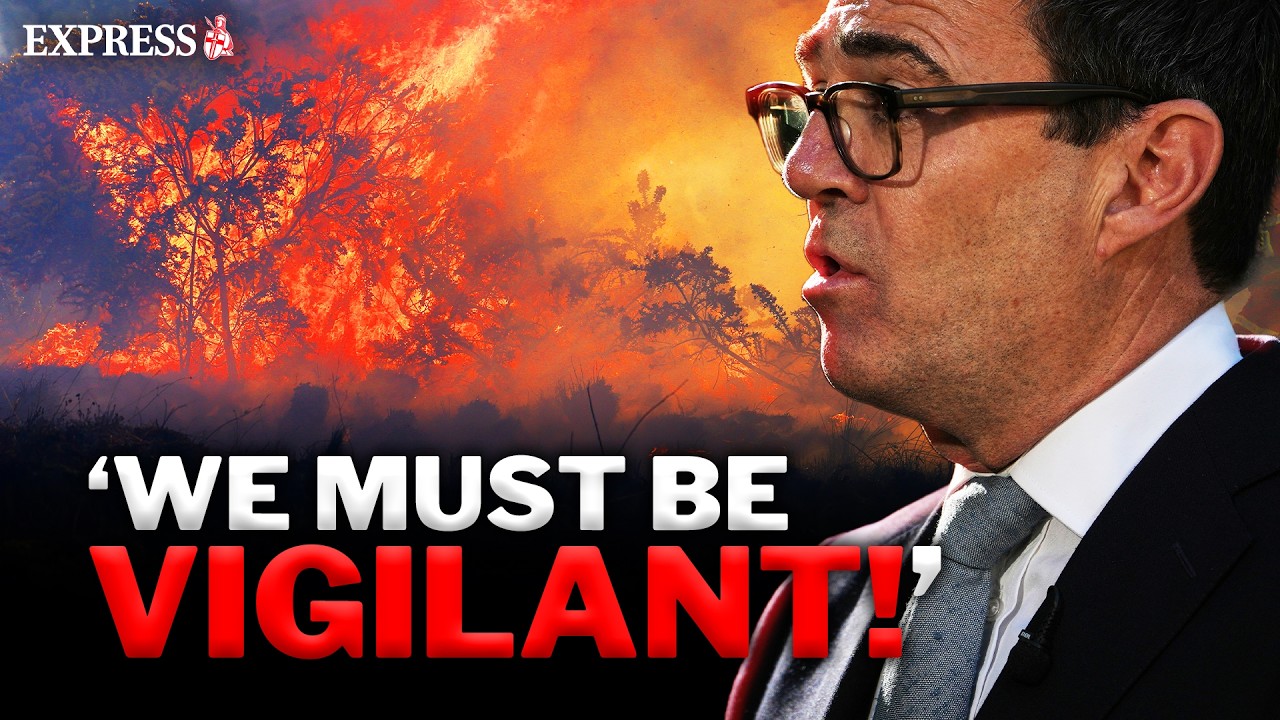
The scale of the current wildfire problem is difficult to ignore. In August 2026, wildfires in England and Wales reached record levels after an exceptionally intense period of heat and drought. Fire chiefs reported that the number of fires had already exceeded the previous annual record, while millions of people were living in drought-affected areas. Temperatures also reached exceptionally high levels, including 38.1°C in London. These conditions created what Burnham himself described as a “tinderbox” Britain. The situation demonstrates that wildfire risk is no longer simply an occasional rural problem. It is becoming a serious national issue involving public safety, emergency services, agriculture, infrastructure and the economy.
One argument made by critics of green policies is that governments sometimes concentrate too heavily on long-term environmental targets while failing to prepare adequately for immediate threats. For example, a government may spend large amounts of money on reducing carbon emissions while insufficient resources are available for firefighting aircraft, emergency personnel, water infrastructure and wildfire prevention. This criticism contains an important point. Climate policy should not be limited to reducing emissions. Governments also need to adapt to environmental changes that are already happening. The recent wildfire crisis has shown the importance of improving emergency preparedness, vegetation management, water supplies and firefighting capacity. Burnham’s government has responded by deploying military personnel, issuing emergency warnings and considering additional firefighting resources.
Nevertheless, it would be misleading to claim that green policies directly make wildfires worse. Many environmental policies are specifically designed to reduce the long-term risks associated with climate change. Renewable energy, energy efficiency, cleaner transport and reductions in fossil-fuel consumption are intended to lower greenhouse-gas emissions. If climate change contributes to higher temperatures and more severe droughts, then reducing emissions should, over the long term, help reduce the severity of these conditions. The important question is therefore not whether environmental policies are “green”, but whether they are effective, affordable and appropriately designed.
There are legitimate concerns about the economic consequences of some climate policies. One example is the government’s review of electric vehicle targets. Burnham’s administration has considered reducing the proportion of new car sales required to be zero-emission vehicles by 2030, although the wider commitment to ending new petrol and diesel car sales by 2035 remains. Environmental groups have criticised this approach, arguing that weaker targets could increase carbon emissions and undermine the UK’s climate commitments. On the other hand, supporters of a more flexible policy argue that manufacturers and consumers need more time and that environmental regulation should not place excessive pressure on industries already facing economic difficulties.
This disagreement illustrates why the debate should not be reduced to a simple conflict between environmentalists and their opponents. A successful green transition must also be economically sustainable. If environmental regulations are so expensive that businesses struggle to survive or consumers cannot afford new technologies, public support for climate policy may decline. Governments therefore need to combine environmental ambition with practical economic planning. Investment in renewable energy, electricity grids, public transport and energy-efficient housing could create jobs while reducing emissions. In this sense, green policies can be part of an economic strategy rather than simply a burden on businesses.
Another important issue is the relationship between fossil fuels and extreme weather. Burnham has faced criticism for remaining open to further oil and gas extraction in the North Sea. Environmental campaigners argue that approving new fossil-fuel projects would contradict the need to reduce emissions at a time when Britain is already experiencing extreme heat and wildfires. More than 50 environmental organisations have called for stronger climate leadership, while climate scientists have also urged the government to reconsider new North Sea drilling projects.
However, supporters of continued domestic oil and gas production argue that energy security cannot be ignored. The UK still needs reliable energy, and rapidly reducing fossil fuels without sufficient alternatives could increase dependence on imported energy. This could expose consumers and businesses to international price fluctuations. The challenge, therefore, is to develop cleaner domestic energy sources quickly enough to reduce dependence on fossil fuels without creating energy shortages or unacceptable economic costs.
It is also important to distinguish between the causes of individual wildfires and the environmental conditions that allow them to spread rapidly. Research cited by the British government has identified thousands of fires associated with barbecues in England between 2020 and 2024, while cigarettes, campfires, rubbish, bottles and lightning can also ignite vegetation. Disposable barbecues have been identified as a particularly significant source of risk, leading the government to introduce restrictions during the current crisis. Therefore, policies such as banning disposable barbecues can have an immediate effect on reducing preventable fires, but they cannot solve the underlying problem of extreme heat and drought.
The most effective strategy would consequently combine prevention, adaptation and emissions reduction. First, Britain should invest more heavily in wildfire prevention. This could include better vegetation management, improved early-warning systems, additional firefighting equipment and stronger cooperation between local authorities and emergency services. Second, the country needs better water management because prolonged drought increases the vulnerability of landscapes to fire. Third, the government should continue investing in renewable energy and energy efficiency so that climate targets can be achieved without imposing unnecessary costs on households.
Urban and rural planning should also be reconsidered. More trees and green spaces can provide shade and help reduce urban heat, although vegetation management is essential in high-risk wildfire areas. Wetlands, healthy soils and sustainable agricultural practices can also improve the ability of landscapes to retain water. Climate adaptation therefore needs to become part of everyday planning rather than an emergency response introduced only after disasters occur.
Ultimately, the phrase “woke green policies” is too simplistic to describe such a complicated issue. Environmental policy should not be judged according to whether it is politically fashionable or unpopular. It should be evaluated according to evidence, cost, effectiveness and its impact on ordinary people. Some regulations may indeed need to be delayed, redesigned or replaced if they impose disproportionate costs without producing meaningful environmental benefits. However, abandoning climate policy altogether would be even more dangerous if climate change is contributing to increasingly severe heat and drought.
In conclusion, Andy Burnham should be willing to rethink environmental policies that are inefficient, expensive or unrealistic, but he should not use the wildfire crisis as an excuse to abandon the green transition. The evidence from the UK’s current wildfire emergency suggests that extreme heat, drought and dry vegetation are major factors creating dangerous conditions, while individual fires can be triggered by human activities such as barbecues and discarded cigarettes. The appropriate response is therefore a balanced one: stronger wildfire prevention, greater investment in emergency resilience, practical economic policies and continued efforts to reduce greenhouse-gas emissions. Rather than choosing between the environment and the economy, Britain needs policies that protect both. A successful government should be pragmatic enough to correct ineffective policies, but ambitious enough to recognise that climate resilience is no longer a distant environmental goal—it is an immediate matter of national security and public safety.