

Angela Rayner and Andy Burnham Have Declared War on the Countryside – They Will Pay for This
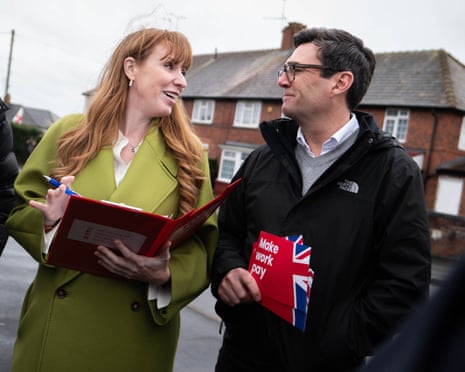
There is a growing sense of frustration across Britain’s countryside. For many people living in rural communities, decisions made in Westminster and by powerful metropolitan politicians can sometimes feel remote, dismissive and disconnected from everyday reality. The debate surrounding housing, planning, transport, development and the future of rural communities has therefore become increasingly heated. Some critics have gone so far as to accuse figures such as Angela Rayner and Andy Burnham of declaring “war on the countryside”.
That language is deliberately provocative. Yet behind it lies a genuine political argument: what kind of country does Britain want to become, and who gets to decide what happens to its rural landscapes and communities?
Angela Rayner, as a senior Labour politician with major responsibilities for housing and local government, has been closely associated with efforts to increase housebuilding and reform the planning system. Andy Burnham, meanwhile, has become one of the most prominent political figures in northern England and an influential advocate for greater regional development. Both have argued, in different ways, that Britain cannot solve its housing and economic problems without building more homes and investing in infrastructure.
The difficulty arises when the national demand for development collides with the local desire to protect the character of rural areas.
For people who live in villages, market towns and farming communities, the countryside is not simply an empty space on a map. It is where they live, work, raise families and maintain longstanding communities. Agricultural land is not merely “available land”; it can be essential to food production. Green spaces are not simply obstacles to construction; they can be important for wildlife, recreation and the identity of a community.
This is why proposals for large-scale development can provoke such intense opposition.
Supporters of planning reform would respond that Britain has a housing crisis. Young people struggle to buy homes, rents have risen sharply in many areas, and communities need new housing if they are to remain economically viable. Rural areas themselves suffer from a lack of affordable homes. Young people who grow up in villages can be forced to move away because they cannot afford to live where they were raised.
That is an important point. Protecting the countryside cannot mean refusing every new development.
However, there is an equally important question: where should new development take place, and what should it look like?
A policy that simply measures success by the number of houses built risks missing the broader picture. Infrastructure matters. Roads, schools, GP surgeries, public transport, sewage systems, water supplies and local services must grow alongside populations. If thousands of new residents arrive but the necessary infrastructure does not follow, existing communities can reasonably feel that they are being asked to carry the cost.
This is where political arguments about the countryside become particularly powerful.
Residents may accept that some development is necessary while objecting to the scale, location or design of particular projects. They may also question whether local people will actually benefit from new housing. If homes are too expensive for local workers, if public services are already overstretched, and if local roads become increasingly congested, promises of economic regeneration can sound hollow.
There is also a deeper cultural issue.
Britain’s countryside has played an enormous role in the country’s identity. From the Yorkshire Dales and Peak District to the villages of the south and the agricultural landscapes of the Midlands, rural Britain represents a part of national heritage that many people believe deserves careful stewardship.
Yet the countryside cannot be frozen in time. Villages need homes. Farmers need modern infrastructure. Businesses need investment. Young families need opportunities. Rural communities need reliable broadband, transport and access to healthcare. A countryside that becomes a museum rather than a living community would not be a successful outcome either.
The real challenge, therefore, is finding a balance between development and preservation.
Critics of Rayner and Burnham argue that political leaders from large urban centres may instinctively favour development because they see land primarily through the lens of housing shortages, economic growth and infrastructure. From that perspective, an undeveloped field can look like an opportunity. To the farmer who owns it, however, it may represent a livelihood. To nearby residents, it may be part of the landscape that defines their community.
Neither perspective should automatically be dismissed.
The political danger for Labour is that rural voters may feel ignored if development is imposed without sufficient local consent. Britain’s political geography has changed dramatically in recent years. Traditional party loyalties have weakened, and voters are increasingly willing to punish politicians whom they believe take them for granted.
This is the significance of the phrase “they will pay for this”.
It should not be understood as a literal threat. In a democracy, politicians “pay” for unpopular decisions through elections. If residents believe that their communities have been disregarded, they have the power to express that judgment at the ballot box.
Local elections, parliamentary elections and council contests can all become referendums on planning decisions. A national government may believe that its housing policies are economically necessary, but voters experiencing the consequences locally may see matters differently.
This creates a difficult political calculation.
The government needs to build more homes. But it also needs to maintain public trust. If communities believe that planning reform means losing control over their surroundings, opposition will inevitably grow. If, on the other hand, residents are given meaningful influence and can see clear benefits from development, resistance may become more manageable.
The answer cannot simply be “build nothing”.
Nor can it reasonably be “build everywhere”.
A smarter approach would involve concentrating development where infrastructure can support it, prioritising brownfield land where appropriate, protecting genuinely valuable agricultural and environmental areas, and ensuring that new developments come with the schools, transport and healthcare facilities that growing communities require.
Local people should also have a meaningful voice. Consultation should not become a box-ticking exercise in which residents are invited to comment after the fundamental decisions have already been made. If politicians want communities to accept difficult changes, they must demonstrate that local concerns have genuinely influenced the final outcome.
There is another issue that deserves attention: rural Britain is not politically uniform.
Farmers, retirees, young families, commuters, small-business owners and agricultural workers can have very different priorities. Some may strongly oppose development. Others may desperately need affordable housing. Some may want better transport links. Others may fear that new roads and construction will permanently alter the character of their area.
That complexity makes simplistic political slogans dangerous.
Calling something a “war on the countryside” may be effective rhetoric, but it can also obscure the real debate. The question should not be whether Britain is for or against development. The question should be whether development is being managed intelligently, fairly and democratically.
Rayner and Burnham therefore face a political test that goes beyond individual planning policies. They must demonstrate that the pursuit of growth does not mean treating rural communities as expendable.
Britain needs houses. Britain needs economic growth. Britain needs modern infrastructure. But Britain also needs farms, villages, open landscapes and thriving rural communities.
These objectives do not have to be enemies.
The countryside should not be protected so rigidly that ordinary people cannot afford to live there. Equally, development should not be pursued so aggressively that the environmental, agricultural and social value of rural Britain is sacrificed in the name of short-term targets.
Ultimately, the strongest political strategy is not to declare war on either development or preservation. It is to recognise that both matter.
If politicians ignore rural concerns, voters have every democratic right to make their dissatisfaction known. If they listen, adapt and invest properly, they can show that new homes and thriving countryside communities are not mutually exclusive.
The future of rural Britain will therefore depend not simply on how many houses are built, but on whether development creates places where people can genuinely live, work and prosper.
That is the real battle ahead. And it will be won not by slogans, but by whether politicians can persuade the people who live in Britain’s countryside that they have a stake in the future being built around them.