

Nigel Farage Has Made an Outrageous Promise — and It’s About to Blow Up
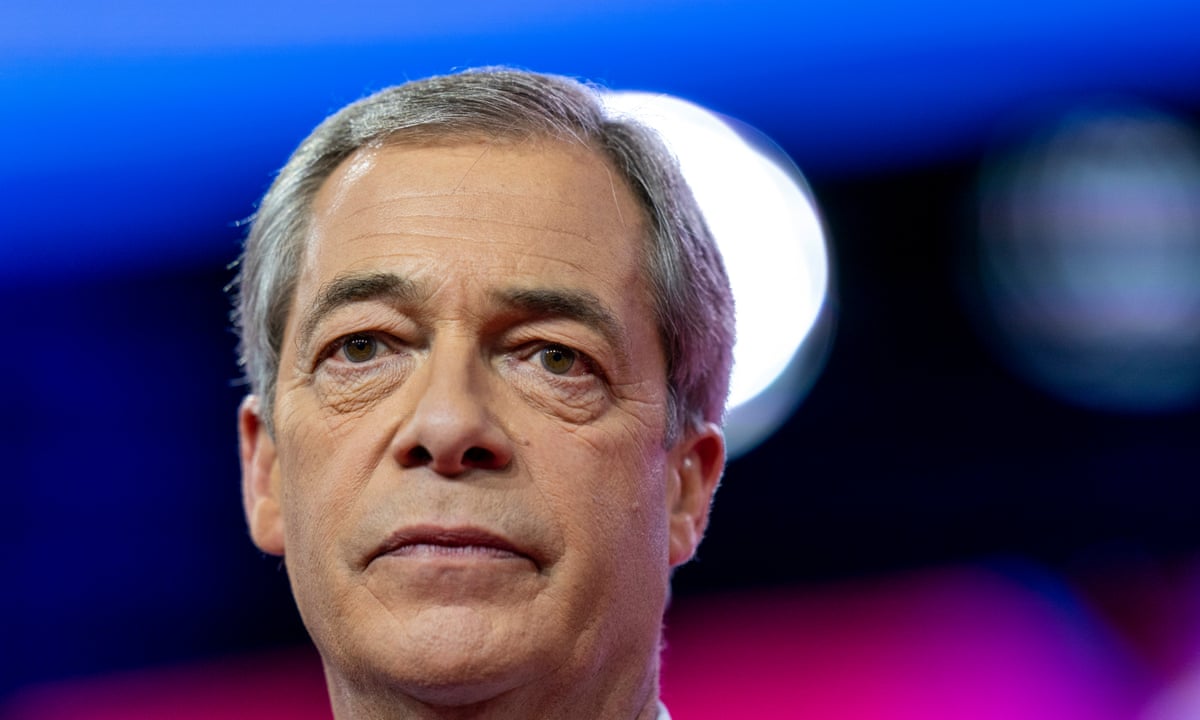
Nigel Farage has built his political career on making promises that sound deliberately different from the cautious language of mainstream Westminster. He has repeatedly told voters that Reform UK would not simply manage Britain’s problems but confront them head-on. Yet one of his latest political promises could prove far more difficult to deliver than the dramatic headlines suggest.
The promise is Reform UK’s sweeping plan to cut around £50 billion a year from the welfare bill.
Announced as part of the party’s attempt to demonstrate that it can transform the British state, the policy has immediately generated fierce controversy. Reform says the package would reduce welfare spending, encourage more people into work and create a smaller, more sustainable benefits system. Critics argue that the proposals could cause severe hardship, particularly for disabled people and families already struggling with rising costs.
This could become one of the biggest tests of Farage’s political credibility.
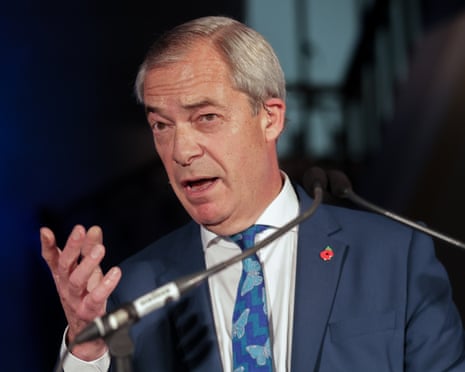
For years, Reform has benefited from being the party that promises to do things differently. But once a political movement starts making enormous financial commitments, voters are entitled to ask a simple question: Can it actually be done?
The £50 billion gamble
Reform’s welfare programme is deliberately ambitious.
The party says it wants to reduce the working-age benefits bill by roughly a quarter by 2030. Among its proposals are major changes to disability payments, restrictions on benefit access for foreign nationals and compulsory community work for some long-term unemployed people considered fit to work.
One of the most controversial elements is the proposed replacement of Personal Independence Payment, or PIP, with a new health security allowance focused on people Reform describes as having severe or high-risk conditions.
The party argues that the existing system has become too expensive and that welfare should be focused on those who genuinely cannot work.
That argument will resonate with some voters.
There is widespread frustration in Britain about rising welfare spending, long-term sickness and the number of people who remain outside the labour market. Reform has identified an issue that concerns many taxpayers: how can the country afford an increasingly expensive welfare state while simultaneously demanding better public services and lower taxes?
But identifying a problem is considerably easier than solving it.
And this is where Farage’s promise could begin to blow up.
The people Reform needs to win
The political irony is that the proposed welfare cuts could affect precisely the voters Reform needs most.
The party’s rise has depended partly on winning support in working-class communities and former Labour strongholds. These are not necessarily areas in which welfare dependency is an abstract political issue. Many households have direct experience of disability, unemployment, caring responsibilities or financial insecurity.
Research reported by The Times highlighted the potential electoral risk: many Reform-held or target constituencies have large numbers of PIP claimants, meaning substantial welfare reductions could affect far more people than the size of Reform MPs’ majorities.
That creates an awkward political calculation.
A policy designed to demonstrate Reform’s determination to control public spending could simultaneously alienate voters who helped create the party’s electoral momentum.
Farage therefore faces a difficult balancing act.
He must persuade taxpayers that welfare spending is being controlled without convincing vulnerable voters that Reform is coming after their financial security.
The numbers are the battlefield
The biggest problem may ultimately be the £50 billion figure itself.
Large savings sound impressive. They can be used to demonstrate that a party is serious about reducing spending. But voters will want to know exactly where the money comes from.
Reform’s proposals include approximately £21 billion of claimed savings from restricting welfare access for foreign nationals and around £22 billion from changes to disability benefits.
Yet critics have questioned whether these savings are realistic.
The difficulty with cutting benefits for foreign nationals is that many people who might appear to be obvious targets are protected by existing legal arrangements. Some EU citizens have rights under post-Brexit agreements, while others have settled status or other forms of legal protection.
That means the theoretical size of the saving does not necessarily equal the amount that could actually be recovered.
The disability-benefit calculation is even more politically sensitive.
Reform says its proposals would encourage hundreds of thousands of people into employment and substantially reduce spending. Critics argue that reducing financial support does not automatically create jobs, improve health or remove barriers to employment.
This is the crucial point.
A government cannot simply assume that taking away benefits will transform someone who is unable to work into someone who can.
The human cost
The political debate has inevitably become emotional because welfare policy affects real families.
Campaigners have warned that Reform’s proposals could push hundreds of thousands of children into poverty. Government analysis cited by critics suggests that some severely disabled or terminally ill people could lose thousands of pounds a year under the proposed system.
Reform disputes the characterisation of its policy and argues that the current system is itself failing people by trapping too many in dependency.
That argument deserves serious consideration.
Britain does have a difficult welfare problem. Long-term sickness has increased substantially, the benefits bill is under pressure and employers frequently complain about labour shortages. A sustainable welfare system must encourage work where work is possible while protecting those who genuinely cannot support themselves.
The challenge is designing a system that does both.
That is much more complicated than simply promising a £50 billion saving.
Farage’s credibility test
This is why the welfare plan could become such an important test of Farage.
For years, Reform has enjoyed the political advantage of operating outside government. The party could promise radical change without having to implement it.
That advantage disappears if Reform wins power.
A government cannot simply say that it will save £50 billion. It has to produce legislation, calculate the consequences, negotiate with departments, deal with legal challenges and face the reality of people whose circumstances do not fit neatly into policy categories.
Every large spending cut produces political consequences.
Every promise of savings has to survive contact with the Treasury.
And every prediction about people moving into work has to survive contact with the labour market.
This is where Farage’s political style will be tested.
His greatest strength is his ability to communicate anger and certainty. But government often requires the opposite: patience, compromise, technical detail and an acceptance that apparently simple problems can have complicated solutions.
The wider political danger
The welfare announcement also comes at an awkward time for Reform.
The party’s national momentum has recently faced challenges. Labour has recovered ground under Prime Minister Andy Burnham, while Reform has faced controversy over internal disputes, donations and Farage’s parliamentary standards investigation.
The timing therefore matters.
If Reform were comfortably ahead in the polls, Farage might be able to absorb criticism of an unpopular policy. But if the party is already struggling to maintain its lead, controversial welfare reforms could give opponents an easy line of attack.
Labour can portray Reform as threatening the welfare state.
The Greens can accuse the party of targeting disabled people.
The Conservatives can question whether the numbers add up.
And rival parties on the right can argue that Farage is making promises that cannot realistically be delivered.
Suddenly, the policy designed to demonstrate Reform’s economic seriousness becomes a potential political liability.
The promise that could define Reform
There is another reason the welfare plan matters.
Immigration has traditionally been Reform’s strongest issue. Farage can communicate his position on borders in a few powerful sentences. But welfare is different.
It forces voters to think about the kind of country Reform wants to build.
Does the party believe the state should be dramatically smaller?
Should taxpayers accept significantly lower levels of social protection?
What should happen to people who are sick but not completely unable to work?
How much responsibility should employers have?
What happens to children in households affected by benefit reductions?
These are not abstract questions.
They go directly to the political identity of Reform UK.
If Farage can demonstrate that his welfare programme is financially credible, legally workable and socially sustainable, he could strengthen his claim that Reform is ready to govern.
If the numbers collapse under scrutiny, however, the consequences could be severe.
The party’s opponents will argue that its £50 billion promise was never a serious financial plan but a political slogan.
And once a party has built its reputation around telling voters that it will “do what it says”, failing to deliver becomes particularly damaging.
A gamble on trust
This is ultimately a battle over trust.
Farage is asking voters to believe that Reform can radically reduce welfare spending without creating unacceptable hardship and can simultaneously improve Britain’s public finances.
That is an enormous promise.
Some voters will welcome it. They will see it as evidence that someone is finally willing to confront an expensive and politically sensitive problem.
Others will see the policy as reckless.
The most important question is not which side produces the loudest headline. It is whether Reform can provide enough evidence to convince voters that the numbers work.
Because £50 billion is not a small adjustment.
It is a transformation of the welfare state.
And transformations have consequences.
Farage has spent years telling Britain that established politicians are too timid to make difficult decisions. Now he has put forward a policy that would force him to make some of the most difficult decisions imaginable.
That is why this promise could blow up.
If Reform eventually enters government, voters will not judge Farage by the size of his rallies or the strength of his speeches. They will judge him by what happens to their bank accounts, their jobs, their families and their public services.
The welfare pledge will be one of the clearest tests of whether Reform’s political revolution is built on practical policy or simply powerful rhetoric.
For now, Farage has made the promise.
The difficult part is keeping it.