


Andy Burnham Creates New Government Role as UK Is Devastated by Wildfires
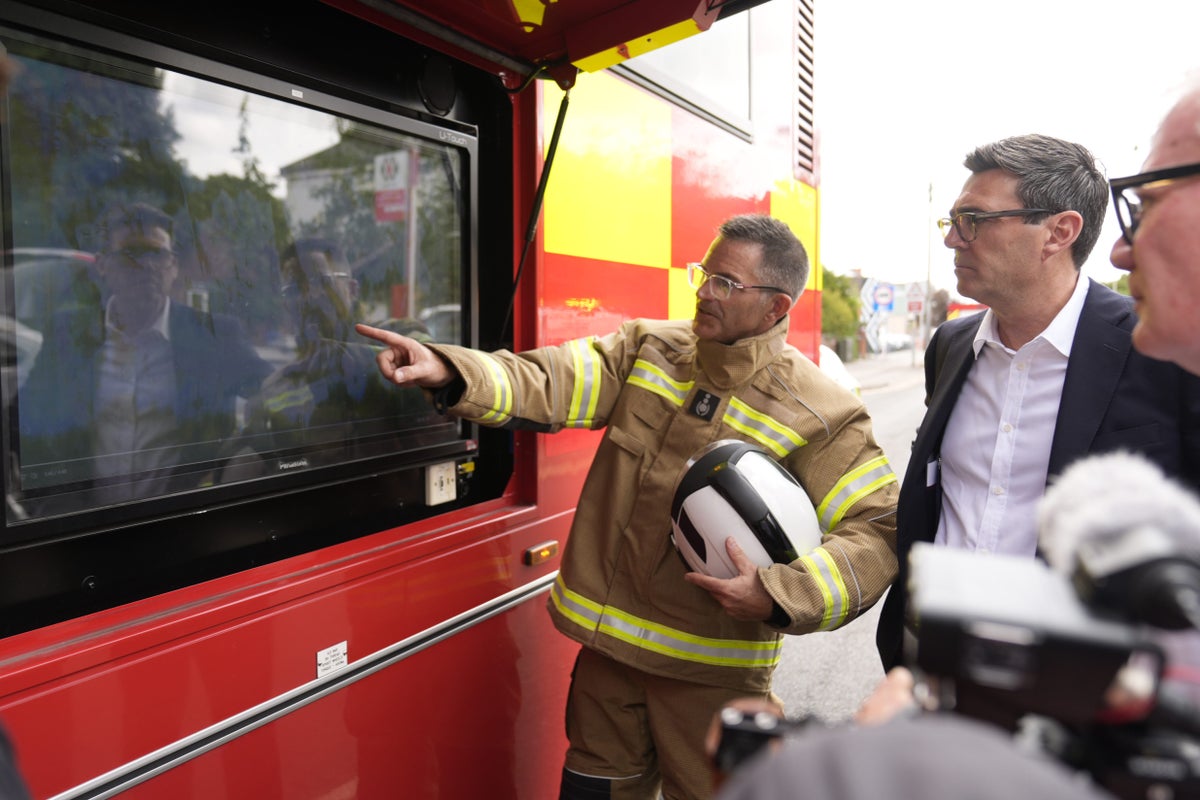
Andy Burnham has taken urgent action as Britain faces one of the most severe wildfire crises in years, placing the escalating emergency at the centre of his new government’s agenda.

With fires spreading across parts of England and Wales, homes destroyed, firefighters pushed to the limit and military personnel deployed to support emergency services, the Prime Minister has been forced to confront a crisis that has rapidly developed from an environmental problem into a national emergency.
Burnham has chaired emergency Cobra discussions on the extreme heat, drought and wildfires and has ordered the government to coordinate its response across departments. The move comes as the UK experiences its fifth heatwave of 2026, with drought conditions leaving large areas exceptionally dry and vulnerable to fire.
The scale of the emergency has also raised a much bigger question for the new Prime Minister: is Britain prepared for a future in which extreme heat, drought and wildfires become increasingly common?
Britain Has Become a Tinderbox
Burnham himself has described the country as a “tinderbox”.
The description reflects the extraordinary conditions facing the UK.
Temperatures reached 38.1°C at Kew Gardens on 13 August, while fire chiefs reported that the number of wildfires in England and Wales had already surpassed the previous annual record. More than 1,000 fires have been recorded during 2026, with the wildfire season expected to continue for months.
The consequences have been devastating.
In Stourbridge, in the West Midlands, a major fire destroyed 19 homes and damaged another 18. Across the country, dozens of incidents have placed enormous pressure on emergency services.
In South Wales, a wildfire near Blaenavon has burned for more than three weeks, affecting more than 4,000 hectares and threatening homes and farmland. Military personnel have been brought in to help firefighters tackle the blaze.
This is no longer simply a matter of isolated grass fires.
The combination of prolonged heat, exceptionally dry vegetation and drought has created conditions in which relatively small fires can spread rapidly.
Burnham’s Emergency Response
The Prime Minister’s immediate response has been to strengthen national coordination.
Burnham chaired an emergency Cobra meeting as the heatwave intensified, bringing together ministers and officials to assess the risks posed by wildfires, drought, water shortages and extreme temperatures.
He has also backed the deployment of military personnel to assist emergency services.
In South Wales, around 100 military personnel have been helping firefighters, using equipment and manpower to create firebreaks and move water. The deployment includes personnel from the Queen’s Own Gurkha Logistic Regiment and Royal Engineers.
For a new Prime Minister, the response represents one of his first major tests of national leadership.
Burnham entered Downing Street promising to make government work differently.
Now he has been presented with a crisis that demands precisely that.
Disposable Barbecues Become a Political Flashpoint
One of Burnham’s most visible measures has been the government’s temporary ban on the sale of disposable barbecues.
The Prime Minister has urged retailers to stop selling them while the extreme fire risk remains, arguing that such products have been associated with some recent wildfires.
The move is deliberately simple.
A disposable barbecue can remain hot enough to ignite dry vegetation long after users believe it has been extinguished.
During ordinary summer conditions, that risk may be manageable.
During a prolonged drought, however, even a small spark can have serious consequences.
Burnham has therefore urged the public to avoid activities that could start fires and has warned that the period of extreme heat and dryness could continue.
Firefighters Are Under Extraordinary Pressure
Behind the political announcements is a much more serious problem: Britain’s emergency services are already under enormous strain.
Fire services have been dealing with multiple major incidents simultaneously.
Crews have had to travel between regions to provide mutual assistance, while firefighters working in extreme temperatures face additional risks from heat exhaustion and dehydration.
The pressure comes after years of reductions in firefighter numbers.
Analysis reported by the Financial Times found that the number of firefighters in England has fallen by 41% from its 2009 peak, even as demand associated with extreme weather has increased. The government has pledged £97 million for wildfire equipment and training, but fire-service leaders have argued that considerably more resources are needed.
That raises an uncomfortable question for Burnham.
Britain may be experiencing a new generation of climate-related emergencies while parts of the emergency-response system remain designed around conditions that no longer exist.
The Climate Adaptation Problem
The wildfire crisis has also exposed concerns about Britain’s wider preparations for extreme weather.
A Freedom of Information request reported that only 20 of 6,613 Defra staff were specifically working on climate adaptation.
That figure has prompted criticism from environmental campaigners, who argue that Britain is not preparing quickly enough for a future of more extreme heat, drought and flooding.
The government has responded that climate adaptation is incorporated across Defra’s work and pointed to investment in reservoirs and flood defences.
But the debate illustrates a fundamental problem.
It is one thing to recognize climate change.
It is another to redesign infrastructure, emergency services, agriculture, water systems and planning rules around the risks it creates.
Water Supplies Are Also Under Pressure
Wildfires are only one part of the emergency.
Britain is simultaneously dealing with severe water shortages.
Around 45 million people are estimated to live in drought-affected areas, while millions face restrictions on water use. Reservoir levels have fallen significantly, and some areas are experiencing exceptionally low river levels.
That creates a difficult situation for firefighters.
Water is essential for fighting large wildfires, but authorities must also protect drinking-water supplies.
Farmers are suffering from the same conditions.
Crops need water.
Livestock need water.
Reservoirs need replenishing.
But prolonged heat and a lack of rainfall are placing pressure on the entire system.
Burnham’s government has already announced a £65 million support package for drought-hit farmers, including funding linked to water storage and agricultural support.
The Bigger Political Question
The wildfire crisis has inevitably become a political argument about climate change.
Scientists have repeatedly warned that rising temperatures can increase the likelihood and severity of extreme heat and drought.
But Burnham has adopted a pragmatic approach to energy and climate policy.
His government is reviewing electric-vehicle targets and has faced criticism over its approach to North Sea oil and gas projects at precisely the moment Britain is experiencing extreme heat and widespread wildfires.
Environmental campaigners argue that the contradiction is obvious.
They ask how the government can acknowledge climate change as a factor behind increasingly dangerous weather while simultaneously considering policies that could slow the transition away from fossil fuels.
Burnham’s supporters would counter that energy security, industrial competitiveness and affordability cannot simply be ignored.
That argument is likely to become increasingly important during his premiership.
Is This a New Government Role?
The description of Burnham creating a “brand new government role” should be treated carefully.
What is new is not necessarily the existence of a permanent ministerial post specifically for wildfires.
Rather, Burnham has taken on a highly visible emergency-coordination role as Prime Minister, chairing Cobra and directing a cross-government response to the extreme-weather crisis.
The Prime Minister already has ultimate responsibility for government policy and decisions, while Cobra provides a mechanism for coordinating departments during serious national emergencies.
The significance is therefore political as much as administrative.
Burnham is making the wildfire crisis a central responsibility of Downing Street rather than leaving it solely to local fire services or individual government departments.
That could prove important if extreme weather continues.
The Military’s Role
The decision to use the armed forces demonstrates how serious the situation has become.
Military involvement in civilian emergencies is not unprecedented.
But using soldiers and engineers to assist with firefighting highlights the scale of the resources required.
In South Wales, troops have been helping construct firebreaks and deliver water to areas affected by the blaze.
The military can provide specialist logistics, transport and manpower.
But it cannot permanently substitute for properly funded civilian emergency services.
If wildfires become a recurring national threat, Britain will need a long-term strategy rather than repeatedly calling in the armed forces whenever conditions become extreme.
A Test of Burnham’s Leadership
The crisis arrives at an awkward moment for Burnham.
He became Prime Minister only on 20 July 2026 and has promised to restore stability after years of political turbulence.
The wildfire emergency therefore gives voters an early opportunity to judge his leadership.
Can his government coordinate effectively?
Can ministers work across departmental boundaries?
Can emergency services receive the resources they need?
Can the government protect water supplies?
Can farmers be supported?
And can Britain prepare for future extreme-weather events rather than simply responding to each crisis after it begins?
Those questions will matter long after the current fires have been extinguished.
The Warning for Britain
The most important lesson may be that wildfires are no longer exclusively a problem for countries such as Australia, Greece or Spain.
Britain’s climate and landscape have traditionally provided some protection from extreme fire conditions.
That protection cannot be taken for granted.
The events of 2026 demonstrate how quickly conditions can change.
A prolonged period of high temperatures and low rainfall can transform countryside, farmland and woodland into highly combustible landscapes.
Once that happens, emergency services can find themselves confronting multiple fires simultaneously.
And that is where preparation becomes crucial.
Burnham Has a Choice
Andy Burnham can treat the current wildfire crisis as a temporary emergency.
Or he can treat it as a warning about the future.
The first approach would mean returning to normal once the fires are extinguished.
The second would mean fundamentally reconsidering Britain’s approach to climate adaptation.
That could include expanding wildfire training, strengthening fire services, improving water infrastructure, creating better early-warning systems, investing in vegetation management and giving local authorities greater resources to prepare for extreme weather.
It could also mean rethinking planning rules in areas increasingly exposed to wildfire.
Such measures would cost money.
But so does disaster response.
The destruction of homes, agricultural land, infrastructure and natural habitats carries enormous economic costs.
Britain at a Crossroads
The immediate priority remains clear: protect lives, protect homes and help firefighters bring the fires under control.
But once the emergency has passed, Burnham will face a much harder political question.
What happens next?
The current wildfire crisis has already broken previous records. Firefighters are under pressure, drought has affected millions of people and the government has been forced to deploy military support.
That should make one thing clear.
Britain cannot simply assume that next summer will be cooler and wetter.
The country needs to prepare for the possibility that extreme heat and wildfire risk will become a recurring feature of British life.
Burnham has already described the country as a “tinderbox”.
His emergency response shows that Downing Street understands the immediate danger.
But the real test of his new government will come after the smoke clears.
The question is no longer whether Britain can survive one terrible wildfire season. It is whether Andy Burnham can build a government capable of preparing the country for the next one.
Leave a Reply
You must be logged in to post a comment.