
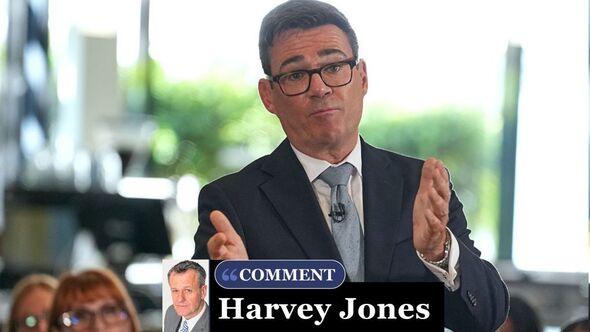
Andy Burnham Is on a Winning Streak – Now He’s Got a Secret General Election Plot
Andy Burnham’s remarkable political comeback has begun to generate a much bigger question in Westminster: could the new Prime Minister be preparing for an early general election?
Only weeks after entering Downing Street, Burnham has transformed the political mood surrounding Labour. The party has recovered ground in the polls, the Prime Minister’s personal popularity has improved compared with recent Labour leadership, and ministers are increasingly confident that the political landscape can be reshaped in Labour’s favour.
That has inevitably led to speculation.
Could Burnham decide to take advantage of his early momentum and seek a fresh mandate from voters?
For now, there is no confirmed evidence that an early election has been scheduled or formally decided. But the political logic behind the speculation is becoming increasingly interesting.
Burnham’s extraordinary political turnaround
When Burnham became Prime Minister, Labour was in a difficult position.
The party had faced growing pressure from Reform UK, particularly in areas that had traditionally been Labour strongholds. Nigel Farage’s party had made significant electoral advances, while Labour’s previous leadership had struggled to maintain enthusiasm among some of its traditional supporters.
Burnham changed the tone almost immediately.
His political style is more energetic and personal. He has emphasised regional government, household finances and public services, while deliberately positioning himself as a leader who understands voters outside Westminster.
The early results have been striking.
Polling after his arrival suggested Labour had recovered enough support to move ahead of Reform in some measures. The Financial Times reported that Burnham’s arrival had produced a significant improvement in Labour’s electoral position and described his early performance as a political success. (ft.com)
That creates the temptation facing every new Prime Minister:
Why wait if the political weather is favourable now?
Why an early election would be tempting
A Prime Minister entering office after a period of political instability has one enormous advantage: novelty.
Voters may be willing to give a new leader the benefit of the doubt.
Opposition parties may not yet have developed effective attacks.
Government policies may still appear fresh.
And the new leader can present himself as the beginning of a new political era.
Burnham has all three advantages.
Reform is still a relatively young political force.
The Conservatives remain under pressure to redefine their identity.
And Labour can present Burnham’s premiership as a fresh start.
An early election could therefore allow the Prime Minister to transform personal popularity into a stronger parliamentary mandate.
But there is a major problem.
The electoral timetable
Britain’s parliamentary system gives a Prime Minister considerable influence over the timing of a general election, but there are constitutional limits.
Under the current arrangements, the maximum length of a Parliament is five years, and the Prime Minister can request a dissolution of Parliament from the King.
That does not mean an election can simply be called whenever the Prime Minister wants without political consequences.
An early election is a gamble.
Win, and Burnham could secure a powerful mandate.
Lose, and he could destroy the political advantage he has built.
That makes the timing crucial.
The danger of going too early
There is an obvious reason why Burnham might decide to wait.
His Government has not yet had time to deliver many of its promises.
The prison crisis remains unresolved.
Immigration remains controversial.
The economy is under pressure.
And the Treasury faces difficult choices in the autumn Budget.
An early election would force voters to judge Burnham before many of his policies had produced measurable results.
That could be dangerous.
A new Prime Minister may enjoy high personal popularity while still having limited evidence of successful government.
The electorate could therefore conclude that Burnham is asking for a mandate before he has earned one.
The autumn Budget changes everything
The Budget could be the key moment.
Burnham’s Chancellor John Healey faces difficult decisions over taxation and public spending, with reports suggesting that the Treasury has a substantial fiscal gap to address. (thetimes.com)
A successful Budget could strengthen Labour enormously.
If Burnham can announce measures that reduce household costs while maintaining financial credibility, Labour could argue that the Government is delivering.
But if taxes rise significantly or spending cuts are required, the political honeymoon could end very quickly.
That makes an immediate election much less attractive.
Why risk a winning position before knowing how voters respond to the Budget?
Burnham may have a longer game
Rather than rushing to the ballot box, Burnham could use his current momentum to rebuild Labour over a longer period.
His strategy appears to focus heavily on regional politics.
The Government has promoted devolution and has established a stronger presence outside London, including the new “Number 10 North” operation in Manchester.
Burnham also plans to travel extensively around Britain to promote his cost-of-living agenda and listen to voters. (ft.com)
That could be part of a much larger political project.
Instead of simply winning an election, Burnham wants to reshape Labour’s relationship with voters.
If he succeeds, an eventual general election could be fought from a much stronger position.
The secret-election theory
This is where the “secret plot” narrative becomes interesting.
Political journalists and opposition parties constantly look for clues about election timing.
A sudden increase in government announcements.
More ministerial visits around marginal constituencies.
Major policy launches.
Changes to parliamentary scheduling.
Increased emphasis on achievements.
None of these things proves an election is coming.
Every government does them.
But when a new Prime Minister enjoys a sudden rise in popularity, speculation inevitably increases.
Burnham’s political opponents therefore have an incentive to claim that he is preparing for an early election.
The accusation itself can be useful.
It encourages voters to think that Labour is becoming overconfident.
Reform UK would be terrified of an early election
There is a very clear reason why Reform would be concerned about this possibility.
The party’s electoral support has been growing, but its parliamentary infrastructure remains less established than that of Labour or the Conservatives.
Reform needs time to build local organisations, identify candidates and convert national support into constituency-level victories.
An unexpectedly early election could make that process considerably harder.
Farage’s strategy depends on turning Reform into a long-term political force.
Burnham’s strategy, if the speculation is correct, could be to prevent Reform from reaching that stage.
That would make the timing of an election politically significant.
If Labour can win while Reform’s support is still divided across the Conservatives and other parties, it could deny Farage the breakthrough he wants.
The Conservatives face their own problem
An early election would also create a major challenge for the Conservatives.
The party is still trying to recover from years of electoral instability.
Kemi Badenoch has been attempting to establish a distinctive Conservative identity while competing with Reform for right-of-centre voters.
A sudden general election would leave little time for the party to develop a new message.
Burnham could therefore face an unusually divided opposition.
Labour could appeal to centre-left voters.
Reform could take votes from the Conservatives.
The Conservatives could struggle to hold their traditional coalition.
In Britain’s first-past-the-post electoral system, that fragmentation can produce dramatic constituency-level effects.
But Labour could also be punished
The danger is that Burnham’s confidence could become arrogance.
If Labour appears to call an election simply because its polling numbers look good, voters may react negatively.
British voters have historically disliked political leaders who appear to put party advantage above national interests.
An election must therefore have a convincing public justification.
Burnham would need to explain why the country needs a new mandate.
A vague claim about “renewal” might not be enough.
Personal popularity is not enough
One of the most important lessons from British politics is that personal popularity does not automatically translate into votes.
A Prime Minister can be personally admired while voters remain unhappy with their party.
Burnham’s relatively strong personal ratings are therefore encouraging for Labour, but they are not a guarantee of victory.
His Government must demonstrate competence.
The economy must improve.
Public services must show progress.
Immigration must be handled effectively.
And Labour must avoid major internal disputes.
If those conditions are met, Burnham could enter a future election in an exceptionally strong position.
The prison crisis could complicate everything
One major obstacle remains the prison system.
Burnham’s Government is already dealing with a severe capacity crisis, alongside controversy over early release.
Police chiefs have demanded stronger safeguards, while probation officers have warned that the system is under severe pressure.
This is exactly the kind of issue that could damage a government’s reputation before an election.
If another serious incident involving an early-released offender occurs, opposition parties will immediately ask why the Government allowed the person to leave prison.
The Prime Minister therefore needs to resolve the issue before considering an election.
A government does not want to enter an election campaign with a major public-safety controversy dominating the headlines.
Immigration is equally dangerous
The same applies to illegal migration.
Reform has made Channel crossings one of its defining issues.
If crossings rise, Farage can claim that Labour has failed.
If crossings fall, Burnham can argue that his policies are working.
That makes the next few months politically important.
An early election would only make sense if Labour believed the immigration numbers were moving in the right direction.
Otherwise, Burnham would be giving Reform exactly the issue it needs.
The bigger ambition: rebuilding Labour
There is another possibility.
Burnham may not be thinking about an election at all.
He may simply be trying to create a successful first year in office.
That could ultimately be more valuable than a snap election.
His political project appears to involve rebuilding Labour’s appeal in regions that have become increasingly sceptical of the party.
Devolution is central to that strategy.
So is the cost of living.
So is his emphasis on practical local government.
If Burnham can demonstrate tangible improvements, he could create a much stronger electoral coalition than Labour currently possesses.
When would Burnham actually call an election?
There are several factors he would probably consider.
First, polling.
A sustained Labour lead would make an early election more attractive.
Second, the economy.
A period of falling inflation, rising wages and stronger growth would create a favourable backdrop.
Third, immigration.
A reduction in Channel crossings would remove one of Reform’s strongest weapons.
Fourth, public services.
Visible improvements in the NHS, transport and local government could strengthen Labour’s argument.
And finally, the opposition.
If Reform and the Conservatives remain divided, Labour could see an opportunity.
But if the opposition begins to consolidate, the calculation could change.
The real secret may be patience
The most successful political strategy might actually be not to call an early election.
Burnham’s biggest advantage is time.
Every month gives his Government an opportunity to demonstrate progress.
Every successful policy makes his leadership look more credible.
Every improvement in polling strengthens Labour’s position.
And every mistake by Reform or the Conservatives makes the opposition weaker.
Calling an election would surrender that advantage.
Waiting could make Burnham even stronger.
That is why the “secret election plot” may be less about a specific date and more about creating the conditions in which Labour can eventually choose the most favourable moment.
Conclusion
Andy Burnham is undoubtedly enjoying an impressive early political recovery.
Labour has regained ground.
His personal standing is stronger than that of many recent prime ministers.
And Reform UK is facing the possibility that its rapid rise could be slowed by a Labour Party that has rediscovered political energy. (ft.com)
That has inevitably created speculation about an early general election.
But there is currently no confirmed evidence that Burnham has decided to call one.
For the Prime Minister, the rational strategy may be to wait.
He has time to strengthen the economy, tackle the prison crisis, address immigration and demonstrate that his new political approach can deliver.
If he succeeds, he could eventually walk into a general election with a much stronger mandate.
If he fails, the temptation to call an election early will disappear.
So the real question is not simply whether Andy Burnham has a secret election plan.
It is whether he can keep his winning streak alive long enough to make an election gamble irresistible.
For now, Labour’s greatest asset is momentum.
But momentum in British politics can disappear almost as quickly as it arrives.
Leave a Reply
You must be logged in to post a comment.