
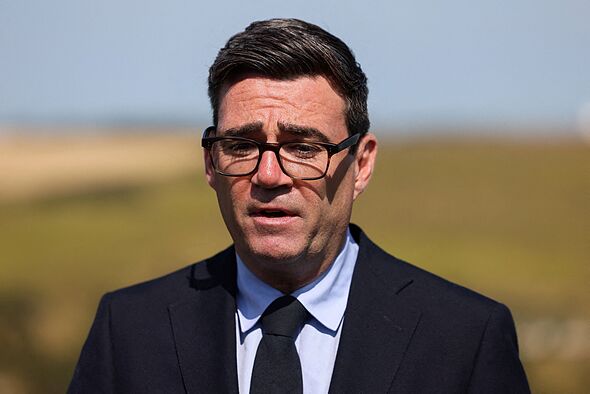
Labour Civil War Erupts as Andy Burnham Slammed Over Holiday After Just Two Weeks on the Job
Andy Burnham’s premiership has suffered an early political headache after the new Prime Minister came under fire for taking a family holiday just over two weeks after entering Downing Street.
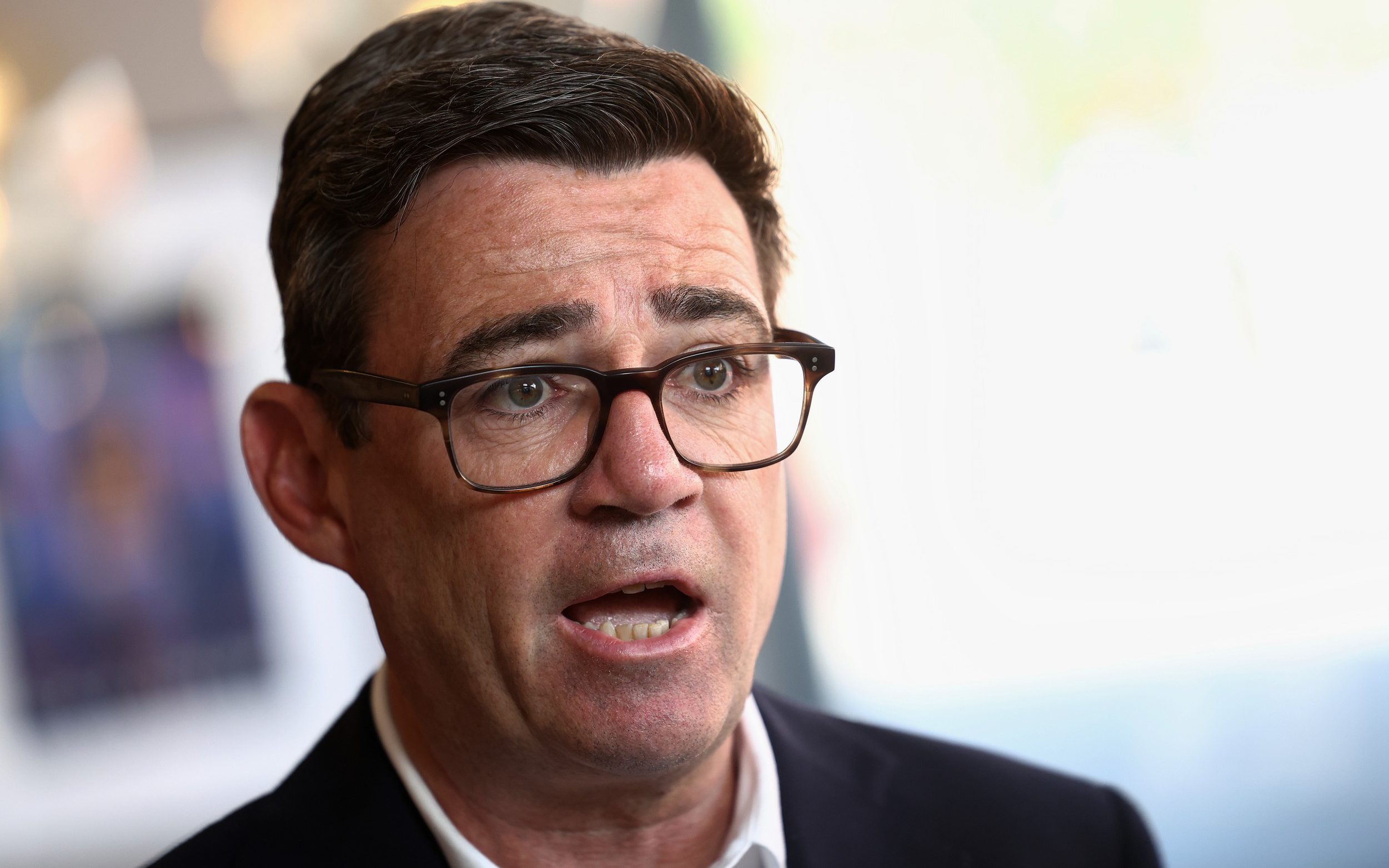
Burnham became Prime Minister on July 20 and left for an overseas break in early August, prompting criticism from political opponents and sparking a debate about whether the timing was appropriate for a leader who had promised a major political reset. Downing Street insisted that the government would continue to operate normally and that Burnham would remain in contact with officials and ministers while away.
The controversy might appear trivial compared with the enormous challenges facing the new government.
But politically, it has exposed something much more significant: the enormous expectations surrounding Burnham’s arrival in Downing Street and the increasingly difficult task of maintaining Labour unity while delivering on his ambitious promises.
A honeymoon interrupted
Burnham entered Downing Street promising to change the way Britain is governed.
His message was one of renewal, competence and a break with the political exhaustion associated with the previous government. During his first days in office, he announced a series of measures aimed at tackling the cost of living, housing, youth unemployment, social care and public services.
That created a sense of momentum.
But barely two weeks into the job, the Prime Minister was away on holiday.
The contrast was inevitable.
A new Prime Minister attempting to demonstrate urgency and energy would naturally attract criticism when he then appeared to step away from the centre of government so soon after taking office.
Downing Street, however, stressed that this was not an ordinary holiday in which the Prime Minister simply disappeared from government business.
Officials said Burnham would remain in direct contact, continue meetings and receive regular updates. The government would continue functioning as normal.
That defence is important.
Yet it has not prevented the political controversy.
Reform UK immediately seized the opportunity
Nigel Farage’s Reform UK was quick to attack.
Reform deputy leader Richard Tice accused Burnham of effectively disappearing while Britain faced serious problems, while Reform MP Lee Anderson described the Prime Minister as having “bunked off” only two weeks into the job.
Such attacks were predictable.
Reform has built much of its political appeal around the argument that Britain’s established politicians are disconnected from ordinary voters.
Burnham’s holiday provides a perfect opportunity to reinforce that narrative.
The Reform argument is straightforward: if Britain is facing a crisis over immigration, public services, government finances and the cost of living, why should the Prime Minister be taking an overseas holiday after only a fortnight?
Whether that criticism is fair is another question.
But politically, it is effective.
The Conservative response was more cautious
Interestingly, Kemi Badenoch did not join the criticism.
The Conservative leader said she would not criticise a politician for taking a holiday, pointing out that it was the school holidays and that her own children were also taking a break.
That response is revealing.
The Conservatives understand that attacking a prime minister simply for taking time off could easily backfire.
Prime ministers are human beings.
They have families.
They cannot realistically be expected to work every minute of every day.
And there is an important difference between taking a short family break while remaining connected to government and abandoning official responsibilities altogether.
Badenoch’s decision not to attack Burnham therefore prevented the controversy from becoming a straightforward opposition-party pile-on.
Instead, it became a more complicated argument about leadership, expectations and political judgement.
The real issue is not the holiday
The holiday itself is unlikely to determine Burnham’s premiership.
The much bigger question is whether the controversy exposes a growing gap between his rhetoric and the reality of governing.
Burnham arrived promising what he described as a major transformation of Britain.
His early agenda included ambitious commitments on housing, public transport, rough sleeping, energy costs and migration.
He also promised to make government more effective and to restore confidence in politics.
That creates an enormous political burden.
The more dramatic the promise, the more closely voters will watch the delivery.
A holiday after two weeks may therefore be politically embarrassing, but it is not the fundamental problem.
The fundamental problem will be whether Burnham can actually deliver the transformation he has promised.
Labour’s internal tensions are more important
The suggestion of a “Labour civil war” should also be treated carefully.
There is a difference between genuine internal conflict and political disagreement.
Labour is a broad coalition containing moderates, traditional social democrats, trade unionists, progressives and MPs with very different views on taxation, immigration, public spending and Britain’s relationship with Europe.
Burnham’s political style may unite some of these groups while irritating others.
His emphasis on regional power and public services will appeal strongly to many Labour supporters.
But his approach to migration, economic policy and national government will inevitably generate arguments within the party.
The Prime Minister therefore has to satisfy several audiences simultaneously.
He must maintain support among Labour MPs.
He must reassure the party’s activists.
He must appeal to voters in former Labour areas who have moved towards Reform.
And he must convince the wider electorate that Labour can govern responsibly.
That is a difficult balancing act.
Immigration could become the biggest flashpoint
One of the most politically sensitive issues is immigration.
Burnham has promised to take a tougher approach to illegal migration, while also presenting Labour as a party committed to fairness and international responsibility.
This is particularly important because Reform UK has made immigration one of its central political issues.
If Labour moves too far towards Reform’s position, it risks alienating parts of its own support.
If it does not move far enough, it risks losing voters who believe the government is failing to control the border.
That tension is already visible.
Reform has used the Prime Minister’s absence to attack him over migration, while Burnham’s government faces pressure to demonstrate that its promises are more than rhetoric.
The prison crisis adds to the pressure
Burnham’s timing was also unfortunate because his holiday came immediately after his government announced controversial changes to the prison early-release system.
The announcement generated criticism from victims’ groups and families concerned about the consequences for public safety. ITV reported that the controversy surrounding the prison scheme coincided with Burnham’s departure.
This creates a much more serious political problem than the holiday itself.
A Prime Minister can easily explain why he needs a few days away.
It is harder to explain why difficult and controversial decisions appear to be landing while he is away from Downing Street.
Burnham therefore needs his ministers to demonstrate that his government remains fully in control.
No deputy Prime Minister makes the optics worse
Another unusual feature of Burnham’s administration is that he did not appoint a formal Deputy Prime Minister.
Instead, Louise Haigh was appointed First Secretary of State and effectively occupies the senior Cabinet position below Burnham.
This created additional questions about who would front the government if a major crisis emerged while Burnham was abroad.
There is nothing constitutionally unusual about a prime minister taking a holiday.
But the absence of a formally titled deputy inevitably makes the political optics more complicated.
The government has insisted that arrangements are in place and that Burnham remains involved.
Still, the episode demonstrates why the first months of a new administration are so important.
Every decision is scrutinised.
Every absence becomes a story.
Every disagreement can be interpreted as evidence of a deeper problem.
Burnham’s defenders have a strong argument
There is also a perfectly reasonable defence of the Prime Minister.
Burnham had spent years in public life before entering Downing Street.
He is not an inexperienced politician suddenly discovering government.
He served as Mayor of Greater Manchester and held senior ministerial positions under previous Labour governments.
There is therefore little reason to believe that a short family holiday means he is uninterested in the job.
Moreover, Downing Street has explicitly stated that he remains in contact with officials and continues working during the break.
Modern prime ministers have access to secure communications and can receive briefings wherever they are.
The idea that government stops functioning whenever a prime minister leaves Downing Street is unrealistic.
In fact, a short break may help a leader return more focused and capable of dealing with difficult decisions.
That is an argument Burnham’s supporters will make.
But politics is about perception
The problem is that politics is not judged purely on technicalities.
It is judged on perception.
Burnham has repeatedly presented himself as a politician determined to work relentlessly to rebuild Britain.
His critics can therefore ask why a man who has only been Prime Minister for fourteen days needed an overseas holiday so soon.
The answer may be perfectly innocent.
But voters do not necessarily respond to political controversies in rational or carefully measured ways.
The image of a new Prime Minister on holiday while the government faces major challenges can be powerful.
That is especially true during a period when many families are struggling with household costs.
Burnham’s biggest challenge is managing expectations
The new Prime Minister’s biggest political asset may also be his biggest vulnerability.
People expect a lot from him.
His supporters believe he can revitalise Labour.
His opponents fear that he could transform the political landscape.
Reform sees him as its principal target.
The Conservatives see him as a threat to their recovery.
Labour MPs expect him to reverse years of electoral decline.
And voters want rapid improvements to problems that have accumulated over decades.
No Prime Minister can satisfy all of those expectations immediately.
Burnham therefore needs to establish a clear distinction between ambition and delivery.
Promising change is easy.
Delivering it is much harder.
The next few months will matter far more
Ultimately, Burnham’s holiday will probably be forgotten if his government succeeds.
If the economy improves, public services become more effective, migration falls and Labour establishes a credible long-term programme, few voters will care that he took a family break after two weeks.
But if his government struggles, the holiday could become part of a broader narrative.
Opponents could argue that Burnham arrived with enormous promises but quickly discovered that governing was harder than campaigning.
That is the real danger.
A political story rarely remains about the original event.
It evolves.
A holiday becomes a question about leadership.
A leadership question becomes a question about competence.
And a competence question can eventually become a question about whether voters trust the entire government.
Conclusion
Andy Burnham’s decision to take a family holiday just over two weeks after becoming Prime Minister has created an awkward early controversy for the Labour government.
Reform UK has attacked him aggressively, while the Conservatives have largely resisted joining the criticism. Downing Street insists that Burnham remains in contact with officials and that the government continues to operate normally.
The holiday itself is unlikely to determine Burnham’s future.
The real test will be what happens when he returns.
Britain faces major challenges over the economy, immigration, public services, housing, crime and government finances. Burnham has promised ambitious solutions to many of them.
Now he has to deliver.
If he succeeds, the controversy will look like a minor Westminster storm.
If he fails, his opponents will undoubtedly return to the image of a Prime Minister who had barely unpacked his bags in Downing Street before heading abroad.
For Burnham, the message is therefore simple.
The holiday may last days. The political consequences will depend on what happens afterwards.
Leave a Reply
You must be logged in to post a comment.