


IRELAND IN TURMOIL? Conor McGregor Breaks His Silence With Explosive New Message
Ireland’s political conversation has once again been pulled toward the center of a storm surrounding Conor McGregor, after the former UFC champion reportedly issued a fresh political message touching on the direction of the country and the government’s handling of major domestic problems.
McGregor is no stranger to controversy.
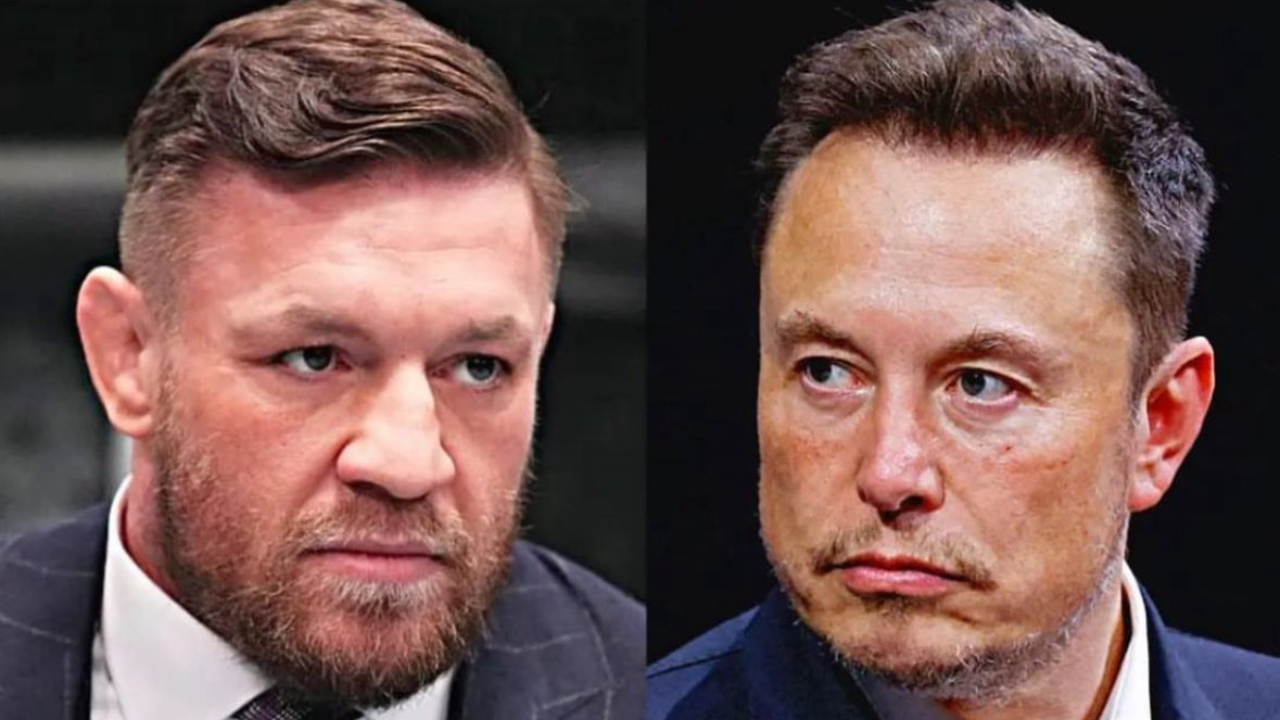
Over the past several years, the Irish sporting superstar has increasingly moved beyond the world of mixed martial arts and into Ireland’s increasingly polarized political conversation. His enormous social-media following gives him an audience far larger than that available to most ordinary political activists, while his willingness to speak bluntly has made him both a powerful voice for some and a deeply divisive figure for others.
The latest message comes at a particularly sensitive moment.
Ireland is facing intense public debates over housing, migration, policing, the cost of living and the future direction of government policy. Those issues have created frustration among sections of the population who believe political leaders are failing to respond quickly enough to problems affecting everyday life.
Housing has become particularly important.
For many younger Irish people, the prospect of finding affordable accommodation has become one of the defining economic challenges of their generation. High rents, limited supply and intense competition for housing have created a sense that traditional pathways toward independence and home ownership are becoming increasingly difficult.
It is within that environment that McGregor’s political interventions attract so much attention.
A statement from a government minister might receive several thousand reactions online.
A statement from McGregor can reach millions.
That difference matters.
McGregor is not simply another commentator. He is one of Ireland’s most recognizable international figures. His sporting career made him a global celebrity, and his enormous online following has allowed him to communicate directly with the public without relying on newspapers or television broadcasters.
That direct connection is one of the reasons his political messages can become so controversial so quickly.
Supporters argue that he gives a voice to people who feel ignored by the political establishment.
Critics argue that popularity and political influence are not substitutes for detailed policy expertise.
Both perspectives are relevant.
The central question is therefore not whether McGregor has the right to express political opinions. He clearly does.
The more important question is what happens when celebrity influence becomes part of a rapidly intensifying political environment.
A Country Under Pressure
Ireland’s political tensions cannot be reduced to one individual.
The country is experiencing several major pressures simultaneously.
Housing is one.
Migration and asylum policy are another.
The cost of living remains an important concern.
Public services face pressure.
And questions about national identity have become increasingly visible in political debate.
These issues frequently overlap.
Housing shortages can become connected to population growth.
Population growth can become connected to migration.
Migration can become connected to public services.
Public-service pressure can become connected to dissatisfaction with government.
Once these issues become connected, political arguments can escalate rapidly.
McGregor has increasingly positioned himself within that broader conversation.
His supporters believe he is willing to say things that established politicians are reluctant to say.
His opponents argue that his interventions can oversimplify complex policy problems and intensify social divisions.
The latest controversy is therefore not simply about what McGregor said.
It is about why his words resonate so strongly.
The Power of a Celebrity Voice
Modern politics has changed dramatically because of social media.
Political leaders no longer control the entire conversation.
A celebrity can reach millions of people directly.
A video can spread internationally within hours.
A short statement can become a headline before journalists have even established the full context.
McGregor is particularly effective in this environment because his public persona has always been built around confrontation.
In the Octagon, his appeal came partly from confidence and unpredictability.
Outside the Octagon, the same characteristics have followed him into political commentary.
That can make his messages compelling.
It can also make them controversial.
Political debate normally involves qualifications, evidence, legislation and institutional constraints.
Social media rewards something different.
It rewards certainty.
It rewards emotion.
It rewards confrontation.
And it rewards short statements that can be easily shared.
That creates an obvious tension.
Complex national problems rarely have simple solutions.
But simple political messages are often the ones that travel furthest.
The Housing Crisis
Among the issues associated with the latest discussion is Ireland’s housing crisis.
For ordinary families, housing is not an abstract political question.
It determines where they can live, whether they can start a family, how far they must commute and whether they can afford to remain in the communities where they grew up.
Young people in particular have expressed frustration over the gap between wages and housing costs.
When people work full-time but still struggle to find secure accommodation, political anger can become intense.
This creates an opportunity for politicians and public figures who promise fundamental change.
But housing policy is extraordinarily complicated.
Construction costs matter.
Planning regulations matter.
Land availability matters.
Infrastructure matters.
Interest rates matter.
Population growth matters.
Government investment matters.
Private development matters.
Migration can influence demand, but it is only one part of a much larger system.
That complexity is often lost when political debate becomes highly emotional.
Migration and National Identity
The debate becomes even more sensitive when housing is discussed alongside migration.
Ireland has experienced significant demographic change, and migration has become one of the country’s most politically controversial subjects.
Supporters of immigration argue that migrants contribute to the workforce, pay taxes, start businesses and help fill shortages in important sectors.
Critics argue that migration must be matched by sufficient investment in housing, healthcare, education and infrastructure.
Both questions deserve serious discussion.
A government can recognize the economic contribution of migrants while also acknowledging that rapid population growth creates additional demand for housing.
Likewise, citizens can demand stronger immigration controls without treating migrants as collectively responsible for every social problem.
The challenge is maintaining that distinction.
This is where public figures such as McGregor can have an enormous impact.
A single statement can influence how millions of people understand a complicated political issue.
That influence creates responsibility as well as power.
Why the Government Faces a Difficult Moment
For Ireland’s political leadership, the growing visibility of celebrity political commentary creates another challenge.
The government cannot simply dismiss public frustration because it is expressed by a famous athlete.
Nor can it adopt every demand made on social media.
Its responsibility is to develop policies that can actually work.
That means building more homes.
Improving infrastructure.
Managing migration effectively.
Protecting vulnerable people.
Maintaining public safety.
And communicating clearly with citizens.
If people believe government institutions are not listening, political frustration will continue to grow.
When mainstream institutions lose credibility, alternative voices gain influence.
That is one reason McGregor’s political interventions attract so much attention.
His supporters do not necessarily agree with every statement he makes.
But many appear to value his willingness to challenge established political assumptions.
The Risk of Polarization
There is, however, another side to the story.
Ireland must be careful not to allow political frustration to become permanent social division.
People can disagree about immigration without becoming enemies.
They can disagree about housing without blaming entire communities.
They can criticize government policy without attacking people because of their nationality or religion.
And they can support McGregor’s right to speak without assuming that everything he says is automatically correct.
That distinction is essential.
Democracy depends on disagreement.
But it also depends on facts.
If political arguments become disconnected from evidence, public debate becomes increasingly difficult.
McGregor’s New Political Role
Whether McGregor intends to become a formal political figure remains a separate question.
His name has already been associated with discussions about Ireland’s political future, and his enormous public profile ensures that any major political intervention will attract attention.
But celebrity politics presents obvious challenges.
Running a country is fundamentally different from winning a fight.
Government decisions involve budgets, courts, legislation, international agreements, civil servants and complex administrative systems.
A powerful message can identify a problem.
It cannot necessarily solve it.
That distinction should remain clear.
McGregor’s influence is therefore best understood as part of a larger political movement rather than as a substitute for conventional politics.
He has become a megaphone for frustrations that already exist.
Those frustrations did not begin with him.
And they will not disappear if he stops talking.
What Comes Next?
Ireland now faces a choice about the direction of its political conversation.
It can respond to growing public frustration with detailed reforms and transparent communication.
Or it can allow the political environment to become increasingly dominated by outrage and confrontation.
The responsibility does not belong only to government.
Opposition parties have a role.
Journalists have a role.
Social-media platforms have a role.
Public figures have a role.
And citizens have a role.
Everyone benefits when political claims are checked against evidence.
Everyone loses when rumors become accepted as facts simply because they are repeated often enough.
That is particularly important when a celebrity’s words are involved.
McGregor’s enormous following means that his statements can shape public conversation almost instantly.
That influence should be recognized—but it should also be examined critically.
The Bigger Picture
The most important story is therefore not simply that Conor McGregor has spoken again.
It is that Ireland is experiencing a period in which traditional political institutions are facing growing pressure from outside voices.
People are angry about housing.
They are concerned about the cost of living.
They are debating migration.
They are questioning government competence.
And they are increasingly willing to listen to people outside the traditional political establishment.
McGregor has become one of the most recognizable symbols of that change.
His message may energize supporters.
It may infuriate opponents.
It may dominate social media for a few days.
But the underlying problems will remain.
Ireland still needs homes.
It still needs functioning public services.
It still needs an effective immigration system.
And it still needs political institutions capable of maintaining public confidence.
Those problems cannot be solved by a viral video or a provocative statement.
They require policy.
They require money.
They require planning.
And they require political courage.
Conor McGregor may be able to command a global audience with a few words.
The Irish government, however, will ultimately be judged by what it does.
That is the real test.
The political storm surrounding McGregor may continue to grow, but Ireland’s future will not be determined by social-media headlines alone.
It will be determined by whether the country’s leaders can address the frustrations that made those headlines powerful in the first place.