

Andy Burnham Is Doomed — His Sworn Enemy Is Just Waiting to Sweep Him Away
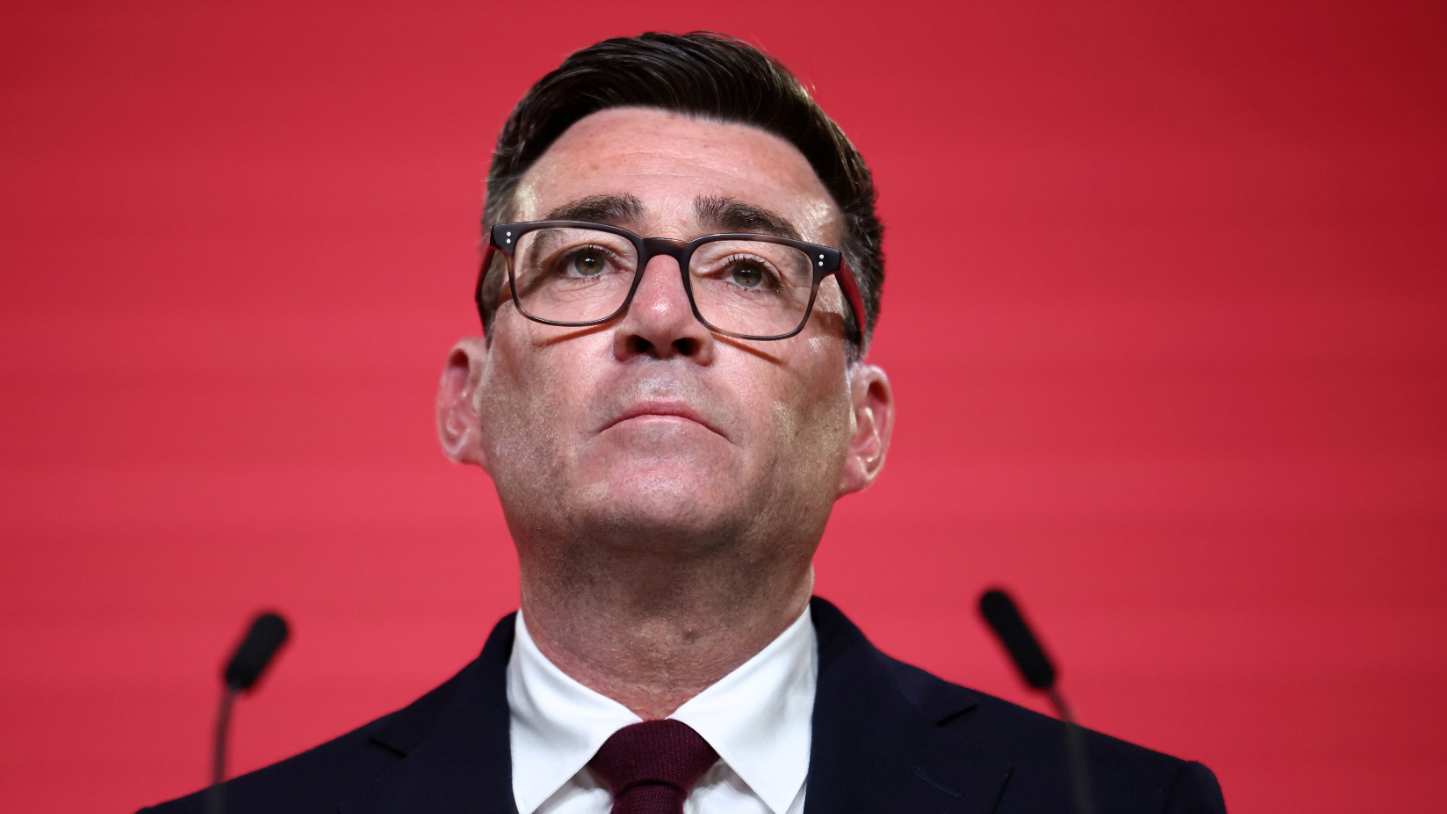
Andy Burnham may have entered Downing Street with enormous political momentum, but his position is far less secure than his supporters would like to believe.
The new Prime Minister has enjoyed a remarkable rise. After years as Mayor of Greater Manchester, Burnham returned to Westminster through the Makerfield by-election and turned what could have been a routine political comeback into a major national event.
His victory was emphatic.
But now comes the difficult part.
Burnham is no longer simply a popular mayor challenging Westminster from the outside. He is responsible for the entire country, and every economic decision he makes will be judged by voters, investors and the financial markets.
And according to his critics, that is where his most dangerous enemy is waiting.
It is not Nigel Farage.
It is not even the Conservative Party.
It is the bond market.
The enemy Burnham cannot simply ignore
The central argument behind the attack on Burnham is straightforward.
A government can promise almost anything during a political campaign.
Once it takes office, however, it must persuade investors that its spending plans are credible.
If investors become worried that government borrowing is becoming unsustainable, they can demand higher interest rates to lend money to the state.
That increases the cost of servicing the national debt.
And suddenly a government’s carefully constructed economic programme can become much more difficult to finance.
This is why the bond market has acquired such a fearsome reputation in British politics.
The experience of Liz Truss’s short-lived premiership remains the obvious warning.
Her 2022 “mini-budget” triggered a sharp reaction in financial markets, forcing the Government to reverse major parts of its fiscal programme.
Burnham’s opponents are now asking whether his economic plans could create a similar confrontation.
That does not mean such a crisis is inevitable.
But it explains the dramatic language surrounding his economic agenda.
Burnham’s political strength could become an economic weakness
Burnham has built his reputation around ambitious public intervention.
As Mayor of Greater Manchester, he championed public transport, local investment and greater devolution.
His political philosophy is broadly based on the idea that government should play an active role in improving people’s lives.
That message helped him build a powerful personal brand.
But the economics of Greater Manchester are not the same as the economics of the United Kingdom.
A mayor can campaign for investment.
A national government has to finance it.
Britain’s Chancellor must consider the national debt, borrowing costs, taxation, inflation, productivity and investor confidence simultaneously.
That is a much more unforgiving environment.
The debt problem
Britain already carries a very substantial public debt burden.
That means the Government is particularly sensitive to movements in interest rates.
When rates rise, the cost of refinancing government debt can increase.
Money that might otherwise be spent on hospitals, schools, infrastructure or tax reductions can instead be absorbed by debt interest.
That is why fiscal credibility matters so much.
The more expensive borrowing becomes, the less room a government has to respond to economic shocks.
For Burnham, this creates an uncomfortable dilemma.
He wants to demonstrate that Labour can improve living standards.
But many of the policies capable of doing that require money.
And if markets become concerned about the scale of government borrowing, the very policies intended to help households could become harder to fund.
The bond market does not vote
This is perhaps the most important difference between political voters and financial markets.
Voters can be persuaded by speeches.
They can be reassured by political promises.
They can respond to emotional arguments about fairness.
Bond investors are much less sentimental.
They want to know whether the numbers add up.
If they believe a government’s debt trajectory is becoming dangerous, they do not need to wait for an election to express their opinion.
They can simply demand a higher return for holding government debt.
That can create a vicious circle.
Higher borrowing costs mean greater debt interest.
Greater debt interest increases borrowing requirements.
Higher borrowing requirements can further unsettle investors.
And the Government is then forced to make difficult choices.
The ghost of Liz Truss
Every British Chancellor knows what happened in September 2022.
Liz Truss entered Downing Street promising a dramatic economic transformation.
Her Government announced substantial tax cuts without fully explaining how the measures would be financed.
Financial markets reacted violently.
Sterling fell.
Government borrowing costs surged.
The Bank of England intervened to stabilise the gilt market.
And Truss was eventually forced to abandon much of her programme.
Her premiership lasted only 49 days.
The episode permanently changed the political vocabulary surrounding British economic policy.
The phrase “bond market” became a warning to politicians who promised large unfunded spending or tax cuts.
Burnham will know that history.
His opponents certainly do.
But Burnham is not Liz Truss
There is an important distinction.
It would be misleading to suggest that any increase in public spending automatically produces a Truss-style crisis.
Britain’s economic circumstances are different.
The structure of Burnham’s policies matters.
So does the credibility of the Government’s fiscal rules.
And so does whether spending is funded through taxation, borrowing, savings elsewhere or higher economic growth.
The real question is not simply:
“Will Burnham spend more?”
It is:
“Can Burnham demonstrate that his plans are financially sustainable?”
That is a much more serious question.
The problem with ambitious promises
Burnham’s political appeal depends partly on his ability to promise change.
He has spoken about making households better off, improving public services and investing in communities.
Those promises are popular.
But each commitment creates expectations.
If he increases spending, he may need higher taxes.
If he refuses to raise taxes, he may need additional borrowing.
If he limits borrowing, he may have to reduce other spending.
There is no magic fourth option.
Economic policy is ultimately about choices.
And those choices become considerably more difficult when debt interest is already consuming a large portion of government resources.
Tax rises could become politically toxic
This is where Burnham’s political enemies see another opportunity.
If the Government decides that additional spending must be financed through taxation, Reform UK can accuse Labour of breaking its promises to working people.
Nigel Farage has already built much of his political appeal around opposition to high taxes and what he describes as wasteful government spending.
That makes the economic battlefield particularly dangerous for Burnham.
Suppose taxes rise.
Farage can say Labour is making ordinary families poorer.
Suppose taxes do not rise but borrowing increases.
Farage can argue that Labour is gambling with Britain’s finances.
Suppose Burnham cuts spending instead.
He risks angering the very public-sector workers and communities that traditionally support Labour.
In other words, almost every option carries a political cost.
Farage is waiting
This is why Nigel Farage remains an important part of the story.
Reform does not necessarily need to defeat Burnham immediately.
It simply needs to wait for the Government to make mistakes.
If economic growth disappoints, Farage will attack.
If taxes rise, Farage will attack.
If public services deteriorate, Farage will attack.
If immigration remains high, Farage will attack.
And if financial markets become nervous, Reform will have an enormous political weapon.
Farage can present himself as the politician who warned about excessive government spending all along.
That narrative could become extremely powerful.
Burnham’s biggest problem is expectations
The Prime Minister’s greatest political asset is also potentially his biggest liability.
People expect a lot from him.
He arrived in Downing Street promising a new direction.
His supporters believe he can reconnect Labour with working-class voters.
They expect him to reduce household pressures.
They want better public services.
They want economic growth.
They want stronger regional investment.
They want action on housing.
And many expect him to challenge Reform’s dominance among former Labour voters.
That is a huge political burden.
A government can survive disappointing expectations for a while.
But eventually voters want results.
His Makerfield victory created enormous expectations
Burnham’s parliamentary return was extraordinary.
He won Makerfield with 24,927 votes, taking 54.8 per cent of the vote.
Reform’s Robert Kenyon finished second with 15,696 votes and 34.5 per cent.
Burnham therefore secured a majority of more than 9,000 votes.
The result immediately strengthened his claim to be the politician capable of stopping Reform.
But that success creates another expectation.
If Burnham could defeat Reform in Makerfield, voters will expect him to demonstrate that he can defeat Reform nationally.
And that requires more than political rhetoric.
It requires economic competence.
The northern experiment goes national
Burnham has spent years promoting what has sometimes been described as a Greater Manchester model.
Greater devolution.
Local control.
Public transport investment.
Interventionist government.
Closer cooperation between councils and businesses.
It is an attractive political proposition.
But scaling such a model from one metropolitan region to an entire country is far more complicated.
Britain contains huge differences between regions.
London is not Manchester.
The South East is not the North East.
Rural communities have different priorities from major cities.
The Government must therefore find a national economic strategy that works across radically different parts of the country.
Markets will judge the details
This is why the bond market, rather than simply political opponents, could become Burnham’s most dangerous adversary.
Markets do not care whether a policy is Labour or Conservative.
They care about whether the Government can finance itself sustainably.
They care about inflation.
They care about economic growth.
They care about the credibility of fiscal policy.
They care about the likelihood that Britain will be able to meet its obligations.
That makes the bond market a uniquely powerful force.
Burnham cannot campaign against it.
He cannot give it a speech.
He cannot blame it on Westminster.
He simply has to convince investors that Britain remains financially credible.
The Chancellor’s role will be crucial
Burnham’s economic credibility will depend heavily on the Chancellor.
A Prime Minister can make broad political promises, but the Treasury must turn them into numbers.
That means deciding how much can actually be spent.
It means identifying savings.
It means calculating tax revenues.
It means assessing the economic impact of every major programme.
And it means ensuring that the Government’s fiscal framework survives contact with reality.
If Burnham and his Chancellor remain disciplined, the nightmare scenario may never materialise.
If they do not, the political consequences could be severe.
Growth is the escape route
There is, however, a potential way out.
Economic growth.
If Britain becomes significantly more productive, tax revenues can rise without tax rates necessarily increasing dramatically.
That gives governments more money to spend while keeping debt under control.
Burnham therefore has a strong incentive to prioritise investment that genuinely increases productivity.
Infrastructure.
Housing.
Skills.
Transport.
Energy.
Technology.
Regional development.
The danger comes when governments confuse spending with investment.
Not every pound of additional public expenditure generates economic growth.
Some spending simply increases the size of the state.
That distinction will become increasingly important.
The danger of borrowing for consumption
Borrowing can sometimes be economically sensible.
Governments routinely borrow to fund infrastructure and long-term investment.
The problem becomes much greater if borrowing is used to finance permanent spending without a credible plan for repayment.
That is the line Burnham must avoid crossing.
If markets believe that Britain is borrowing to invest in future growth, they may be relatively comfortable.
If they believe Britain is borrowing simply because the Government cannot balance its day-to-day books, confidence could deteriorate.
This is why the details of the Budget will matter enormously.
Burnham’s political enemies are already preparing
Farage will not be the only person waiting.
The Conservatives will look for evidence that Labour is increasing taxes.
Business groups will scrutinise regulatory changes.
Financial commentators will analyse every fiscal announcement.
Backbench Labour MPs will worry about unpopular measures.
And voters will compare their bank accounts with the promises they heard during the campaign.
The Prime Minister therefore faces pressure from almost every direction.
Yet declaring Burnham “doomed” would be premature
There is an important reason not to accept the headline at face value.
Political careers are unpredictable.
Burnham has already demonstrated an extraordinary ability to reinvent himself.
He went from Westminster politician to Mayor of Greater Manchester and then returned to national politics.
His Makerfield victory demonstrated that his personal appeal remains considerable.
And recent polling has shown Labour recovering ground against Reform.
That means Burnham is hardly a politician on the verge of immediate collapse.
His problem is that the next stage of his career is much harder than the previous one.
The real enemy is arithmetic
Ultimately, Burnham’s biggest enemy is not a particular politician.
It is arithmetic.
Government spending must be financed.
Debt must be serviced.
Taxes must generate revenue.
Economic growth must support the tax base.
And investors must believe the overall strategy is credible.
No Prime Minister can negotiate with those realities.
Political slogans cannot change them.
This is where Burnham’s leadership will be tested most severely.
A financial crisis would transform British politics
If Burnham were ever forced into a sudden fiscal reversal because of market pressure, the political consequences would be enormous.
Reform would claim vindication.
The Conservatives would attack Labour’s economic competence.
The Government’s authority would be weakened.
And Burnham’s reputation as a politician capable of delivering change could suffer a devastating blow.
That is why his critics are watching the bond market so closely.
They are waiting for the first sign of weakness.
But a successful economy could destroy the opposition’s argument
There is another possibility.
Burnham could keep borrowing under control.
He could attract investment.
He could improve productivity.
He could reduce energy costs.
He could improve infrastructure.
And he could demonstrate that greater public investment can coexist with fiscal discipline.
If that happens, the entire “Burnham is doomed” argument collapses.
Instead, the Prime Minister would have demonstrated that Labour can combine interventionist government with financial credibility.
That would be an extremely powerful political achievement.
The next Budget could be decisive
The coming fiscal decisions will therefore matter enormously.
Burnham needs to show three things.
First, that his Government understands Britain’s debt problem.
Second, that his spending commitments are properly funded.
Third, that his policies are designed to increase long-term economic growth rather than simply expand government expenditure.
If he succeeds, the bond market may remain a relatively distant concern.
If he fails, his opponents will have a ready-made political narrative.
Final verdict
The claim that Andy Burnham is “doomed” is deliberately dramatic.
He is not doomed.
Far from it.
He has returned to Westminster with a huge mandate, defeated Reform in a high-profile by-election and entered Downing Street with substantial political momentum.
But his greatest challenge is now becoming clear.
He has to prove that his political ambitions can survive economic reality.
The bond market is an opponent that cannot be intimidated, outmanoeuvred or defeated at the ballot box.
It responds to debt, inflation, growth and credibility.
And if Burnham’s Government convinces investors that its plans are sustainable, he could neutralise one of the most dangerous threats to his premiership.
But if borrowing rises sharply, interest costs increase and investors lose confidence, the Prime Minister could discover that his most formidable opponent has been waiting patiently all along.
Not Farage.
Not the Conservatives.
Not even his Labour rivals.
The numbers themselves.
And unlike a political opponent, they cannot be persuaded to change their mind.