

Andy Burnham Faces Winter of Discontent – New Crisis Will Chill Him to the Bone
Andy Burnham has barely had time to settle into Downing Street, yet the first signs of a potentially brutal winter are already emerging.
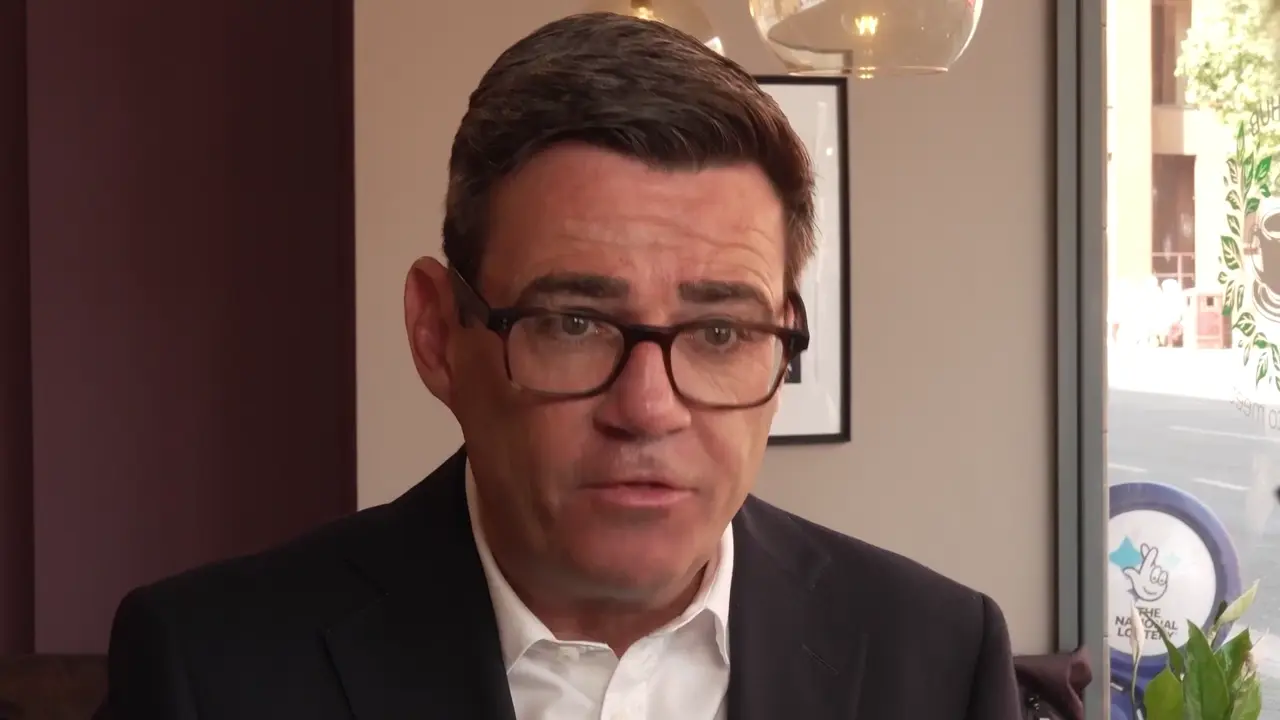
The new Prime Minister entered office promising to make Britain more stable, tackle the cost-of-living crisis and give people “breathing space”. He also pledged to end rough sleeping and deliver a radically different economic model.
But as autumn approaches, Burnham faces a problem that could expose the gap between political promises and economic reality.
Britain’s finances are under severe pressure.
Public services remain stretched.
Businesses are complaining about costs.
Households remain worried about bills.
And now the Government is confronting the prospect of another difficult winter at precisely the moment when voters will begin asking whether Burnham’s promised transformation is actually achievable.
The danger for the Prime Minister is not one spectacular crisis.
It is the possibility that several crises arrive simultaneously.
The winter test is already beginning
Burnham’s first weeks have been dominated by immediate emergencies.
This week, he chaired an emergency Cobra meeting as Britain experienced another severe heatwave, with drought, wildfires and extreme temperatures putting pressure on communities and public services. Reuters reported that around 45 million people were living in drought-affected regions, while health officials had recorded thousands of heat-related deaths during 2026.
That may sound like a summer problem.
It is not.
Extreme weather exposes weaknesses in Britain’s infrastructure that can become even more serious during winter.
Water shortages, ageing infrastructure, pressure on the NHS and fragile energy systems all raise questions about how prepared the country is for another difficult season.
Burnham cannot control the weather.
But voters will expect his Government to control the response.
And that is where the political danger begins.
The cost-of-living promise
Burnham deliberately made the cost of living one of the defining themes of his premiership.
At his first Cabinet meeting, he described his administration as a “cost-of-living government” and announced a cut to VAT on household electricity bills from October.
The policy is designed to provide households with some relief before winter.
But it also creates a political expectation.
If people still struggle to heat their homes, pay their mortgages or afford groceries, they will not necessarily credit the Government for a relatively modest reduction in one component of their bills.
They will simply ask:
Is my life getting better?
That is the brutal test facing Burnham.
A Prime Minister can announce dozens of policies.
A family opening its energy bill experiences only one reality.
The Treasury problem
Burnham’s biggest constraint may ultimately be financial.
In an interview with the BBC, he acknowledged that the Government has limited fiscal room and faces a difficult economic outlook. He nevertheless promised to help businesses and said his administration would maintain fiscal rules.
That creates an awkward balancing act.
Burnham wants to cut household costs.
He wants to rebuild public services.
He wants to construct more council housing.
He wants greater public control over essential services.
He wants to support British industry.
He wants to reform social care.
And he has made commitments on defence.
All of those objectives require money.
But the Government cannot simply spend without consequences.
Higher borrowing can push up financing costs.
Higher taxes can anger voters and businesses.
Spending cuts can damage public services.
And doing nothing can allow existing problems to become worse.
The Prime Minister therefore faces the classic problem of government:
everyone wants something, but somebody has to pay for it.
The looming social care battle
Social care could become one of the biggest political flashpoints.
Britain’s ageing population means demand for care is rising while councils and families face enormous financial pressure.
Burnham has indicated that he wants major changes to social care as part of his broader programme.
But reforming the system is extraordinarily expensive.
And if the Government decides that additional taxation is required, it risks contradicting its promise to protect working people from higher taxes.
Burnham has said he will not increase taxes on working people, but he has not ruled out other tax rises to fund social care reform.
That distinction may satisfy economists.
It may be less convincing to voters who see their overall tax burden rising.
The rough-sleeping pledge
Another potential winter crisis concerns homelessness.
On his first day as Prime Minister, Burnham promised to end rough sleeping in Britain and committed an additional £340 million to the effort.
It is an ambitious pledge.
But the Government is already being warned that the objective could be undermined by a growing number of people leaving prison without secure accommodation.
Nacro has reported that more than 15,000 people were released from prison without secure housing between April 2025 and March 2026, with the number increasing significantly compared with the previous year.
This creates an uncomfortable contradiction.
Burnham wants to reduce rough sleeping.
At the same time, the Government is releasing prisoners because of pressure on the prison estate.
If some of those people subsequently become homeless, the Government risks appearing to move people from one crisis to another.
And winter is when that contradiction becomes particularly visible.
The prison problem
Prisons represent another ticking time bomb.
The Government inherited a severely overcrowded prison system and has already used early release as one mechanism to relieve pressure.
That policy may reduce overcrowding in the short term.
But it carries political risks.
If released prisoners struggle to find housing or support, councils and charities may face additional pressure.
If someone released early subsequently commits a serious offence, the Government will face intense scrutiny.
And if the public begins to believe that criminal justice policy is being driven by a lack of prison capacity rather than principle, confidence in the system could fall.
Burnham therefore has to solve two problems simultaneously:
where to put prisoners, and what happens when they leave.
Neither can be ignored.
The NHS will be another winter battlefield
Then comes the NHS.
Every British government knows that winter places enormous pressure on hospitals.
Flu.
Respiratory illnesses.
Delayed discharges.
Staff shortages.
Emergency departments.
Ambulance services.
All of these problems become more acute during the colder months.
Burnham has promised a more preventative approach to public services, arguing that government should invest earlier rather than simply pay for crises later.
That is intellectually attractive.
But prevention takes time.
Winter arrives quickly.
The Prime Minister may therefore find himself judged on problems that began long before he entered Downing Street.
That will not necessarily matter politically.
Voters rarely distinguish between inherited problems and newly created ones.
They simply ask who is responsible now.
Reform will be waiting
And this is where Nigel Farage and Reform UK enter the story.
Every crisis Burnham fails to resolve gives Reform another weapon.
If energy bills remain high, Reform can attack Labour’s economic record.
If immigration remains high, Farage can argue that the Government has lost control of the borders.
If prisons remain overcrowded, Reform can attack law and order.
If homelessness rises, it can question Burnham’s competence.
If taxes rise, Reform can accuse Labour of breaking its promises.
The opposition does not have to solve these problems.
It merely has to convince voters that Burnham cannot.
That makes the winter particularly important.
A “winter of discontent” is more than a slogan
The phrase “winter of discontent” carries enormous political weight in Britain.
It evokes the industrial unrest of the late 1970s, when strikes and public-sector disruption contributed to a profound sense of national crisis.
Britain today is obviously not experiencing an identical situation.
But the phrase remains politically powerful because it describes something deeper than strikes.
It describes a public mood.
A feeling that things are not working.
A sense that government has lost control.
A belief that ordinary people are being asked to sacrifice while politicians continue making promises.
That is precisely the mood Burnham must prevent.
His greatest advantage
Yet Burnham has one significant advantage.
He has only just arrived.
Voters know that he inherited many of these problems.
He can therefore argue that fundamental reform takes time.
Indeed, his first speech explicitly acknowledged that Britain had suffered years of instability and decline and promised a ten-year plan for national renewal.
That gives him some political breathing space.
But it also creates a contradiction.
If Burnham tells voters that change will take ten years, they may reasonably ask what happens during the next six months.
People cannot wait ten years for affordable energy.
They cannot wait ten years for a hospital appointment.
They cannot wait ten years for a home.
And someone sleeping on the street certainly cannot wait ten years.
The Prime Minister therefore needs immediate victories while simultaneously pursuing long-term reform.
That is an exceptionally difficult political task.
The danger of overpromising
Perhaps the biggest threat to Burnham is therefore not the winter itself.
It is the expectations he has created.
He promised a “circuit breaker” for Britain.
He promised the biggest changes in forty years.
He promised a new economic model.
He promised to put essential services under stronger public control.
He promised to end rough sleeping.
He promised help with the cost of living.
Those are enormous commitments.
If even some fail to materialise, his opponents will portray them as evidence that Burnham was simply another politician making grand promises.
That would be particularly damaging because his entire political identity is based on offering something different from the previous Labour government.
The coming months will decide the narrative
Burnham therefore needs to get through the winter without allowing several separate problems to merge into one narrative of failure.
That means controlling the economy.
Keeping energy costs manageable.
Protecting the NHS.
Maintaining public order.
Managing immigration.
Preventing homelessness.
Keeping businesses alive.
And, crucially, maintaining confidence in his Government’s ability to pay for its programme.
That is an enormous list.
But politics is unforgiving.
Voters do not judge governments according to how difficult their circumstances were.
They judge whether the government appeared capable of handling them.
Burnham knows that.
He came into Downing Street promising stability after years of political turbulence.
Now he has to prove that his Government can withstand the first major test of its authority.
The heatwave may have been the summer crisis.
The winter could bring another set of challenges entirely.
And if energy bills, NHS pressure, homelessness, prison overcrowding, taxation and economic anxiety all collide at once, Burnham could face the most difficult few months of his young premiership.
That is why the phrase “winter of discontent” is beginning to acquire a new political relevance.
The Prime Minister does not need to fear the cold.
He needs to fear the public mood.
Because if millions of voters reach December believing that their bills are still too high, their services are still failing and their Government is still making promises it cannot afford, Nigel Farage will be waiting to tell them exactly who he thinks is to blame.
Burnham has promised to bring hope back to Britain.
This winter will test whether he can turn that promise into something people can actually feel.
Leave a Reply
You must be logged in to post a comment.