
Reform Accuse Andy Burnham of “Bunking Off for a Jolly Abroad” After Just Two Weeks
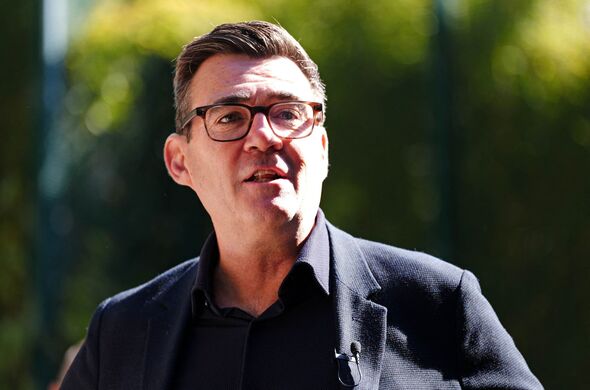
Andy Burnham has been hit by a furious political backlash after taking an overseas holiday little more than two weeks after entering Downing Street, with Reform UK accusing the new Prime Minister of abandoning the country at a critical moment.
Burnham became Prime Minister on July 20 and left for a family holiday in early August. Officials said he would remain in contact with government figures and continue working while away, insisting that the machinery of government would operate normally.
But Reform seized on the timing.

Lee Anderson, the party chairman, accused Burnham of having “had enough” after only two weeks in the job and described the trip as a “jolly abroad”. Reform deputy leader Richard Tice similarly attacked the Prime Minister, arguing that Britain was facing serious problems while Burnham was away.
The row has created an immediate political headache for Burnham.
It is not simply about whether a Prime Minister is entitled to take a holiday.
It is about optics, timing and leadership.
And for a new government that has spent its first weeks promising a dramatic political reset, the sight of its Prime Minister leaving the country so soon after entering Downing Street was always going to attract criticism.
Two weeks into the biggest job in Britain
Burnham entered No 10 with enormous expectations.
His arrival was presented as a break with the previous political era and an opportunity to reset Labour’s relationship with the electorate.
During his first fortnight, he announced a series of ambitious measures, including plans involving energy bills, rough sleeping, bus fares, pubs, social care and illegal migration. He also announced changes to the prison early-release system.
That is an enormous amount of political activity for any new administration.
Burnham’s allies therefore argue that the holiday was not evidence of laziness or indifference.
They say it was a long-planned family break following an exhausting leadership campaign and election period.
There is also a practical argument.
The House of Commons is in its summer recess.
Parliament is not sitting.
Prime ministers have traditionally taken holidays during the summer, provided arrangements are made for government business to continue.
Former Prime Ministers including Tony Blair and Theresa May took summer breaks while in office.
Burnham is therefore not breaking some constitutional rule by going away.
The question is whether he made the right political calculation.
Reform sees an opportunity
For Reform UK, the answer is obvious.
No.
The party has made Burnham’s absence into a symbol of what it describes as a weak government.
Anderson argued that Burnham had already made a series of “unfunded commitments” while migrant crossings remained a major issue.
That is a particularly effective attack for Reform because immigration is one of the party’s strongest political weapons.
The party wants voters to believe that Labour is incapable of controlling Britain’s borders.
If Burnham is seen leaving Britain shortly after promising tougher action on small boats, Reform can portray the episode as evidence that his priorities are misplaced.
That may be unfair.
But politics is not always about fairness.
It is about perception.
And the image of a new Prime Minister taking an overseas holiday after only a fortnight in office is extremely easy for opponents to exploit.
Is a Prime Minister ever really “off duty”?
There is another interesting issue at the heart of the controversy.
Can a British Prime Minister actually go on holiday?
Technically, yes.
But the job does not stop.
Burnham’s officials said he would remain in contact while abroad and continue government business.
That means this is better described as a working holiday than a complete absence from office.
The Prime Minister remains responsible for national security.
He can be briefed on emergencies.
He can speak to ministers.
And if a major crisis develops, he can be expected to respond.
Britain does not have a constitutional requirement for a deputy prime minister or caretaker prime minister to take over whenever the PM goes abroad.
Burnham appointed Louise Haigh as First Secretary of State rather than formally appointing a Deputy Prime Minister. Her position gives her a senior coordinating role while he is away.
So the Government has not simply been left leaderless.
But that does not eliminate the political criticism.
The “serious leader” question
Reform’s most damaging argument is not that Burnham has technically abandoned his duties.
It is that a serious leader should perhaps have waited.
That is a question of judgement.
A Prime Minister who has spent years campaigning for the top job has only just received the keys to Downing Street.
His government is under enormous scrutiny.
His first parliamentary appearances have barely begun.
His policies are being examined.
His opponents are looking for weaknesses.
And voters are deciding whether the new administration represents genuine change.
Against that background, going abroad so quickly gives critics an opportunity to ask whether Burnham understands the symbolic importance of his new position.
That does not mean the Prime Minister should never take a holiday.
It means that the timing matters.
A week or two can make a significant difference to political perception.
But the attack has a weakness
There is an obvious problem with Reform’s criticism.
Prime ministers are human beings.
They have families.
They need rest.
And the summer parliamentary recess exists partly because political life slows down during this period.
Conservative leader Kemi Badenoch refused to attack Burnham over the holiday.
She said she was not going to criticise a politician for taking a break, pointing out that children were on their school holidays and that she hoped everyone would be able to take some time off.
That response is politically significant.
Badenoch could easily have joined Reform’s attack.
Instead, she chose not to.
That leaves Reform looking more aggressive than the Conservatives on an issue that may not necessarily resonate with ordinary voters.
After all, many people take their annual holiday during the summer.
They may not instinctively resent a politician doing the same.
The criticism becomes more powerful only if voters believe Burnham’s absence has affected government decisions or that the country was facing an emergency that required him to remain in Downing Street.
The real test is what happens next
Ultimately, Burnham’s holiday will matter much less than what he does after returning.
If his government delivers on its promises, the controversy will probably fade.
If the economy improves, public services perform better and immigration falls, few voters will care that he spent several days abroad in August.
But if problems emerge, the holiday will be remembered differently.
Opponents will say that Burnham was distracted.
They will remind voters that he was away after only two weeks.
They will point to every crisis and ask whether the Prime Minister was paying attention.
That is why the optics matter.
A new Prime Minister does not get unlimited opportunities to establish an image.
Burnham is trying to present himself as a decisive leader who understands the pressures facing ordinary people.
He therefore needs to demonstrate that he is in control.
Immigration makes the criticism sharper
The issue is particularly sensitive because of Reform’s focus on Channel crossings.
Anderson accused Burnham of disappearing abroad while more than 2,000 illegal migrants had crossed into Britain during the early part of his premiership.
Whether the precise political interpretation is justified or not, the underlying issue is real.
Immigration was one of the biggest reasons Reform gained support.
Burnham cannot afford to appear complacent.
His Government has promised to tackle small-boat crossings, but Reform will judge him by the numbers rather than the announcements.
Every successful crossing gives Farage and Anderson another opportunity to claim that Labour’s policies are failing.
That makes the Prime Minister’s early weeks particularly important.
Burnham’s first real political test
The holiday controversy is therefore part of a much bigger battle.
Burnham needs to prove that his government can deliver.
He has made ambitious commitments.
Now voters will ask how they will be paid for.
He has promised action on immigration.
Now voters will expect results.
He has promised improvements to public services.
Now they will want to see shorter waits and better outcomes.
He has promised a different kind of Labour government.
Now he must demonstrate what that actually means.
This is why Reform’s attack is politically clever.
It connects the holiday to everything else.
The argument becomes:
The Prime Minister has made big promises, but is he actually serious about delivering them?
That is much more damaging than simply saying that Burnham should not take annual leave.
A dangerous narrative for Labour
Burnham should therefore be careful about allowing the controversy to grow.
The longer the story remains about his holiday, the harder it becomes for Labour to control the political agenda.
The Government needs to move the conversation back towards its programme.
It needs to show activity.
It needs to demonstrate progress.
And it needs to make clear that Burnham’s absence has not slowed decision-making.
The best answer to Reform’s criticism is not an angry response.
It is delivery.
If Burnham returns from his holiday and immediately demonstrates control over the government’s agenda, Reform’s attack will look increasingly petty.
If the Government appears confused or divided, the criticism will gain credibility.
That is the political calculation.
The bigger battle with Farage
There is also a wider reason why Reform is so eager to attack Burnham.
Farage’s party is fighting for the position of Britain’s main alternative to Labour.
Every sign of weakness from Burnham is an opportunity.
Every unpopular policy is ammunition.
Every internal Labour disagreement is evidence for Reform’s argument that the establishment cannot govern effectively.
Burnham therefore cannot afford to treat Reform as merely a noisy opposition party.
It has become a serious electoral threat.
Recent polling has shown significant movement between Labour and Reform, reinforcing how volatile Britain’s political landscape has become.
The Government’s task is to ensure that voters judge it on its achievements rather than Reform’s attacks.
Holiday or political mistake?
There is no convincing evidence that Burnham has stopped governing simply because he is abroad.
Officials have said he remains in contact.
The Government continues to function.
And British Prime Ministers have historically taken holidays during parliamentary recess.
So the accusation that Burnham has literally abandoned his responsibilities is overstated.
But politics is about more than constitutional technicalities.
The question is whether the Prime Minister made a smart political choice.
After only two weeks in Downing Street, with a mountain of promises to fulfil and Reform looking for every opportunity to attack him, Burnham arguably gave his opponents an unnecessary weapon.
That may be the real lesson.
A Prime Minister is entitled to a holiday.
But a new Prime Minister is also responsible for managing the political symbolism surrounding that holiday.
Burnham has now been warned.
Reform will scrutinise every move.
Farage and Anderson will attack every weakness.
And the Government will be judged not only on what it promises but on whether it looks capable of delivering.
For Burnham, the holiday itself may soon be forgotten.
But the political test that awaits him when he returns will not be.
He now has to prove that he is not merely a new Prime Minister — but a Prime Minister firmly in control.
Leave a Reply
You must be logged in to post a comment.