
Farage Rages Police Chiefs Are Turning UK Into Communist Russia After Polanski Decision
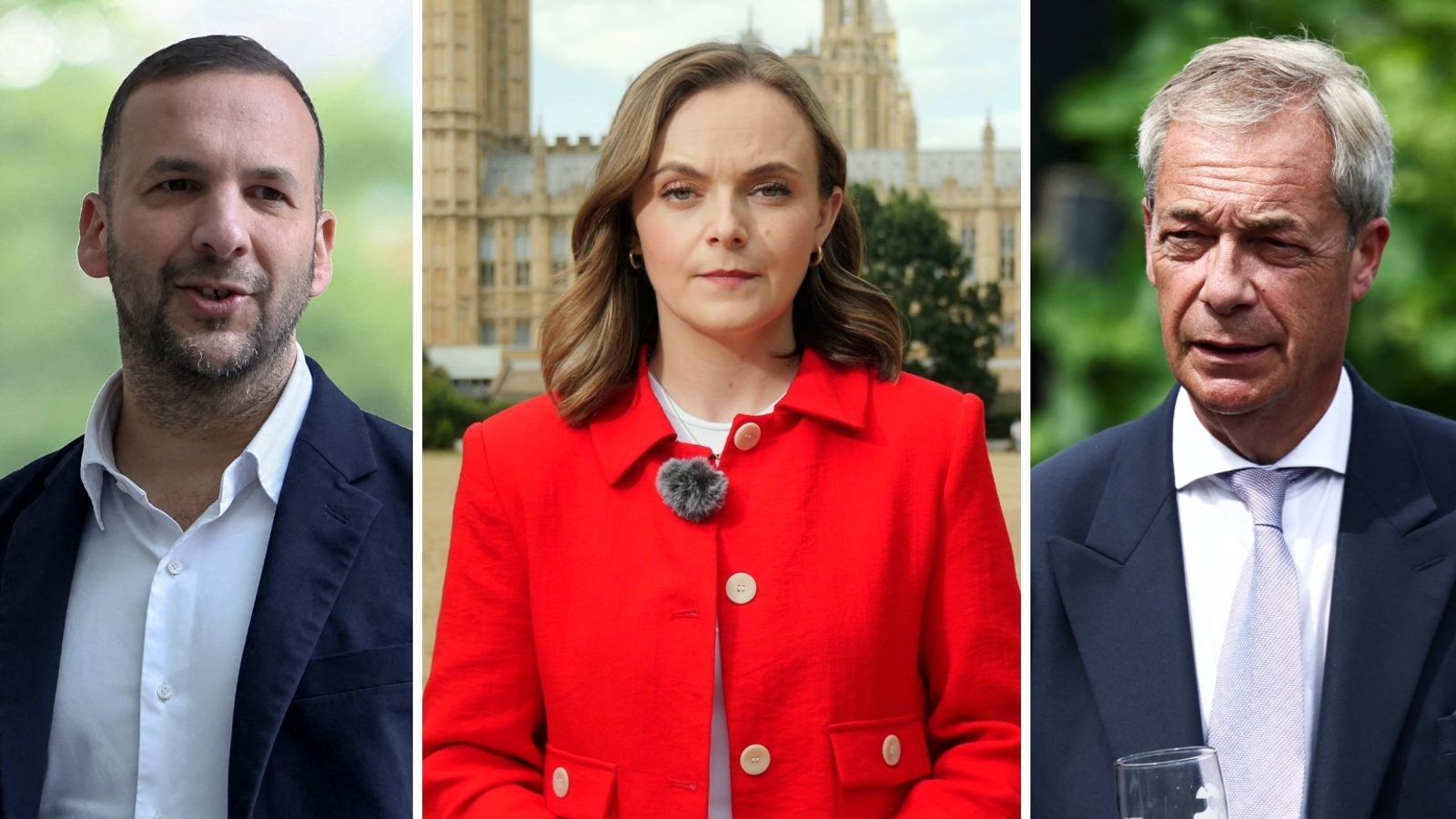
Nigel Farage has launched another furious attack on Britain’s policing system after officers decided to take no further action against Green Party leader Zack Polanski over a controversial social media image.
The Reform UK leader has seized on the decision as further evidence of what he describes as a deeply troubling double standard in British policing.

For Farage, the issue is much bigger than one Instagram post.
He argues that Britain is developing a political culture in which ordinary people can find themselves investigated over controversial speech while politicians on the opposite side of the political divide appear to escape similar scrutiny.
His language has been deliberately explosive.
Farage has compared the direction of British policing to authoritarian states, including Communist Russia, warning that the country risks moving towards a system in which political expression is increasingly monitored and controlled.
Whether that comparison is justified is fiercely disputed.
But the political argument behind it is becoming increasingly important.
The controversy began when Polanski was involved in a collaborative Instagram post containing an image of a man wearing a T-shirt featuring a guillotine and the words “We’re only making plans for Nigel”.
The phrase was a reference to the 1979 song “Making Plans for Nigel” by XTC, but the presence of the guillotine immediately transformed the image into a political controversy because it appeared alongside Farage’s name.
Farage reacted angrily.
He argued that the image amounted to incitement and said that if he had posted something similarly inflammatory, he would expect the police to investigate him.
Reform UK subsequently reported Polanski to police.
The Metropolitan Police confirmed that officers were making enquiries and said that reports of this nature were taken seriously.
Polanski, however, maintained that he had not intended to endorse the image.
The Green Party said he had accepted a collaboration request for a larger collection of photographs from an event and had not noticed the controversial image. Once it was brought to his attention, the post was removed.
The party also stated that Polanski did not support the message represented by the T-shirt.
That might have been the end of the story.
Instead, it became another front in Britain’s increasingly bitter culture war.
The police investigation eventually concluded that the threshold for criminal action had not been met.
The Met considered possible offences including telecommunications and public-order offences as well as incitement, but concluded that no further criminal action against Polanski was appropriate.
For Farage, however, the decision was not evidence that the system had worked.
He saw it as evidence of the opposite.
Reform politicians revived their accusations of “two-tier policing”, arguing that the authorities would have reacted differently if the political circumstances had been reversed.
That claim is at the heart of Farage’s broader argument.
He believes that Britain’s police forces are increasingly being pulled into political disputes over speech, protest and online expression.
The police reject the idea that they are simply enforcing a political agenda.
And there is an important distinction that must not be lost.
The fact that police investigate a complaint does not mean that they believe the person has committed a crime.
Police routinely assess allegations, examine evidence and then decide whether the legal threshold for action has been met.
That is precisely what appears to have happened in the Polanski case.
A complaint was made.
Officers investigated.
The relevant offences were considered.
And no further action was taken against Polanski.
That process is not, by itself, evidence of political bias.
But Farage’s argument concerns something broader than this single decision.
He points to what he sees as a pattern of British authorities becoming increasingly involved in disputes over controversial online speech.
That concern has resonated with many voters.
Britain does not have an American-style First Amendment.
Its legal framework allows restrictions on certain forms of speech, including communications that cross into criminal threats, harassment, incitement or other offences.
The challenge is deciding where legitimate political expression ends and criminal conduct begins.
That boundary has become increasingly difficult to police in the age of social media.
A provocative joke can be seen by millions of people within minutes.
A political meme can be interpreted in completely different ways by different audiences.
A photograph can be reposted without the person sharing it necessarily endorsing every element within it.
And a slogan that was originally intended as humour can suddenly acquire a threatening meaning when placed in a particular political context.
That is precisely why the Polanski controversy became so complicated.
Was the image genuinely threatening?
Was it political satire?
Was it simply tasteless?
Or was it something that should have triggered criminal investigation?
The police ultimately decided that it did not meet the threshold for criminal action against Polanski.
But the debate over whether they were right is unlikely to disappear.
Farage has built much of his political identity around opposition to what he regards as the expansion of state power.
He has repeatedly argued that Britain is becoming less tolerant of controversial opinions and that institutions such as the police are increasingly being asked to police speech rather than crime.
That argument has helped Reform distinguish itself from the established parties.
It also allows Farage to connect apparently unrelated controversies into a larger political narrative.
Immigration.
Protest.
Online speech.
Political correctness.
Police powers.
Free expression.
All can be presented as parts of the same story: an establishment allegedly becoming increasingly hostile to dissent.
His supporters find that argument compelling.
Critics see it very differently.
They argue that Farage frequently exaggerates isolated incidents in order to create a broader sense of institutional persecution.
They point out that the police did investigate the Polanski complaint, precisely because allegations involving threats or incitement cannot simply be ignored.
And ultimately, the police concluded that there was insufficient basis for criminal action.
That is not necessarily evidence of bias.
Indeed, one could make the opposite argument.
The investigation demonstrated that a complaint could be taken seriously while still ending without an arrest or prosecution.
But this is where political perception becomes more powerful than legal technicalities.
If voters believe that the police treat different political groups differently, confidence in the justice system can deteriorate even when individual investigations are conducted properly.
That is why accusations of “two-tier policing” are politically dangerous.
The police depend on public trust.
They need people to believe that officers apply the law fairly regardless of political identity.
If large numbers of voters believe that certain opinions receive preferential treatment while others attract disproportionate scrutiny, the legitimacy of policing itself can suffer.
Farage understands that perfectly.
His response to the Polanski decision therefore serves another political purpose.
It reinforces his central message to Reform supporters: that the political establishment cannot be trusted to treat everyone equally.
This is particularly important as Reform attempts to establish itself as a potential governing party.
Farage is no longer simply an outsider attacking Westminster.
He is presenting himself as someone who could fundamentally change how Britain is governed.
That makes his arguments about policing and free speech increasingly significant.
If Reform eventually wins power, voters will expect Farage to translate those arguments into policy.
Would a Reform government restrict police involvement in controversial speech?
Would it change Britain’s laws governing online communications?
Would it introduce stronger protections for political expression?
Would it reform police leadership?
Would it establish new rules governing how officers respond to complaints about politicians?
These are much harder questions than simply criticising the existing system.
Governments have to balance freedom of expression against public safety.
They have to protect politicians from genuine threats without criminalising legitimate criticism.
They have to prevent harassment and incitement while allowing people to express unpopular political opinions.
There is no perfect formula.
And the internet makes the problem even harder.
The Polanski controversy illustrates the difficulty perfectly.
A politician was connected to an image containing a guillotine and his rival’s name.
The image was removed after it was brought to his attention.
The police investigated.
And no criminal action was taken against him.
Reasonable people can disagree about whether the investigation was necessary.
But the key question is whether the police reached their conclusion according to evidence and law rather than political pressure.
That is something that should concern everyone.
Not only Reform supporters.
Not only Green voters.
Everyone.
Because once police forces become perceived as instruments of political competition, trust begins to disappear.
Farage’s “Communist Russia” comparison is deliberately provocative, and Britain is plainly not a communist dictatorship. Political opponents remain free to campaign, criticise the government and challenge institutions.
But the underlying warning about civil liberties deserves to be debated seriously.
A democratic society must be able to tolerate political speech that is offensive, provocative or unpopular.
At the same time, political freedom cannot provide unlimited protection for genuine threats or incitement to violence.
The difficult task is drawing the line.
That is why the Polanski decision matters.
It forces Britain to confront a question that will become increasingly important as political conflict intensifies: how much controversial speech should the police be expected to investigate?
Farage wants the answer to be much less.
His opponents fear that weakening enforcement could create greater risks for politicians and members of the public.
Both concerns are legitimate.
The danger lies in allowing political parties to turn every police decision into proof that the system is either biased or corrupt.
Police officers should not be expected to settle Britain’s political arguments.
They should enforce the law.
Politicians should argue about whether the law itself is appropriate.
That distinction is essential.
For now, the Polanski affair has ended without criminal action against the Green Party leader.
But politically, it is far from over.
Farage has turned the decision into another battle over free speech, policing and political neutrality.
His warning is dramatic.
His critics believe it is exaggerated.
Yet the underlying issue is real.
Britain must decide how it wants its police to respond to the increasingly blurred boundary between political speech, online provocation and genuine threats.
If the police are too aggressive, they risk becoming accused of policing opinions.
If they are too passive, they risk missing genuine threats.
And if politicians continually pressure officers to act against their opponents, public confidence could be damaged even further.
The Polanski case therefore represents more than a dispute between Nigel Farage and Zack Polanski.
It is another chapter in Britain’s increasingly intense argument about free speech and state power.
Farage has made his position clear.
He believes Britain is heading in the wrong direction.
Whether voters agree with his dramatic comparison to Communist Russia is another matter entirely.
But as Britain’s political divisions deepen, the question he has raised will not disappear.
Who decides where political expression ends and criminal behaviour begins?
And, perhaps even more importantly, can the British public continue to trust that the answer will be the same whoever is speaking?