


Brexit Fury as New Minister Admits Labour Is About to Drag Britain Closer to the EU Under Burnham
Britain’s Brexit debate has erupted once again, only weeks after Andy Burnham entered Downing Street promising to bring stability to a country exhausted by years of political turmoil.
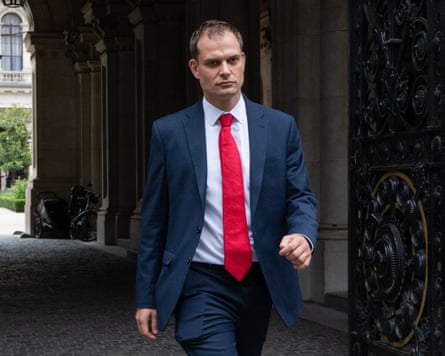
The appointment of Hamish Falconer as the new minister responsible for European relations has sent an unmistakable signal about the direction of the new Labour government. Falconer has openly argued for a deeper and more ambitious relationship between Britain and the European Union, raising fresh fears among Brexit supporters that the government is preparing to move Britain steadily closer to Brussels.
For many Leave voters, this will sound like a familiar nightmare.
They were promised in 2016 that Britain would regain control over its laws, borders and trade policy. Brexit was presented as a historic opportunity to establish a more independent Britain, free from the political structures of the European Union. Yet a decade later, the political argument has not disappeared.
Instead, it has returned with a new Labour prime minister.
Burnham’s government insists that it has no intention of simply reversing Brexit. Labour continues to reject British membership of the EU single market and customs union, while free movement is also firmly outside the government’s stated ambitions.
But critics are increasingly asking a different question.
What if Brexit is not formally reversed, but gradually weakened?
That is the fear behind the latest political backlash.
Falconer has made clear that the government wants to accelerate the post-Brexit “reset” with the EU. His ambitions include greater cooperation in areas such as services, energy, security and technology, while the government is also exploring measures that could make it easier for people to work and study across Britain and Europe. Discussions around mutual recognition of professional qualifications and youth mobility are particularly significant.
To supporters, this is simply common sense.
Britain’s largest neighbouring economic bloc remains enormously important to British businesses. Any reduction in unnecessary barriers could potentially help exporters, universities, employers and workers. After years of disruption caused by Brexit, closer practical cooperation could make trade and movement easier without requiring Britain to rejoin the EU.
But to Brexit supporters, the distinction may not be convincing.
They fear that small agreements accumulated over several years could eventually create a relationship that looks increasingly similar to EU membership without the UK formally becoming a member.
That is why the appointment of Falconer matters.
The new minister is not merely proposing to maintain the existing relationship. He has described the ambition as making the relationship “deeper” and more effective. The government appears determined to move faster than the previous administration, which struggled to make substantial progress on several parts of the Brexit reset.
The political implications for Burnham could be enormous.
The prime minister has attempted to present himself as a politician who understands communities outside Westminster. His political identity was shaped in Greater Manchester, where he became a powerful advocate of regional government and greater economic independence for English cities.
Now he must answer a much bigger question: what does independence mean in a post-Brexit Britain?
For Burnham, closer cooperation with Europe could be presented as a practical rather than ideological decision.
He can argue that Britain does not need to choose between Brexit and European cooperation. The country can remain outside the EU while rebuilding economic and political relationships that were damaged by the UK’s departure.
But this argument will not satisfy everyone.
Brexit has never been purely about economics. For many voters, it was about sovereignty, identity and political control. The referendum was fought around the fundamental question of who should make Britain’s laws and determine its future.
Any policy that appears to transfer influence back towards Brussels therefore risks reopening those emotional divisions.
And Burnham knows this.
His political opponents will almost certainly accuse Labour of pursuing a “Brexit by stealth”. They will argue that the government is gradually dismantling the practical consequences of leaving the EU while avoiding the political cost of openly calling for Britain to rejoin.
That accusation could become particularly powerful if the government eventually agrees to arrangements involving greater mobility or regulatory alignment.
Labour will respond that cooperation is not the same thing as membership.
And technically, that is correct.
A country can cooperate with the EU without being a member. Britain already does so in numerous areas. Security cooperation, scientific research, energy policy and trade arrangements can all be negotiated independently.
The real political question is how far that cooperation should go.
This is where Falconer’s role becomes crucial.
The new minister has indicated that he wants to approach negotiations from the perspective of practical benefits for British communities. He has even referred to Burnham’s “Makerfield test” — essentially the idea that international agreements should be judged according to whether they deliver tangible benefits to working people.
That is a politically clever strategy.
Rather than discussing Europe in abstract ideological terms, Labour can talk about jobs, wages, exports, energy prices and opportunities for young people.
Instead of saying, “We want Britain closer to the EU,” the government can say, “We want British businesses to face fewer barriers when selling to European customers.”
The language matters.
Yet the political reality remains that Britain is moving into a new phase of the Brexit debate.
Under the previous government, the European reset was cautious and deliberately limited. Burnham’s arrival appears to have created greater political space for Labour to pursue a more ambitious relationship.
That does not necessarily mean Britain will rejoin the EU.
In fact, the immediate evidence points in the opposite direction.
Labour continues to reject membership of the single market and customs union, and there is no immediate proposal to restore unrestricted free movement.
Nevertheless, the direction of travel is unmistakable.
Britain is being encouraged to cooperate more closely with Europe in an expanding number of areas.
And that is precisely what has triggered the latest Brexit fury.
The question is whether voters will see this as a betrayal or simply as a sensible attempt to repair Britain’s relationship with its closest neighbours.
Much will depend on the economic results.
If closer cooperation produces more exports, lower costs and greater opportunities for British workers, Burnham will have a powerful argument. He can say that his government is not undoing Brexit but fixing some of its practical consequences.
If, however, voters perceive European cooperation as creating new obligations without delivering clear benefits, the political backlash could be severe.
There is another danger for Labour.
The party could find itself trapped between two electorates.
Younger voters are generally more supportive of closer European relations, while many older and traditionally working-class voters were central to the Leave coalition. Labour needs both groups if it wants to maintain a broad electoral coalition.
Moving too far towards Brussels could alienate Brexit-supporting voters who have historically been suspicious of Labour’s European instincts.
Moving too slowly could frustrate younger, pro-European voters who believe Brexit has damaged Britain’s economic and international position.
Burnham therefore faces a delicate balancing act.
He must demonstrate that Britain can cooperate with Europe without surrendering sovereignty.
That may sound straightforward, but politics rarely is.
The European Union will also have its own demands. Brussels is unlikely to offer Britain every benefit of membership without asking for concessions in return. The more closely Britain wants to integrate with European systems, the more complicated negotiations are likely to become.
This means Burnham cannot simply announce that Britain wants a closer relationship and expect the EU to provide it on British terms.
There will be negotiations.
There will be compromises.
And there will almost certainly be political battles at home.
That is why the coming months could determine the character of Burnham’s premiership.
If he succeeds, he could create a new settlement in which Britain remains outside the EU but maintains much stronger economic and strategic links with Europe.
Such an arrangement could eventually move the Brexit debate away from the old question of “Leave or Remain” and towards a more practical question: what kind of relationship should an independent Britain have with the European Union?
But if the government moves too quickly, Brexit could once again dominate British politics.
The opposition will seize on every concession. Brexit campaigners will accuse Labour of ignoring the referendum. Pro-European politicians will argue that Burnham is still being too cautious.
In other words, Burnham may discover that Brexit is not a problem Britain can simply leave behind.
It is a political fault line that continues to run through the country.
The new government has chosen to reopen the relationship with Europe. Falconer’s appointment and his comments make that clear.
But closer cooperation does not automatically mean Brexit is being reversed.
The crucial distinction will be whether Burnham can persuade voters that European cooperation strengthens Britain rather than weakens it.
That will be his greatest political challenge.
For Brexit supporters, the warning signs are already obvious: a new minister is openly talking about a deeper relationship with the EU, and the government wants to accelerate negotiations.
For Burnham, however, the argument is likely to be very different.
He will insist that Britain can remain sovereign while working more closely with its neighbours.
The next chapter of Brexit is therefore unlikely to be about a dramatic return to the European Union.
It may be something far more subtle.
Britain could remain formally outside the EU while gradually rebuilding many of the economic, diplomatic and social connections that Brexit disrupted.
Whether that represents sensible pragmatism or a slow-motion reversal of Brexit will depend largely on whom you ask.
But one thing is already certain.
The Brexit argument is back — and this time, Andy Burnham is sitting in Downing Street at the centre of it.