

Andy Burnham Demands ‘All Parts of the Country’ Have Homes for Asylum Seekers

Andy Burnham has reignited Britain’s increasingly bitter immigration debate by insisting that “all parts of the country” must play their part in housing refugees and asylum seekers.
The Prime Minister’s intervention comes as the government attempts to move away from its reliance on asylum hotels, while pressure continues over how asylum accommodation is distributed across Britain. Burnham argues that it cannot be fair for the burden to fall disproportionately on poorer communities.
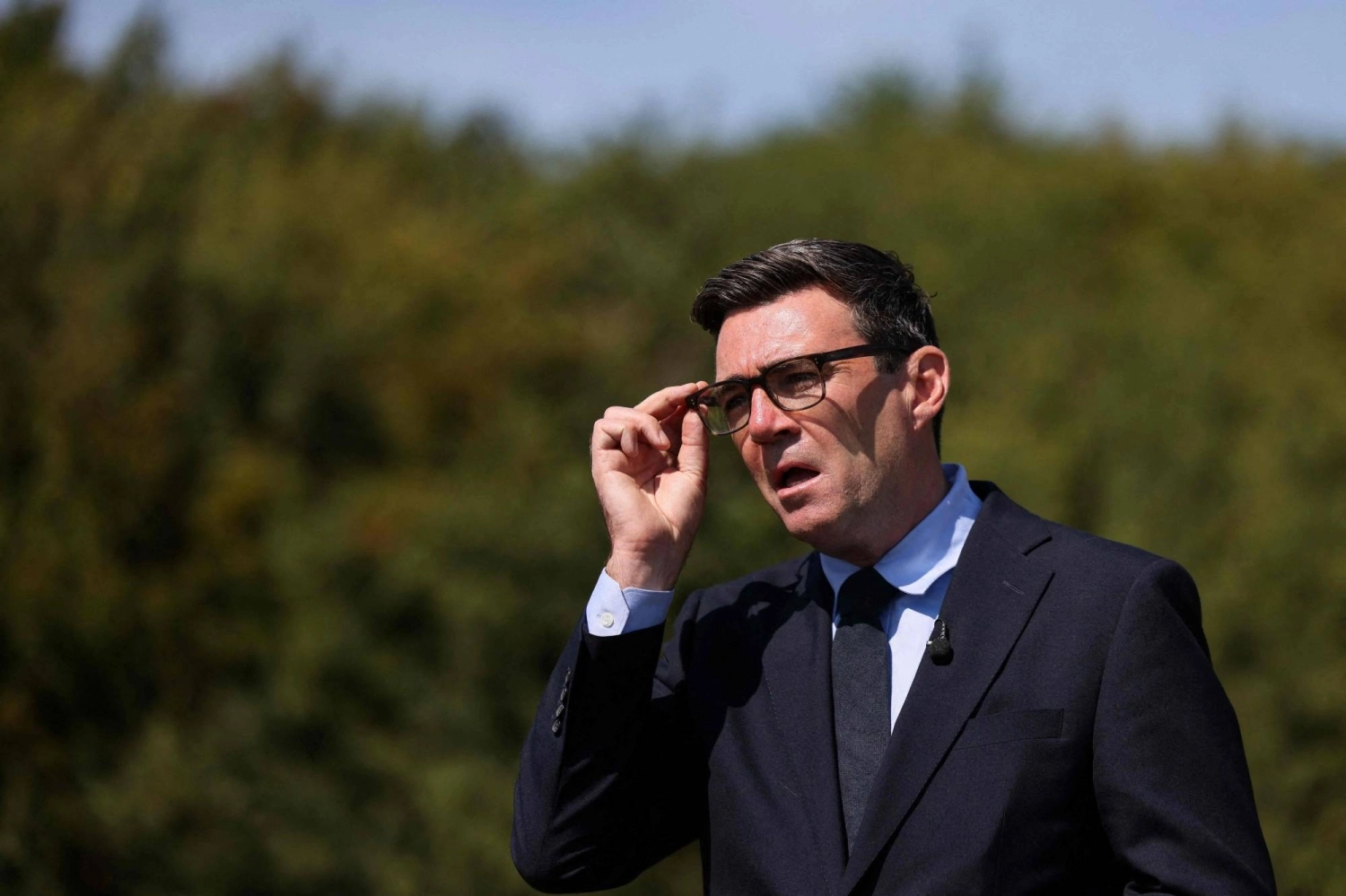
But his words have immediately created a political problem.
For many voters, the argument is not primarily about whether wealthy areas are doing enough. It is about whether Britain is accepting too many asylum seekers in the first place.
That distinction could prove crucial for Burnham.
Burnham’s message is about fairness
Burnham has been explicit about his reasoning.
He says Britain cannot have a situation where only the poorest communities receive the bulk of asylum dispersal, arguing that every part of the country should contribute.
There is a straightforward argument behind this.
If asylum accommodation is concentrated in towns where property is cheaper, those communities can end up carrying a disproportionate share of the financial and social consequences of national immigration policy.
Burnham himself has previously pointed to places such as Oldham, Rochdale and Stoke, arguing that earlier governments effectively followed the question: where is accommodation cheapest? That approach naturally directed asylum accommodation towards areas with lower housing costs.
His answer is to create a more balanced system.
In principle, that sounds reasonable.
But politics rarely ends with the principle.
The question Burnham cannot escape
The immediate response from critics is brutally simple:
Why should Britain be distributing asylum seekers more widely instead of reducing the number arriving?
That is the question Reform UK will relentlessly put to the government.
It is also a question that resonates beyond Reform’s traditional support base.
Many voters are not necessarily opposed to helping genuine refugees.
But they are increasingly concerned about the scale of migration, the cost of accommodation and the continuing arrival of people across the English Channel.
The government can therefore talk about fairness between different parts of Britain.
But voters may be asking about something much more fundamental:
When will the numbers come down?
The hotel problem
Burnham’s announcement also comes as Labour attempts to fulfil its pledge to end the use of asylum hotels.
The government has already closed dozens of hotels this year, with 44 reportedly shut by August and nearly 200 still involved in the wider system.
Ending hotel use has obvious attractions.
Hotels are highly visible.
They have become symbols of the asylum system.
They can be expensive for taxpayers.
And their presence has generated protests and political controversy in communities across England.
But closing hotels does not make asylum seekers disappear.
They have to be accommodated somewhere else.
That means the government is effectively facing a huge logistical exercise: finding alternative accommodation while continuing to process asylum claims.
From hotels to houses and barracks
The alternatives include houses in multiple occupation, other forms of dispersal accommodation and former military facilities.
The government argues that these arrangements can be cheaper and less disruptive than maintaining large numbers of hotels.
But there is an obvious problem.
Moving people from hotels into houses does not resolve the underlying immigration pressure.
It simply changes the location and appearance of the accommodation system.
That is why Burnham’s intervention risks being interpreted as an admission that the government expects asylum accommodation to remain a major part of British life.
Piddington has become the symbol
Few places illustrate the controversy better than Piddington in Oxfordshire.
The tiny village has fewer than 400 residents, yet plans have been discussed for accommodating around 1,250 single adult male asylum seekers at a nearby former Ministry of Defence site.
The scale of the proposed accommodation has provoked fierce local opposition.
Residents have even held a symbolic referendum on seceding from the United Kingdom in protest.
The episode may sound extraordinary, but it demonstrates the enormous gap between Westminster’s language about “fair distribution” and the experience of individual communities suddenly being asked to accommodate a large number of newcomers.
Is this really about class?
Burnham’s use of the term “poorest communities” has inevitably made this a class issue.
His critics can portray the policy as the Prime Minister telling middle-class families that they have been enjoying comfortable lives while poorer communities deal with the consequences of immigration.
That is politically dangerous.
Affluent communities may have more financial resources, but that does not necessarily mean they have unlimited capacity.
A rural village may have fewer buses, limited healthcare, inadequate public transport and little spare housing.
A wealthy neighbourhood can still be completely unsuitable for a large asylum accommodation facility.
Income is not the same as infrastructure.
That is a point Burnham will need to address.
The argument in his favour
Yet there is a strong counterargument.
Why should the availability of cheap accommodation determine where asylum seekers live?
If the national government believes that people seeking protection must be accommodated while their claims are processed, it is arguably unfair to concentrate them almost exclusively in poorer areas simply because property is cheaper there.
The figures cited by the Guardian illustrate the imbalance: asylum seekers were reported to make up about 0.29 per cent of the population in England’s most deprived local authorities, compared with 0.05 per cent in the least deprived.
That is a significant difference.
Burnham can therefore argue that his policy is not about forcing wealthy people to “take migrants”.
It is about ensuring that the consequences of a national government policy are shared nationally.
But there is a huge political weakness
The weakness is that Burnham’s policy begins after people have already arrived.
It does not stop the Channel crossings.
It does not dismantle smuggling networks.
It does not automatically accelerate asylum decisions.
And it does not guarantee that people whose claims fail will leave Britain quickly.
That is why the policy gives Reform UK such an easy target.
Nigel Farage can argue that the government is debating where to put migrants rather than how to prevent illegal crossings.
Whether that description is entirely fair is almost beside the point.
Politically, it is a devastatingly simple message.
The government needs two policies, not one
Burnham should therefore be careful not to present dispersal as the solution to Britain’s immigration problem.
It is, at most, a solution to one part of the problem.
Britain needs an accommodation system that is fair and financially sustainable.
But it also needs an immigration system that is credible.
That means faster decisions, effective border enforcement, cooperation with other countries and the removal of people who have no legal right to remain.
At the same time, genuine refugees need a fair assessment of their claims and humane treatment.
These objectives are not mutually exclusive.
Public consent is the real prize
Burnham himself has recognised that public consent is essential.
In Parliament, he argued that a fairer distribution of asylum seekers could help rebuild public support for the immigration system.
That is an important observation.
A democratic immigration system cannot survive indefinitely if a large proportion of the public believes that the costs are being imposed on particular communities without their consent.
But the opposite is also true.
Public consent is unlikely to be restored simply by moving asylum seekers from one community to another.
People will want evidence that the government has control over the entire system.
The cost question
There is also the issue of money.
Accommodation costs taxpayers substantial sums.
Hotel accommodation has been particularly expensive, which is one reason the government wants to end its reliance on hotels. Dispersal accommodation can be significantly cheaper, although the availability of suitable properties is limited.
That makes Burnham’s proposal economically attractive in one sense.
If the government can move people from expensive hotels into cheaper accommodation, it could reduce the bill.
But the savings will only matter if the overall number of people requiring accommodation also comes down.
Otherwise Britain risks simply creating a cheaper but permanent asylum accommodation system.
The danger of normalisation
This is perhaps the most politically sensitive aspect of the debate.
Burnham’s critics fear that by discussing how every part of Britain can accommodate asylum seekers, the government is effectively normalising high levels of migration.
The government will insist that this is not the intention.
It is simply dealing with people already in the asylum system.
But political perception matters.
If voters repeatedly hear that the solution is to find accommodation in another town, they may conclude that ministers have accepted the underlying problem as permanent.
That could provide Reform with an enormous political advantage.
What should happen in poorer communities?
Burnham’s position also raises an uncomfortable question about existing pressures.
Some of the communities that have accommodated large numbers of asylum seekers already have severe housing shortages.
Oldham, for example, has hundreds of children living in temporary accommodation, according to Burnham’s parliamentary intervention.
Those residents may reasonably ask why they should accept more pressure when their own housing needs remain unmet.
A genuinely fair policy therefore needs to consider local capacity, not simply national averages.
A better formula?
Rather than dividing Britain into “poor” and “middle-class” areas, the government could use a transparent formula based on:
- population;
- housing availability;
- deprivation;
- existing asylum accommodation;
- healthcare capacity;
- transport infrastructure;
- local authority resources;
- and the number of asylum seekers already accommodated.
That would be much easier to defend.
It would also reduce the impression that ministers are simply choosing affluent communities because poorer communities have complained.
The political battle is only beginning
Burnham has been in Downing Street long enough to discover that immigration is one of the hardest issues in British politics.
Every decision creates competing groups of critics.
Accommodate asylum seekers in hotels and residents object.
Move them to barracks and residents object.
Disperse them into houses and communities object.
Close hotels and asylum seekers may face disruptive relocations.
Do nothing and taxpayers continue paying high accommodation costs.
There is no easy solution.
But there is one principle Burnham should keep at the centre of his policy:
the government must be able to explain not only where people will live, but why they are here, how quickly their claims will be decided and what happens afterwards.
Farage will be watching
For Reform UK, Burnham’s comments are almost tailor-made for political attack.
Farage can argue that Labour has accepted the need to accommodate more migrants rather than confronting the causes of the crisis.
He can point to Piddington.
He can point to the cost of hotels.
He can point to continuing Channel crossings.
And he can ask why British families struggling to find affordable housing should watch the government build an increasingly elaborate accommodation system for asylum seekers.
That argument will be difficult for Labour to neutralise unless it can demonstrate tangible progress on the border.
Conclusion
Andy Burnham’s demand that “all parts of the country” play their part in housing asylum seekers is based on a legitimate principle: a national responsibility should not fall overwhelmingly on Britain’s poorest communities.
But the Prime Minister is walking into a political minefield.
For communities already struggling with housing shortages, public-service pressures and limited infrastructure, being told that wealthier areas must now share the burden may sound fair in Westminster.
It may sound very different to someone living next door to a proposed accommodation site.
And for voters worried about immigration, the central issue is unlikely to be whether an asylum seeker lives in a poor town or an affluent suburb.
It is whether the government can control the numbers, process claims quickly and enforce its own immigration rules.
Burnham therefore needs to do more than redistribute accommodation.
He needs to demonstrate that Britain has a credible immigration strategy.
Otherwise Reform UK will have a simple response to his message about “playing their part”:
Britons may be willing to share responsibility—but they also want to know when the government intends to bring the crisis under control.
Leave a Reply
You must be logged in to post a comment.