
Today, 13 More Asylum Hotels Are Being Closed: What It Means for Britain
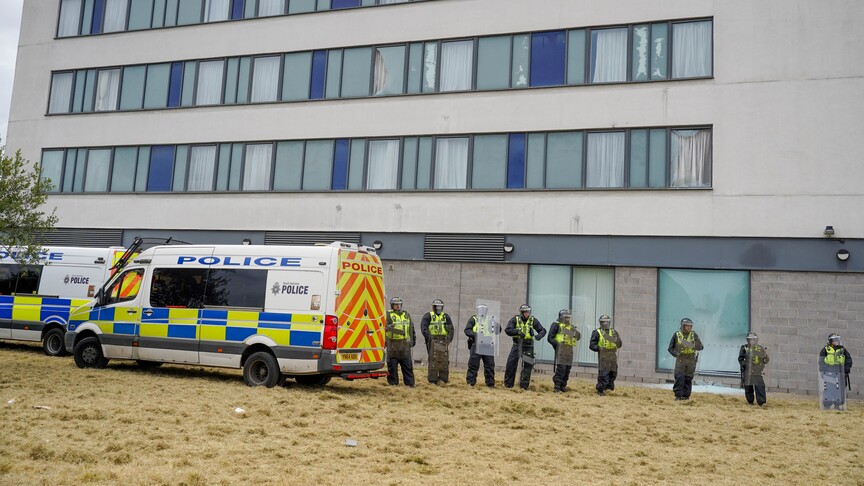
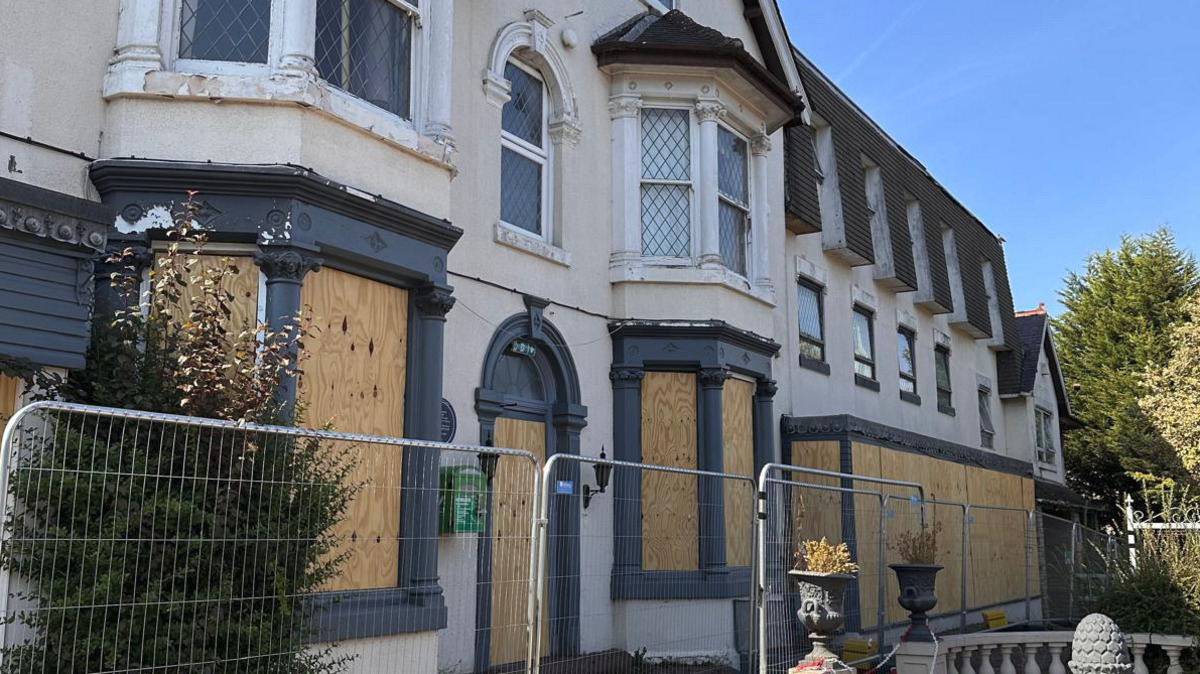
Today, another 13 hotels previously being used to accommodate asylum seekers are being closed and returned to their local communities. The announcement marks another step in the British government’s effort to end the use of hotels as asylum accommodation, a policy that has become one of the most controversial issues in the country’s immigration debate.
The closures are significant not simply because 13 buildings are changing their purpose, but because they represent part of a much larger attempt to reshape the way Britain accommodates people who are waiting for decisions on their asylum claims. The government says hotel accommodation was always intended to be temporary and has been costly and unsustainable. At the same time, the closure of hotels does not mean that the people staying in them simply disappear. They must still be accommodated somewhere while their cases are processed.
That distinction is essential to understanding what is happening.
Why were asylum seekers placed in hotels in the first place?
The widespread use of hotels developed during a period when the asylum system faced enormous pressure. Large numbers of people were arriving in the United Kingdom, while the system struggled to process applications and provide sufficient accommodation.
Hotels became a rapid way of providing shelter to people who were entitled to asylum support but had nowhere else to live. At the height of the crisis, more than 400 hotels were being used for this purpose. The system was never intended to become a permanent solution. The government has repeatedly described hotels as expensive emergency accommodation rather than an appropriate long-term model.
The problem was that temporary arrangements remained in place for years.
For local communities, the presence of an asylum hotel could change the character of a town or neighbourhood almost overnight. For asylum seekers, meanwhile, living for long periods in hotels could mean uncertainty, limited independence and a lack of stability while waiting for decisions about their future.
The result was a system that satisfied neither side.
The government wants to end asylum hotels
The current government has made the closure of asylum hotels a major political commitment. In February 2026, Home Secretary Shabana Mahmood told Parliament that the government intended to close every asylum hotel by the end of the current Parliament.
That ambition has been accompanied by a gradual reduction in the number of hotels being used.
In June, the government told Parliament that 11 hotels had already been closed in April, followed by another 20. At that point, just under 170 asylum hotels remained in use, compared with a peak of around 400. The number of people accommodated in hotels had also fallen substantially from approximately 56,000 in 2023 to around 21,000.
Independent analysis also confirms that hotel use has fallen. Full Fact reported in June that the number of asylum seekers housed in hotels was around 29% lower in March 2026 than in June 2024, while the number of hotels being used had also decreased.
The latest closure of 13 hotels therefore forms part of a broader trend rather than being an isolated announcement.
But closing hotels does not end the asylum system
This is perhaps the most important point to understand.
When a hotel closes, the asylum seekers accommodated there still need somewhere to live if they remain eligible for government accommodation. Closing the hotel is therefore only one part of the process.
The government has been developing alternative forms of accommodation, including larger sites and former military facilities. The stated objective is to move away from expensive hotel accommodation and toward a system that is more predictable and less dependent on private hotels.
The government has described larger sites as a way of reducing the reliance on hotels while the asylum system continues to process applications.
This approach, however, has created a new set of controversies.
Where will people go?
Moving people out of hotels can reduce the number of hotels being used, but it can also shift the pressure somewhere else.
The government has explored former military facilities and other large sites as alternatives. For example, official plans for MoD Bicester in Oxfordshire envisage using a former military site for asylum accommodation. The Home Office says such sites are part of its broader strategy for replacing hotel accommodation.
But communities near proposed sites have raised concerns.
Some residents worry about the number of people who could be accommodated in relatively small communities. Others question whether local healthcare, transport, policing and other public services have sufficient capacity.
These concerns should not automatically be dismissed as hostility toward asylum seekers. Local communities have legitimate questions about infrastructure, planning and public services whenever large numbers of people are moved into an area.
At the same time, concerns about immigration should not become an excuse for hostility toward individuals who are themselves waiting for decisions under the asylum system.
The challenge is to discuss both sides honestly.
Why do many people support the hotel closures?
There are several reasons why hotel closures have attracted public support.
The first is cost.
Hotel accommodation can be expensive because the government is effectively paying for large blocks of rooms and associated services. The longer the system continues, the greater the financial burden becomes.
The government has therefore argued that replacing hotels with more suitable forms of accommodation can save taxpayers substantial amounts of money.
The second issue is local disruption.
Hotels are designed to serve tourists, business travellers and other temporary guests. When they are converted into asylum accommodation for extended periods, they are no longer available for ordinary commercial use.
In towns that depend heavily on tourism, this can become particularly controversial.
The third issue is the perception that the asylum system should be temporary and controlled. Many members of the public believe that people awaiting asylum decisions should be housed in appropriate accommodation while their cases are processed, rather than being placed in hotels indefinitely.
For these reasons, the closure of hotels has become an important political symbol.
But critics say the problem is simply being moved
Opponents of the government’s approach argue that closing hotels does not necessarily solve the underlying asylum crisis.
If people are transferred from hotels into houses, hostels, shared accommodation or large former military facilities, the accommodation problem has not disappeared. It has simply changed form.
This is particularly important because the government itself has acknowledged that alternative accommodation must be available before hotels can be closed safely and in an orderly manner. A parliamentary report noted that sufficient alternative accommodation is needed to ensure continuity of the asylum accommodation system.
Critics therefore argue that the real solution must involve faster processing of asylum applications, effective returns where claims are rejected, suitable accommodation for people who are entitled to support, and a system capable of responding to fluctuations in arrivals.
Without those reforms, hotels could potentially be replaced by another emergency solution.
The human side of the debate
Behind the statistics are real people.
An asylum seeker is someone who has asked another country for protection and is waiting for a decision on that request. Some claims will ultimately be accepted, while others will be rejected. Until decisions are made, however, the individuals involved still need somewhere safe and lawful to live.
For people who have travelled through dangerous circumstances, spending months or years in temporary accommodation can be psychologically difficult.
Constant relocation can make the situation even more stressful. Moving from one hotel to another, or from a hotel into a completely different form of accommodation, can create uncertainty for people who are already waiting for an important decision about their future.
This does not mean that governments should keep expensive hotels open indefinitely.
It means that the transition needs to be managed carefully.
A political issue that will not disappear
Immigration has become one of the most politically sensitive issues in Britain.
The closure of asylum hotels is therefore about more than accommodation. It is also about public confidence in the immigration system.
People want to know whether borders are being effectively managed, whether asylum claims are being processed quickly, whether rejected claims are followed by removals, and whether public money is being spent responsibly.
At the same time, Britain has longstanding legal obligations toward people seeking protection.
A functioning asylum system needs to address both realities.
A government can promise to reduce illegal migration while still maintaining a functioning system for genuine asylum claims. It can seek to close hotels while ensuring that people are not left without lawful accommodation. And it can listen to communities without allowing immigration debates to turn into hostility against vulnerable individuals.
What does today’s announcement really mean?
The closure of 13 more asylum hotels is undoubtedly a visible sign of progress toward the government’s goal of ending hotel accommodation.
But it should not be interpreted as the end of the asylum crisis.
The number of hotels may continue to fall, yet the fundamental questions remain: How quickly will asylum applications be decided? Where will people live while they wait? How will rejected claims be dealt with? How much will the new accommodation system cost? And how will the government ensure that communities hosting asylum accommodation receive adequate support?
These questions will determine whether the hotel closures represent a genuine transformation or simply another stage in a long-running crisis.
For now, today’s 13 closures are another piece of a much larger puzzle.
Britain is moving away from a system that relied heavily on hotels during a period of intense pressure. The government says it is building a cheaper, more controlled and more sustainable alternative. The figures suggest that hotel use has already fallen considerably from its peak.
But success will ultimately depend on what comes next.
Closing a hotel is relatively simple.
Building an asylum system that is fast, fair, affordable and trusted by the public is much harder.
That is the real challenge facing Britain.